Why You Can Hear Sound of Fan From Speakers
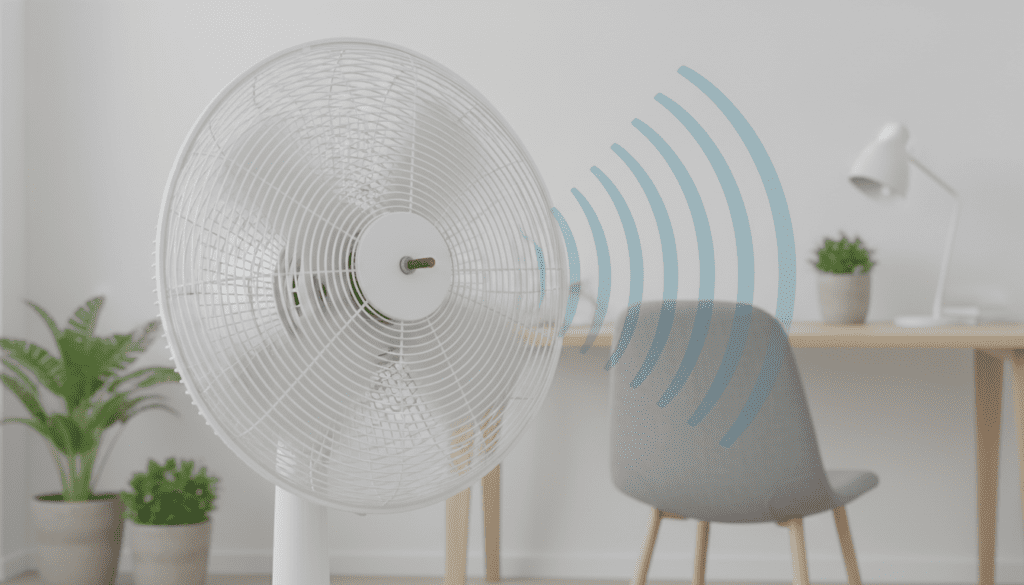
If you can hear the sound of a fan from your speakers, the primary cause is usually Electromagnetic Interference (EMI) or a ground loop occurring within your PC’s electrical circuit. This happens when the electrical pulses used to spin the fan motor leak into the audio signal path, manifesting as a whirring, buzzing, or clicking noise that fluctuates with the fan’s speed.
In my fifteen years of building high-end workstations and recording studios, I have encountered this “phantom” fan noise dozens of times. Whether it is a subtle hum or a loud whine that makes gaming impossible, the root issue is almost always a lack of physical or electrical isolation between your high-power components and your sensitive audio hardware.
TL;DR: Quick Solutions for Fan Noise in Speakers
- Isolate the Power: Move your speakers or audio interface to a different wall outlet than your computer.
- Check the Cables: Use balanced (TRS/XLR) cables instead of unbalanced (RCA/3.5mm) ones if your hardware supports it.
- Install Ferrite Beads: Clip these small magnets onto your fan power cables and speaker wires to suppress High-Frequency EMI.
- External DAC: Switch from your motherboard’s “Onboard Audio” to an External USB DAC or Audio Interface to move the audio processing away from internal interference.
- Ground Loop Isolator: Plug a $10–$20 3.5mm Ground Loop Isolator between your PC and your speakers.
Understanding Why You Can Hear Sound of Fan From Speakers
To fix the problem, we first need to understand the physics of Cross-talk and Induction. Your computer fans use PWM (Pulse Width Modulation) to control their speed. This involves rapidly switching the power on and off, which creates a specific electrical frequency.
When your audio cables or internal motherboard traces are poorly shielded, they act like antennas. They “pick up” these fluctuations from the fan’s magnetic field. Because the fan speed changes based on your CPU temperature, the pitch of the noise in your speakers will often rise and fall as you launch games or heavy applications.
Common Culprits of Audio Interference
- Poor Motherboard Shielding: Budget motherboards often lack the “isolated audio PCB” layers found in premium models, leading to EMI leakage.
- Unshielded Cables: Cheap 3.5mm auxiliary cables lack the copper braiding necessary to block external signals.
- Front Panel Audio Headers: The thin wires connecting your case’s front headphone jack to the motherboard often run directly past the GPU and fans, picking up massive amounts of noise.
- Shared Power Rails: If your speakers and PC are on the same power strip, “dirty power” from the Switching Mode Power Supply (SMPS) can feedback into the speakers.
Immediate Steps When You Can Hear Sound of Fan From Speakers
Before buying new hardware, try these “zero-cost” troubleshooting steps to narrow down the source of the interference.
The “Wiggle” Test
While the noise is occurring, gently move your speaker cables. If the pitch or volume of the fan noise changes, the issue is Induction occurring in the cables.
- Expert Tip: Ensure your audio cables cross power cables at a 90-degree angle. Never run them parallel to each other, as this maximizes the “Transformer Effect” that transfers noise.
Switch to Rear I/O
If you are using the front headphone jack on your PC case, unplug it and move your speakers to the Rear Motherboard Green Port. The rear ports are soldered directly to the PCB and typically have much better signal integrity than the unshielded internal case wires.
Test with a Different Device
Plug your speakers into your phone or a laptop (running on battery). If the fan noise disappears, the speakers are fine, and the issue is definitely your PC’s Internal Grounding or EMI.
| Solution Type | Success Rate | Difficulty | Cost |
|---|---|---|---|
| Switch to Rear I/O | High (for case noise) | Easy | $0 |
| Ferrite Beads | Medium | Easy | $5–$10 |
| Ground Loop Isolator | Very High | Easy | $10–$20 |
| External USB DAC | 100% | Medium | $30–$100 |
| Balanced Audio Cables | High (Pro gear) | Medium | $15–$30 |
How to Fix Fan Noise Using Software Adjustments
Sometimes, the “noise” isn’t purely electrical; it’s a software-gain issue. If your Windows volume is set to 10% but your physical speaker knob is at 100%, you are magnifying the Noise Floor of your sound card.
Optimize Your Gain Staging
- Set your Windows System Volume to 80-90%.
- Set the volume within your media player or game to 100%.
- Use the Physical Volume Knob on your speakers to reach a comfortable listening level.
- This ensures the “Signal” is much louder than the “Noise,” effectively hiding the fan whir.
Disable Unused Inputs
Often, the Microphone In or Line In ports are “open” and picking up internal fan noise.
- Right-click the speaker icon in your taskbar and select Sound Settings.
- Go to Input Devices.
- Disable every input that you are not currently using (especially “Stereo Mix” or “CD Audio”).
Eliminating Ground Loops and Power Noise
If you can hear sound of fan from speakers specifically as a “buzz” that changes when the fan spins faster, you likely have a Ground Loop. This happens when your computer and your speakers have different “references” to the electrical ground.
Using a Ground Loop Isolator
A Ground Loop Isolator is a small transformer that breaks the physical electrical connection between the PC and the speakers while allowing the audio signal to pass through via magnetism.
- Actionable Advice: If you are using a 3.5mm aux cord, buy the Mpow Ground Loop Noise Isolator or a similar brand. Plug it directly between your PC and the speaker cable. This is the #1 most effective fix for most users.
The “Same Outlet” Rule
Try to plug your PC, monitor, and speakers into the exact same high-quality power strip. This ensures they all share a common ground point, reducing the potential for a loop. Conversely, if the noise persists, try moving the speakers to a completely different wall circuit using an extension cord as a test.
Hardware Upgrades to Stop EMI Permanently
If the basic fixes fail, it is time to move your audio processing outside of the “noisy” environment of the PC case.
The External USB DAC (Digital-to-Analog Converter)
The interior of a PC is an electrical nightmare. Between the GPU, the VRMs, and the Fan Motors, there is constant radio frequency interference.
Solution: By using an External DAC (like the Schiit Modi or the FiiO NewK3), the digital signal leaves the PC via USB and is only converted to audible sound outside* the box, where it is shielded from fan noise.
Ferrite Beads (RFI Suppressors)
These are the small “cylinders” you often see on laptop power bricks. They are designed to filter out high-frequency noise.
- Usage: Buy a pack of clip-on Ferrite Cores. Clip one on the wire of the offending fan (as close to the motherboard header as possible) and another on your speaker cables.
Replace the Fan
Not all fans are created equal. Some cheap sleeve-bearing fans produce massive amounts of Back-EMF (Electromotive Force) as they age.
- Expert Recommendation: I recommend switching to Noctua NF-A12x25 or be quiet! Silent Wings fans. These use Fluid Dynamic Bearings (FDB) and high-quality motors that produce significantly less electrical noise compared to cheap generic fans.
Advanced Strategies for Audiophiles and Streamers
For those using Studio Monitors (like HS5s or KRK Rokits), the issue is often amplified because these speakers are extremely sensitive.
Switching to Balanced Connections
If your speakers have XLR or TRS (1/4″) inputs, stop using RCA or 3.5mm cables immediately.
- Why it works: Balanced cables use three wires instead of two. The third wire carries an inverted version of the signal. When the signal reaches the speaker, the “noise” (which is identical on both wires) is cancelled out through Phase Inversion.
- Required Hardware: You will need a USB Audio Interface (such as the Focusrite Scarlett 2i2) to provide these balanced outputs.
Shielding the Internal Cables
If you are DIY-inclined, you can wrap your internal Front Panel Audio cable in Copper Shielding Tape. Ensure the tape is grounded to the metal of the PC case. This creates a Faraday Cage around the audio wire, blocking the EMI from your fans.
Frequently Asked Questions
Why does the fan noise in my speakers change when I move my mouse?
This is a variation of the same EMI issue. Your mouse polling rate causes the CPU and Motherboard VRMs to change power states rapidly. This electrical “chatter” leaks into the audio path. Following the External DAC steps above will fix this.
Can a bad power supply cause me to hear fan sound from speakers?
Yes. A failing or low-quality Power Supply Unit (PSU) with poor Ripple Suppression cannot “smooth out” the electricity effectively. This “dirty power” is then distributed to your fans and your sound card, leading to audible interference.
Will a sound card fix the issue?
An Internal Sound Card (PCIe) might help if it has a dedicated EMI shield (a metal “shroud” over the card). However, an External USB DAC is almost always a better choice because it provides physical distance from the source of the noise.
Does the speed of the fan matter?
Absolutely. Most fans use Pulse Width Modulation (PWM). At lower speeds, the pulses are further apart, which might create a “clicking” sound. At higher speeds, the pulses merge into a constant high-pitched “whine.”
Can I fix this by just using headphones?
Only if you plug the headphones into an External DAC. If you plug them into the same noisy jack your speakers were using, you will likely still hear the fan noise, and it may be even more noticeable due to the proximity to your ears.