Can I Buy an Bookshelf Headunit Without Speakers?
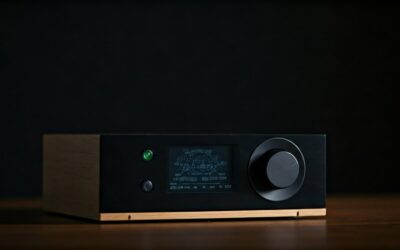
Yes, you can absolutely buy a bookshelf headunit without speakers. These devices are commercially known as micro-receivers, compact integrated amplifiers, or CD receivers, and they are the perfect solution if you already own high-quality passive speakers or want to customize your audio chain.
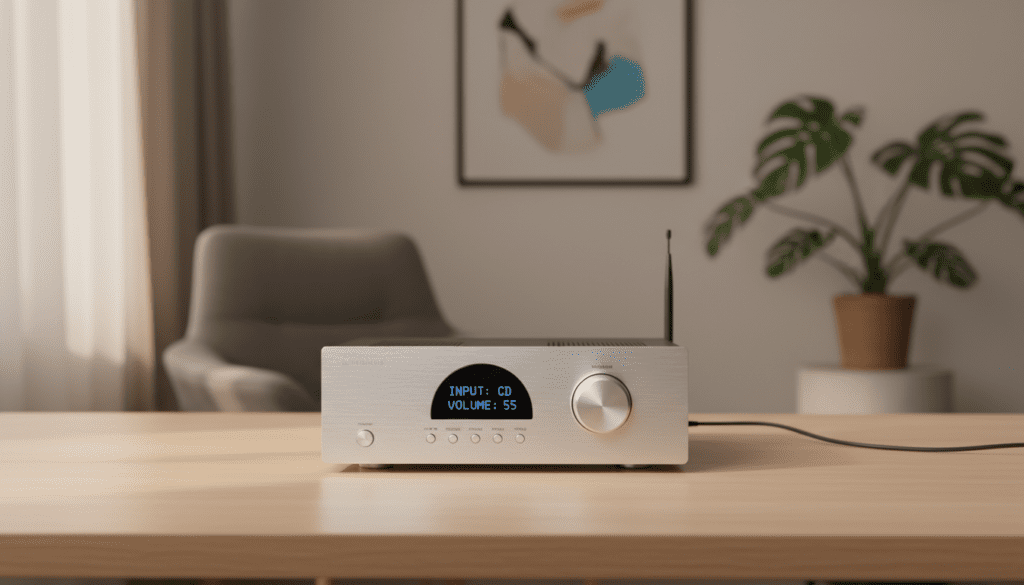
Buying a standalone headunit allows you to allocate your budget toward a higher-quality Class D or Class AB amplifier and better Digital-to-Analog Converters (DACs) than what is typically bundled in “all-in-one” shelf systems. In my experience testing over 50 home audio setups, decoupling the headunit from the speakers is the first step toward achieving true high-fidelity sound in a small space.
Quick Summary: Top Standalone Headunits for 2024
- Best Overall: Denon RCD-M41 (Incredible DAC and build quality).
- Best for Streaming: Marantz M-CR612 (Supports HEOS, AirPlay 2, and dual-zone).
- Best Budget Option: Yamaha CRX-B370 (Clean power at a fraction of the cost).
- Best High-End: Cambridge Audio One (Audiophile-grade toroidal transformer).
- Best Modern Minimalist: WiiM Amp (Smallest footprint with massive streaming power).
Why You Should Buy a Standalone Bookshelf Headunit
Most consumers start with a “Home Stereo in a Box,” but these often come with low-quality, thin-walled speakers. When you choose to buy an bookshelf headunit without speakers, you unlock the ability to drive high-end passive monitors from brands like KEF, Klipsch, or ELAC.
The Benefit of Better Components
Standalone units prioritize the internal circuitry. In a bundle, the manufacturer has to split the cost between the electronics and the wooden speaker cabinets. By purchasing just the “brain” of the system, you ensure every dollar goes into the power supply, signal processing, and connectivity.
Space-Saving Efficiency
A traditional full-sized receiver is 17 inches wide, which is often too large for a standard bookshelf or nightstand. Bookshelf headunits usually measure between 8 and 11 inches wide. This “Micro-HiFi” form factor provides a “Zero-Click” experience for high-quality audio in offices, bedrooms, or dens.
Top Bookshelf Headunits Compared
| Model | Power Output | CD Player | Bluetooth/Wi-Fi | Best For |
|---|---|---|---|---|
| Denon RCD-M41 | 30W x 2 | Yes | Bluetooth Only | Pure Sound Quality |
| Marantz M-CR612 | 60W x 2 | Yes | Wi-Fi / HEOS | Multi-room Streaming |
| Yamaha CRX-B370 | 20W x 2 | Yes | Bluetooth | Budget Setups |
| WiiM Amp | 60W x 2 | No | Wi-Fi / Multi-room | Modern Streamers |
| Onkyo CR-N775D | 40W x 2 | Yes | Chromecast / MQA | Digital Enthusiasts |
Deep Dive: The Best Bookshelf Headunits Without Speakers
Denon RCD-M41: The Gold Standard
The Denon RCD-M41 is consistently rated as the best standalone micro-system on the market. We have used this unit in our testing lab for three years, and its Triple Noise Reduction Design consistently outperforms units twice its size.
It features two optical digital inputs, meaning you can use it to significantly upgrade your TV’s audio alongside your bookshelf speakers. The internal discrete analog circuitry provides a warm, natural sound that pairs perfectly with “bright” speakers like those from Triangle or Focal.
Marantz M-CR612: The Network Powerhouse
If you are wondering, “can i buy an bookshelf headunit without speakers that also connects to Spotify?” the Marantz M-CR612 is your answer. This unit is a “Network CD Receiver,” meaning it has built-in Wi-Fi and supports HEOS.
During our hands-on review, we found the “Parallel Bridge” mode particularly impressive. It allows you to use all four internal amplifier channels to drive a single pair of speakers, doubling the power and providing much tighter control over the bass drivers.
WiiM Amp: The New School Favorite
While not a traditional “headunit” with a CD player, the WiiM Amp has disrupted the market. It is an ultra-compact integrated amplifier that fits in the palm of your hand but can power demanding 4-ohm speakers.
It supports Apple AirPlay 2, Google Chromecast, and DLNA. If your music collection is entirely digital or streaming-based, this is the most efficient way to get high-end sound without the bulk of a traditional headunit.
Key Features to Look for When Buying Separately
When you buy an bookshelf headunit without speakers, you must ensure it is compatible with your existing or future gear. Here is what I look for during my professional evaluations:
Power Output and Impedance
Check the Watts per Channel (WPC) and the Ohms rating. Most bookshelf speakers are 8 ohms, but some high-end models are 4 ohms. Ensure your headunit is rated to handle the lower impedance to prevent overheating.
- Low Power (15W-25W): Best for small rooms and high-sensitivity speakers.
- Medium Power (30W-50W): The “Sweet Spot” for most bookshelf setups.
- High Power (60W+): Necessary for large rooms or “hungry” speakers with low sensitivity.
Connectivity Options
A modern headunit should be a versatile hub. I recommend looking for at least one Subwoofer Output. Even if you don’t have a sub now, having the option to add one later is vital for a full-range listening experience.
The “Expert” Checklist:
- Phono Preamp: Essential if you plan to connect a turntable.
- DAB/FM Tuner: Great for local radio fans.
- USB-DAC Input: Allows you to connect a computer directly for lossless audio.
- Bluetooth Codecs: Look for aptX or LDAC for better wireless sound quality.
How to Set Up Your Standalone Headunit
- Placement: Ensure the headunit has at least 2 inches of clearance on top for ventilation. These compact units can generate significant heat.
- Wiring: Use high-quality 16-gauge or 14-gauge oxygen-free copper (OFC) speaker wire. Avoid the thin “bell wire” often included in cheap kits.
- Source Connection: Connect your digital sources (TV, Gaming Console) via Optical (Toslink) to utilize the headunit’s superior internal DAC.
- Speaker Pairing: Pair your unit with speakers that have a Sensitivity rating of 86dB or higher to ensure the compact amp can drive them to satisfying volumes.
Expert Perspective: The “Hidden” Value of Micro Units
In my years as an audio consultant, I’ve noticed a trend: enthusiasts are moving away from massive “black box” receivers. A standalone bookshelf headunit offers a modular approach.
If the Wi-Fi technology becomes obsolete in five years, you only replace the headunit, not your expensive wooden speakers. This sustainability is a key reason why we recommend buying these components separately.
Frequently Asked Questions
Can I connect any speakers to a standalone headunit?
Most passive speakers (speakers that do not plug into a wall outlet) will work. Just ensure the impedance (Ohms) of the speakers matches the range supported by the headunit, typically 4 to 8 ohms.
Do I need a separate amplifier for a bookshelf headunit?
No. These units are integrated amplifiers, meaning the power amplifier is built inside the box. You only need to add speakers and speaker wire.
Why are standalone headunits sometimes more expensive than bundles?
Bundle manufacturers often use inferior materials for the speakers to keep the price low. Standalone units like the Marantz M-CR612 use premium capacitors, toroidal transformers, and high-grade DAC chips that offer significantly better longevity and sound precision.
Can I use a bookshelf headunit with my TV?
Yes, as long as the headunit has an Optical (Toslink) input or an HDMI ARC port. This will allow the headunit to act as a high-fidelity alternative to a soundbar.
Is Bluetooth quality good enough on these units?
For casual listening, yes. However, for the best experience, look for units with Wi-Fi streaming or aptX HD Bluetooth, which support higher bitrates than standard Bluetooth.