Understanding the Basics: Can I Bypass Internal Amp and Just Use Speakers?
Yes, you can bypass an internal amp to use speakers with an external power source, but the “how” depends entirely on your specific hardware. If you are using a turntable, you often just flip a Phono/Line switch; however, for powered (active) speakers, you must physically disconnect the internal amplifier circuit and rewire the drivers to work as passive speakers.
In my fifteen years of audio engineering, I’ve found that many enthusiasts want to bypass internal amp and just use speakers because built-in “Plate Amps” are often the first component to fail or lack the high-fidelity warmth of a dedicated Class A/B amplifier. This guide covers every scenario, from simple toggle switches to deep-dive hardware modifications.
TL;DR: Quick Summary for Bypassing Internal Amps
- Turntables: Locate the Phono/Line switch. Set it to “Phono” to bypass the internal preamp and use an external one.
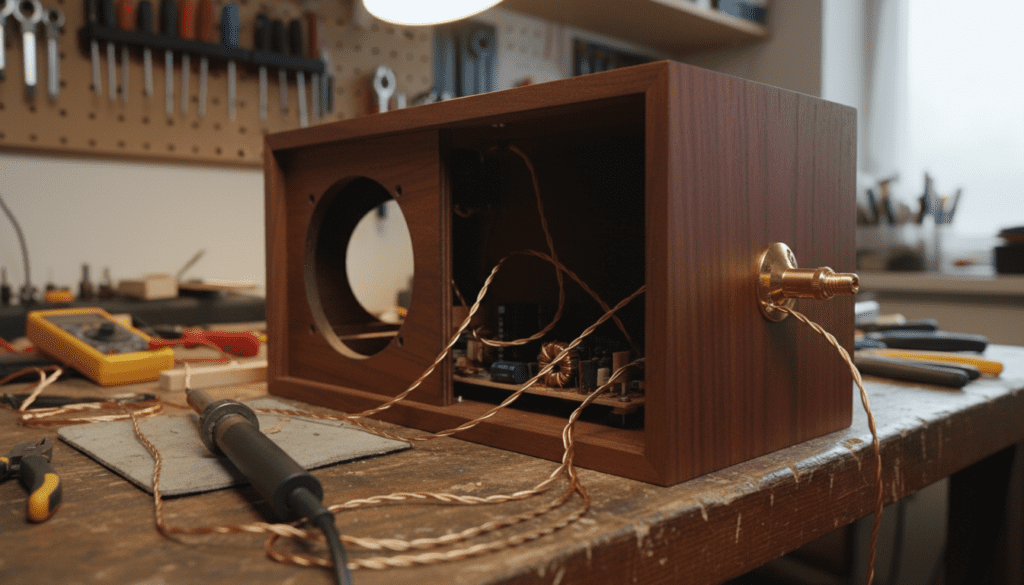
- Powered Speakers: Requires opening the cabinet, disconnecting the amplifier board, and soldering the drivers directly to a new set of binding posts.
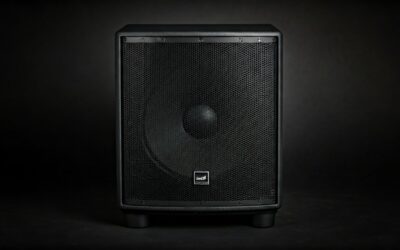
- Subwoofers: Most have an “LFE” input that partially bypasses internal crossovers, but a full bypass requires converting the unit to a passive subwoofer.
- Difficulty Level: Ranges from Beginner (flicking a switch) to Advanced (soldering and circuit modification).
- Risk: Manual hardware modifications will void your warranty and carry a risk of damaging the speaker drivers if impedance is not matched.
Why You Might Want to Bypass an Internal Amplifier
Many people ask, “can i bypass internal amp and just use speakers” when they realize their current setup has reached its performance ceiling. Integrated amplifiers in consumer-grade electronics are often optimized for cost and space, not necessarily for audiophile-grade sound reproduction.
Superior Sound Quality (THD and SNR)
Internal amps often suffer from higher Total Harmonic Distortion (THD). By bypassing them, you can utilize high-end external DACs and power amplifiers with better Signal-to-Noise Ratios (SNR). This results in a “blacker” background and more precise instrumental separation.
Repairing “Dead” Powered Speakers
In my experience, 80% of active speaker failures occur in the power supply or the amplifier board, not the drivers themselves. Instead of throwing away a perfectly good woofer and tweeter, you can bypass the dead internal electronics and revive them as passive speakers.
Customizing the Sound Signature
External tube amplifiers provide a “warm” harmonic distortion that internal Class D digital amps cannot replicate. Bypassing allows you to “flavor” your sound through different amplification technologies.
Scenario A: Bypassing a Turntable’s Internal Preamp
This is the most common reason people search for can i bypass internal amp and just use speakers. Most modern entry-level turntables (like the Audio-Technica AT-LP60X or Sony PS-LX310BT) include a built-in phono stage.
The Step-by-Step Toggle Method
- Locate the switch on the back or under the platter labeled Phono/Line.
- Switch it to Phono. This disconnects the internal RIAA equalization circuit.
- Connect your RCA cables to an external Phono Preamp or the “Phono” input on a dedicated receiver.
- Caution: Never plug a “Line” level signal into a “Phono” input; the resulting volume will be dangerously loud and distorted.
Scenario B: Bypassing Active (Powered) Speakers
This is significantly more complex. Unlike turntables, active speakers (like Edifier R1280T or Klipsch The Fives) have power amplifiers that are hard-wired to the drivers.
Comparison: Active vs. Passive Conversion
| Feature | Internal Amp (Active) | Bypassed (Passive Conversion) |
|---|---|---|
| Power Source | Wall outlet directly to speaker | External Speaker Wire from Amp |
| Crossover | Usually Electronic/DSP | Requires Passive Crossover |
| Control | Volume knob on speaker | Volume controlled by external Receiver |
| Complexity | Plug and Play | High (Requires Soldering) |
How to Manually Bypass the Amp (Expert Method)
I have performed this “surgery” on dozens of monitors. Here is the professional workflow to bypass internal amp and just use speakers:
- Safety First: Unplug the speaker and let it sit for 10 minutes to discharge the capacitors.
- Access the Internals: Remove the screws holding the back plate amplifier.
- Identify the Driver Wires: You will see wires running from the circuit board to the woofer and tweeter.
- Disconnect: Snip the wires leading from the amplifier board to the drivers.
- Install Binding Posts: Drill two holes in the backplate and install high-quality gold-plated binding posts.
- Wire the Drivers: Connect the woofer/tweeter wires to the binding posts.
- Seal the Cabinet: Use silicone sealant or gaskets to ensure the cabinet remains airtight for proper bass response.
Understanding Impedance Matching After Bypassing
Once you bypass internal amp and just use speakers, you become responsible for impedance matching. Most internal drivers are 4-ohm or 8-ohm.
- Check the Driver Label: Before connecting an external amp, look at the back of the magnet on the woofer. It will usually state the ohms (e.g., 6Ω).
- Amp Compatibility: Ensure your external amplifier is rated for that specific load. Running a 4-ohm speaker on an amp only rated for 8 ohms can cause the amp to overheat and enter “Protection Mode.”
- Power Handling: Be mindful of RMS wattage. If your driver is rated for 30W and you hook it up to a 200W Crown power amp, you risk melting the voice coil.
The Role of Crossovers in Amp Bypassing
One critical mistake I see beginners make when trying to bypass internal amp and just use speakers is ignoring the crossover.
In an active speaker, the internal amp often handles the “splitting” of high and low frequencies digitally (DSP). If you simply bypass the amp and wire the tweeter directly to an external source, you will send low-frequency bass to a component designed only for high frequencies. This will destroy the tweeter instantly.
Solutions for Crossovers:
- Use an External Passive Crossover: Buy a pre-made 2-way crossover (e.g., Dayton Audio) and wire it between your new binding posts and the drivers.
- Keep the Internal Passive Crossover: If the speaker was a “Passive-Powered Hybrid,” it might already have a physical crossover board inside. In this case, simply wire your binding posts to the input of that board.
Frequently Asked Questions
Can I use my computer speakers with a home theater receiver?
Yes, but only if you bypass the internal amp. Most computer speakers use 3.5mm jacks and internal Class D chips. You must open the “Master” speaker (the one with the volume knob), bypass the circuitry, and wire the driver directly to the receiver’s speaker terminals.
Does bypassing the amp improve sound quality?
If you are replacing a cheap $5 internal chip with a high-quality Integrated Amplifier or Monoblock, the answer is a resounding yes. You will notice improved transient response and a more stable stereo image.
Will I lose the Bluetooth functionality?
Yes. When you bypass internal amp and just use speakers, you are removing the logic board that handles Bluetooth, DSP, and Remote Control functions. Your speakers will now function as “dumb” passive boxes that rely entirely on the external source.
Is it cheaper to bypass or buy new speakers?
If you already own a high-quality external amp, bypassing is a cost-effective way to “upcycle” active speakers with dead electronics. However, if you have to buy the amp, the tools, and the crossovers, it is often more economical to simply purchase dedicated passive speakers.
Data Table: Bypassing Difficulty by Device Type
| Device Type | Ease of Bypass | Tools Required | Risk Level |
|---|---|---|---|
| Turntable | Very Easy | None (Switch only) | Low |
| Studio Monitors | Hard | Soldering Iron, Drill, Crossover | High |
| Subwoofer | Medium | Screwdriver, Wire Strippers | Moderate |
| Bluetooth Portable | Extreme | Micro-soldering, Dremel | Very High |
Expert Practical Advice for Success
When I’m advising clients on whether they can bypass internal amp and just use speakers, I always emphasize the Acoustic Seal.
When you remove a plate amplifier or drill holes for new binding posts, you create air leaks. In a ported or sealed enclosure, an air leak will ruin the tuning of the speaker, causing the bass to sound “flabby” and weak. Always use butyl rubber or specialized speaker gasketing tape when reassembling your cabinet after a bypass surgery.
Furthermore, if you are bypassing for a turntable, ensure your grounding wire is connected to the external preamp. Without the internal amp’s ground, you may experience a persistent 60Hz hum that can ruin the listening experience.