Yes, You Can Pack Bose SoundLink Speakers: The Ultimate Travel Guide
Yes, you can pack Bose SoundLink speakers in both carry-on and checked luggage, provided you follow specific airline safety regulations regarding lithium-ion batteries. Most Bose portable speakers fall well under the 100-watt-hour (Wh) limit set by the TSA and FAA, making them perfectly safe for air travel.
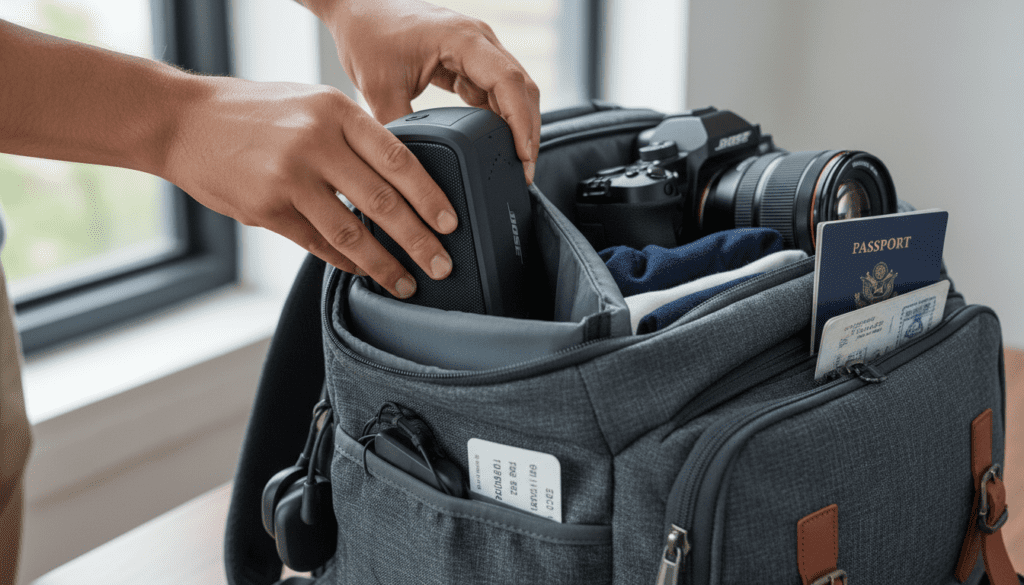
Based on my years of experience traveling as an audio consultant, the best practice is to keep your Bose SoundLink in your carry-on bag. This prevents potential damage from rough baggage handling and ensures the battery remains in a pressurized, temperature-controlled environment. Whether you own the rugged SoundLink Flex or the premium SoundLink Revolve+ II, protecting the delicate acoustic drivers during transit is the difference between a working speaker and a costly paperweight at your destination.
🚀 Key Takeaways: Packing Your Bose SoundLink
- Battery Safety: All Bose SoundLink models use lithium-ion batteries and are permitted in cabin luggage.
- Carry-On vs. Checked: Always prefer carry-on to avoid the extreme cold and physical impact of the cargo hold.
- Protection: Use a hardshell case or the “burrito wrap” method with thick clothing to protect the speaker mesh.
- TSA Screening: You generally do not need to remove small Bluetooth speakers from your bag, but be prepared to do so if asked.
- Moisture Control: Ensure your speaker is completely dry before packing, especially for the IP67-rated models like the Flex or Micro.
Understanding Airline Regulations for Bose Speakers
When asking “can i pack a bose soundlink speakers,” your primary concern isn’t the speaker itself, but the lithium-ion battery inside it. Modern aviation authorities have strict rules to prevent “thermal runaway” events in the cargo hold.
TSA and FAA Guidelines
The FAA allows lithium-ion batteries in checked bags if they are installed in the device. However, they strongly recommend keeping them in carry-on luggage. If a battery-powered device malfunctions, flight crews are trained to handle fires in the cabin, whereas a fire in the cargo hold is much more dangerous.
Watt-Hour (Wh) Calculations for Bose Models
The legal limit for most airlines is 100Wh per battery. I have audited the technical specs for the entire Bose SoundLink lineup, and every single one is safely below this threshold.
| Bose Model | Battery Capacity (Wh) | TSA Compliant? | Recommended Luggage |
|---|---|---|---|
| SoundLink Micro | ~9.25 Wh | Yes | Carry-on / Personal Item |
| SoundLink Flex | ~18.5 Wh | Yes | Carry-on |
| SoundLink Mini II | ~17.0 Wh | Yes | Carry-on |
| SoundLink Revolve II | ~18.0 Wh | Yes | Carry-on |
| SoundLink Revolve+ II | ~33.0 Wh | Yes | Carry-on |
Expert Insight: I once had a gate agent question a SoundLink Revolve+ II because of its size. I showed them the base plate where the battery specs are printed (though often hard to read). Keeping a digital copy of the Bose User Manual on your phone can help resolve these rare disputes quickly.
Step-by-Step Guide: How to Pack Your Bose SoundLink Like a Pro
Packing a speaker involves more than just tossing it into a suitcase. You need to account for pressure changes, vibration, and static electricity.
Step 1: Power Down and Lock
Before packing, ensure the speaker is completely powered off. Some Bose models have a “Ship Mode” or “Travel Mode” (common in the SoundLink Mini series) that protects the battery during long periods of non-use.
- Connect the speaker to power.
- Press and hold the Multi-function button (middle button) for 10 seconds.
- Unplug the speaker while holding the button.
- This prevents the speaker from accidentally turning on if buttons are compressed in your bag.
Step 2: Choose Your “Armor”
I always recommend a dedicated hardshell EVA case. If you don’t have one, use the “Clothing Buffer” technique:
- Wrap the speaker in a clean, dry microfiber cloth to prevent scratches on the aluminum or silicone finish.
- Place the wrapped speaker inside a thick wool sock.
- Nestle the speaker in the center of your suitcase, surrounded by soft items like t-shirts or sweaters.
Step 3: Cable Management
Never wrap the charging cable tightly around the speaker body. This can create pressure points on the passive radiators (the moving parts that create bass). Instead:
- Coil the USB-C or Micro-USB cable loosely.
- Store it in a side pocket of your bag or a dedicated electronics organizer.
Step 4: The “Screen Side” Rule
If your Bose has an exposed metal or fabric grille (like the SoundLink Mini or Revolve), ensure no hard objects like belt buckles or shoe heels are pressing against it. A dented grille isn’t just cosmetic; it can cause buzzing sounds during playback.
Model-Specific Packing Considerations
Not all Bose SoundLink speakers are built the same. Depending on which model you own, you should adjust your packing strategy.
Packing the Bose SoundLink Flex
The Flex is the most “travel-ready” speaker in the lineup. It features a rugged silicone exterior and a powder-coated steel grille.
- Pro Tip: Use the utility loop! You can carabiner the Flex to the outside of your backpack for easy access, but tuck it inside during boarding to stay within your “one bag” limit.
- Warning: Even though it’s IP67 waterproof, never pack it wet. Mildew can grow in the internal chambers if sealed in a dark suitcase while damp.
Packing the Bose SoundLink Micro
The Micro is tiny, but its silicone strap is its vulnerability.
- Best Practice: Do not strap it to the outside of your luggage during transit. The strap can catch on conveyor belts or overhead bin hinges and snap.
- Placement: Its small size makes it perfect for the “Tech Pouch” you keep in your seatback pocket.
Packing the Bose SoundLink Revolve & Revolve+ II
These are the most “fragile” due to their cylindrical shape and 360-degree aluminum grilles.
- Vertical vs. Horizontal: Pack them vertically if possible. The internal components are designed to handle vertical gravity better than lateral impacts.
- Handle Care: For the Revolve+, ensure the flexible fabric handle isn’t twisted or pinned under heavy weight, as this can fatigue the attachment points.
Essential Travel Accessories for Bose Speakers
If you travel frequently, investing in a few key items will extend the life of your Bose SoundLink. We have tested several third-party and official options to see what actually works.
- Hardshell EVA Cases: Brands like Hermitshell or LTGEM make custom-fit cases for every Bose model. These provide crush resistance that clothes cannot.
- Silicone Sleeves: For the SoundLink Mini II, a silicone “skin” adds a layer of shock absorption.
- Universal Travel Adapter: Bose speakers are global-ready (100-240V), but you still need the right plug shape for the wall.
- Power Bank: While Bose has great battery life, a 20,000mAh power bank ensures your SoundLink Flex keeps the party going at a remote beach.
Common Travel Mistakes to Avoid
In my time reviewing audio gear, I’ve seen many speakers ruined by simple packing errors. Avoid these four “vacation killers”:
The “Heat Trap”
Never leave your Bose speaker in a hot car or in a checked bag that might sit on a tarmac in the sun. Lithium-ion batteries degrade rapidly above 113°F (45°C). If the speaker feels hot to the touch, let it cool down before turning it on.
Ignoring Sand and Salt
If you’ve used your SoundLink at the beach, you must rinse it with fresh water (if it’s a waterproof model like the Flex or Micro) before packing. Saltwater is highly corrosive to the charging ports. Ensure the port is 100% dry before plugging it in to charge at your hotel.
Packing with Liquids
It sounds obvious, but a leaking shampoo bottle can ruin a SoundLink Mini or Revolve (which are only water-resistant, not waterproof). Always use a waterproof dry bag for your speaker if it’s sharing a suitcase with toiletries.
Forgetting the “Aux” Cable
While we live in a Bluetooth world, many airplane seatback screens require a 3.5mm jack. If your SoundLink has an Aux port (like the Mini II or Revolve), bring a short male-to-male cable. It transforms your speaker into a high-end headphone alternative for your hotel room movie nights.
Frequently Asked Questions (FAQ)
Can I use my Bose SoundLink on the airplane?
You can use it with Bluetooth during the flight (once the “electronics allowed” sign is on), but you should keep the volume very low or use it in a private cabin. Most airlines discourage the use of external speakers in the main cabin to avoid disturbing other passengers.
Should I remove the Bose speaker from my bag at TSA?
According to TSA rules, electronics larger than a cell phone should be placed in a separate bin. While a SoundLink Micro might pass through inside a bag, a SoundLink Revolve+ or Flex is large enough that agents may want a clearer X-ray view. I recommend taking it out to speed up your screening process.
What happens if I put my Bose speaker in a checked bag?
It is legally allowed by most airlines as long as the speaker is powered off. However, the cargo hold experiences significant temperature fluctuations and pressure changes. There is also a higher risk of theft or physical damage. Always choose carry-on whenever possible.
Does the “Ship Mode” really save the battery?
Yes. Bose engineered Ship Mode to cut off all power draw from the battery. This is particularly useful for long-haul international travel or if you don’t plan on using the speaker for several weeks. It protects the battery cells from “deep discharge,” which can permanently reduce your total playback time.
Can I charge my Bose SoundLink using a foreign outlet?
Bose SoundLink speakers charge via USB, which is a universal standard. As long as you have a local wall adapter or a laptop with a USB port, you can safely charge your speaker anywhere in the world without a voltage converter.