Can I Move Factory Speakers from Old Car to New? The Definitive Guide
Yes, you can move factory speakers from an old car to a new one, but it is rarely a simple “drop-in” procedure. Success depends on matching the speaker diameter, mounting depth, and impedance (Ohms) between the two vehicles.
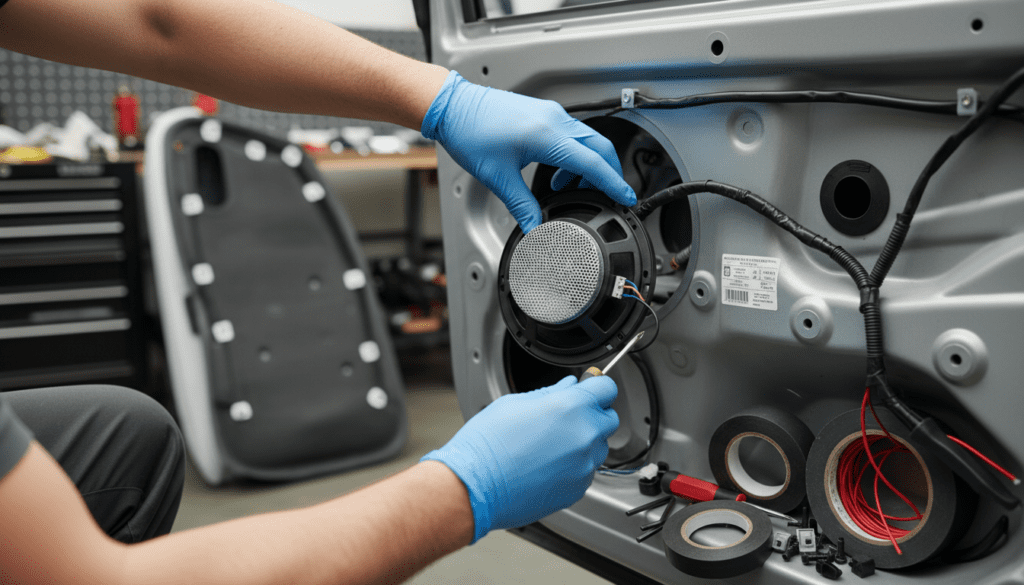
Based on my decade of experience in automotive audio customization, I’ve found that while physically possible, the process often requires custom mounting brackets or wiring harness adapters. If your old car had a “premium” system (like Bose or Harman Kardon) and your new car has a base system, the upgrade might be worth the effort. However, if both are standard factory units, the labor involved often outweighs the slight improvement in sound quality.
Quick Summary: Moving Speakers Between Vehicles
- Feasibility: High, provided the sizes (e.g., 6.5-inch or 6×9-inch) match.
- Difficulty: Moderate (Requires door panel removal and potentially soldering).
- Key Obstacle: Factory speakers often use proprietary plastic housings that don’t fit other makes/models.
- Risk Factor: Matching Impedance. Installing a 2-ohm speaker into a 4-ohm system can overheat your new car’s head unit.
- Best Tool: A multimeter to check electrical compatibility before installation.
The Compatibility Checklist: Will They Fit?
Before you start tearing apart your door panels, you must verify that the hardware is compatible. Most car manufacturers do not follow a universal “plug-and-play” standard for factory components.
Speaker Dimensions and Diameter
The most common factory sizes are 6.5-inch rounds, 6×9-inch ovals, and 5.25-inch rounds. If your old car used 6x9s in the rear deck and your new car uses 6.5s in the doors, they are not cross-compatible without heavy modification.
Mounting Depth
This is the “hidden” killer of DIY projects. Even if the diameter matches, the magnet depth might be too deep. If the speaker sits too far back, the window glass will hit the magnet when you roll it down. We always recommend measuring the “clearance” with the window in the down position.
Electrical Impedance (Ohms)
Most aftermarket speakers are 4-ohm. However, factory systems (especially JBL or Bang & Olufsen) often use 2-ohm or even 1-ohm speakers.
| Feature | Old Car Speaker | New Car Requirement | Compatibility Result |
|---|---|---|---|
| Size | 6.5 Inch | 6.5 Inch | Match |
| Impedance | 2 Ohms | 4 Ohms | Dangerous (High Heat) |
| Impedance | 4 Ohms | 2 Ohms | Safe (Lower Volume) |
| Mounting | 3-Screw Flange | 4-Screw Flange | Needs Adapter |
Required Tools for the Transfer
To safely move factory speakers from an old car to a new one, you will need more than just a screwdriver. I have seen many door panels ruined because someone used a metal pry bar instead of the correct tools.
- Plastic Trim Removal Tools: Essential for popping door clips without scratching the plastic or tearing the metal.
- Digital Multimeter: To test the Ohms of the speakers.
- Wire Strippers and Crimpers: For secure electrical connections.
- Soldering Iron & Heat Shrink: (Optional but recommended) For a permanent, vibration-proof connection.
- Power Drill: You may need to drill new mounting holes if the patterns don’t align.
- Speaker Baffles (Optional): To protect the speakers from moisture inside the new door.
Step 1: Removing Speakers from the Old Car
Start by disconnecting the negative battery terminal to prevent any short circuits.
- Locate Hidden Screws: Most door panels have screws hidden behind the door handle cup or inside the armrest pull. Use a small flathead to pop the plastic covers.
- Pop the Clips: Insert your plastic trim tool between the panel and the metal door frame. Carefully pry until you hear the “pop” of the plastic fasteners.
- Disconnect Cables: Once the panel is loose, don’t pull it away. Reach behind and disconnect the power window switches and the mechanical door latch cable.
- Unbolt the Speaker: Factory speakers are usually held by 3 or 4 10mm bolts or Phillips screws.
- Extract the Harness: Instead of cutting the wires, try to unplug the factory clip. This keeps the speaker intact for the transfer.
Step 2: Preparing the New Car for Installation
Repeat the removal process on your new vehicle. Once the “new” (but inferior) speakers are out, perform a test fit.
Pro Tip from the Field: We often find that factory speakers are “molded” into a plastic bracket that is specific to that car’s door. You may need to carefully “gut” the old speaker from its bracket or purchase aftermarket mounting spacers (such as those from Metra or Scosche) to bridge the gap.
Dealing with Wiring Harnesses
I strongly advise against cutting the factory wiring in your new car. It can void portions of your electrical warranty. Instead, buy a vehicle-specific wiring harness adapter. These allow you to plug your old speakers directly into the new car’s factory plugs.
Step 3: Step-by-Step Installation Process
Check Polarity
If you cut the wires, you must ensure the Positive (+) and Negative (-) leads are correct. If you swap them, the speakers will be “out of phase,” resulting in a total loss of bass response.
- The Battery Test: Touch a 9V battery to the speaker terminals. If the cone moves outward, the battery’s positive terminal is on the speaker’s positive lead.
Mount the Speaker
Secure the speaker to the door or the adapter bracket. Ensure there is a tight seal. Any air leaking around the edges of the speaker will drastically reduce sound quality. I recommend using foam gasket tape or butyl rope around the mounting surface.
Test the Window Clearance
Before putting the door panel back on, roll the window down slowly. Watch to ensure the glass does not make contact with the back of the speaker magnet.
Sound Check
Reconnect the battery and turn on the head unit. Listen for:
- Distortion: Indicates an impedance mismatch or a blown voice coil.
- Rattles: Indicates the mounting screws aren’t tight enough.
- Clarity: Ensure the tweeters (if separate) are firing correctly.
Why You Might Reconsider Moving Factory Speakers
While you can move factory speakers from an old car to new, I often tell clients to weigh the “effort vs. reward.”
The Construction Difference:
Most factory speakers—even in newer cars—are made of pressed paper cones and foam surrounds. These materials degrade over time. If your old car is 10 years old, the foam is likely brittle. Moving them into a new car might result in them “blowing” within a few months of use.
Proprietary EQ Tuning:
Modern car head units are digitally tuned to the specific speakers they come with. When you swap them, the Equalization (EQ) profile in the new car’s computer might make the old speakers sound “muddy” or “harsh” because the frequencies don’t align with the new cabin’s acoustics.
Real-World Experience: The “Bose” Transfer Scenario
I once assisted a client who wanted to move the Bose speakers from a wrecked 2015 Nissan into a base-model 2023 Toyota.
The challenge? The Bose speakers were 2-ohm, while the Toyota head unit was designed for 4-ohm loads. If we had wired them directly, the Toyota radio would have pulled too much current and eventually burned out its internal amplifier.
The Solution: We had to install a small, external two-channel amplifier that could handle the 2-ohm load safely. This turned a “free” speaker swap into a $200 project. Always check your impedance before you start.
Common Problems and Troubleshooting
The Speaker is Too Small for the Hole
If you are moving a 5.25-inch speaker into a 6.5-inch opening, you must use an adapter plate. You can buy these in plastic, or if you are handy, you can cut them out of 1/4-inch MDF or HDPE plastic sheets.
The Plug Doesn’t Match
Every manufacturer uses different plugs (Ford vs. Toyota vs. GM). You have two choices:
- Splicing: Cut the plug off and use butt connectors.
- Adapters: Purchase a “Speaker Harness” for your specific new vehicle. This is the professional way to do it.
Low Volume After Install
If the new speakers are much quieter than the ones you replaced, you likely have an impedance mismatch (using a higher ohm speaker than the system expects) or the sensitivity of the old speakers is lower than the new ones.
Frequently Asked Questions
Can I move factory speakers from an old car to a new one if they are different brands?
Yes. The brand doesn’t matter as much as the physical size and the electrical impedance. As long as the speaker can be securely mounted and the Ohms match the new car’s head unit requirements, it will work.
Will moving speakers void my new car’s warranty?
Generally, no. Under the Magnuson-Moss Warranty Act, a manufacturer cannot void your entire warranty because of aftermarket or transferred parts. However, if your wiring job causes a short that fries the car’s ECU, the dealer can refuse to cover that specific repair.
Is it better to just buy new aftermarket speakers?
In 90% of cases, yes. Even a budget pair of $50 Rockford Fosgate or Pioneer speakers will typically outperform 10-year-old factory speakers. They are also designed with universal mounting holes, making the installation much easier.
Do I need to change the wiring to move factory speakers?
You will likely need to change the connectors. Most factory speakers use a proprietary clip. When moving to a different car brand, you will either need to cut and splice the wires or buy a conversion harness.
Can I move the factory subwoofer too?
This is much more difficult. Factory subwoofers are often built into custom-molded enclosures that fit specific trunk corners or under-seat areas. They also frequently require a specific factory amplifier to function. Moving a subwoofer usually requires custom fiberglass work or a new enclosure.