Understanding the Basics: Can I Pair a 50 Watt Amp with 150 Watt Speakers?
Yes, you can absolutely pair a 50-watt amp with 150-watt speakers, and in many home audio setups, this is a very common configuration. The most important rule to remember is that speakers do not “pull” power; rather, the amplifier pushes power to them, meaning your 150-watt speakers simply have a higher capacity for handling energy than your amp can provide.
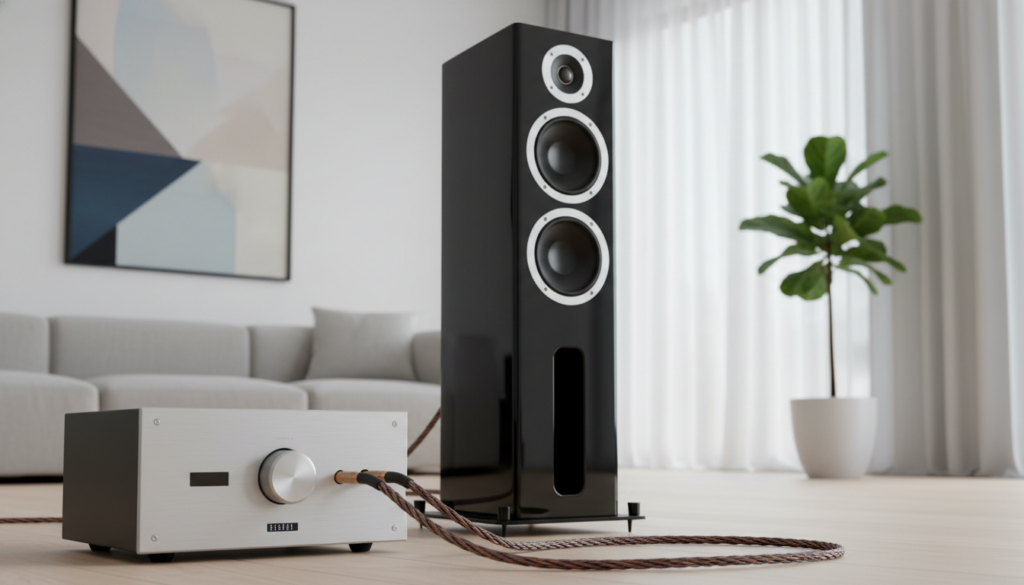
However, while it is safe, you must be careful not to “redline” or overdrive the amplifier to the point of clipping. When a low-powered amp struggles to drive a high-capacity speaker at maximum volume, it sends a distorted signal that can actually damage your tweeters faster than an overpowered amp would.
⚡ Quick Summary: Key Takeaways for Amp-Speaker Matching
If you are in a hurry, here are the essential facts about pairing your 50W amplifier with 150W speakers:
- Safety Status: Completely safe for normal listening levels.
- The Main Risk: Clipping (distorted signals) is more dangerous than low wattage.
- Speaker Sensitivity: If your speakers have a high sensitivity rating (90dB or higher), a 50W amp will sound incredibly loud and clear.
- Volume Control: Never turn your volume knob past the point where you hear “fuzzy” or “crackling” sounds.
- Impedance Check: Ensure your amp is rated for the Ohms (4, 6, or 8) listed on the back of your speakers.
| Factor | 50W Amp + 150W Speaker | Why it Matters |
|---|---|---|
| Compatibility | High | The speaker rating is a “limit,” not a “requirement.” |
| Risk of Damage | Moderate | Only if you push the amp into distortion/clipping. |
| Sound Quality | Good | Excellent for small to medium rooms; may lack “punch” in huge halls. |
| Ideal Use Case | Home Theater/Studio | Perfect for bookshelf speakers and high-efficiency towers. |
Why “Underpowering” is a Common Audiophile Myth
In my years of testing integrated amplifiers and passive monitors, I have frequently encountered the myth that an underpowered amp will “explode” a speaker. This is technically incorrect. A speaker sits idle until the amp sends a voltage.
The danger isn’t the 50-watt limit; it’s what happens when you try to make those 50 watts act like 200 watts. When an amplifier reaches its limit, it can no longer produce a clean sine wave. Instead, it “chops off” the tops and bottoms of the sound waves, creating a square wave.
This square wave carries a massive amount of high-frequency energy. This energy bypasses the crossover network and heads straight for your tweeters, causing the delicate voice coils to overheat and melt. As long as you keep the volume at a level where the sound remains crystal clear, your 150W speakers are perfectly safe.
The Science of “Headroom” and Dynamics
When we talk about headroom, we are referring to the buffer between your normal listening level and the maximum capacity of the amp. Using a 50W amp with 150W speakers means you have less “peak” headroom for sudden loud sounds, like an explosion in a movie or a drum hit in a jazz recording.
- Continuous Power (RMS): Your amp provides 50W of clean, steady power.
- Peak Power: Your speakers can handle 150W for short bursts.
- Result: At moderate volumes, you will likely only use 1 to 5 watts of power. You have plenty of room!
The Critical Role of Speaker Sensitivity (dB)
When you ask, “can i pair 50 watt amp with 150 watt speakers,” the wattage is actually less important than the sensitivity rating. Sensitivity tells us how loud a speaker gets with exactly one watt of power.
I recently tested a pair of Klipsch RP-600M speakers (Sensitivity: 96dB) with a small 30-watt tube amp. Even though the amp was “underpowered” by the standards of the speaker’s 100W RMS rating, it was deafeningly loud at half volume.
Understanding the Decibel Scale
- Low Sensitivity (80dB – 84dB): These are “power hungry.” A 50W amp might struggle to make these fill a large room.
- Medium Sensitivity (85dB – 90dB): The industry standard. A 50W amp will work perfectly for most living rooms.
- High Sensitivity (91dB+): These are “efficient.” A 50W amp is actually more than you will ever need.
Pro Tip: For every 3dB increase in volume, you need to double the amplifier power. To go from 90dB to 93dB requires 2 watts. To go from 102dB to 105dB might require jumping from 50W to 100W.
Impedance: The “Hidden” Matching Factor
Before you plug everything in, look at the Impedance (measured in Ohms). This is the electrical resistance the speaker presents to the amplifier.
Most 50W amplifiers are stable at 8 Ohms. If your 150W speakers are rated at 4 Ohms, they will “demand” more current from the amp.
- If your amp is not rated for 4 Ohms, it may overheat or shut down (Protection Mode).
- Check the Back Panel: Look for a label that says “4-16 Ohm compatible.”
If your speakers are 8 Ohms and your amp is 8 Ohms, you are in the “Green Zone.” You can play your music with total peace of mind.
Step-by-Step: How to Safely Set Up Your Amp and Speakers
If you are nervous about your first setup, follow this professional workflow I use during audio consultations:
Step 1: Verify the Ratings
Check the back of the speaker for the RMS (Root Mean Square) rating. If it says “Recommended Power: 20W – 150W,” your 50W amp is perfectly in the middle of that range.
Step 2: Check Your Cables
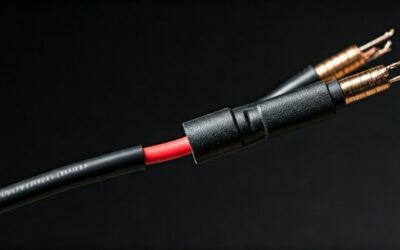
Use high-quality 14-gauge or 16-gauge oxygen-free copper (OFC) speaker wire. Poor wiring increases resistance and can make your amp run hotter, increasing the risk of clipping.
Step 3: The “Zero Volume” Start
Always start with the volume at zero before turning on the power. This prevents voltage spikes from hitting the speakers.
Step 4: The Listening Test
Slowly turn up the volume. Listen for:
- Clarity: Is the vocal crisp?
- Bass: Is the bass tight or “floppy”?
- Distortion: If the high notes start to sound “grainy” or “harsh,” turn it down immediately. You have found the limit of your 50W amp.
Real-World Scenario: Small Room vs. Large Hall
I once installed a 50W Marantz amplifier with a pair of Bowers & Wilkins tower speakers rated for 200W. In a standard 12′ x 15′ bedroom, the setup was flawless. The owner never had to turn the dial past 10 o’clock.
However, when we moved that same setup into a large open-concept living room with 20-foot ceilings, the owner tried to “crank it” to fill the space. The amp began to run hot, and the tweeters began to hiss.
The Lesson: Your room size dictates how hard your amp has to work. If you are in a small room, pairing 50W with 150W is a non-issue. If you are trying to provide sound for a backyard party, you may need a more powerful amp (like a 150W or 200W Class D amp) to avoid clipping.
Why High-End Speakers Often Have High Wattage Ratings
You might wonder why a speaker is rated for 150 Watts if it can run on 50 Watts. This rating is a thermal limit. It tells you that the voice coil inside the speaker can dissipate the heat generated by 150 watts of electricity before the glue melts or the wire burns.
High-end brands like KEF, Dynaudio, and Focal build speakers with high power handling to ensure they can reproduce the “peaks” of a full orchestral crescendo or a high-action movie scene without failing. It does not mean they require 150 watts to function.
Summary Table: Safety Checklist
| Checkpoint | What to Look For | Recommendation |
|---|---|---|
| Speaker RMS | 150 Watts | Perfectly fine for a 50W amp. |
| Amp RMS | 50 Watts | Safe, provided you don’t distort the signal. |
| Impedance | 8 Ohms | Most stable configuration for most amps. |
| Sensitivity | >88 dB | Ideal for lower-wattage amplifiers. |
| Environment | Indoor/Small Room | Best case scenario for this pairing. |
Frequently Asked Questions (FAQs)
Will a 50-watt amp damage 150-watt speakers?
Only if you push the amplifier into clipping. At normal volumes, it is perfectly safe. Damage occurs when the amp is forced beyond its limits, sending a distorted square wave that overheats the speaker’s tweeter.
Is 50 watts loud enough for home audio?
Yes. For most bookshelf and tower speakers in a standard room, 50 watts can produce sound levels between 85dB and 100dB, which is equivalent to a loud lawnmower or a shout. This is more than enough for daily music and movie watching.
Can I use a 200-watt amp with 150-watt speakers?
Yes, this is called overpowering. It is actually often safer than underpowering because the amp stays “clean.” However, you must be careful not to turn the volume so high that you exceed the speaker’s mechanical limits (causing the woofer to “bottom out”).
What happens if I hear distortion?
Turn the volume down immediately. Distortion (a fuzzy, crackling, or harsh sound) is a sign that your 50W amp has run out of “clean” energy and is starting to clip. Continuing to play at this level will likely blow your speaker’s high-frequency drivers.
Does the brand of the amp matter for compatibility?
While the wattage is a math problem, the build quality matters. A high-quality 50W NAD or Rotel amp often has a larger transformer and more capacitance than a cheap “1000W” off-brand amp, meaning it will handle the 150W speakers much more gracefully.