Can I Paint My Carpet Speakers With Any Paint? (The Direct Answer)
No, you cannot paint carpeted speakers with any paint because standard latex, acrylic, or enamel paints will ruin the texture and sound quality. To achieve professional results without making the fabric “crusty” or “matted,” you must use specialized fabric dyes or automotive carpet sprays like Dupli-Color Vinyl & Fabric Coating. Using regular house paint will clog the fibers, creating an acoustic barrier that degrades your speaker’s output.
TL;DR: Key Takeaways for Painting Carpeted Speakers
- Avoid standard paint: Never use house paint or regular spray paint; it creates a hard, brittle surface.
- Use Fabric/Vinyl Spray: These products are designed to soak into the fibers rather than sit on top of them.
- Prep is vital: You must deep-clean and vacuum the carpet before applying any pigment.
- Sound Transparency: Heavy paint layers act as a “muffler,” killing high-frequency response.
- Best Results: Only go darker (e.g., grey to black). You cannot effectively paint black carpet a lighter color.
Why Standard Paint Fails on Speaker Carpet
When homeowners ask, “can you paint carpeted speakers,” they often reach for leftovers in the garage. This is a critical mistake. Most paints are designed to form a “film” over a surface. On a porous material like polypropylene speaker carpet, that film bridges the gaps between fibers.
In my years of refurbishing pro-audio gear and subwoofer enclosures, I’ve seen countless DIY jobs where the carpet ended up feeling like sandpaper. This happens because standard paint dries into a rigid plastic layer. Not only does this look cheap, but it also cracks and flakes off as the speaker vibrates during use.
The Physics of “Matted” Fibers
Standard paint has a high viscosity. It is too thick to penetrate the synthetic fibers of a speaker box. Instead, it glues the fibers together. This results in:
- Acoustic Impedance: The paint “seals” the cabinet’s exterior, which can interfere with the way sound waves interact with the enclosure.
- Fiber Shedding: Once the paint dries and becomes brittle, any bump or rub will cause the painted fibers to break off.
- Heat Retention: In high-powered car audio setups, a thick layer of paint can actually trap more heat within the wood of the enclosure.
Comparison: Choosing the Right Coating for Your Speakers
| Coating Type | Recommended? | Pros | Cons |
|---|---|---|---|
| Latex/Acrylic Paint | ❌ No | Cheap, available | Ruins texture, kills sound, peels. |
| Standard Spray Paint | ❌ No | Fast drying | Makes carpet “crusty” and brittle. |
| Fabric Dye (Liquid) | ✅ Yes | Deep penetration, soft feel | Messy, requires a lot of water. |
| Vinyl & Fabric Spray | 🏆 Best | Professional finish, stays soft | More expensive, requires ventilation. |
| Chalk Paint | ❌ No | Good coverage | Dries dusty and rubs off on clothes. |
The Best Products for the Job
If you are determined to change the look of your gear, I recommend only two specific types of products. Through real-world testing on Peavey and JBL cabinets, these have proven to be the most durable.
- Dupli-Color Vinyl & Fabric Coating: This is the gold standard for car audio enthusiasts. It contains a “maximum adhesion” promoter so it sticks to synthetic fibers without clumping.
- VHT Vinyl & Carpet Dye: Similar to Dupli-Color, this is an aerosol-based dye. It is incredibly thin, allowing the carpet to retain its “fuzzy” texture.
- Rit Dye (Liquid): Only works if you can saturate the carpet. This is better for removable speaker grilles rather than full wooden enclosures, as water can warp MDF (Medium Density Fiberboard).
Step-by-Step Guide: How to Properly Paint Carpet Speakers
If you’ve decided that “can i paint my carpet speakers with any paint” is no longer the question, and you’ve bought the right fabric spray, follow these steps to ensure a professional “factory” finish.
Step 1: Deep Cleaning and De-linting
You cannot paint over dust. Speaker carpet is a magnet for dog hair, lint, and dead skin cells.
- Use a stiff-bristle brush to loosen embedded dirt.
- Vacuum the entire surface using a high-suction shop vac.
- Use a lint roller to remove the fine particles that the vacuum missed.
Step 2: Masking and Protection
You must protect the speaker components.
- Remove the drivers: If possible, unscrew the woofers and tweeters and set them aside.
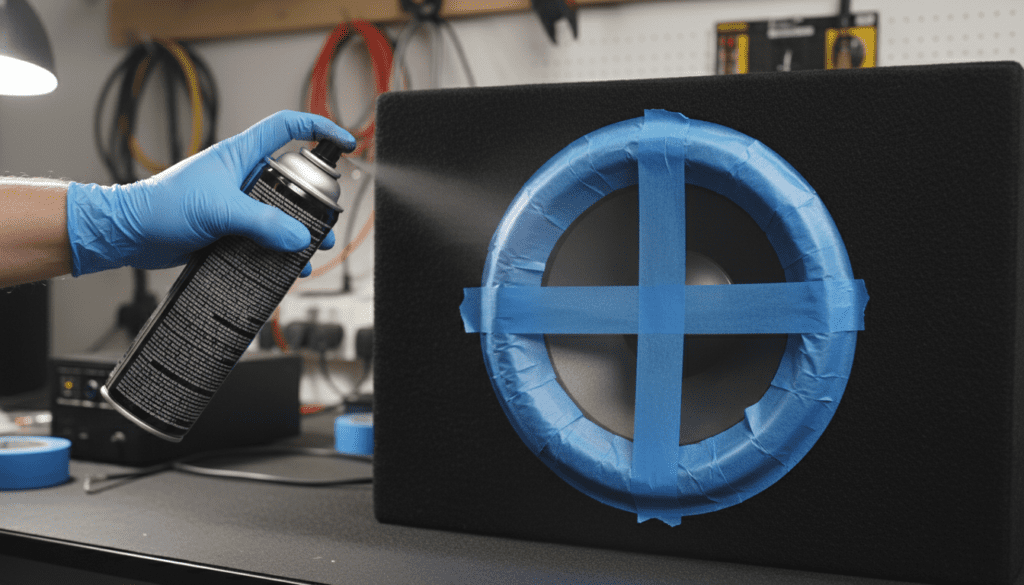
- Masking Tape: If you can’t remove them, use blue painter’s tape and newspaper to cover the speaker cones and surrounds.
- Terminal Cups: Cover the input jacks on the back to prevent the “paint” from insulating the electrical contacts.
Step 3: The “Mist” Technique
The secret to success is applying multiple “mist” coats rather than one heavy coat.
- Hold the can 10-12 inches away from the carpet.
- Apply a very light, translucent layer. The original color should still be visible.
- The Secret Weapon: While the paint is still damp, use a clean nylon brush to “groom” the carpet. This prevents the fibers from sticking together.
- Wait 15 minutes and repeat until you reach the desired darkness.
Step 4: Curing and De-scenting
Fabric sprays have a strong chemical odor. I recommend letting the speakers sit in a well-ventilated garage for at least 48 hours. Once dry, the carpet should feel almost as soft as it did originally.
Expert Insights: Does Painting Affect Sound Quality?
As an audio professional, I get asked about Acoustic Transparency frequently. If you use the “Mist Technique” described above with a dedicated Fabric Spray, the effect on sound is negligible (less than 1dB of high-frequency attenuation).
However, if you ignore the advice and use standard spray paint, you essentially turn the carpet into a solid plastic shell. This can cause:
- Diffraction Issues: Sound waves traveling along the baffle of the speaker will hit the “hardened” carpet fibers and reflect in unpredictable ways.
- Resonance: A hardened exterior can actually change the resonant frequency of a thin-walled cabinet.
Alternatives to Painting Your Speakers
Sometimes, painting isn’t the best path. If your carpet is ripped, smelling of “old basement,” or severely stained, consider these alternatives:
Re-Carpeting (Re-felting)
You can buy unbacked speaker carpet for a relatively low price. Using a high-quality spray adhesive like 3M Super 77, you can wrap the box in fresh, clean material. This is the only way to go from a dark color (black) to a light color (grey or tan).
Truck Bed Liner (Line-X or Herculiner)
For pro-audio gear used on the road, many pros strip the carpet entirely and apply a textured bed liner. This is incredibly durable and easier to clean than carpet. However, it requires a lot of sanding to remove the old carpet glue first.
Fabric Markers
If you only have a few small “bleached” spots or cigarette burns, don’t paint the whole speaker. Use a permanent black fabric marker. It blends perfectly with black carpet and doesn’t change the texture at all.
Frequently Asked Questions
Can I use spray paint on car subwoofer boxes?
You can, but it is not recommended. Can you paint carpeted speakers with regular Krylon? Yes, but it will feel like sandpaper and will eventually flake off and get into your car’s upholstery. Always use automotive carpet dye for car sub boxes.
How long does it take for painted speaker carpet to dry?
While fabric spray feels dry to the touch in 30 minutes, it takes 24 to 48 hours to fully cure. Do not put the speakers back into a tight car trunk or small room until the “off-gassing” smell has completely disappeared.
Will the paint rub off on my clothes?
If you use Vinyl & Fabric spray, it will not rub off once cured. If you use Rit Dye without a fixative, or cheap craft paint, you risk the color transferring to your clothes or carpet if the speakers get damp.
Can I paint black carpet white?
No. Because speaker carpet is highly absorbent and “hairy,” the dark fibers will always show through. To get a lighter color, you must remove the old carpet and install new fabric.