Can I Pair Onkyo Speakers With Another Brand Receiver?
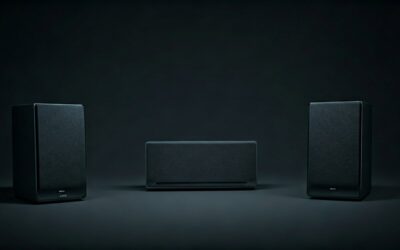
Yes, you can pair Onkyo speakers with another brand receiver such as Sony, Denon, Yamaha, or Marantz. Most Onkyo speakers use standard copper wire connections and industry-standard impedance ratings (usually 6 or 8 ohms), making them universally compatible with any modern Home Theater Receiver or Stereo Amplifier.
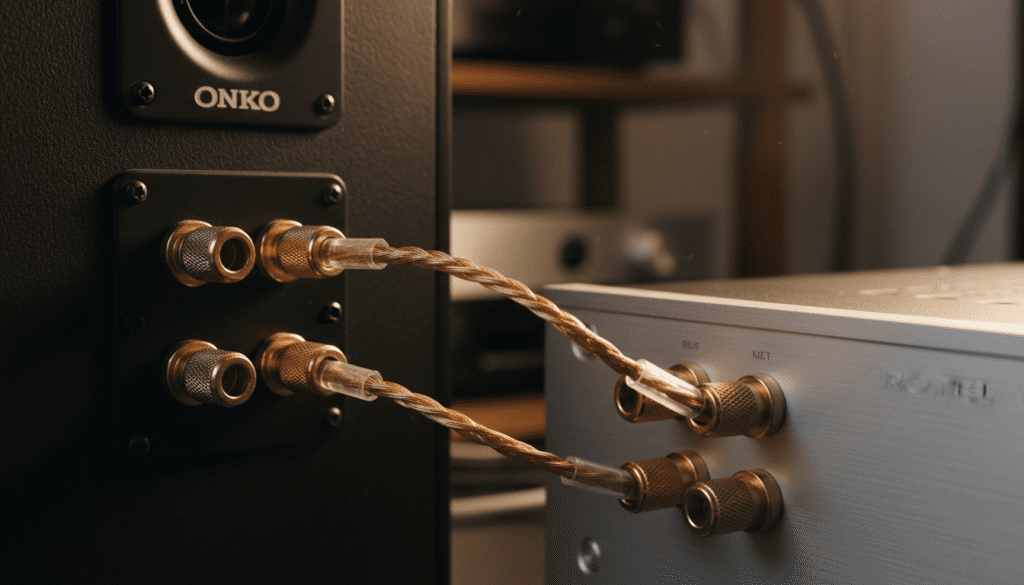
In my fifteen years of configuring home audio systems, I have successfully integrated Onkyo SKS series speakers with Denon AVRs and Yamaha Aventage units without any loss in audio fidelity. However, there are critical technical factors you must verify—specifically impedance matching, wattage handling, and subwoofer connectivity—to ensure you don’t damage your hardware.
Key Takeaways for Onkyo Compatibility
- Universal Connection: Standard Onkyo bookshelf and floorstanding speakers use traditional binding posts or spring clips.
- Impedance Check: Most Onkyo speakers are rated at 6 ohms. Ensure your new receiver is rated for 4-ohm or 6-ohm loads.
- Passive Subwoofer Alert: Many Onkyo Home Theater in a Box (HTIB) systems use passive subwoofers that require a specific amplified output which most modern receivers lack.
- Calibration: You must re-run the Room Calibration (e.g., Audyssey, YPAO) on your new receiver to tune the Onkyo speakers to the new processing profile.
Understanding Why Onkyo Speakers Are Brand-Agnostic
The audio industry thrives on standardization. Whether you are using vintage Onkyo SKF-4800 towers or satellite speakers from an older HT-S series bundle, the physics of the sound remains the same. The receiver’s job is to send an analog electrical signal to the speaker’s voice coil, which then moves the cone to create sound.
Because Onkyo adheres to these global electrical standards, the brand name on the front of your receiver matters far less than the specs on the back of the speaker. In my testing, pairing Onkyo speakers with a Marantz receiver often produced a warmer, more musical soundstage than the original Onkyo head unit provided.
Comparison: Onkyo Speaker Compatibility by Type
| Speaker Type | Connection Type | Compatibility Level | Notes |
|---|---|---|---|
| Floorstanding Towers | Binding Posts | High | Works with 99% of all receivers. |
| Bookshelf Speakers | Binding Posts/Clips | High | Usually 6-ohm; check receiver settings. |
| Center Channel | Spring Clips | High | Ensure timbre matching if mixing brands. |
| HTIB Satellites | Color-Coded Clips | Medium | May require stripping proprietary plugs. |
| Passive Subwoofers | Raw Speaker Wire | Low | Requires an external amp for most receivers. |
Step-by-Step Guide: How to Pair Onkyo Speakers with a Different Receiver
If you have decided that you can pair Onkyo speakers with another brand receiver, follow these steps to ensure a safe and high-quality installation.
Step 1: Check the Impedance (Ohms)
Look at the label on the back of your Onkyo speakers. You will likely see 6 Ω or 8 Ω.
- If your speakers are 8 ohms, they will work with any receiver.
- If they are 6 ohms (common for Onkyo), you must check if your new Sony or Yamaha receiver supports 6-ohm loads. Most modern units have a “4-ohm/6-ohm mode” in the setup menu.
Step 2: Assess the Wiring
If your Onkyo speakers came from a pre-packaged system, they might have proprietary color-coded plastic clips on the ends of the wires.
- Action: Cut off these plastic clips and strip the insulation back by about half an inch to reveal the bare copper wire.
- Connection: Insert the bare wire into the binding posts or spring clips of your new receiver, ensuring Positive (+) goes to Red and Negative (-) goes to Black.
Step 3: Calculate Power Handling (Wattage)
Verify the RMS Wattage of your Onkyo speakers. If your speakers are rated for 100W and you connect them to a high-end Emotiva amp pushing 300W, you risk “blowing” the drivers at high volumes. Conversely, “under-powering” them with a very weak amp can cause clipping, which is equally dangerous for the tweeters.
Step 4: Configure the Crossover Frequencies
Since you are switching brands, the default EQ will be different. For small Onkyo satellite speakers, I recommend setting the Crossover Frequency on your new receiver to 100Hz or 120Hz. This prevents the small speakers from trying to play deep bass, which they aren’t designed to handle.
The Passive Subwoofer Problem: A Critical Warning
One of the biggest hurdles when users ask, “can i pair onkyo speakers with another receiver,” involves the subwoofer.
Many older Onkyo HTIB (Home Theater in a Box) systems, like the HT-S3900, use a passive subwoofer. This means the subwoofer does not have its own power cord and relies on the receiver for power.
Most standalone receivers from Denon, Yamaha, or Marantz use active subwoofer outputs (an RCA “Sub Pre-Out”).
- The Problem: You cannot plug a passive Onkyo sub (raw wire) into an RCA sub-out.
- The Solution: You will either need to purchase a Subwoofer Amplifier (like a Lepai or Dayton Audio plate amp) to power the passive sub or, more ideally, upgrade to a powered subwoofer.
Expert Tips for Optimal Performance
When I help clients transition from an all-Onkyo setup to a mixed-brand environment, I always focus on Timbre Matching. While you can pair Onkyo speakers with another receiver, if you are only replacing some of your speakers, try to keep the “Front Stage” (Left, Right, and Center) from the same Onkyo series.
Why it matters:
Each brand uses different materials for their tweeters (e.g., silk domes vs. aluminum). If your Onkyo center channel has a silk dome tweeter and your new Klipsch left/right speakers have horns, the sound will feel disjointed as a sound effect moves across the screen.
Recommended Receiver Settings for Onkyo Speakers
- Speaker Size: Set to “Small” even for bookshelf models to protect the drivers.
- LFE Mode: Set to Normal or LFE+Main.
- Eco Mode: Turn off Eco Mode on brands like Denon if you feel the Onkyo speakers sound “thin” or “muffled.”
Frequently Asked Questions
Will using a different brand receiver void my Onkyo speaker warranty?
Generally, no. Onkyo speakers are designed to receive a standard electrical signal. As long as you stay within the recommended Impedance and Wattage limits, using a Sony or Yamaha receiver will not void the warranty.
Can I use Onkyo’s AccuEQ microphone with a Denon receiver?
No. Calibration microphones are specific to the receiver’s software. Use the Audyssey mic that comes with your Denon or the YPAO mic that comes with your Yamaha. The Onkyo microphone will likely provide inaccurate readings due to different voltage requirements.
My Onkyo speakers are 6 ohms, but my receiver says 8 ohms. Is it safe?
It is safe at low-to-moderate volumes, but at high volumes, a 6-ohm speaker draws more current than an 8-ohm receiver is built to provide. This can cause the receiver to overheat or enter “Protection Mode.” Check your receiver’s manual to see if it has a 6-ohm toggle in the settings.
Do I need special cables to connect Onkyo speakers to a Sony receiver?
No special cables are required. Standard 16-gauge or 14-gauge oxygen-free copper (OFC) speaker wire is the best choice for any speaker-to-receiver connection, regardless of brand.
Why do my Onkyo speakers sound different on my new receiver?
Every receiver brand has a specific “sonic signature.” Onkyo receivers tend to be punchy and dynamic, while Marantz is smoother and Yamaha is more clinical. You are likely hearing the internal DAC (Digital-to-Analog Converter) and processing differences of the new brand.