Can I Replace the Speakers in a Mini?
Yes, you can replace the speakers in a Mini Cooper, and it is one of the most effective ways to transform your driving experience. Whether you drive a classic R53, a popular R56, or the modern F56 generation, the factory speakers—especially the base non-Harman Kardon versions—often use low-quality paper cones that degrade over time. Upgrading to aftermarket speakers is a straightforward DIY project that requires only basic tools, significantly improving clarity, bass response, and high-frequency detail.
Key Takeaways: Quick Upgrade Summary
- Difficulty: Moderate (2/5). Requires basic tool knowledge and patience with plastic clips.
- Time Required: 1 to 3 hours depending on the number of speakers replaced.
- Essential Tools: Torx T20/T30 drivers, plastic trim removal tools, and wire adapters.
- Compatibility: Most Minis use 4-inch or 6.5-inch drivers in the doors and 6×9-inch speakers in the rear.
- Sound Gain: Replacing the factory paper cones with polypropylene or silk-dome tweeters provides a massive leap in audio fidelity.
Understanding Your Mini’s Audio Layout
Before you purchase new hardware, you must identify which audio package your vehicle currently has. Mini Coopers generally come with one of two setups: the Base Audio or the Harman Kardon (HK) Premium System.
The Base Audio system typically lacks a dedicated external amplifier and uses the head unit to power the speakers directly. These systems are the easiest to upgrade because they use standard 4-ohm impedance speakers.
The Harman Kardon system is more complex. It utilizes a digital signal processor (DSP) and an external amplifier. If you are asking “can I replace the speakers in a Mini” with an HK system, the answer is still yes, but you must be careful with impedance matching. HK speakers often run at 2-ohms, and installing a 4-ohm speaker may result in significantly lower volume levels.
Speaker Sizes by Generation
| Mini Generation | Front Door Size | Rear Side Size | Tweeter Location |
|---|---|---|---|
| R50/R53 (2002-2006) | 6.5-inch | 6×9-inch | A-Pillar or Upper Door |
| R56/R57 (2007-2013) | 6.5-inch & 4-inch | 6×9-inch | Upper Door Panel |
| F55/F56 (2014-Present) | 4-inch Midrange | 6.5-inch (Underseat) | A-Pillar (if equipped) |
Required Tools and Materials
To ensure you don’t damage your interior panels, I highly recommend investing in a dedicated nylon trim removal kit. Metal screwdrivers will scratch the plastic and chip the paint.
- Torx Bit Set: Minis are built with T20, T25, and T30 screws throughout the cabin.
- Trim Removal Tools: Essential for popping the door panel clips without snapping them.
- Speaker Adapters: Aftermarket speakers rarely line up with the factory three-hole mounting pattern.
- Wiring Harnesses: Brands like Metra or Crutchfield offer “plug-and-play” adapters so you don’t have to cut the factory wires.
- Sound Deadening: Applying a small amount of Butyl rubber matting (like Dynamat or Noico) inside the door cavity reduces rattles.
Step-by-Step Guide: Replacing Front Door Speakers
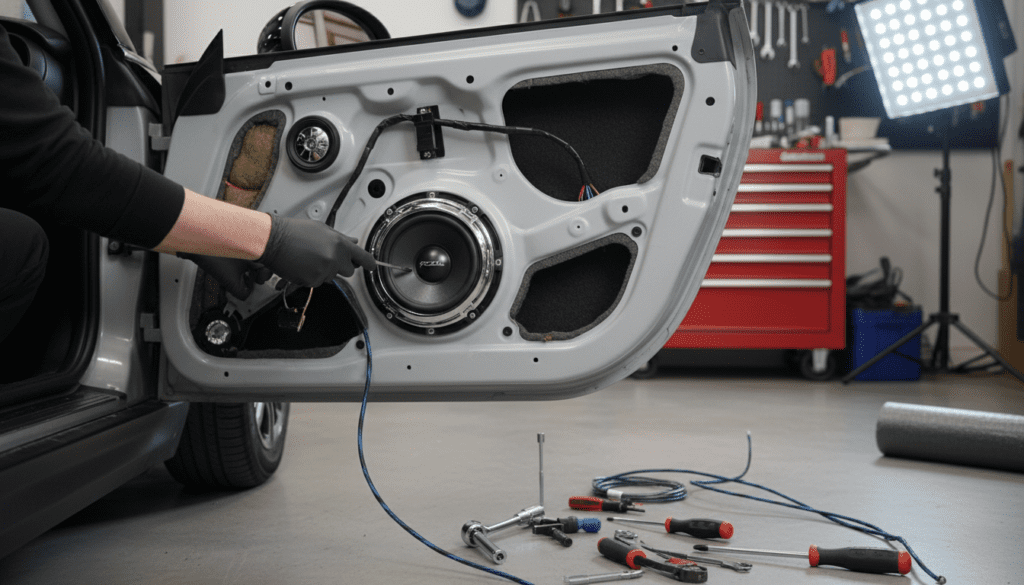
Replacing the door speakers is the most common entry point for owners. In my experience, the biggest challenge isn’t the wiring; it’s the hidden screws behind the door reflectors and handles.
Step 1: Remove the Door Panel
Start by locating the hidden screws. On an R56 Mini, there is a large screw behind the door release handle and often one hidden behind the plastic reflector at the bottom of the door. Use your Torx T20 to remove these.
Next, use your trim tool to gently pry the edges of the panel away from the metal door skin. Work your way around the bottom and sides. You will hear loud “pops”—these are the plastic friction clips releasing. If a clip breaks, don’t worry; they are cheap and easily replaced.
Step 2: Disconnect Cables and Wiring
Once the panel is loose, do not pull it away completely. Reach behind the panel to disconnect the bowden cable (the wire that opens the door) and the electrical plugs for the windows and puddle lights. Set the door panel aside in a safe, clean area to avoid scratching the leather or fabric.
Step 3: Swap the Speakers
Unscrew the factory speaker using your Torx driver. Unplug the wiring harness. If you have a plug-and-play adapter, click it into the factory plug and connect the terminals to your new speaker (Wide terminal is positive, narrow is negative).
If your new speaker doesn’t fit the factory holes, install your mounting bracket first. In my many installations, I’ve found that using Focal or Bavsound speakers often eliminates the need for brackets as they are designed specifically for European car fitments.
Step 4: Test and Reassemble
Before snapping the panel back on, turn on your radio. Balance the sound to the door you just worked on to ensure the speaker is firing correctly. Once confirmed, reconnect the door handle cable and press the panel firmly back onto the door until all clips click into place.
Upgrading the Rear Speakers (6×9 Units)
In older Mini models (R50-R57), the rear speakers are 6×9-inch oval units. These provide the majority of the “thump” or bass in the system.
However, accessing them is significantly more difficult than the doors. You often have to remove the rear seat cushions and the entire side trim panels.
Pro Tip: If you are asking “can I replace the speakers in a Mini” on a budget, focus on the front doors first. The rear speakers in a Mini are mostly for “rear fill” and don’t contribute as much to the driver’s soundstage as the front components do.
The Importance of Sound Deadening
Mini Coopers are notorious for “road noise” due to their stiff suspension and run-flat tires. When you have the door panels off, I strongly suggest applying Sound Deadening Mats.
- Why? It lowers the floor noise of the cabin and stops the thin metal door skins from vibrating.
- Where? Apply 2-3 sheets to the flat metal surfaces inside the door cavity.
- Result: Your 4-inch or 6.5-inch speakers will sound much “punchier” because the energy is being pushed into the cabin rather than vibrating the door.
Expert Advice: Choosing the Right Brand
When you replace the speakers in a Mini, not all aftermarket brands are created equal. Because Minis have shallow door cavities, “deep” speakers with massive magnets might hit the window glass when it’s rolled down.
- Bavsound: The gold standard for “Plug & Play.” They are specifically engineered for Mini/BMW electronics.
- Focal (Integration Series): These offer incredible high-end detail and usually fit the shallow depth requirements of the F56 models.
- Hertz or Audison: Excellent for those who plan on adding an external amplifier later. They handle high power exceptionally well.
- Kicker: A great budget-friendly option if you just need to replace a blown factory speaker without spending a fortune.
Common Pitfalls to Avoid
During my years of modifying Mini interiors, I have seen several recurring mistakes that can ruin a weekend project:
- Ignoring the Window Clearance: Always roll the window down after mounting the speaker (but before putting the panel back) to ensure the window track doesn’t hit the back of the speaker magnet.
- Forgetting the Crossover: If you buy component speakers (separate tweeter and woofer), you must use the included crossover box. Wiring a tweeter directly to a full-range signal will blow it instantly.
- Phase Issues: If your new speakers sound “hollow” or have less bass than the factory ones, you likely swapped the positive and negative wires on one side. This causes “phase cancellation.”
Frequently Asked Questions
Can I replace the speakers in a Mini with the Harman Kardon system?
Yes, but you must use speakers that match the factory impedance (usually 2-ohm). Using standard 4-ohm speakers will result in a significant drop in volume unless you also replace the factory amplifier.
Do I need to replace the head unit to get better sound?
Not necessarily. While the factory head unit isn’t incredibly powerful, modern high-efficiency speakers can sound 50% better even on factory power. However, for the best results in newer Minis, a DSP amplifier is a better upgrade than a new head unit.
What is the best speaker size for a Mini Cooper door?
For the R50-R56 models, a 6.5-inch slim-mount speaker is the standard. For the newer F56 models, the door uses a 4-inch midrange, while the woofers are located under the front seats.
Will replacing my speakers void my warranty?
In most regions (including the US under the Magnuson-Moss Warranty Act), replacing speakers does not void your vehicle’s warranty unless the installation itself causes damage to the electrical system. Always use plug-and-play harnesses to avoid cutting factory wires.