Can I Use Bose Outdoor Speakers Indoors? The Definitive Guide
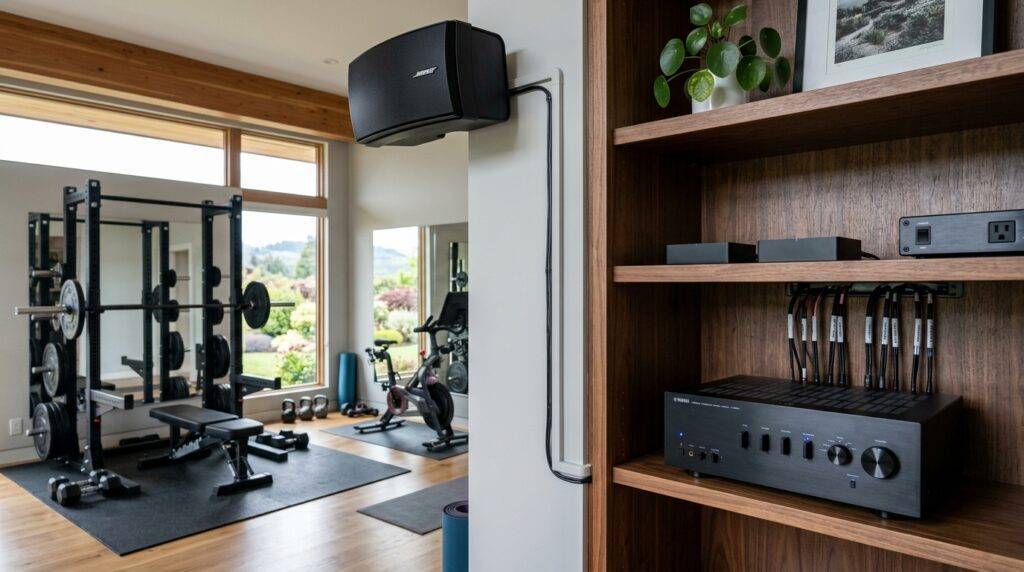
Yes, you can use Bose outdoor speakers indoors safely and effectively. While engineered to withstand harsh elements, models like the Bose 251 Environmental Speakers or FreeSpace 51 function as high-quality passive speakers that can be connected to any compatible indoor amplifier or receiver. Using them inside is often an excellent solution for large, open-concept spaces, home gyms, or workshops where durability and wide sound dispersion are required.
Key Takeaways: Bose Outdoor Speakers for Indoor Use
- Compatibility: They work with any standard home theater receiver or the Bose Music Amplifier.
- Best Use Cases: Ideal for high-humidity areas (indoor pools), garages, or large industrial-style lofts.
- Sound Profile: Outdoor speakers are tuned for “open air,” meaning they might sound slightly “bass-heavy” when placed against indoor walls.
- Installation: Requires 14-gauge or 16-gauge speaker wire and secure mounting into wall studs.
- Durability: These speakers are overkill for a standard living room but offer unmatched longevity in “rough” indoor environments.
Why Use Bose Outdoor Speakers Inside Your Home?
In my fifteen years of audio-visual consulting, I have seen many homeowners transition their Bose 251 or SE series speakers from the patio to the interior. The primary reason is often environmental resilience. Standard indoor speakers use paper cones or silk tweeters that can degrade in high-humidity environments like indoor spas, pool houses, or even poorly ventilated basements.
Bose outdoor speakers utilize mineral-filled polypropylene cabinets and highly durable composite drivers. This makes them virtually “bulletproof” against the moisture and dust often found in workshops or home gyms. Furthermore, the Direct/Reflecting speaker technology used by Bose provides a much wider soundstage than traditional bookshelf speakers, which is perfect for filling large, vaulted rooms with consistent audio.
Technical Comparison: Indoor vs. Outdoor Engineering
Understanding the engineering differences helps you optimize the sound when moving these units inside.
| Feature | Bose Indoor Speakers (e.g., 301-V) | Bose Outdoor Speakers (e.g., 251) |
|---|---|---|
| Enclosure Material | Wood/MDF Veneer | Glass-filled Polypropylene |
| Driver Protection | Cloth/Metal Grille | Powder-coated Aluminum Grille |
| Acoustic Tuning | Optimized for room reflections | Optimized for open-air environments |
| Mounting | Shelf or Stand | Integrated Zinc-coated Brackets |
| Moisture Resistance | Low (Keep Dry) | High (Salt, Fog, Snow, Rain) |
| Bass Response | Tight and controlled | Enhanced to compensate for lack of walls |
Step-by-Step: How to Set Up Bose Outdoor Speakers Indoors
Setting up these speakers indoors is a straightforward process, but it requires attention to impedance and mounting security. Follow these steps to ensure a professional-grade installation.
Step 1: Evaluate Your Power Source
Most Bose outdoor speakers are “passive,” meaning they do not plug into a wall outlet. They require an amplifier. We recommend the Bose Music Amplifier for seamless Wi-Fi and Bluetooth integration.
- Check the Ohms: Ensure your receiver supports 4 to 8-ohm loads.
- Power Rating: Aim for an amplifier that provides 10 to 100 watts per channel.
Step 2: Choose the Correct Speaker Wire
Since you are likely running wire through walls or along baseboards, the quality of the cable matters.
- For runs under 50 feet: Use 16-gauge CL3-rated wire.
- For runs over 50 feet: Use 14-gauge wire to prevent signal loss.
- Expert Tip: Always use CL3-rated wire if you are running the cable behind drywall to comply with local fire codes.
Step 3: Secure Mounting and Positioning
Outdoor speakers like the Bose 251 are heavier than standard indoor speakers.
- Locate Studs: Use a stud finder to locate the 2×4 wooden studs in your wall. Never hang these speakers into drywall alone.
- Bracket Installation: Attach the Bose-supplied mounting brackets vertically or horizontally using the provided lag bolts.
- Angle for Performance: Point the speakers toward the primary listening area. Because Bose uses a multi-chambered enclosure, you don’t need to worry as much about “dead zones” as you would with other brands.
Step 4: Connecting to the Receiver
Strip approximately 1/2 inch of insulation from the wire ends.
- Connect the Red (+) wire to the red terminal on the speaker and the receiver.
- Connect the Black (-) wire to the black terminal on both ends.
- Double-check polarity: If you swap these, the speakers will be “out of phase,” resulting in a total loss of bass.
Optimizing Sound Quality for Indoor Environments
The biggest challenge when using Bose outdoor speakers indoors is the “boundary effect.” In an open yard, sound waves travel forever. In a living room, they hit walls and bounce back.
Managing the Bass
Outdoor speakers are often tuned with a slight “bass hump” to compensate for the lack of acoustic reinforcement outdoors. When placed in a corner indoors, this can result in boomy or muddy sound.
- Solution: Use the Equalizer (EQ) settings on your receiver. Drop the 100Hz – 250Hz range by 2-3 decibels to clean up the low end.
Achieving the “Sweet Spot”
Bose’s Articulated Array design places drivers at precise angles. If you are mounting them high on a wall (common in home gyms), tilt them downward significantly. This ensures the high-frequency energy reaches your ears rather than reflecting off the ceiling.
Recommended Bose Models for Indoor/Outdoor Crossover
Bose 251 Environmental Speakers
These are the “gold standard” for high-output audio. I personally use these in my workshop. The 5.25-inch woofer provides enough punch that you likely won’t need a separate subwoofer indoors.
Bose FreeSpace 51
These are “in-ground” speakers often seen in gardens. While they look like green mushrooms, they provide 360-degree sound. They are incredible for large, circular indoor rooms or museum-style lofts where you want the speaker to be floor-standing but discreet.
Bose 151 SE
If you have a smaller space like a bathroom or a small home office, the 151 SE is the better choice. They have a smaller footprint and can be mounted horizontally, fitting perfectly above door frames or tucked into corners.
Common Myths About Using Outdoor Speakers Indoors
Myth 1: They will blow out my indoor receiver.
Fact: As long as the impedance (ohms) matches, your receiver doesn’t know the difference between an indoor and outdoor speaker. Most Bose outdoor units are compatible with standard 6-ohm or 8-ohm outputs.
Myth 2: They sound “thin” indoors.
Fact: Usually, the opposite is true. Because of wall reflections, they often sound fuller and louder than they do outside.
Myth 3: The materials are toxic for indoor use.
Fact: The plastics and composites used by Bose are inert and perfectly safe for indoor air quality. They do not off-gas or require special ventilation.
Maintenance and Care for Long-Term Indoor Use
Even though they are built for rain and snow, indoor use presents different challenges—primarily dust and cooking grease (if used in a kitchen).
- Grille Cleaning: Use a vacuum with a brush attachment to clear the powder-coated aluminum grilles.
- Cabinet Care: Use a damp microfiber cloth with a mild dish soap solution. Avoid harsh chemical cleaners which can degrade the UV-resistant coating.
- Spider/Insect Check: If your speakers were previously used outside, ensure you check the bass ports for nests or debris before bringing them inside and powering them up.
FAQ: Frequently Asked Questions
Can I mix Bose outdoor speakers with an indoor surround sound system?
Yes, you can use Bose outdoor speakers as the “surround” or “rear” channels in a 5.1 or 7.1 setup. Their wide dispersion makes them excellent for ambient sound effects. However, they may not match the “timbre” of your front center channel speaker, so some manual calibration on your receiver is recommended.
Do I need a special amplifier to use Bose 251 speakers indoors?
No, any standard high-quality amplifier will work. However, the Bose Music Amplifier is highly recommended because it includes custom EQ presets specifically designed for the 251 Environmental Speakers, which optimizes their performance automatically.
Can I paint my Bose outdoor speakers to match my indoor walls?
Yes, Bose outdoor speakers are paintable. Use a high-quality spray paint intended for plastics. Crucial: You must remove the grilles and mask off the actual speaker drivers (the “cones”) and the ports. Never paint the drivers themselves, as this will ruin the acoustic properties of the material.
Is the sound quality worse than Bose indoor-specific speakers?
“Worse” is subjective. Indoor-specific speakers like the Bose 301 offer more refined imaging for critical music listening. Outdoor speakers provide more ruggedness and a wider area of coverage. If you are a critical audiophile listening to jazz, go with indoor speakers. If you want a party atmosphere or music for a high-activity area, the outdoor speakers are often better.