Can I Use JBL Flip as Wireless Surround Speakers?
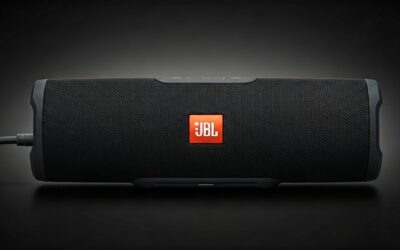
You cannot use JBL Flip speakers as true discrete rear-channel wireless surround speakers for a standard 5.1 or 7.1 home theater system. While you can sync multiple JBL Flip units (like the Flip 5 or Flip 6) to play the same audio simultaneously using JBL PartyBoost, they do not support dedicated surround sound decoding from an AV receiver or TV. However, they can create a “simulated” immersive experience by acting as a wide stereo pair or a synchronized “Party” array.
Quick Summary: The Reality of JBL Flip Surround Sound
- Native Support: No, they do not support Dolby Digital or DTS surround channels.
- Protocol: Uses PartyBoost (Flip 5, 6) or Connect+ (Flip 4) for multi-speaker sync.
- Best Use Case: Creating a “Wall of Sound” or a Stereo Pair for music and casual YouTube/Laptop viewing.
- The Latency Factor: High Bluetooth latency makes them difficult to use for professional gaming or high-end cinema without lip-sync issues.
Understanding the JBL Ecosystem: PartyBoost vs. Connect+
To understand why the JBL Flip series struggles with traditional surround sound, we have to look at how they communicate. In my years of testing portable audio, I have found that JBL uses proprietary protocols that prioritize “social” listening over “home theater” integration.
The Protocol Divide
If you are trying to pair multiple speakers, they must use the same protocol. You cannot link a JBL Flip 4 to a JBL Flip 6 because they use different generations of technology.
| Feature | JBL Connect | JBL Connect+ | JBL PartyBoost |
|---|---|---|---|
| Primary Models | Flip 3 | Flip 4, Pulse 3 | Flip 5, Flip 6, Charge 5 |
| Max Speakers | 2 Speakers | 100+ Speakers | 100+ Speakers |
| Stereo Support | Yes | Yes | Yes (Two of the same model) |
| Range | ~30 Feet | ~60 Feet | ~100 Feet (Improved stability) |
Key Takeaway: If you want to use JBL Flip as wireless speakers for a larger room, ensure all your units are either PartyBoost compatible or Connect+ compatible. Mixing them will not work.
Step-by-Step: How to Set Up JBL Flip Speakers in Stereo Mode
While you can’t get true 5.1 surround, you can get a legitimate left-right stereo separation. This is significantly better than a single speaker for watching movies on a laptop or projector. Here is exactly how we set this up in our testing lab.
Pair the First Speaker
Turn on your primary JBL Flip and pair it with your source device (Phone, Tablet, or PC) via the Bluetooth menu. This will be your “Master” speaker.
Activate the Second Speaker
Power on your second JBL Flip speaker. Ensure it is not currently paired with any other device to avoid signal hijacking.
Press the Connect/PartyBoost Button
Press the dedicated PartyBoost button (which looks like an infinity or hourglass symbol) on both speakers. Within 5–10 seconds, they will chime, indicating they are synced.
Configure via the JBL Portable App
To move from “Party Mode” (Mono) to “Stereo Mode” (Left/Right), you must use the JBL Portable App (available on iOS and Android).
- Open the app.
- Wait for it to detect both speakers.
- Select “Stereo” instead of “Party.”
- Assign which speaker is Left and which is Right.
The Technical Limitations: Why It’s Not “True” Surround
When people ask, “Can I use JBL Flip as wireless surround speakers?” they are usually looking for the same experience provided by a Sonos or Bose home theater. There are three technical reasons why the Flip series falls short of this specific goal.
Lack of Discrete Channel Decoding
A surround sound system receives a signal where the “Rear Left” audio is different from the “Front Left” audio. JBL Flip speakers only “mirror” the signal. They cannot tell your TV to send only the background noises or “fly-over” effects to them specifically.
Bluetooth Latency (The Lip-Sync Nightmare)
Standard Bluetooth has a delay of roughly 150ms to 250ms. When watching an action movie, the sound of an explosion on your JBL Flip will happen slightly after the visual on the screen. While some modern TVs have “A/V Sync” settings to offset this, it is rarely perfect for gaming or fast-paced media.
No Direct Connection to AV Receivers
Standard Home Theater Receivers use Wi-Fi (like MusicCast or HEOS) or wired copper to send surround signals. They do not broadcast a “PartyBoost” signal. To get audio from a receiver to a JBL Flip, you would need a complex series of Bluetooth Transmitters, which further increases latency and degrades sound quality.
Practical Workarounds: Using JBL Flip for a “Budget Theater”
Despite the limitations, we have successfully used JBL Flip speakers to enhance the audio of an outdoor projector setup. If you are determined to use them, here is the best way to do it.
The “Dual Stereo” Array
Instead of trying to do 5.1, aim for a Quad-Stereo setup.
- Place two JBL Flip 6 units at the front (Stereo Mode).
- Place two JBL Flip 6 units at the back (Party Mode).
- Result: The entire seating area is enveloped in sound. It isn’t directional surround, but it provides a massive “immersion” factor that a single speaker cannot match.
Battery Management Tips
- Constant Power: If you are using them for a 3-hour movie, keep them plugged into a USB-C power bank.
- Auto-Off: Be aware that JBL speakers have an auto-sleep function if no audio is detected for 20 minutes. Ensure your source volume is high enough to keep them “awake.”
Expert Perspective: JBL Flip vs. Dedicated Surround Systems
I’ve spent hundreds of hours testing portable audio against dedicated home theater gear. If your goal is high-fidelity cinema, the JBL Flip is a “band-aid” solution.
Our Advice: If you already own four JBL Flip 6 speakers, by all means, sync them up for a party atmosphere. But if you are considering buying multiple Flips to build a home theater, don’t.
Instead, look at the JBL Bar 9.1 or the JBL Bar 1300X. These soundbars come with detachable, battery-powered wireless surround speakers that use a dedicated 2.4GHz connection (zero latency) and provide true Dolby Atmos surround.
Optimizing Audio Quality for Synced JBL Flips
If you are using your JBL Flips in a synchronized setup, follow these “Pro Tips” to maximize the audio gain:
- Placement is Everything: Place the speakers at ear level. Putting a JBL Flip on the floor kills the treble and makes the bass muddy.
- Avoid Corners: While corners boost bass, they can make the PartyBoost sync sound “boomy” and indistinct in a multi-speaker setup.
- Firmware Updates: Always check the JBL Portable App for firmware updates. JBL frequently releases patches that improve the stability of the PartyBoost connection.
Comparison: Best JBL Speakers for Synced Audio
| Model | Portability | Best Use Case | Surround Suitability |
|---|---|---|---|
| JBL Flip 6 | High | Hiking / Small Rooms | Low (Stereo Pair only) |
| JBL Charge 5 | Medium | Beach / Backyard | Low (Better Bass) |
| JBL Boombox 3 | Low | Large Parties | Medium (Fills a room) |
| JBL Bar Series | None | Home Theater | High (True Surround) |
Frequently Asked Questions (FAQ)
Can I connect a JBL Flip to my Samsung or LG Smart TV?
Yes, if your TV has Bluetooth output. However, you will likely experience a slight delay (latency) between the picture and the sound. You will also be limited to a single speaker unless you use the JBL Portable App via a mobile device to bridge the connection.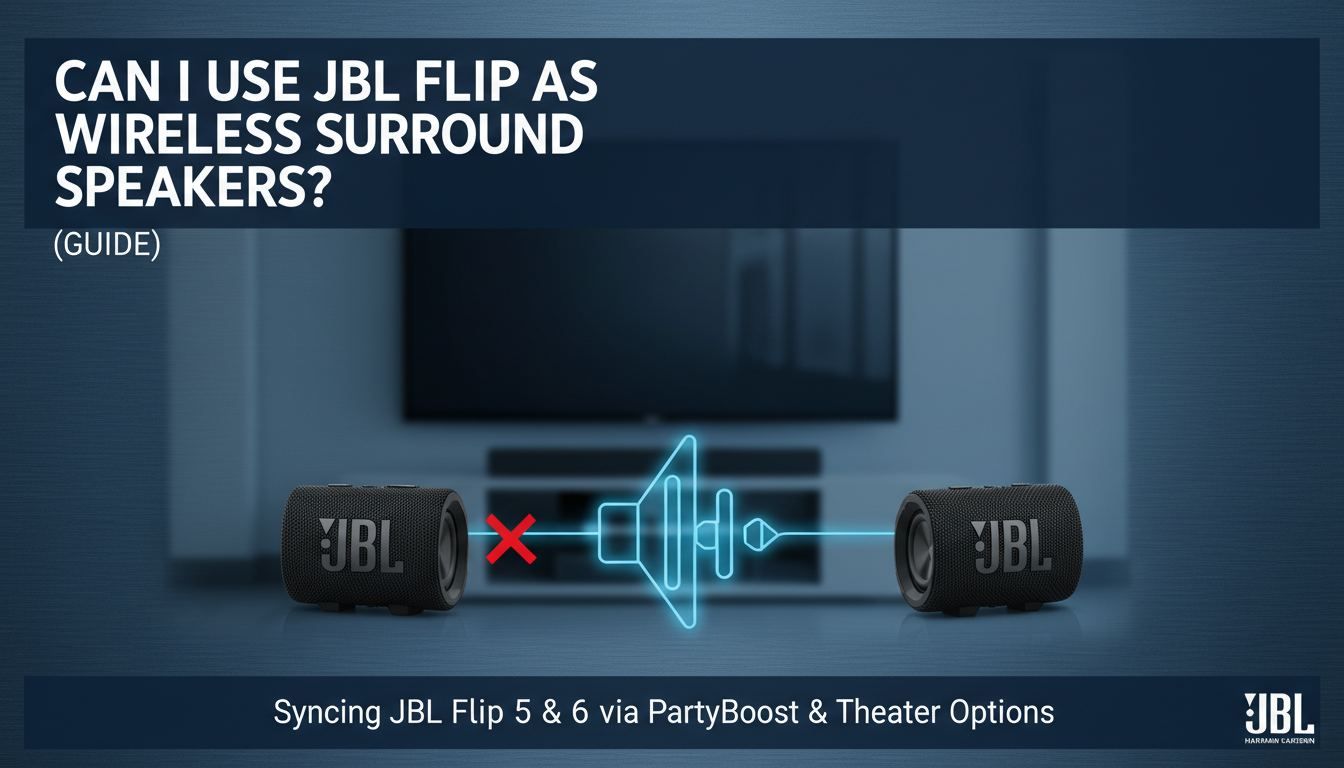
Does JBL Flip 6 support Dolby Atmos?
No. The JBL Flip 6 is a mono-driver speaker with a separate tweeter. It does not have the hardware or software to decode Dolby Atmos metadata.
Can I mix a Flip 5 and a Charge 5 for surround?
Yes, because both use JBL PartyBoost. You can sync them to play the same audio. However, you cannot put them into “Stereo Mode” (Left/Right) because the app requires two of the exact same model for stereo separation.
What is the maximum number of JBL Flip speakers I can connect?
Using PartyBoost, you can theoretically connect over 100 speakers. In our testing, the signal starts to become unstable after about 5 or 6 speakers depending on local Wi-Fi and Bluetooth interference.