Understanding Custom Audio Integration: Can Speakers Be Installed on Car Seat Frames?
Yes, can speakers be installed on car seat frames or headrests is a common question for audiophiles, and the answer is yes, they can. However, the installation process requires specific technical knowledge regarding near-field audio, upholstery removal, and, most importantly, vehicle safety systems like side-impact airbags.
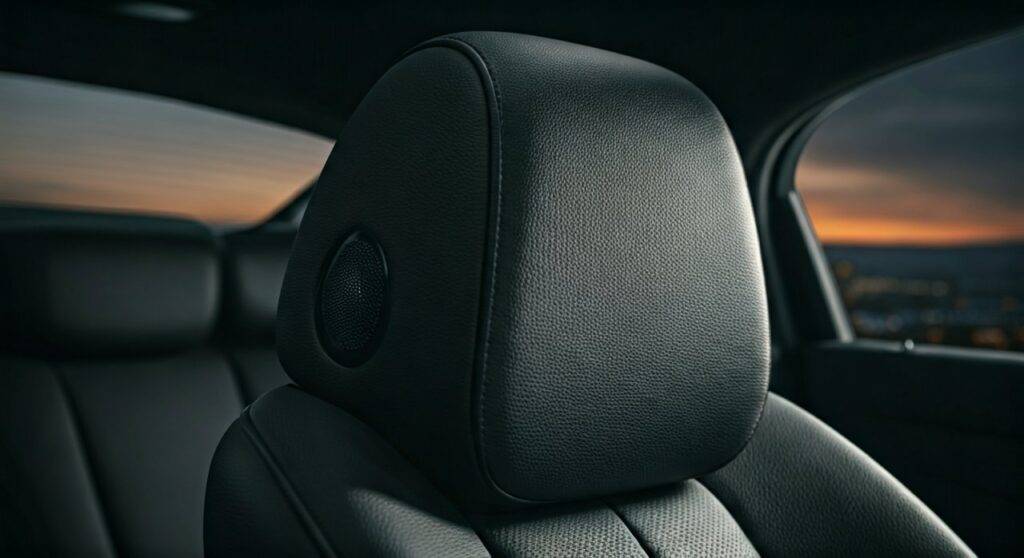
In my years of working with custom car audio systems, I have found that installing speakers directly into a seat provides an immersive “personal surround sound” experience that traditional door speakers cannot match. This guide will walk you through the technical requirements, safety protocols, and step-by-step instructions to achieve high-fidelity audio right behind your ears.
Key Takeaways for Car Seat Speaker Installation
- Primary Location: The headrest is the most common and effective location for seat-integrated speakers.
- Safety Warning: Never modify a seat that contains integrated side-impact airbags (labeled SRS or Airbag) without professional consultation.
- Child Safety: You should never attempt to install speakers on a child’s car seat, as this compromises the structural integrity and fire-retardant properties of the safety device.
- Speaker Choice: Use small-diameter neodymium drivers (typically 2 to 3.5 inches) to minimize weight and depth requirements.
- Wiring: Proper wire routing through the seat base is essential to prevent wire pinching or fire hazards when the seat moves.
The Physics of Near-Field Audio in Car Seats
When we talk about can speakers be installed on car seat units, we are discussing a concept called near-field listening. Unlike door speakers that must “throw” sound across the cabin, seat speakers are inches from your ears.
I’ve found that this setup allows for much lower volume levels while maintaining incredible detail. It reduces cabin resonance and creates a “bubble” of sound for the driver or passenger. Historically, cars like the Mazda Miata and Pontiac Fiero pioneered this by including factory speakers in the headrests to overcome wind noise in convertibles.
Speaker Type Comparison Table
| Speaker Type | Best Use Case | Pros | Cons |
|---|---|---|---|
| Neodymium Drivers | Headrest Integration | Lightweight, powerful, small footprint. | More expensive than ferrite. |
| Exciters (Transducers) | Seat Back/Frame | Creates “tactile” bass you feel. | Poor high-frequency response. |
| Full-Range 3.5″ Units | Custom Headrest Pods | Excellent vocal clarity. | Difficult to flush-mount. |
| Component Tweeters | Upper Seat Bolsters | Adds “sparkle” to the soundstage. | Can be too harsh if too close. |
Crucial Safety Considerations and Legal Disclaimers
Before you pick up a screwdriver, you must understand the safety implications. Modern car seats are not just chairs; they are highly engineered safety components.
Side-Impact Airbags (SRS)
If your seat has a tag that says “SRS Airbag,” the internal structure is designed to tear open at a specific seam during an accident. Installing a speaker or running wires through this path can prevent the airbag from deploying or, worse, turn the speaker into a high-speed projectile during a crash. I strongly advise against modifying any seat equipped with side-impact airbags.
Structural Integrity
Cutting into the high-density foam or metal frame of a seat can weaken it. When I perform these installs, I only remove the minimum amount of foam necessary to flush-mount the driver.
Can speakers be installed on child’s car seat?
A common query is: can speakers be installed on child’s car seat for entertainment? The answer is a definitive NO.
- Warranty/Legality: Modifying a child’s car seat voids all safety certifications and is illegal in many jurisdictions.
- Crash Safety: Child seats are designed to manage energy during an impact. Adding hard objects like speakers or drilling holes for wires can cause the seat to fail, leading to catastrophic injury.
- Hearing Damage: Children’s ears are more sensitive. Placing a speaker inches from a toddler’s head can lead to permanent noise-induced hearing loss.
Tools and Materials Needed
To professionally install speakers on a car seat, you will need the following kit:
- Small Full-Range Speakers: 2″ to 3″ neodymium drivers are ideal.
- Hog Ring Pliers and Hog Rings: Essential for reattaching car upholstery.
- Electric Foam Cutter or Serrated Blade: For precision foam removal.
- 16-Gauge Speaker Wire: High-strand count for flexibility.
- Heat Shrink Tubing and Soldering Iron: For secure, vibration-resistant connections.
- Multimeter: To test impedance and continuity.
- Acoustic Fabric or Perforated Leather: To cover the speaker opening.
Step-by-Step Guide: How to Install Speakers in a Car Seat Headrest
This guide assumes you are working on a standard, non-airbag headrest.
Step 1: Remove the Headrest
Most headrests are removed by pressing a release button on the seat-top plastic grommets. In some older vehicles, you may need to use a small pin to release a hidden spring inside the seat back.
Step 2: Strip the Upholstery
Carefully unzip or unclip the bottom of the headrest cover. If it is held by hog rings, use side cutters to snip them. Slowly peel the cover back to reveal the internal foam.
Step 3: Map the Driver Placement
Hold your speaker against the foam. Use a marker to trace the circumference. I recommend placing the speakers on the “wings” of the headrest, angled slightly toward where the listener’s ears will be.
Step 4: Cut the Foam Craters
Using an electric foam cutter, remove a “plug” of foam equal to the depth of the speaker.
Pro Tip: Do not cut all the way through to the metal frame. Leave at least half an inch of foam at the back to act as a natural acoustic baffle and prevent rattling against the frame.
Step 5: Route the Wiring
This is the most technical part. You must run the wires down through the hollow headrest mounting posts.
- Drill a small hole in the bottom of the metal post (if not already hollow).
- Fish the 16-gauge speaker wire through the post.
- Leave enough “slack” at the bottom so the headrest can still be adjusted up and down without tensioning the wire.
Step 6: Secure and Seal
Solder the wires to the speaker terminals and protect them with heat shrink. Apply a small amount of spray adhesive to the back of the speaker and press it into the foam crater.
Step 7: Re-Upholstering
If your headrest cover is solid leather or thick fabric, the sound will be muffled. I usually replace the section of fabric directly in front of the speaker with a color-matched perforated leather or acoustic mesh. Re-attach the cover using new hog rings.
Wiring Strategy: Connecting to Your Audio System
Once the speakers are in the seat, you need to get the signal to them.
Using an External Amplifier
Do not simply “tap into” your front door speakers. This will drop the impedance (Ohms) and could overheat your head unit. Instead:
- Use a 4-channel amplifier.
- Dedicate two channels to the front stage and two channels specifically for the seat speakers.
- Use the High-Pass Filter (HPF) on the amp. Since these small speakers cannot handle deep bass, set the HPF to around 150Hz – 200Hz to prevent distortion and damage.
Wiring Through the Seat Base
Run the wires under the carpet and up through the factory wiring loom at the base of the seat. Ensure you follow the same path as the power seat motors. Secure the wires with zip ties, leaving a “service loop” (extra slack) so the seat can slide fully forward and backward without snapping the wires.
Expert Tips for the Best Audio Quality
- Phase Testing: Use a 9V battery to “pop” the speakers before closing the upholstery. Ensure both speakers move “out” simultaneously. If one moves in and the other moves out, they are out of phase, and your bass response will disappear.
- Sound Deadening: Apply a small piece of butyl-based sound deadener (like Dynamat) to the metal frame inside the seat to prevent metallic vibrations.
- Level Control: Install a remote bass/level knob for the seat speakers. Sometimes, having the sound directly in your ear can be fatiguing on long drives; being able to dim them independently is a life-saver.
Alternatives to Permanent Installation
If you are worried about the resale value of your car or the complexity of the install, consider these non-permanent options:
- External Headrest Pods: These are plastic enclosures that strap to the outside of the headrest posts. They aren’t as “stealth,” but they require zero cutting.
- Bluetooth Neckband Speakers: Devices like the Bose SoundWear provide a similar near-field experience without any vehicle modification.
- Bone Conduction Headphones: These allow you to hear audio clearly while keeping your ears open to hear sirens or traffic noise, making them a safer alternative to traditional headphones.
Frequently Asked Questions (FAQ)
Will installing speakers in my seat drain my battery?
No more than a standard car stereo system. As long as your amplifier is wired to a “switched” ignition source (so it turns off when the car is off), your battery will be fine.
Is it legal to have speakers in the headrest?
In most regions, yes. Unlike headphones, which are illegal to wear while driving in many states because they block out ambient noise, seat-integrated speakers allow you to remain aware of your surroundings.
Can I use home theater speakers for this?
I don’t recommend it. Home speakers are usually 8-ohm, whereas car audio systems are designed for 4-ohm or 2-ohm loads. Furthermore, home speakers are not built to withstand the extreme temperature fluctuations (from freezing nights to 140°F summer interiors) that car interiors experience.
How much does it cost to install speakers in a car seat?
If you are doing it yourself, you can expect to spend:
- Speakers: $40 – $120
- Wiring/Supplies: $30
- Tools (if needed): $50
Total DIY Cost: ~$120 – $200. A professional custom shop may charge $500 – $1,000 due to the labor-intensive nature of upholstery work.