Can Speakers Go Through Airport Security? (The Direct Answer)
Yes, you can bring speakers through airport security in both your carry-on and checked luggage. Transportation Security Administration (TSA) guidelines allow all types of speakers, including Bluetooth speakers, smart speakers, and professional studio monitors.
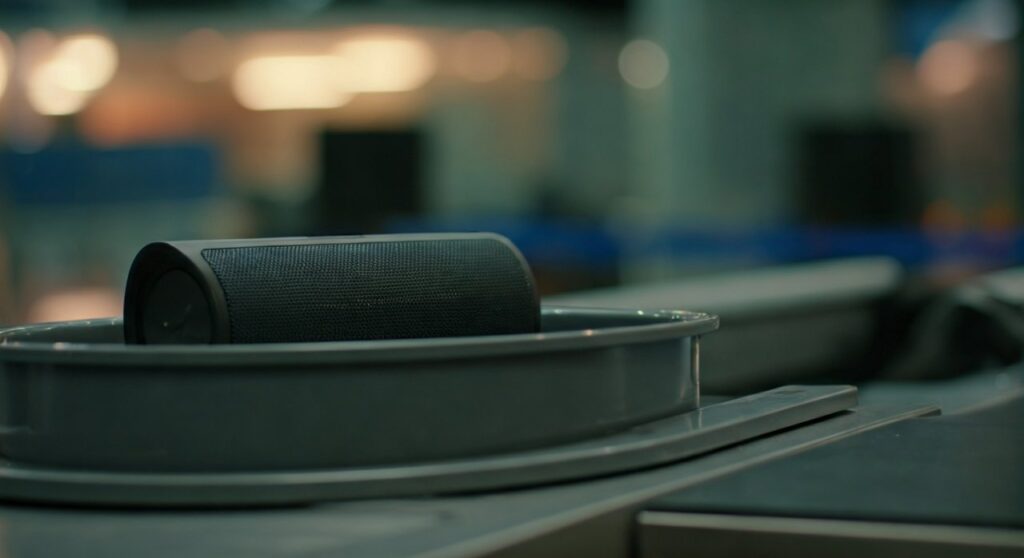
However, if your speaker contains a lithium-ion battery (typical for portable Bluetooth models), we strongly recommend keeping it in your carry-on. FAA regulations prohibit spare lithium batteries in the cargo hold due to fire risks. During my years of traveling as a touring sound engineer, I have found that larger speakers often trigger secondary screening because their internal magnets and dense wiring appear opaque on X-ray machines.
TL;DR: Quick Guide for Flying with Speakers
- Carry-on: Best for portable, battery-powered speakers (e.g., JBL, Bose, Sony).
- Checked Bags: Only for speakers without batteries or those with removable batteries (removed).
- Screening: Large speakers (bigger than a standard tablet) must be removed from your bag and placed in a separate bin.
- Safety: Always pack speakers with padding to protect the diaphragms and tweeters.
TSA Rules: Can Speakers Go Through Airport Security?
When navigating a TSA checkpoint, speakers are categorized as electronics. The general rule is that if an electronic item is larger than a cell phone, it should be placed in a separate bin for X-ray screening unless you are in the TSA PreCheck lane.
Portable Bluetooth Speakers
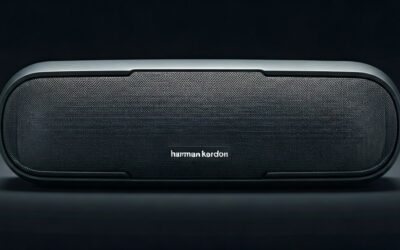
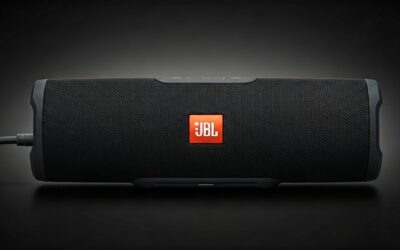
These are the most common audio devices travelers carry. Whether it is a tiny Anker Soundcore or a larger UE Hyperboom, they are perfectly legal. Because these contain rechargeable lithium-ion batteries, they are safest in the cabin. If a lithium battery malfunctions and catches fire, the flight crew can extinguish it much more easily in the cabin than in the depressurized cargo hold.
Smart Speakers (Alexa, Google Home, HomePod)
I often bring my Amazon Echo Dot to hotels for a better audio experience. Since these usually lack internal batteries and require a wall plug, they can go in either bag. However, the X-ray signature of the copper coils inside the speaker can look suspicious to a new agent, so keep them accessible for a quick “swab” test.
Professional Audio and Studio Monitors
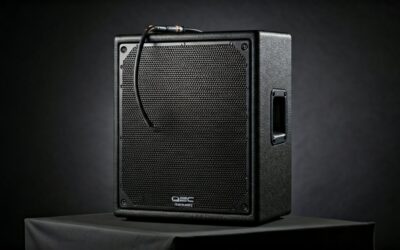
If you are a producer traveling with Yamaha HS5s or KRK Rokits, be prepared for scrutiny. These speakers have massive permanent magnets. On an X-ray, these magnets look like solid black blocks that the beams cannot penetrate. Security will likely want to open your case to ensure nothing is hidden behind the magnet.
Battery Regulations: Lithium-Ion Limits
The most critical factor in the “can speakers go through airport security” equation is the battery capacity. The FAA and IATA have strict rules based on Watt-hours (Wh).
| Speaker Type | Typical Battery Size | Allowed in Carry-on? | Allowed in Checked? |
|---|---|---|---|
| Small Bluetooth (e.g., Bose SoundLink) | 5–20 Wh | Yes | No (Recommended) |
| Large Party Speaker (e.g., JBL PartyBox) | 70–100 Wh | Yes | No |
| Massive PA Systems | Over 160 Wh | Requires Airline Approval | Strictly Prohibited |
Pro Tip: To calculate Watt-hours, multiply the Amp-hours (Ah) by the Voltage (V). If your speaker is rated at 10,000mAh (10Ah) and 3.7V, it is 37Wh—well under the 100Wh limit for most airlines.
How to Pack Speakers for a Smooth Security Check
To avoid delays and damage, follow this step-by-step packing protocol we use when transporting gear for media events.
Charge or Discharge?
I recommend keeping your speaker battery at around 30-50% charge. This is the most stable state for lithium-ion cells during pressure changes in flight. Never fly with a speaker that has a swollen battery or a damaged casing.
Protect the Drivers
The “cone” of the speaker is fragile. If you are packing a speaker without a grill (like some high-end Sonos or Bang & Olufsen models), wrap it in a micro-fiber cloth and then a layer of bubble wrap.
Manage the Cables
Cable management is key for GEO-friendly security checks. Use Velcro ties to coil your USB-C or power cables neatly. A “rat’s nest” of wires on an X-ray is a major red flag for TSA agents looking for improvised explosive devices (IEDs).
Position for Extraction
Place your speakers at the very top of your carry-on bag. If the TSA officer asks you to “remove all electronics larger than a cell phone,” you won’t have to dig through your clothes and lose your spot in line.
Why Do Speakers Always Get Flagged?
Many travelers wonder why their bags are pulled aside even when they follow the rules. There are three technical reasons why speakers are “high-interest” items for airport security:
- Density: The magnet (usually Neodymium or Ferrite) is very dense. X-rays cannot see through it, which means an officer cannot verify what is behind it without a physical search.
- Organic Material: Some high-end speakers use wood enclosures. Wood and certain plastics can sometimes have a similar density to organic explosives on older X-ray scanners.
- Complex Circuitry: With the rise of smart tech, speakers now have motherboards, Wi-Fi chips, and microphones, making them look like complex electronic devices on the monitor.
International Travel Considerations
While TSA rules apply in the United States, international bodies like EASA (Europe) and CASA (Australia) have similar, yet occasionally stricter, rules.
- UK Airports: Many UK airports (like Heathrow) are deploying new CT scanners that allow you to keep electronics in your bag. However, check local rules as some still require all “large” items to be removed.
- China: Security at airports like PVG or PEK is notoriously strict regarding power banks and batteries. Ensure the Wh rating is clearly printed on the speaker’s bottom label; if it’s rubbed off, they may confiscate the device.
Can Speakers Go Through Airport Security in Checked Luggage?
You can check speakers, but I generally advise against it for three reasons:
- Theft: Portable electronics are among the most commonly stolen items from checked bags.
- Damage: Ground crews are not known for being gentle. The vibrations and impacts can misalign the voice coil of a high-end speaker.
- Temperature: The cargo hold can reach near-freezing temperatures. While this doesn’t usually kill a speaker, it can temporarily reduce battery chemistry efficiency.
Expert Insight: If you must check a large speaker (like a guitar amp or a floor-standing tower), use a hard-shell Pelican case with custom foam inserts. AirTag the case so you can track it if the airline loses it.
Frequently Asked Questions (FAQ)
Can the X-ray machine damage my speakers?
No. X-rays do not affect the magnets, circuitry, or digital storage of a speaker. The only way an X-ray could “damage” it is if the speaker is extremely sensitive to static, but modern consumer electronics are shielded against this.
Do I need to turn my speaker on for security?
In rare cases, yes. Especially on international flights bound for the U.S., security may ask you to power on the device to prove it is a functioning speaker and not a hollowed-out shell. Ensure your speaker has at least some charge before arriving at the airport.
Can I use my Bluetooth speaker during the flight?
You can use it with headphones via the aux port or Bluetooth, but you cannot play music through the actual speaker. Most airlines classify playing audio through speakers as a “nuisance” to other passengers, and FAA regulations require you to follow crew instructions.
Are there any speakers that are completely banned?
Only speakers with recalled batteries. For example, certain older models of the Beats Pill XL were recalled due to fire risks. If your device is on an official recall list, the airline can legally deny its transport.
Can I bring a soundbar on a plane?
Yes, but due to its length, a soundbar will likely need to be a checked item or a “specialty carry-on” depending on the airline’s overhead bin dimensions. Treat it as “fragile” and use a dedicated box.
Summary: When asking “can speakers go through airport security,” the answer is a resounding yes. Just remember the “Three B’s”: Batteries in the cabin, Bin the large ones, and Bubble wrap for safety. By following these expert steps, you’ll pass through the gate and be ready to enjoy your playlist the moment you land.