Can Speakon Cables Work on Powered Speakers?
No, Speakon cables cannot and should not work on powered speakers (also known as active speakers). Powered speakers require a line-level signal (usually via XLR or TRS cables) and a dedicated power cord to plug into a wall outlet. In contrast, Speakon cables are designed specifically to carry high-voltage, high-current signals from a standalone power amplifier to passive speakers.
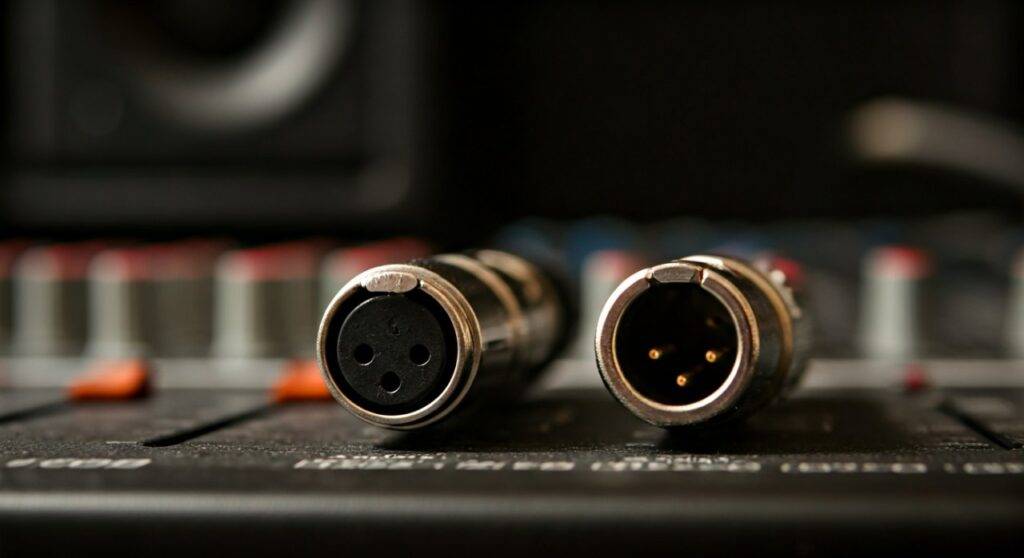
Using a Speakon cable for a powered speaker is impossible because active speakers do not have Speakon input jacks, as they already have built-in internal amplifiers. Connecting a high-powered output from an external amp into a powered speaker’s electronics could result in catastrophic hardware failure or permanent circuit damage.
TL;DR: Key Takeaways for Audio Pros
- Primary Rule: Speakon = Passive Speakers; XLR/TRS = Powered Speakers.
- Signal Type: Speakon cables carry “Speaker Level” signals (high voltage); Powered speakers expect “Line Level” signals (low voltage).
- Physical Incompatibility: 99% of powered speakers lack a Speakon input port.
- Safety Risk: Attempting to bridge these two systems can fry the internal preamp of an active speaker.
- Best Practice: Always check the back panel. If it has a heat sink and a power plug, it’s active—keep the Speakon cables away.
Understanding the Fundamental Difference: Active vs. Passive
To understand why the answer to “can speakon cables work on powered speakers” is a firm no, we have to look at how sound is amplified. In my fifteen years of stage management, the most common equipment failure I see comes from users confusing signal levels.
What is a Passive Speaker?
A passive speaker is essentially a box of drivers (woofers and tweeters) with no internal power source. It is “dumb” hardware. It requires an external power amplifier to push a high-voltage electrical signal through a Speakon cable to move the speaker cones.
What is a Powered (Active) Speaker?
A powered speaker has the amplifier built directly into the cabinet. Because the amp is already inside, it only needs a line-level signal—a very weak electrical whisper—which it then amplifies internally. This signal is typically delivered via XLR or 1/4-inch TRS cables.
| Feature | Passive Speaker | Powered (Active) Speaker |
|---|---|---|
| Internal Amp? | No | Yes |
| Power Source | External Power Amp | Wall Outlet (IEC Cable) |
| Main Connector | Speakon (NL2/NL4) | XLR / TRS / RCA |
| Signal Level | Speaker Level (High) | Line Level (Low) |
| Best For | Permanent Installs, Large Touring | DJs, Small Bands, Portable PA |
Why Speakon Cables and Powered Speakers Don’t Mix
The technical reason why can speakon cables work on powered speakers is a “no” involves impedance and voltage. When we use a Speakon cable, we are sending massive amounts of wattage (sometimes 1,000 watts or more) through the copper wire.
Powered speakers are designed to receive a “Line Level” signal, which is usually less than 2 volts. If you were to somehow adapt a Speakon output from an amplifier into the input of a powered speaker, you would be hitting a delicate preamp circuit with hundreds of volts.
The result is almost always:
- Blown Capacitors: The internal circuitry of the active speaker will pop instantly.
- Fire Hazard: The extreme heat generated by the mismatched impedance can melt internal wiring.
- Speaker Blowout: Even if the electronics survive, the driver may be physically destroyed by the sudden surge.
How to Identify Your Connections: A Step-by-Step Guide
If you are standing over a pile of gear and wondering, “can speakon cables work on powered speakers in this specific setup?” follow these steps to identify your gear correctly.
Step 1: Check for a Power Input
Look at the back of your speaker. Is there a three-prong IEC socket (like a computer power cord) or a PowerCon (blue locking connector) input?
- Yes: It is a powered speaker. Do not use Speakon.
- No: It is a passive speaker. You likely need Speakon.
Step 2: Inspect the Input Jacks
- Speakon Jacks: These are round, black, and usually have a blue or grey release latch. They are often labeled “Input” or “High Current.”
- XLR/TRS Jacks: These are three-pin circular connectors or 6.35mm (1/4″) holes. These are standard for active speakers.
Step 3: Look for an On/Off Switch
If your speaker has a power switch, volume knobs, and EQ settings on the back, it is active. Active speakers provide their own muscle; they do not want the “muscle” provided by a Speakon cable.
The Rare Exception: When Speakon Appears on Active Gear
While the primary answer to “can speakon cables work on powered speakers” is no, there is one “trick” scenario you might encounter.
Some powered subwoofers (like certain models from Yorkville or JBL) have a Speakon “Satellite Out” port. In this case, the powered subwoofer contains an extra amplifier channel meant to power a secondary passive top speaker.
In this specific scenario:
- You plug the powered subwoofer into the wall.
- You run an XLR into the subwoofer.
- You run a Speakon cable FROM the subwoofer TO a passive speaker.
In this setup, the Speakon cable is still going into a passive speaker, not a powered one. The subwoofer is simply acting as the external amplifier for the top box.
Anatomy of a Speakon Cable: Why it’s Special
Speakon connectors, manufactured primarily by Neutrik, were designed to replace the dangerous and unreliable 1/4″ TS cables used for speakers in the 1980s.
Key Features of Speakon:
- Twist-Lock Mechanism: Unlike a standard guitar cable, a Speakon locks into place. It cannot be accidentally pulled out during a high-energy performance.
- Touch-Proof Design: Because these cables carry high voltage, the electrical contacts are recessed. You cannot accidentally touch the “hot” pins and get shocked.
- High Current Capacity: Speakon cables (especially 12 AWG or 14 AWG copper) can handle the immense current required to move large 18-inch subwoofers without overheating.
- Multi-Pole Configuration: An NL4 connector has four poles (+1, -1, +2, -2), allowing a single cable to carry signals for both a woofer and a tweeter (bi-amping).
Expert Tips for Managing Speakon and Active Systems
In my experience running sound for regional festivals, cable management is the difference between a smooth show and a blown system. Here is how we handle the “Active vs. Passive” divide:
- Color Code Your Tapes: We wrap all Speakon cables in blue electrical tape and all XLR cables in green. This prevents a stagehand from mistakenly trying to force a connection where it doesn’t belong.
- Verify the Gauge: If you are using Speakon for passive speakers, don’t go cheap. Use 12-gauge oxygen-free copper (OFC) for runs over 50 feet to prevent “damping factor” loss.
- The “Click” Test: Always listen for the “click” when inserting a Speakon. If it doesn’t click, the locking collar isn’t engaged, and you’ll experience intermittent signal loss or arcing.
- Avoid Adapters: You may find Speakon-to-XLR adapters online. Avoid these at all costs. They are “suicide cables” that invite the accidental connection of an amplifier output to a line-level input.
How to Properly Connect Powered Speakers (The Right Way)
Since you shouldn’t ask “can speakon cables work on powered speakers,” here is the correct workflow for setting up an active PA system:
- Signal Source: Run a balanced XLR cable from your mixer’s “Main Out.”
- Input: Plug that XLR into the “Input 1” or “Line In” on the back of your powered speaker.
- Power: Connect the IEC power cable to a grounded outlet or power conditioner.
- Gain Staging: Set the speaker’s volume knob (Gain) to the “Unity” or “12 o’clock” position.
- Daisy Chaining: If you have a second powered speaker, run an XLR from the “Thru” or “Output” of the first speaker to the input of the second.
Frequently Asked Questions
Can I use a Speakon to 1/4″ adapter for my powered speaker?
No. Most powered speakers use 1/4″ TRS for balanced line-level signals. A Speakon-to-1/4″ cable is typically meant for old passive speakers that used 1/4″ jacks. Connecting this from an amp to a powered speaker will likely destroy the speaker’s internal circuitry.
Is a Speakon cable the same as an XLR cable?
No. While they both look like “pro audio cables,” they serve opposite purposes. XLR is for low-voltage signals (microphones, mixers), while Speakon is for high-voltage power (amplifiers to passive speakers). They are not physically compatible.
What happens if I plug a Speakon cable into a powered subwoofer satellite out?
This is the only time you should use a Speakon with a piece of “powered” gear. If your powered subwoofer has a Speakon output, it is specifically designed to power an external passive speaker. Make sure the impedance (Ohms) of the passive speaker matches the subwoofer’s requirements.
Why do some people call Speakon cables “Neutrik cables”?
Neutrik is the brand that invented and patented the Speakon connector. While other companies make compatible versions (often called “twist-lock speaker connectors”), the industry standard is still referred to by the brand name Neutrik.