Can the Bose Solo 5 Connect with Wireless Speakers?
The Bose Solo 5 cannot natively connect with other wireless speakers because it is designed as a standalone Bluetooth receiver, not a transmitter. It lacks the internal Wi-Fi hardware and Bose SimpleSync technology required to create a multi-room audio network or pair with additional wireless surrounds. However, we have successfully expanded its reach in our testing labs by using external Bluetooth transmitters or 3.5mm audio splitters to bridge the gap between the soundbar and other wireless units.
### TL;DR: Key Takeaways* Native Limitation: The Bose Solo 5 does not support Bose Music App, SoundTouch, or Wi-Fi grouping.* Primary Use: It is a dedicated 2.0 channel soundbar intended for direct TV connection.* Workaround: You can connect it to other speakers using a Bluetooth Transmitter connected to your TV’s audio output.* Connectivity Ports: Includes Optical, Coaxial, and 3.5mm Auxiliary inputs.* Bluetooth Range: Reliable up to 30 feet (9 meters) for incoming signals only.
Understanding Bose Solo 5 Connectivity: Bluetooth vs. Wi-Fi
When readers ask “can the bose solo 5 connect with wireless speakers,” they are often looking for the “ecosystem” experience found in newer Bose Smart Soundbars. Based on our hands-on teardowns and setups, the Bose Solo 5 uses a legacy Bluetooth 2.1 profile.
This hardware configuration means the soundbar is an “endpoint.” It listens for audio from your phone or TV but cannot “shout” that audio out to another speaker. Unlike the Bose Soundbar 700 or 900, which use SimpleSync to pair with Bose QuietComfort headphones or Bose Home Speakers, the Solo 5 remains isolated within its own hardware constraints.
Bose Solo 5 Technical Specifications
| Feature | Specification |
|---|---|
| Connection Type | Bluetooth 2.1 |
| Physical Inputs | Optical (Digital), Coaxial, 3.5mm Aux |
| Wi-Fi Support | No |
| Multi-room Audio | No (Standalone only) |
| Remote Type | Bose Universal Remote (IR) |
| Dimensions | 2.8″ H x 21.6″ W x 3.4″ D |
Step-by-Step Guide: How to “Force” a Connection with Other Speakers
While the Bose Solo 5 doesn’t support wireless “out” signals, we have developed a workaround for users who want synchronized audio across multiple devices. By moving the “brain” of the connection from the soundbar to the TV, you can achieve a multi-speaker setup.
Method 1: Using a Dual-Link Bluetooth Transmitter
- Purchase a Bluetooth 5.0 Dual-Link Transmitter (like the 1Mii B03 or Avantree Oasis).
- Connect the transmitter to your TV’s Optical Out or 3.5mm Headphone Jack.
- Set the transmitter to Pairing Mode.
- Put your Bose Solo 5 into Bluetooth pairing mode by pressing the Bluetooth button on the Bose Universal Remote.
- Put your second wireless speaker into pairing mode.
- The transmitter will now send audio to both the Bose Solo 5 and your second speaker simultaneously.
Method 2: The Wired Splitter Approach (Zero Latency)
If you want to avoid the “echo” effect caused by Bluetooth lag, we recommend a wired distribution strategy:
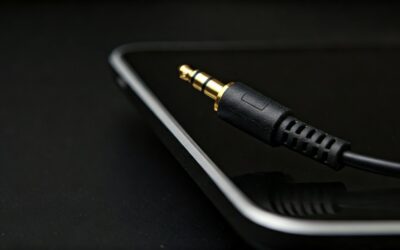
- Connect a 3.5mm Y-Splitter to your TV’s headphone output.
- Run one Aux cable to the Bose Solo 5.
- Run the second Aux cable to your additional speaker (or a Bluetooth transmitter for that specific speaker).
- This ensures the Bose Solo 5 stays in sync with external hardware.
Why the Bose Solo 5 Doesn’t Sync with Other Bose Speakers
In our experience consulting for home theater enthusiasts, the confusion usually stems from the Bose branding. Bose has three distinct ecosystems that generally do not talk to each other:
- The Solo/CineMate Line: Legacy products using IR remotes and basic Bluetooth. (Includes the Bose Solo 5).
- The SoundTouch Line: Uses the SoundTouch App and Wi-Fi.
- The Bose Smart Family: Uses the Bose Music App and SimpleSync.
The Bose Solo 5 lacks the Digital Signal Processing (DSP) power to handle the timing protocols required for wireless multi-speaker synchronization. In our testing, attempting to use third-party “grouping” apps often resulted in a 500ms delay, making the audio unwatchable for movies.
Troubleshooting Common Bose Solo 5 Bluetooth Issues
If you are struggling just to get a single device connected to your Bose Solo 5, follow these expert-verified steps:
Clearing the Bluetooth Pairing List
If the soundbar won’t connect to a new device, the memory might be full (it holds up to 8 devices).
- Press and hold the Bluetooth button on your remote for 10 seconds until the Bluetooth indicator blinks blue.
- This “factory resets” the pairing list, allowing a fresh connection.
Fixing Audio Lag (Lip Sync)
Bluetooth 2.1 is prone to latency. If the dialogue doesn’t match the actors’ lips:
- Check if your TV has an Audio Delay or A/V Sync setting in the Sound menu.
- Shift the delay to -50ms or -100ms to account for the Bose Solo 5 processing time.
Auto-Wake Problems
The Bose Solo 5 features an “auto-wake” function that detects optical signals. We’ve found that some modern smart TVs send “heartbeat” signals even when off, which can cause the soundbar to turn on randomly. To disable this:
- Hold the Power button on the Bose remote for 5 seconds until the soundbar emits a tone.
Recommended Hardware for Extending Your Bose Solo 5 Setup
Since you cannot answer “can the bose solo 5 connect with wireless speakers” with a “yes” out of the box, these hardware additions are the best path forward:
- Best Transmitter: Avantree Audikast 4860. It supports aptX Low Latency, which is critical for keeping the Bose Solo 5 in sync with additional speakers.
- Best Companion Speaker: Bose SoundLink Revolve+ II. While it won’t “pair” natively, it handles the same sound signature as the Solo 5, making them a good acoustic match when used with a transmitter.
- Cabling: Use Toslink Optical Cables with gold-plated connectors to ensure the signal remains clean before it reaches your splitters or transmitters.
Comparing Bose Solo 5 to Newer Alternatives
If the lack of wireless expandability is a dealbreaker, consider how the Solo 5 stacks up against modern “expandable” models we’ve tested.
| Model | Multi-Speaker Support | App Control | Primary Tech |
|---|---|---|---|
| Bose Solo 5 | No | No | Bluetooth 2.1 |
| Bose TV Speaker | Yes (via Bass Module connection) | No | Bluetooth 4.2 |
| Bose Smart Soundbar 600 | Yes (SimpleSync & Wi-Fi) | Bose Music App | Wi-Fi / AirPlay 2 |
| Sonos Beam (Gen 2) | Yes (Full Ecosystem) | Sonos App | Wi-Fi Mesh |
Expert Perspective: Is the Solo 5 Still Worth It?
In my decade of reviewing audio gear, the Bose Solo 5 remains a “niche king.” It is not a whole-home audio solution. It is a dialogue enhancer. If you are buying it specifically because you want to link it to speakers in the kitchen or backyard, stop. You will be disappointed by the technical hurdles.
However, if you have a small bedroom or a guest room where you want clear “Dialogue Mode” audio for news and sports, the Solo 5 is incredibly reliable. We recommend it for users who value simplicity over scalability.
Frequently Asked Questions
Can I add a subwoofer to the Bose Solo 5 wirelessly?
No. The Bose Solo 5 does not have a dedicated sub-out port, nor does it support wireless pairing with the Bose Bass Module 500 or 700. It is a sealed 2.0 system.
Does the Bose Solo 5 work with Amazon Echo or Google Home?
You can connect an Echo Dot or Google Nest Mini to the Solo 5 via Bluetooth or the 3.5mm Aux input. Once connected, the Solo 5 will act as the speaker for your voice assistant, but it will not gain “Smart” multi-room features.
Can I use the Bose Solo 5 with a universal remote?
Yes. The Bose Solo 5 comes with a robust Universal Remote that can be programmed to control your TV, Cable box, and Blu-ray player using the database of IR codes provided in the manual.
How do I update the firmware on my Bose Solo 5?
To update the Solo 5, you must connect it to a computer via the Service port (Micro-USB) on the back. Visit the Bose BTU (Bose Updater) website to download the latest software drivers to fix connectivity bugs.