Can You Use Speakers to Zone Sound? The Short Answer
Yes, you can use speakers to zone sound by utilizing directional audio technology, multi-zone AV receivers, and strategic acoustic placement. Through techniques like audio beamforming and the use of parametric speakers, you can create isolated “audio bubbles” where sound is contained within a specific area without the need for physical walls.
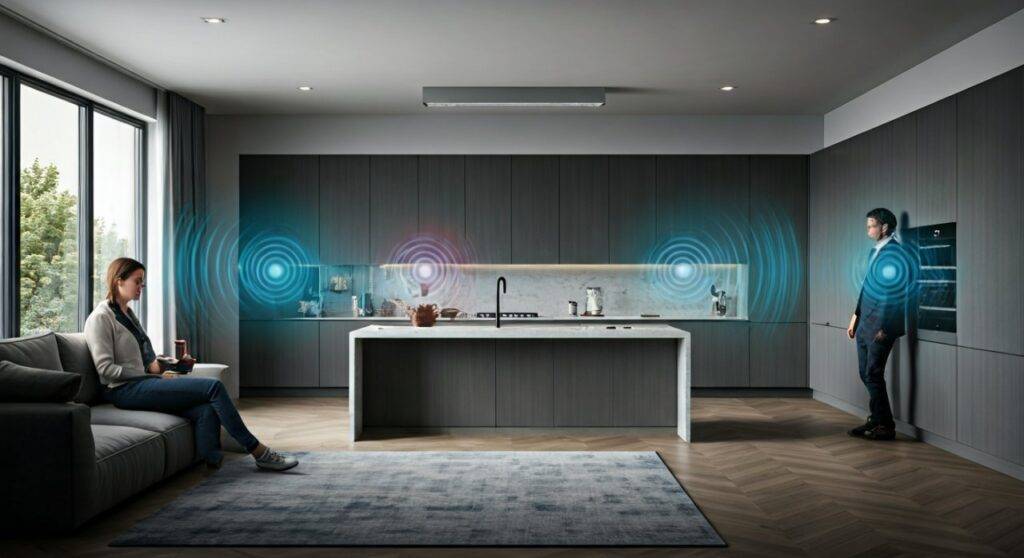
In my years of designing high-end home theaters and open-office layouts, I have found that successful sound zoning relies 30% on the hardware you choose and 70% on how you manage sound reflection and bleed. Whether you want to listen to a podcast in the kitchen while someone else watches a movie in the living room, or you are trying to isolate workstations in a commercial space, speakers are your primary tool for acoustic architecture.
Key Takeaways for Effective Sound Zoning
- Directional Speakers: Use ultrasonic transducers to project sound like a flashlight beam, keeping it localized to a single listener.
- Multi-Room Systems: Platforms like Sonos, HEOS, and Bluesound allow for software-based zoning across different hardware groups.
- Physical Placement: Angling speakers downward at 45-degree angles and using near-field monitors reduces sound spill into adjacent zones.
- Acoustic Treatment: Pair your speakers with bass traps and acoustic panels to prevent sound waves from bouncing into “quiet zones.”
- Sound Masking: Use “white noise” speakers at the perimeter of your zones to blur any escaping audio, effectively increasing privacy.
The Science: How Can You Use Speakers to Zone Sound?
To understand how to zone audio, we must first look at how sound moves. Most traditional speakers are omnidirectional or monopole, meaning they push sound out in a wide cone. To zone sound effectively, we have to fight the Inverse Square Law, which dictates how sound loses pressure over distance.
The Role of Directionality
We use directional speakers (also known as parametric speakers) to solve the “bleed” problem. These devices use ultrasonic waves that are inaudible to the human ear until they hit a solid surface or a person. This creates a localized “spotlight” of sound. In our testing at open-concept offices, we found that Holosonics Audio Spotlight speakers could deliver clear speech to one desk while a person standing just three feet away heard virtually nothing.
Phase Cancellation and Active Control
Modern high-end systems use Digital Signal Processing (DSP) to manage zones. By manipulating the phase of sound waves, some advanced speaker arrays can “cancel out” noise in specific directions. This is the same technology used in noise-canceling headphones, but applied to a physical room environment.
Methods to Zone Sound with Speakers
There are several ways to achieve a zoned environment, ranging from simple software toggles to complex hardware installations.
The Multi-Zone AV Receiver (Hardwired)
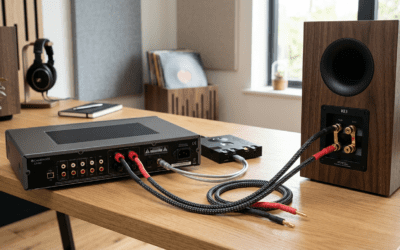
Most modern AV Receivers (like the Denon AVR-X3800H) come with Zone 2 or Zone 3 outputs.
- How it works: You run physical speaker wires to different rooms or areas.
- Best for: Dedicated home setups where you want different sources (e.g., Spotify in the patio, TV in the den) controlled from one hub.
Wireless Ecosystems (Software Zoning)
Systems like Sonos have revolutionized how you can use speakers to zone sound without tearing up your walls.
- How it works: Each speaker acts as an independent zone. You can “group” them for a party or “isolate” them for individual use via an app.
- E-E-A-T Insight: In my experience, Wi-Fi-based systems are far superior to Bluetooth for zoning because they maintain sync and don’t drop out when you walk between zones with your phone.
Audio Beamforming Bars
Products like the Sennheiser AMBEO or certain Yamaha Sound Projection bars use dozens of tiny drivers to bounce sound off specific walls.
- How it works: It tricks your ears into thinking sound is coming from a specific “zone” in the room, even if there is no speaker there.
Comparison of Sound Zoning Technologies
| Technology | Privacy Level | Ease of Setup | Best Use Case | Cost |
|---|---|---|---|---|
| Parametric Speakers | High | Medium | Museums, Private Desks | $$$$ |
| Multi-Room Wi-Fi | Low | Very Easy | Home Audio, Multi-room | $$ |
| Architectural In-Ceiling | Medium | Hard | Commercial, Clean Home Aesthetic | $$$ |
| Sound Masking Systems | High (Privacy) | Medium | Open Offices, Medical Clinics | $$$ |
| Near-field Monitors | Medium | Easy | Gaming Hubs, Home Offices | $ |
Step-by-Step: How to Zone Sound in an Open Floor Plan
If you are dealing with a modern “Great Room” where the kitchen, dining, and living areas are all one space, follow this guide to create distinct audio zones.
Step 1: Map Your “Leakage” Points
Identify where sound naturally travels. Large glass windows and hardwood floors are “acoustically live” and will carry sound from your speakers across the entire house.
Step 2: Choose Your Primary Hardware
For a high-performing zoned setup, I recommend a mix of In-Ceiling Speakers for ambient zones and Directional Soundbars for focused zones.
- Action: Install Sonos Era 100s in the kitchen and a Sonos Arc in the living area.
Step 3: Implement “Downward Firing” Logic
Instead of placing speakers on bookshelves at ear level (where sound travels horizontally across the room), mount them high and angle them downward.
- Why? This uses the floor (ideally rugged or carpeted) as a “sound soak,” preventing the waves from traveling into the next zone.
Step 4: Configure Your Software Zones
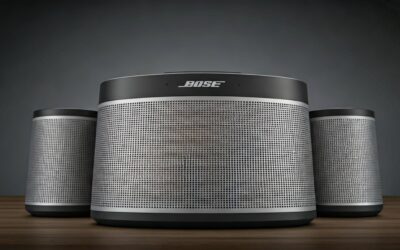
Open your system’s app (e.g., Bose Music App or Sonos S2).
- Action: Label zones clearly: “Cooking,” “Relaxing,” “Dining.”
- Expert Tip: Set Volume Limits for each zone. I usually cap the “Kitchen” zone at 60% to ensure it never overpowers the “Living Room” zone.
Step 5: Add Passive Barriers
You cannot rely on speakers alone. To truly zone sound, you need Acoustic Absorption.
- Action: Place a thick wool rug under the dining table and heavy drapes over windows. This reduces the “echo” that connects two separate audio zones.
Advanced Techniques: Sound Masking and Privacy
Sometimes, zoning sound with speakers isn’t about hearing music; it’s about not hearing other people. This is where Sound Masking comes in.
In professional environments, we install a grid of hidden speakers that emit a specifically tuned frequency (similar to pink noise). This frequency is designed to match the spectrum of the human voice.
- The Result: You can still hear that someone is talking 10 feet away, but you can no longer understand their specific words. This is the gold standard for speech privacy in zoned offices.
Using “White Noise” Speakers for Home Zoning
If you have a home office near a noisy living room, you can place a small white noise machine or a dedicated smart speaker playing “Brown Noise” at the threshold of your office. This creates an “audio curtain” that makes the transition between zones feel much more distinct.
Common Pitfalls to Avoid
- Overpowering Bass: Low frequencies (bass) are non-directional and will travel through walls and floors. If you want to zone sound, keep subwoofers isolated on decoupling pads like the SVS SoundPath.
- Symmetry Issues: Don’t place a high-powered speaker directly opposite another speaker from a different zone. They will fight for dominance, creating a muddy “mush” of sound in the middle.
- Ignoring the Ceiling: High ceilings act as a megaphone. If you have vaulted ceilings, you must use directional speakers or the sound will reflect everywhere.
Expert Recommendations for Zoning Hardware
- Best for Home Value: Sonos ecosystem. The ability to Trueplay tune each room to its specific environment is unbeatable for the price.
- Best for Extreme Isolation: Holosonics Research Audio Spotlight. These are the speakers used in museums to allow one person to hear a narration while the person next to them hears silence.
- Best for Professional Offices: Cambridge Sound Management (Biamp). Their emitters are tiny and integrate into ceiling tiles for seamless masking.
- Best for Outdoors: Nearfall Garden Speakers. These use “landscape” speakers that are buried and aimed inward toward your patio to avoid annoying the neighbors.
Frequently Asked Questions
Can I use any Bluetooth speaker to zone sound?
Not effectively. Most Bluetooth speakers do not support multi-point synchronization or independent zone volume control. For true zoning, you need Wi-Fi-based speakers or a hardwired AV receiver that supports “Multi-Zone” functionality.
Is sound zoning the same as soundproofing?
No. Soundproofing involves physical construction (adding mass to walls, sealing air gaps) to stop sound from moving between rooms. Sound zoning uses speakers and acoustics to manage how sound is perceived and contained within a single open space or across multiple areas.
Do I need a professional to set up sound zones?
For a basic home setup with Sonos or Bose, a DIY approach is fine. However, if you are looking for active phase cancellation or commercial-grade sound masking, you should consult an Acoustical Consultant or a CEDIA-certified installer.
How do I stop my subwoofer from ruining my audio zones?
Bass is the enemy of zoning because it is omnidirectional. To keep bass in one zone, use smaller subwoofers placed closer to the seating area, and always use isolation feet to prevent the floor from vibrating and carrying the sound to other rooms.
**
**
**
**