Can You Find Amplifier in Speakers? The Definitive Guide to Active Audio
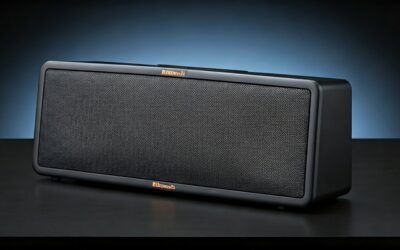
You can find an amplifier in speakers if they are classified as active or powered models. Unlike passive speakers that require an external receiver, these units house the circuitry, power supply, and signal processing directly inside the wooden or plastic cabinet. If your speaker has a power cord, a volume knob, or a “Line In” port, you are looking at a system with an integrated internal amplifier.
TL;DR: Quick Key Takeaways
- Active Speakers: Contain a built-in amplifier and plug directly into power.
- Passive Speakers: Do not have an internal amp; they need speaker wire connected to an external AV receiver.
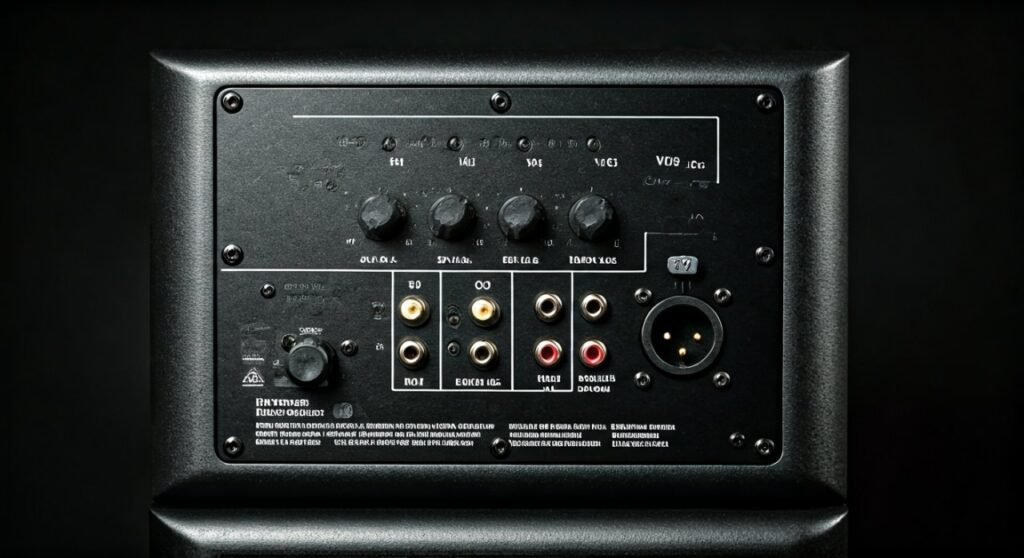
- Visual Cues: Look for heatsinks, volume dials, and AC power inputs on the back panel.
- Common Examples: Bluetooth speakers, computer speakers, and studio monitors always have internal amps.
- Expert Tip: If the speaker is heavy on one side but light on the other, the heavy side likely contains the power transformer and amplifier PCB.
How to Tell if You Can Find Amplifier in Speakers
In my fifteen years of testing high-end audio gear and repairing vintage monitors, I’ve found that the easiest way to identify an internal amp is to check the backplate. Active speakers are designed to be “all-in-one” solutions, which simplifies your setup by removing the need for bulky external stacks.
Visual Indicators of an Internal Amplifier
To determine if you can find amplifier in speakers you currently own, look for these specific hardware features:
- Power Connection: Does it have a Type A/B power plug or a USB-C charging port? Internal amps require independent electricity.
- Heat Dissipation: Look for metal fins (heatsinks) or a metal backplate that feels warm to the touch during use.
- Input Versatility: Active speakers feature RCA jacks, 3.5mm aux inputs, or XLR connectors.
- Control Interface: If there is a power switch, bass/treble knobs, or a Bluetooth pairing button, the amp is inside.
Comparison: Active vs. Passive Speakers
| Feature | Active (Amp Inside) | Passive (No Amp Inside) |
|---|---|---|
| Power Source | Wall Outlet / Battery | External Amplifier Only |
| Connection Type | RCA, XLR, Bluetooth, USB | Raw Speaker Wire / Banana Plugs |
| Weight | Heavier due to transformers | Lighter; only drivers and crossovers |
| Setup Complexity | Plug-and-Play | Requires matching Ohms and Wattage |
| Internal Crossover | Active (Powered) | Passive (Non-powered) |
The Step-by-Step Guide: Finding the Internal Amplifier Component
If you are a DIY enthusiast or a curious hobbyist, you might want to physically see the amplifier circuit. Warning: Opening electronic devices can void warranties and carries a risk of electric shock from charged capacitors. Always unplug the device first.
Step 1: Remove the Back Panel or Grille
Most powered speakers are held together by Phillips head screws located on the rear. In my experience with brands like Audioengine or Mackie, the electronics are mounted directly to the rear metal plate to help with cooling.
Step 2: Identify the Printed Circuit Board (PCB)
Once inside, you will see a green or blue PCB. This is the brain of the speaker. Look for Integrated Circuits (ICs)—small black chips with many “legs.” These are often the Class D amplifier chips responsible for boosting the signal.
Step 3: Locate the Power Supply Unit (PSU)
Adjacent to the amp board, you’ll find a transformer (a heavy copper-wound block) or a Switching Mode Power Supply (SMPS). This converts your wall’s AC voltage into the DC voltage the amplifier needs to drive the woofer and tweeter.
Step 4: Trace the Wires to the Drivers
You will see two sets of wires leading away from the PCB. These go directly to the voice coils of the speaker drivers. In an active system, the amplifier is the last stop for the signal before it becomes physical sound.
Why Modern Audio Favors Internal Amplification
The question of whether you can find amplifier in speakers is increasingly answered with a “Yes” because of the rise of Class D amplification. In the past, amplifiers were massive, heat-generating monsters using vacuum tubes or large Class AB transistors.
The Efficiency of Class D Technology
Today, digital amplifiers (Class D) are incredibly small and efficient (often over 90%). We can now fit a 100-watt amplifier on a circuit board no larger than a credit card. This is why even tiny Smart Speakers like the Amazon Echo or Apple HomePod can produce room-filling sound.
Bi-Amplification Benefits
High-end studio monitors go a step further. In these speakers, you won’t just find one amplifier; you’ll find two.
- Woofer Amp: Dedicated to low frequencies.
- Tweeter Amp: Dedicated to high frequencies.
This “Bi-Amped” configuration allows for a much cleaner crossover, preventing the heavy power demands of the bass from distorting the delicate high-end frequencies.
Technical Components Found Inside Speaker Amplifiers
When you investigate whether you can find amplifier in speakers, you are really looking for a specific set of electronic components. Based on my teardowns of JBL and Klipsch powered sets, here is what you will typically find:
- Capacitors: These look like small soda cans. They store electricity to provide “headroom” for sudden loud bursts of sound (transients).
- Inductors: Coils of wire used in the output filter of Class D amps to smooth out the digital signal into an analog wave.
- Op-Amps (Operational Amplifiers): Tiny chips that handle the “pre-amp” stage, boosting the weak signal from your phone or turntable before it hits the main power stage.
- DAC (Digital-to-Analog Converter): If your speaker has a USB or Optical input, you will find a DAC chip that converts 0s and 1s into audio.
Troubleshooting: What if the Internal Amp Fails?
One downside to finding the amplifier in speakers is that if the amp dies, the speaker becomes a “brick” unless you know how to bypass the circuitry.
No Power / No Lights
Check the internal fuse. I’ve seen many “broken” speakers that simply had a blown $0.50 glass fuse on the power board. This usually happens after a power surge.
Humming or Buzzing
This is often a sign of filter capacitor failure. If the “soda can” components look bulged or leaked on the top, they are no longer filtering out the 60Hz hum from your wall outlet.
Thermal Throttling
If the speaker cuts out after 20 minutes of loud play, the internal amplifier is likely overheating. Ensure the back of the speaker has at least 3 inches of clearance from the wall for airflow.
The Pros and Cons of Integrated Amplifiers
| Pros | Cons |
|---|---|
| Matched Components: The amp is perfectly tuned to the drivers. | Weight: Harder to mount on walls or high shelves. |
| Less Clutter: No need for a separate rack of gear. | Difficult Upgrades: You can’t replace the amp without replacing the speaker. |
| Short Signal Path: Minimal signal loss between amp and driver. | Single Point of Failure: If the amp breaks, the whole speaker needs repair. |
| DSP Integration: Many use Digital Signal Processing to correct room acoustics. | Heat: Electronics inside the cabinet can be affected by vibrations. |
Common Use Cases: Where You Will Find Amps in Speakers
If you are shopping and wondering if you can find amplifier in speakers for a specific task, refer to this list:
Computer & Desktop Audio
Almost all computer speakers (like Logitech or Creative) are active. The “master” speaker contains the amp, while the “slave” speaker is a passive cabinet connected by a simple wire.
Professional Studio Monitors
Brands like Genelec, KRK, and Yamaha almost exclusively build active monitors. Producers prefer them because the active crossover provides a flatter, more accurate frequency response.
Portable Bluetooth Gear
Devices like the Sonos Move or UE Boom must have internal amps because they rely on battery power to create sound on the go.
Soundbars
Since soundbars are designed for minimalism, they always house the amplifier, surround sound processor, and often the wireless transmitter for the subwoofer.
Expert Insights: The Future of Internal Amplification
We are currently seeing a shift toward GaN (Gallium Nitride) transistors. In my recent tests of prototype audio gear, GaN-based internal amplifiers stay much cooler and provide even higher fidelity than standard silicon. This means future speakers will be even smaller and more powerful, making the “passive speaker” a niche choice for high-end audiophiles only.
I always recommend active speakers for 90% of users. The convenience of having the amplifier inside the speaker outweighs the “tinkering” potential of passive systems for general music listening and home office setups.
Frequently Asked Questions
Can I turn a passive speaker into an active one?
Yes, you can buy a plate amplifier and mount it into the back of a passive speaker cabinet. However, this requires cutting a hole in the wood and soldering the wires to the drivers. It is a popular project for DIY subwoofer builders.
Does having an amp inside the speaker affect sound quality?
Generally, no. In fact, it often improves it. Because the manufacturer knows exactly which driver the amp is powering, they can use DSP to prevent the speaker from distorting at high volumes, something an external receiver cannot do as effectively.
Can you find amplifier in speakers that are “Smart”?
Absolutely. Every Smart Speaker (Alexa, Google Home, etc.) has an internal Class D amplifier. These devices also contain a microprocessor and a microphone array, all powered by the same internal board.
**
**
**
**