We’ve all been there: you need to set up a security camera in a critical spot—perhaps a remote barn, an outer driveway, or a separate warehouse building—only to realize that running hundreds of feet of physical cable is going to cost you a fortune in time, labor, and sanity. Traditional wired CCTV setups are famously reliable, but their physical limitations can make certain monitoring projects practically impossible or prohibitively expensive.
While modern wireless IP cameras are a common alternative, they suffer from their own set of issues: congested Wi-Fi networks, high latency, dropped connections, and the constant threat of signal jamming. If you need real-time, zero-latency monitoring over a significant distance without the headache of network configuration or expensive trenching, analog wireless technology remains the ultimate secret weapon.
Enter the Wireless Video & Audio Transmitter and Receiver 1.2G CCTV Monitoring Transmitter Receiver. Priced at a highly accessible $49, this compact kit offers a highly specialized solution to long-distance wireless video and audio transmission. Operating on the ultra-reliable 1.2GHz frequency band and offering exclusive compatibility with AHD and CVBS video signals, this device aims to bridge the gap between heavy-duty wired CCTV systems and rapid-deployment wireless needs. In this comprehensive review, we will dive deep into its specs, analyze its pros and cons, and determine whether this budget-friendly wireless transceiver is the right choice for your security setup.
Product Overview
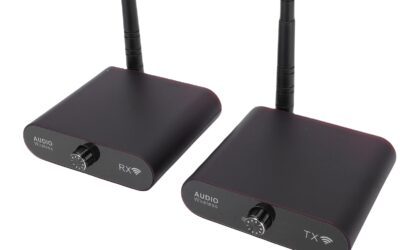
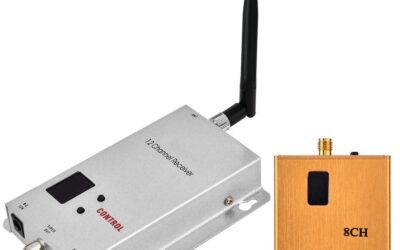
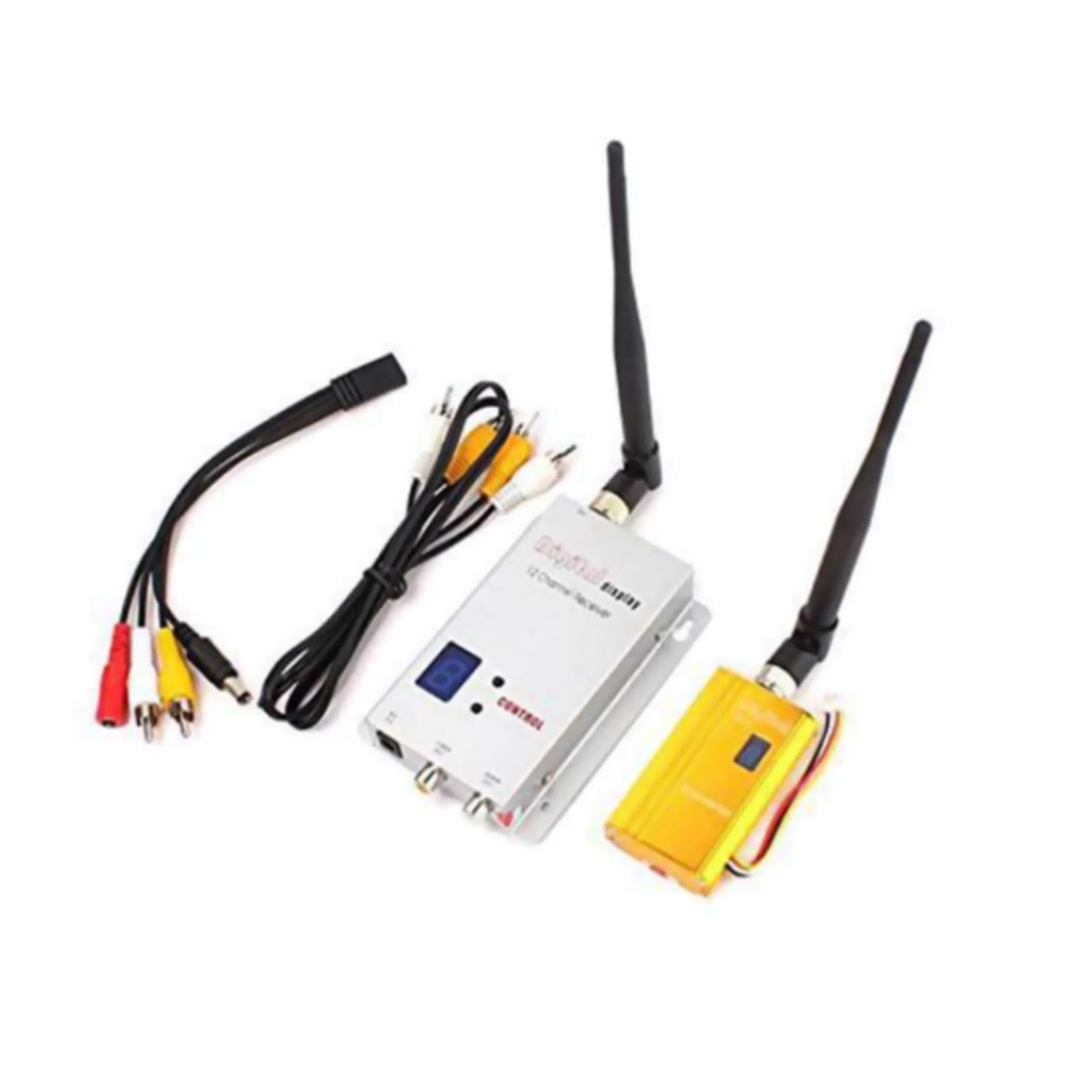
The Wireless Video & Audio Transmitter and Receiver 1.2G is a point-to-point wireless link designed specifically for analog surveillance systems. It consists of two main hardware units: a transmitter (which connects to your camera’s video and audio outputs) and a receiver (which connects to your monitor, DVR, or recording device).
At the heart of this system is its 1.2GHz operating frequency. Unlike standard wireless systems that operate on the incredibly crowded 2.4GHz or 5.8GHz bands (the same frequencies used by your home Wi-Fi, microwave ovens, baby monitors, and Bluetooth devices), the 1.2GHz band sits in a much quieter spectrum. This frequency has a longer wavelength, which naturally gives it superior diffraction properties—meaning the signal can bend around obstacles, pass through foliage, and penetrate solid brick or concrete walls far more effectively than higher-frequency alternatives.
The transmission is driven by Frequency Modulation (FM). Unlike Amplitude Modulation (AM), FM is highly resistant to external radio frequency (RF) interference. This guarantees a stable, clear, and steady picture even in complex environments packed with other electronic signals.
Another defining characteristic of this device is its dual-signal compatibility. It exclusively supports:
- CVBS (Composite Video Baseband Signal): The legacy standard-definition analog format. This ensures compatibility with older analog CCTV cameras, FPV drone gear, and standard-definition video equipment using RCA connections.
- AHD (Analog High Definition): A modern analog transmission standard that allows for high-definition video (often up to 1080p) to be sent over traditional analog channels. This means you do not have to sacrifice image clarity for the convenience of wireless transmission.
With a theoretical maximum transmission distance of up to 1.2 kilometers (approx. 0.75 miles) in open, unobstructed, and interference-free environments, this system is engineered to provide wide coverage. The highly integrated, lightweight, and compact form factor means you can easily mount these modules in tight enclosures, weather-resistant boxes, or carry them in a field pack for emergency deployments.
Pros
When evaluating a specialized RF tool like this, it is essential to look at how its unique physical properties translate into real-world benefits. Here are the main advantages of this 1.2G wireless video and audio transmitter kit:
Incredible Cost-to-Performance Ratio
At just $49, this transmitter and receiver pair is a fraction of the cost of industrial-grade digital wireless bridges or fiber-optic conversion kits. If you were to run 500 meters of high-quality outdoor-rated coaxial cable, you would easily spend hundreds of dollars on the wire alone, not to mention the labor costs of trenching, conduit installation, or running overhead wires. By opting for a wireless system like this, you eliminate those material and labor costs completely. For budget-conscious DIYers and professional security installers alike, the return on investment is realized the minute you power the system on.
Superior Signal Penetration on the 1.2GHz Band
The choice of a 1.2GHz frequency is a massive advantage over standard 2.4GHz or 5.8GHz wireless systems. In physics, lower frequencies have longer wavelengths, which are physically better at passing through physical obstructions like drywall, concrete, wooden structures, and dense foliage. If you try to send a 5.8GHz video signal through three brick walls, you will likely lose the signal entirely. This 1.2GHz system, however, can easily push through multiple solid structures, making it highly reliable for indoor-to-outdoor setups or agricultural monitoring where barns and outbuildings stand between the camera and the monitor.
Zero-Latency Real-Time Monitoring
Digital wireless networks (such as Wi-Fi or cellular-based IP systems) have to packetize video data, compress it, transmit it over a network, and then decompress it at the receiving end. This process introduces latency, often ranging from several hundred milliseconds to a few seconds. For real-time surveillance, traffic control, or emergency response, even a one-second delay can be critical. Because this 1.2GHz kit uses direct analog FM transmission, the video and audio are transmitted in true real-time. What your camera sees is what you see on your monitor instantly, without any lag, buffering, or frame drops.
Backward and Forward Compatibility with AHD and CVBS
Many standard analog wireless transmitters only support low-resolution CVBS (Composite) signals, leaving you with blurry, grainy video that makes identifying faces or license plates nearly impossible. This system’s support for AHD is a game-changer. AHD allows you to transmit high-definition video over an analog carrier. This means you can hook up modern 720p or 1080p AHD security cameras and enjoy crisp, high-definition image quality wirelessly. At the same time, if you are running older legacy equipment, the CVBS support ensures your old cameras won’t go to waste.
Completely Network-Independent Operation
In an era where almost everything relies on an internet connection, a network outage can cripple your security system. This 1.2GHz kit operates entirely independently of your local area network (LAN), Wi-Fi router, or internet service provider. It sets up a direct, point-to-point analog radio link between the transmitter and receiver. Even if your home network is hacked, congested, or entirely offline, your surveillance system will continue to transmit without a hitch. This makes it highly secure against network-based cyber threats and perfect for remote, off-grid locations where internet access is unavailable.
Compact, Lightweight, and Rapidly Deployable
The physical size of both the transmitter and receiver modules is highly optimized for ease of use. They are lightweight and occupy minimal space, making them ideal for quick-response scenarios such as temporary construction site monitoring, emergency rescue operations, tactical traffic management, or outdoor exploration. Setup takes only a few minutes: mount your camera, plug it into the transmitter, plug your monitor into the receiver, supply power, and you have an instant, high-quality video link.
Robust Anti-Interference Capabilities
Because the kit utilizes Frequency Modulation (FM) rather than Amplitude Modulation (AM), it boasts excellent anti-interference characteristics. Electronic devices, motors, and high-voltage lines generate electromagnetic interference that can easily distort AM signals, resulting in heavy static lines. This FM system filters out much of this background electrical noise, providing a stable, synchronized stream of video and audio with vibrant color accuracy and excellent clarity under both daytime (color) and nighttime (black-and-white) conditions.
Cons
While this transmitter is incredibly capable for its price, no product is perfect. To make an informed decision, you must understand its limitations:
Strict Line-of-Sight Requirements for Maximum Range
While the manufacturer boasts an impressive “ultra-long range” of up to 1.2KM, it is absolutely crucial to note the fine print: this maximum distance is only achievable in open, unobstructed, and interference-free environments with a clear line-of-sight (LOS) between the transmitter and receiver antennas. Once you introduce heavy concrete walls, metal structures, or terrain variations (like hills and valleys), that 1.2KM range will drop significantly. For urban environments or densely wooded properties, users should manage their expectations and anticipate a practical range of a few hundred meters rather than a kilometer.
No Direct Digital, HDMI, or IP Support
This system is purely analog in its input and output architecture. It is designed to work with AHD and CVBS camera signals, which typically use BNC or RCA connectors. If you are hoping to plug this directly into a modern digital IP camera, a computer USB port, or a standard HDMI television monitor, you will be disappointed. Doing so will require purchasing additional active signal converters (such as an analog-to-HDMI converter or a BNC-to-RCA adapter), which adds to the overall cost and complexity of your installation.
Frequency Regulatory and Licensing Restrictions
Operating on the 1.2GHz frequency band is not globally unrestricted. In many countries, including the United States, the 1.2GHz band (specifically the 1.24GHz to 1.3GHz amateur band) is strictly regulated by government agencies like the FCC. Operating a transmitter on these frequencies without a proper amateur radio license (commonly known as a HAM license) or outside of specific power limits can be illegal. Before buying and operating this device, it is highly recommended to research your local telecommunication laws to ensure you are compliant.
Analog Degradation vs. Digital Cutoff
Unlike digital signals which are binary (either you have a perfect picture or the screen goes black), analog signals degrade gracefully but noticeably. As you push the limits of the system’s range or introduce physical obstacles, your video stream will begin to display lines, static, fuzz, or ghosting. While some security professionals actually prefer this because they can still see movement through the static (whereas a digital camera would simply disconnect), users accustomed to pristine, digital-only feeds may find the potential for analog noise off-putting.
Power Supplies May Need Separate Sourcing
To keep the kit compact and the price point at a low $49, the package often does not include dedicated power adapters or may require specific 12V DC power supplies. Standard analog security systems usually run on 12V DC power, so if you are an installer, you likely have spare power supplies laying around. However, for a complete novice, having to buy separate 12V power adapters for both the transmitter and receiver units can be an unexpected minor hassle during setup.
Customer Reviews Analysis
At the time of writing, this specific product has 0 customer reviews on Amazon. For many online shoppers, a lack of reviews can be a red flag. However, in the highly specialized world of analog security gear and RF transmitters, this is actually quite common. These products are niche utilities targeted at professional installers, RF hobbyists, and DIY security enthusiasts rather than the general consumer market.
When analyzing what to expect from a budget 1.2GHz transmitter based on market trends of similar devices, buyers should be aware of a few key factors. First, successful operation heavily depends on proper installation. Most complaints regarding similar 1.2G transmitters stem from users trying to use them over long distances through thick concrete walls without understanding how RF signal attenuation works, or using inadequate, low-gain stock antennas.
Hobbyists who understand antenna placement (such as elevating the antennas as high as possible to establish a clear line-of-sight) typically report fantastic results with these devices, praise their reliability, and highlight the zero-latency feed. Conversely, plug-and-play beginners who expect magic through multiple buildings without a clear line-of-sight often experience disappointing signal quality. To get the best out of this product, you should treat it as a technical tool that requires a basic understanding of wireless signals.
Who Should Buy This Product?
This wireless transceiver kit is not a general-purpose consumer product, but it is an absolute lifesaver for specific users and scenarios:
- Farmers and Ranchers: If you need to monitor a calving barn, a horse stable, or a remote gate that is several hundred yards away from your main house, this kit is perfect. It easily bypasses the need for running expensive cables across your pasture.
- Legacy CCTV Installers: If you are upgrading or maintaining an existing analog CCTV network and need to add a camera in a location where running a new physical wire is structurally impossible (such as crossing a paved driveway, a small river, or a public pathway), this transceiver serves as the perfect wireless bridge.
- Elevator and Lift Technicians: Running traveling cables in elevator shafts is incredibly difficult and expensive. This zero-latency analog link is widely used to transmit video from the elevator car’s security camera directly to the control room.
- RF and FPV Hobbyists: Those who experiment with long-range radio-controlled vehicles, drone monitoring (UAVs), or DIY electronics projects will appreciate the cheap entry point into the highly penetrative 1.2GHz band.
- Temporary Security Deployments: Construction site managers, event coordinators, and emergency response teams who need to set up a multi-camera monitoring station in minutes and pack it up just as quickly will benefit greatly from its high portability and rapid deployment capabilities.
Final Verdict
The Wireless Video & Audio Transmitter and Receiver 1.2G CCTV Monitoring Kit is an incredibly powerful, niche-specific tool that delivers outstanding value for its $49 price point. By leveraging the physical advantages of the 1.2GHz frequency band, it succeeds where 2.4GHz and 5.8GHz systems fail, offering superior obstacle penetration and zero-latency real-time video transmission.
The inclusion of AHD (Analog High Definition) support is a major selling point, ensuring you can transmit modern 720p and 1080p high-resolution analog camera feeds without being bottlenecked by the fuzzy, standard-definition CVBS signals of yesteryear.
However, it is not a magical cure-all. You must be prepared to manage the limitations of analog wireless technology, including strict line-of-sight requirements for long distances, potential analog static under heavy interference, and the lack of direct digital/HDMI connectivity. Additionally, you must be mindful of local RF licensing regulations regarding the 1.2GHz band in your country.
If you understand its technical nature, require zero latency, and need to bridge a difficult gap in your analog security system on a budget, this transmitter and receiver kit is an exceptional buy that will save you hundreds of dollars in cabling costs.
Our final rating is a strong 4.3 out of 5 stars for its stellar value and physical performance in its specific analog niche.