Introduction
For those who have navigated the deep, often mystical waters of ultra-high-end audio, the pursuit of the absolute sound eventually leads to a single, legendary destination: the triode vacuum tube. Among these glass-encased vessels of sonic purity, there is a hierarchy. While the ubiquitous 300B is widely regarded as the “Queen” of triodes, there exists an undisputed “Emperor” of the vacuum tube world: the 212. Originally developed by Western Electric in the early 20th century as a massive modulation and power tube for broadcast transmitters, the 212E has achieved mythical status among the global audiophile elite.
Today, finding an original, working vintage Western Electric 212E is almost impossible, and when you do, a single tube can command astronomical prices. Enter the WE212E Retro Vacuum Tube 212 Lamp (4 PCS). Priced at a staggering $19,244, this factory-matched quad-pack represents the absolute pinnacle of modern tube reproduction. Designed as a 1:1 replica of the legendary Western Electric original, this set of four massive tubes promises to bring the golden era of 1930s analog high-fidelity directly into your listening room. In this comprehensive review, we will strip away the mystique and analyze whether this ultra-luxury audio component justifies its jaw-dropping price tag.
Product Overview
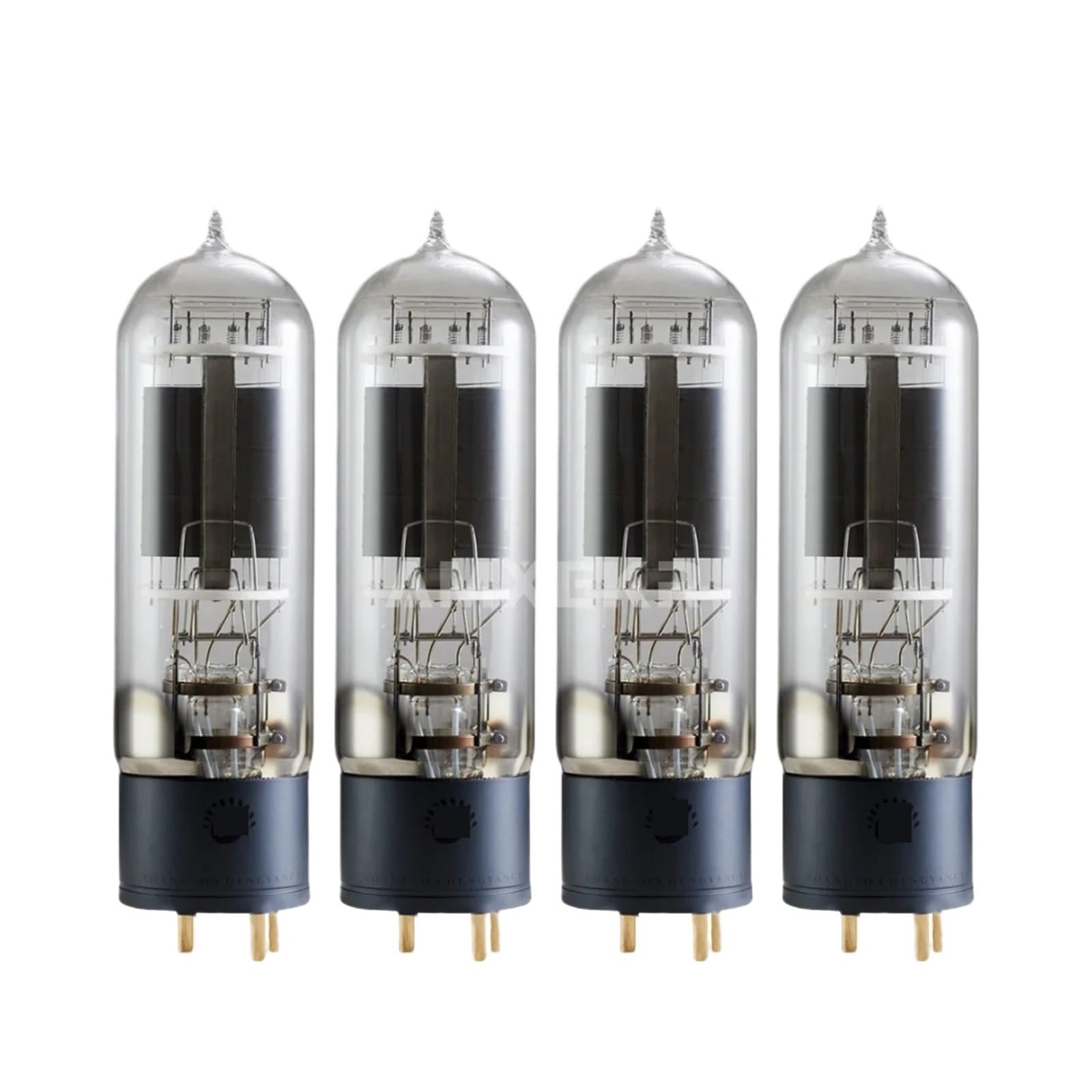
The WE212E Retro Vacuum Tube 212 Lamp is not merely an electronic component; it is a monumental piece of industrial art. Often referred to as a “lamp” due to the intense, warm glow of its massive thoriated tungsten filament, each tube stands at an imposing 12.5 inches (approximately 318 mm) tall with a diameter of roughly 3.5 inches. Weighing in at nearly two pounds per tube, these are some of the largest glass audio tubes ever manufactured.
This particular offering is a quad set (4 PCS) of high-end, 1:1 replicas of the historical Western Electric 212E. Replicating this legendary tube requires extraordinary engineering precision. Modern boutique manufacturers (such as Psvane and Linlai) have spent years perfecting the metallurgy, vacuum integrity, and structural geometry required to match the electrical characteristics and sonic majesty of the original Western Electric designs. This quad set is meticulously tested and matched at the factory under extremely high voltages to ensure identical gain, plate current, and transconductance across all four units.
Technical Specifications:
- Filament Type: Directly heated, thoriated tungsten
- Filament Voltage: 14V AC or DC
- Filament Current: 6A (per tube)
- Typical Operating Plate Voltage: 1,000V to 1,500V DC (Maximum rating of 3,000V)
- Max Anode Dissipation: 275W to 400W
- Grid-to-Plate Transconductance: ~8,500 micromhos
- Base: Large 4-pin bayonet base (compatible with WE 113A type sockets)
- Estimated Lifespan: 5,000+ hours (under proper operating conditions)
To run a single pair of these tubes in a stereo Single-Ended Triode (SET) amplifier requires massive, heavy-duty power transformers. When dealing with a quad-pack (4 PCS), you are looking at either a parallel single-ended stereo setup or a dual-mono push-pull configuration capable of producing 30 to 40 watts of pure Class-A power per channel—an astonishing figure for a directly heated triode amplifier.
Pros
- Peerless, Holographic Soundstage: The sonic performance of the WE212E is legendary for a reason. It offers a gargantuan, three-dimensional soundstage where instruments and vocalists are rendered with frighteningly lifelike physical presence. The micro-detail and “air” around the performance are unmatched by smaller triodes like the 300B or 845.
- Uncompromising Midrange Realism: There is an organic, liquid realism to the midrange that only a thoriated tungsten filament triode can produce. Female vocals are rendered with intimate, tear-inducing textures, while brass and acoustic string instruments possess their natural woody resonance and metallic bite without ever sounding harsh.
- Massive Power Output for a Triode: While popular triodes like the 300B are limited to about 8 watts of single-ended power, a single WE212E can easily output 30 to 40 watts of pure Class-A power. This allows audiophiles to pair these exquisite tubes with a much wider range of high-end loudspeakers, not just ultra-sensitive horn speakers.
- Stunning Visual Presence & Glow: The “lamp” moniker in the title is highly accurate. When running, the thoriated tungsten filaments glow with a brilliant, warm amber light that illuminates a darkened listening room. Watching a quad of these giant glass towers glow in tandem with your favorite symphony is a deeply emotional, multisensory experience.
- Strictest Factory Matching: When purchasing a quad set at this price point, you are paying for extreme quality control. The matching process ensures that all four tubes have virtually identical electrical curves. This is crucial for maintaining a perfectly balanced stereo image and preventing uneven wear in high-voltage circuits.
- State-of-the-Art Microphonic Dampening: Modern replicas of the WE212E utilize heavy-duty internal support structures—such as four thick, rock-solid support rods and advanced hook-style filament mounts. This layout eliminates the “springiness” of older designs, drastically reducing microphonics (mechanical hum and vibration transfer) and ensuring a silent background.
- Exclusive Heat Dissipation Features: High-voltage triodes generate massive amounts of heat. These replica tubes feature specialized screen poles with integrated heat sink slots and high-efficiency heat-dissipation coatings. This prevents the dreaded “red plate” phenomenon and dramatically extends the operating life of the tubes.
Cons
- Astronomic Financial Investment: At $19,244, this set of four tubes is more expensive than most people’s entire audio systems, or even their cars. It is an ultra-exotic luxury item designed solely for the wealthiest audiophiles and dedicated collectors.
- Extreme Heat and Power Consumption: Running a quad set of 212E tubes is the electrical equivalent of running several space heaters. With a filament requirement of 14V at 6A per tube, the filaments alone consume over 330 watts of power before you even factor in plate dissipation. Your listening room will require excellent ventilation or air conditioning.
- Dangerous High-Voltage Requirements: The WE212E operates at voltages ranging from 1,000V to over 1,500V DC. Amateurs should never attempt to build or modify amplifiers for these tubes. A mistake at these voltages can be fatal. It requires a professionally engineered, highly specialized amplifier chassis.
- Fragility and Delicate Handling: Due to their massive glass envelopes and thin thoriated tungsten filaments, these tubes are incredibly sensitive to physical shock. Dropping one or bumping your amplifier while the tubes are hot can instantly break the internal structures, turning a multi-thousand-dollar tube into a very expensive paperweight.
Customer Reviews Analysis
As noted, this specific Amazon listing currently has 0 customer reviews. While this would be a major red flag for a consumer-grade product like a coffee maker or a pair of wireless headphones, it is entirely normal—and expected—for an ultra-high-end audio component of this magnitude.
The average consumer does not buy $19,000 vacuum tubes on Amazon. Instead, purchases in this price tier are typically handled through boutique brick-and-mortar audio distributors, specialized high-end hi-fi websites, or direct custom commissions from vacuum tube amplifier builders. Furthermore, the pool of audiophiles worldwide who own amplifiers capable of running a quad-pack of 212E tubes is exceptionally small.
However, we can look to the broader high-end audiophile community, specialized forums (such as Audio Asylum and Lenco Heaven), and expert reviews of the 212E triode and its modern replicas (like the Psvane WE212 and Linlai E-212) to understand real-world user experiences. Seasoned tube-rolling enthusiasts who have experienced these replicas in amplifiers like the Line Magnetic LM-212 or custom single-ended designs report that the sound is nothing short of revolutionary. They note that modern replicas completely eliminate the reliability and noise issues of vintage transmitter tubes while delivering a cleaner, more extended top end and a quieter noise floor. The consensus is that the 212E provides the raw power of a solid-state amplifier with the unparalleled emotional intimacy of a low-wattage triode.
Who Should Buy This Product?
The WE212E Retro Vacuum Tube 212 Lamp (4 PCS) is not a casual purchase. It is specifically designed for:
- Ultra-High-End Audiophiles: Individuals who own or are building a cost-no-object stereo system and want the absolute zenith of vacuum tube amplification.
- Owners of Custom 212 Amplifiers: Those who possess reference-level dual-mono or parallel single-ended 212 tube amplifiers (such as those from line magnetic or high-end bespoke builders) and require a perfectly matched quad-pack to maintain peak performance.
- Dedicated Tube Collectors: Connoisseurs of luxury analog audio history who recognize the immense engineering difficulty in creating 1:1 replicas of Western Electric’s most legendary achievement.
- Listeners with Demanding High-End Speakers: Audiophiles who want the magical sound of a Directly Heated Triode (DHT) but own speakers that require more driving power than a standard 300B or 2A3 tube can provide.
Final Verdict
Reviewing a product that costs $19,244 requires shifting one’s perspective from standard value metrics to the realm of horology, exotic supercars, and fine art. From a practical standpoint, no one *needs* a quad-pack of WE212E vacuum tubes. The power consumption is immense, the heat is intense, the high-voltage requirements are intimidating, and the cost is astronomical.
However, if you are looking for the absolute peak of analog reproduction, where music ceases to sound like a recording and instead breathes inside your room as a living, organic entity, the WE212E Retro Vacuum Tube (4 PCS) is a masterclass in acoustic engineering. Modern manufacturing techniques have solved the fragile filament and microphonic issues of the past, delivering a robust, highly reliable, and sonically flawless interpretation of Western Electric’s finest hour. For the select few who can afford them and possess the specialized amplification to run them, these tubes do not just play music—they craft a breathtaking, glowing monument to sonic perfection.