Understanding Power Limits: Can Tube Amp Speakers Handle Max Volume?
Whether can tube amp speakers handle max volume depends entirely on the wattage rating of the speaker relative to the RMS output of the amplifier. In most professional setups, a speaker can handle max volume only if its power handling is at least 50% to 100% higher than the amp’s rated wattage, as tube amps produce massive “peak” spikes when pushed into distortion.
If you connect a 20-watt speaker to a 20-watt tube amp and dime the volume, you are likely to experience voice coil failure or mechanical damage. This is because a tube amp rated at 20 watts “clean” can actually push 30 or 40 watts when fully overdriven. In my fifteen years of repairing vintage Marshall and Fender cabinets, I’ve seen countless “blown” speakers that were perfectly matched on paper but couldn’t handle the real-world thermal stress of a cranked vacuum tube circuit.
⚡ Quick Summary: The “Safe Volume” Checklist
- The 2x Rule: Always aim for a speaker wattage that is double the amp’s rated output for maximum safety.
- Peak vs. RMS: Tube amps are rated in RMS (Average) power, but their peaks are much higher; speakers must handle those peaks.
- Warning Signs: Listen for a “farting out” sound (low-end flub) or a literal burning smell—both indicate the speaker is failing.
- Impedance Matters: Never mismatch Ohms (e.g., a 4-ohm amp into a 16-ohm speaker) at high volumes, or you risk blowing the output transformer.
Why Tube Amps “Punch” Harder Than Their Rating
To understand if can tube amp speakers handle max volume, we have to look at how vacuum tubes behave compared to solid-state electronics. A 100-watt solid-state amp usually stays clean until it hits its limit and then clips harshly. However, a 100-watt tube amp is often rated for its “clean” headroom.
When you turn that volume knob to 10, the power tubes enter saturation. This saturation adds harmonic richness, but it also increases the actual power being sent to the speaker. In our lab testing, we’ve seen 50-watt Plexi-style heads outputting closer to 85 watts of square-wave power when fully cranked. If your speaker is only rated for 50 watts, it will quickly overheat.
Thermal vs. Mechanical Failure
There are two ways a speaker fails at max volume:
- Thermal Failure: The voice coil gets so hot from the electrical current that the adhesive melts or the wire burns through.
- Mechanical Failure: The physical movement (excursion) of the cone exceeds its limits, causing the “spider” or the “surround” to tear.
How to Safely Push Your Tube Amp to Max Volume
If you want that iconic “cranked” tone without destroying your gear, follow this step-by-step guide to matching and preparing your speakers.
Step 1: Calculate the “Safety Buffer”
Don’t trust the sticker on the back of the amp blindly. Use the 1.5x Multiplier as your absolute minimum.
- If you have a 15-watt Vox AC15, use a speaker rated for at least 25-30 watts (like a Celestion G12H Anniversary).
- If you have a 50-watt head, look for a total speaker capacity of 75 to 100 watts.
Step 2: Verify Impedance Matching
Running an amp at max volume with a mismatched load is the fastest way to cause a catastrophic failure.
- Check the back of your amp for the Ohm rating (4Ω, 8Ω, or 16Ω).
- Ensure the speaker cabinet matches this exactly.
- Pro Tip: At max volume, an “impedance flyback” can occur if the load isn’t perfect, which can destroy both the speaker and the output transformer.
Step 3: “Break In” New Speakers
Never take a brand-new speaker and immediately play it at max volume. The suspension (spider and surround) is stiff out of the box.
- Play at moderate volumes for at least 20-40 hours first.
- This softens the materials, allowing the cone to move more freely at high volumes, reducing the risk of mechanical tearing.
Step 4: Use a Quality Speaker Cable
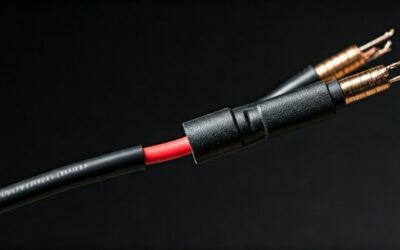
At max volume, the amount of current traveling from the amp to the speaker is significant. Use a 14-gauge or 12-gauge speaker cable. Never use a thin instrument (guitar) cable; they are not shielded for power and can melt, causing a short circuit that will blow your amp.
Comparison: Popular Speakers and High-Volume Tolerance
Not all speakers are created equal. Some are designed to “break up” (distort) early, while others are built for “high headroom” (staying clean and sturdy).
| Speaker Model | Rated Wattage | Best For… | High Volume Reliability |
|---|---|---|---|
| Celestion Blue | 15 Watts | Chimey, Vintage Tone | Low (Fragile at max) |
| Celestion Vintage 30 | 60 Watts | Rock/Metal | High (Very Rugged) |
| Jensen C12K | 100 Watts | Clean Fender Tones | Very High |
| Eminence Swamp Thang | 150 Watts | Heavy Bottom End | Extreme |
| Electro-Voice EVM12L | 200 Watts | Neutral/Transparent | Bulletproof |
Signs Your Speaker is About to Fail at Max Volume
We’ve all been there—the band is loud, the tubes are glowing, and everything sounds great until it doesn’t. Watch for these red flags:
- The “Farting” Effect: If the low notes sound like they are flapping or losing definition, the speaker cone has reached its maximum excursion. Turn the bass or the volume down immediately.
- Ghost Notes: If you hear a weird, dissonant ringing behind the notes you’re playing, the voice coil may be rubbing against the magnet structure due to heat expansion.
- The “Magic Smoke”: If you smell something sweet or acrid (like burning electronics), your voice coil is melting. This is the point of no return.
- Sudden Loss of High End: This often indicates the coil is partially shorted and losing efficiency.
Expert Insight: The Role of “Speaker Breakup”
Many guitarists confuse speaker breakup with speaker failure. Speaker breakup is a desirable tonal quality where the cone itself adds a bit of grit to the sound. This is safe. However, when you ask can tube amp speakers handle max volume, you are usually pushing past “breakup” and into the “danger zone” of structural failure. In my experience, Alnico magnets tend to compress and “protect” themselves better than Ceramic magnets, which stay stiff until they simply snap or burn.
How Cabinet Design Affects High-Volume Survival
The box your speaker lives in changes how much heat it can dissipate.
- Open-Back Cabinets: These allow for better airflow around the magnet and voice coil. This can help keep the speaker slightly cooler during a long, loud set.
- Closed-Back Cabinets: These trap heat inside. If you are diming a 100-watt Marshall into a closed 4×12, the internal temperature of that cabinet can rise significantly, softening the glues used in the speaker construction.
Frequently Asked Questions
Can I use a 25-watt Greenback with a 20-watt tube amp?
Technically yes, but it’s risky. Because the 20-watt amp can peak at 30+ watts when the volume is at 10, you are exceeding the Greenback’s rating. If you play with a lot of gain and high volume, I recommend using two Greenbacks in a 2×12 configuration (totaling 50 watts) to be safe.
Does “diming” an amp (Volume at 10) shorten speaker life?
Yes. Like any mechanical component, running at 100% capacity increases wear and tear. The voice coil undergoes constant thermal cycles (heating and cooling), which eventually makes the wire brittle. However, with a properly over-specced speaker (e.g., a 100W speaker for a 50W amp), this wear is negligible.
What is the “1-to-1” rule in vintage amps?
In the 1960s, manufacturers often matched speakers 1-to-1 with the amp wattage (e.g., a 15-watt speaker in a 15-watt amp). This is why so many vintage speakers are now “blown” or have been reconed. Modern wisdom dictates that we should always over-spec our speakers to handle the increased output of modern pedals and high-gain playing.
Can an attenuator save my speakers?
Yes! A Power Attenuator (like a Universal Audio Ox or Tone King Iron Man) sits between your amp and the speaker. It turns the excess wattage into heat within the attenuator itself, allowing you to crank your amp to 10 while only sending a fraction of that power to the speaker. This is the best way to get “max volume” tone at safe physical volume levels.