Introduction
Building a high-quality home theater system can be a thrilling yet overwhelming experience. With hundreds of audio brands competing for your attention, trying to decode technical specifications like wattage, channel configurations, and driver sizes is enough to make anyone’s head spin. If you have been searching for a comprehensive audio setup, you may have crossed paths with the Paramax IM3 5.1 Amplifier, Receiver, Pre-Amp, FM Tuner, and Digital Sound Processor.
Listed at a retail price of $799.00, this all-in-one system positions itself as a powerhouse solution for home entertainment. Boasting a massive advertised 2000 watts of total power, an active 8-inch subwoofer, and full HD-TV compatibility, it promises to transform your living room into a cinematic soundstage. However, there is a catch that immediately stops many savvy online shoppers in their tracks: the product currently has zero customer reviews on Amazon.
Whenever a high-ticket audio product has no user feedback, it is essential to proceed with caution. Is the Paramax IM3 a hidden gem in the audio world, or is it an outdated system hiding behind inflated specifications? In this comprehensive, honest, and balanced review, we will strip away the marketing jargon. We will analyze the product’s actual features, discuss the pros and cons, dive into the brand’s background, and help you determine whether this system is worth your hard-earned money.
Product Overview
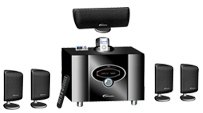
The Paramax IM3 is marketed as a multi-functional 5.1-channel home audio system. Rather than requiring you to purchase separate components, this unit claims to combine five essential audio devices into a single chassis. It operates as a power amplifier, an audio/video receiver, a pre-amplifier, an FM radio tuner, and a digital sound processor (DSP). On paper, this “all-in-one” approach is highly appealing, especially for users who want to avoid the clutter of multiple electronic boxes under their television.
Let’s take a closer look at the key specifications provided by the manufacturer:
- Total Power Output: 2000 Watts
- Subwoofer Power: 500 Watts (Program)
- Satellite & Center Speaker Power: 1500 Watts (5 channels x 300 Watts each)
- Subwoofer Driver: 8-inch Long-Throw Active Driver
- Video Compatibility: HD-TV Compatible
- Audio Input Support: Standard stereo inputs, auxiliary ports, and legacy connections (often including older iPod/MP3 docks depending on the manufacturing run)
The core of this system is its 5.1 surround sound configuration. This means it supports five discrete main audio channels (left, right, center, surround left, and surround right) along with one dedicated low-frequency effects channel (the subwoofer). The 8-inch long-throw active driver in the subwoofer cabinet is designed to move back and forth over a greater distance than standard drivers, which theoretically allows it to displace more air and create deeper, more impactful bass frequencies.
Additionally, the built-in digital sound processor is intended to help shape the acoustic output, allowing you to choose between various preset sound modes to match whatever you are watching or listening to, whether it is a fast-paced action movie, a live sporting event, or high-fidelity music.
Pros of the Paramax IM3
While the system has several caveats that we will address later, it does offer a few distinct advantages for specific home setups. Here are the key benefits of the Paramax IM3:
Multi-Functional, All-in-One Design
One of the biggest selling points of the Paramax IM3 is its sheer versatility. By combining an amplifier, pre-amp, receiver, radio tuner, and digital sound processor into one unit, it simplifies your physical entertainment center. You do not have to worry about buying expensive interconnect cables to link a separate pre-amplifier to a power amplifier, nor do you need to learn how to configure multiple devices to work in harmony.
Active Subwoofer Configuration
Unlike passive subwoofers that rely on the main receiver to feed them power, the Paramax IM3 features an active 8-inch subwoofer. Active subwoofers contain their own dedicated internal power amplifiers. This is a major advantage because it ensures the subwoofer has plenty of dedicated electrical juice to drive the 8-inch long-throw driver, resulting in cleaner, punchier bass without draining power away from the main satellite speakers.
High Advertised Wattage
On paper, an output of 2000 watts is incredibly high. For users with large living rooms or high-ceilinged basements, a high-wattage system is desirable to ensure that sound can fill the entire space without distorting. If the system can hit even a fraction of its advertised peak ratings consistently, it has the potential to get exceptionally loud.
Straightforward, Analog-Friendly Set Up
Modern AV receivers can be incredibly complicated to set up. Many require you to connect them to your home Wi-Fi network, run automatic microphone calibrations, navigate complex on-screen menus, and download mobile apps just to get basic sound. The Paramax IM3 utilizes a much more traditional, plug-and-play approach. Its rear panel consists of straightforward analog connections that make it easy to wire up your speakers and get things running in minutes.
Built-In FM Tuner
While streaming music has largely taken over the modern household, many people still enjoy listening to local radio stations for news, weather, sports, and music. The integration of a physical FM tuner with manual and automatic station scanning means you do not have to rely on an internet connection to enjoy local broadcasts.
Full-Function Remote Control
The system comes equipped with a dedicated wireless remote control. This allows you to easily switch between inputs, adjust individual speaker volume levels, fine-tune the treble and bass, toggle the digital sound processor presets, and control your radio stations without ever having to get up from your couch.
Cons of the Paramax IM3
To write a truly honest and balanced review, we must look closely at the drawbacks of this system. When evaluating a piece of equipment priced at $799.00, the expectations are naturally very high. Unfortunately, the Paramax IM3 falls short in several critical areas compared to modern mainstream home theater systems.
Serious Lack of Modern Connectivity
In today’s home theater landscape, HDMI is the absolute standard. Modern receivers utilize HDMI eARC (Enhanced Audio Return Channel) to receive high-resolution, uncompressed audio directly from your smart TV using a single cable. The Paramax IM3 lacks modern HDMI switching, optical audio inputs, and digital coaxial connections. Furthermore, it does not feature built-in Bluetooth or Wi-Fi connectivity. If you want to stream music from your phone or connect a modern gaming console, you will have to rely on clunky analog adapters or auxiliary cables.
Inflated and Misleading Power Specifications
One of the most important concepts in home audio is the difference between Peak Power (PMPO) and Continuous Power (RMS). The advertised “2000 Watts” is almost certainly a peak rating, which refers to the absolute maximum amount of power the system can handle or discharge for a split second before failing. In terms of real-world, continuous RMS power (the metric that actually determines how clean and loud a system sounds over time), the Paramax IM3 is likely operating at a fraction of that number—probably closer to 30 to 50 watts per channel. Advertising peak numbers is a common tactic used to make low-end gear look like high-end audiophile equipment.
No Support for Modern Surround Formats
A true $799 home theater receiver should support modern multi-channel audio codecs like Dolby Atmos, DTS:X, Dolby TrueHD, or DTS-HD Master Audio. These formats provide object-based, highly immersive surround sound. Because the Paramax IM3 relies primarily on analog inputs and basic digital processing, it cannot decode these modern audio tracks. It will only output basic, matrixed 5.1 surround sound, which lacks the detail and steering precision of modern cinema standards.
Obscure Brand Identity and Lack of Manufacturer Support
Paramax is not a mainstream consumer electronics brand like Sony, Denon, Yamaha, Onkyo, or Marantz. The brand has historically been associated with alternative distribution methods (often referred to in the audio community as “white van” sales). Because of this, there is no official manufacturer website, no customer service helpline, no firmware updates to download, and no reliable way to claim a warranty if a component fails. If your unit breaks, finding replacement parts or technical support will be incredibly difficult.
Extremely Poor Price-to-Performance Ratio
At $799.00, the Paramax IM3 is priced similarly to premium mid-range AV receivers from industry giants. For this budget, you can easily purchase a highly advanced, brand-name 7.2-channel receiver equipped with 8K HDMI ports, Dolby Atmos, Bluetooth, Apple AirPlay, and built-in room correction, while still having money left over for a high-quality speaker package. Paying $799.00 for the legacy technology inside the Paramax IM3 is highly uneconomical.
Customer Reviews Analysis
As mentioned earlier, the Paramax IM3 currently has 0 reviews on Amazon. When a product has no direct consumer feedback, a smart buyer must look to the broader internet community to see what real-world experiences tell us about the brand and the product line.
When you research the “Paramax” brand name on audio enthusiast forums, reddit, and consumer warning websites, a very clear pattern emerges. Paramax is widely recognized as one of the hallmark brands of the infamous “white van speaker scam.”
In this sales scheme, representatives driving unmarked rental vans approach people in gas stations, parking lots, or college campuses. They claim to be professional home theater installers who have “extra stock” left over from a job due to a warehouse mistake. They show high-quality brochures displaying an incredibly high MSRP (often between $1,500 and $3,000) to convince the buyer they are getting a luxury product, and offer to sell it on the spot for a “discounted” price of several hundred dollars.
In reality, the electronics inside these units are incredibly cheap, lightweight, and mass-produced. Users who have opened up similar Paramax units or set them up in their homes have noted several common issues:
- Fake Display Elements: Some models feature graphical equalizers or power meters on the front display that are merely blinking lights, rather than actual, functioning audio analysis tools.
- Lightweight Cabinets: Users frequently report that the speaker cabinets and subwoofers are incredibly light, indicating very small speaker magnets and thin, fragile MDF or plastic construction. In some extreme teardown videos of similar scam brands, physical weights (like bags of sand or blocks of concrete) have been found glued inside the subwoofer box to make it feel heavier and higher-quality than it actually is.
- Subpar Audio Quality: Those who have hooked up these systems out of curiosity report flat, muddy sound. The treble is often harsh, the midrange is muffled, and the bass lacks any real definition, sounding more like a cheap clock radio than a cinematic home theater.
The absence of any verified reviews on Amazon further suggests that this product is not a standard retail item that consumers actively seek out and buy through traditional storefronts.
Who Should Buy This Product?
Given the technical limitations, inflated specifications, and problematic brand history, it is difficult to recommend the Paramax IM3 to the vast majority of consumers. However, there are a couple of very specific scenarios where someone might consider acquiring one:
- The Second-Hand Bargain Hunter: If you happen to find a brand-new, unopened Paramax IM3 box at a local garage sale, thrift shop, or estate auction for $30 to $50, it might be worth picking up. At that rock-bottom price point, it can serve as a decent, disposable audio setup for a garage, workshop, college dorm room, or backyard patio where you do not want to risk damaging expensive, high-end gear.
- The Retro Audio Experimenter: If you specifically want a legacy system with physical controls and older inputs to connect to vintage gear, and you can find it for a tiny fraction of the retail price, it could serve as an experimental unit to tinker with.
Who should absolutely avoid it? Anyone looking for a genuine, high-quality, modern home theater system to connect to an HD or 4K Smart TV. If you are shopping with a budget of $700 to $800, you should completely steer clear of this product.
Final Verdict
While the product description of the Paramax IM3 5.1 Amplifier, Receiver, Pre-Amp, FM Tuner, and Digital Sound Processor paints a picture of a high-performance home audio system, the reality is vastly different. At its current price point of $799.00, this system is an incredibly poor investment.
The advertised “2000 Watts” of power is a marketing illusion designed to catch the eyes of unsuspecting buyers. The total lack of modern connectivity—most notably HDMI and Bluetooth—renders this unit practically obsolete for modern living rooms. Furthermore, the lack of mainstream manufacturer support, zero verified customer reviews, and the brand’s notorious association with predatory “white van” sales tactics make purchasing this product a massive financial risk.
For $799.00, you can build a genuinely phenomenal home audio setup. For instance, you could purchase a brand-name 5.1 or 7.2-channel receiver from a trusted manufacturer like Denon, Sony, or Yamaha for around $300 to $400. You could then spend the remaining $400 on a high-quality, reputable speaker package from brands like Klipsch, Polk Audio, or ELAC. This approach will give you true high-fidelity sound, modern HDMI eARC connectivity, Bluetooth streaming, Dolby Atmos decoding, and a reliable manufacturer’s warranty.
Our Recommendation: Pass on the Paramax IM3. Do not let the impressive-looking wattage numbers or the multi-functional description fool you. Invest your money in established, trusted audio brands that offer modern features, genuine specifications, and robust customer support.