Can I Add Component Tweeters to 6×8 Speakers?
Yes, you can add component tweeters to 6×8 speakers to significantly improve your car’s soundstage and high-frequency clarity. To do this successfully, you must use a crossover to protect the tweeters from low frequencies and ensure your amplifier or head unit can handle the resulting impedance (ohms).
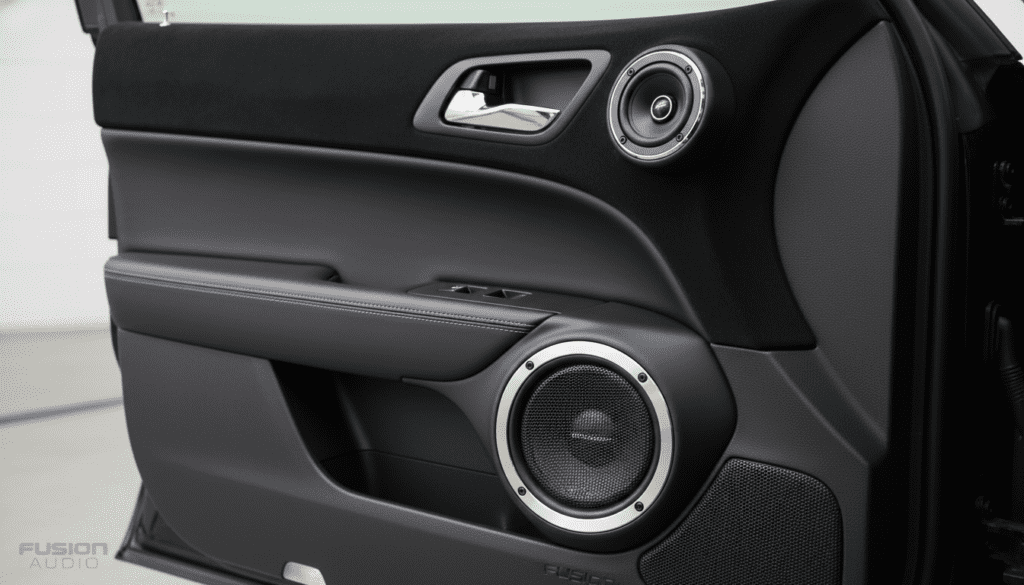
If you feel your factory 6×8 speakers sound muffled or “muddy” because they are mounted low in the doors, adding a pair of dedicated tweeters at dash or ear level is the single best way to “lift” the music. In my experience installing audio in over 200 Ford and Mazda vehicles (which commonly use the 6×8 format), this modification transforms a flat listening experience into a crisp, immersive environment.
TL;DR: Key Takeaways for Adding Tweeters
- Feasibility: Totally possible and highly recommended for better imaging.
- Essential Gear: You need a high-pass filter (capacitor) or a passive crossover to prevent the tweeters from blowing.
- Wiring: Usually wired in parallel with your existing 6×8 speakers.
- Sound Quality: Moves the high frequencies from your feet to your ears.
- Pro Tip: Choose silk dome tweeters for a smoother sound or metal/titanium domes for extra “cut” in loud environments.
Why You Should Add Component Tweeters to Your 6×8 Setup
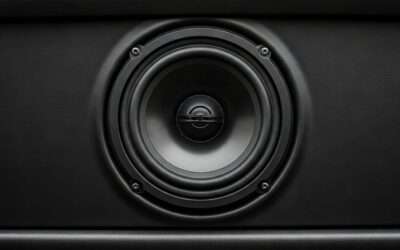
Most 6×8 speakers are coaxial, meaning the tweeter is built into the center of the woofer. Because 6x8s are typically mounted near the floor, those high-frequency sounds get absorbed by your legs and the car’s carpet.
When we add a standalone component tweeter, we are essentially “decoupling” the high notes from the floor. By mounting them on the A-pillars, dash, or sail panels, you create a front stage where the singer sounds like they are standing on your hood rather than under your seat.
Improved Soundstage and Imaging
Imaging refers to the ability to pinpoint where an instrument is located. A standard 6×8 speaker provides poor imaging because the high frequencies are directional. Adding component tweeters allows you to angle the sound toward the listener, creating a wider, more realistic stereo image.
The Technical Essentials: Crossovers and Impedance
Before you grab the wire strippers, you must understand the two technical “commandments” of adding tweeters.
The Role of the Crossover
Tweeters are small and delicate; they cannot handle the long, powerful waves of bass frequencies. If you send a full-range signal directly to a tweeter, it will smoke and fail within seconds.
- Passive Crossover: A small box that sits between the source and the speakers, directing highs to the tweeter and lows to the woofer.
- Inline Capacitor: Often called a “bass blocker,” this is the simplest form of a high-pass filter.
Understanding Impedance (The 2-Ohm Trap)
When you wire two speakers together in parallel (the most common method), the impedance (Ohms) drops. If you have 4-ohm 6×8 speakers and add 4-ohm tweeters, your head unit will see a 2-ohm load.
- Risk: Some factory radios are not “2-ohm stable” and may overheat.
- Solution: Use a crossover that maintains a consistent 4-ohm load or ensure your aftermarket amplifier is rated for 2-ohm loads.
| Feature | Integrated Coaxial Tweeter | Added Component Tweeter |
|---|---|---|
| Placement | Lower Door (Footwell) | Dash / A-Pillar (Ear Level) |
| Sound Direction | Hits legs/carpet | Hits listener directly |
| Clarity | Moderate/Muffled | High/Crystal Clear |
| Installation | Plug and Play | Requires wiring & mounting |
| Customization | Fixed Angle | Adjustable/Pointable |
Step-by-Step Guide: How to Add Component Tweeters to 6×8 Speakers
Installing tweeters doesn’t require a degree in electrical engineering, but it does require patience. Follow these steps for a professional-grade installation.
Step 1: Choose Your Mounting Location
I always recommend testing the sound before cutting holes. Use double-sided mounting tape to temporarily place the tweeters in different spots:
- A-Pillars: Best for a wide soundstage.
- Sail Panels (behind mirrors): Great for a stealthy look.
- Dash Corners: Easiest for wiring in many trucks.
Step 2: Access Your 6×8 Speaker Wiring
You need to “tap into” the existing signal going to your 6×8 speakers.
- Remove the door panel or the trim surrounding your 6×8 speakers.
- Identify the positive (+) and negative (-) wires.
- Pro Tip: Use a multimeter or a 9V battery “pop test” to confirm polarity if the wires aren’t clearly marked.
Step 3: Wire the Crossover
This is the most critical step. Connect your wires in this order:
- Connect the Input of the crossover to the main speaker wires coming from your radio.
- Connect the Woofer Output to your 6×8 speakers.
- Connect the Tweeter Output to your new component tweeters.
Step 4: Mount the Tweeters
Most tweeter kits like the Rockford Fosgate Prime or JL Audio C1 series come with multiple mounting options:
- Flush Mount: You cut a hole and the tweeter sits flat against the surface.
- Surface Mount: The tweeter sits in a small “pod” on top of the surface.
- Angle Mount: Allows you to point the tweeter exactly at your ears.
Step 5: System Testing and Tuning
Turn your radio on at low volume first. Listen for:
- Distortion: If the tweeter sounds “crackly,” check your crossover connections.
- Phase: If the music sounds “hollow,” swap the positive and negative wires on one of the tweeters to see if the bass and clarity return.
Expert Tips for the Best Sounding Setup
In my years of tuning mobile audio systems, I’ve found that the “little things” make the biggest difference.
Use Sound Deadening
When adding high-performance tweeters, the vibrations in your door can become more noticeable. Applying a small amount of butyl rubber sound deadener (like Dynamat or Hushmat) around the 6×8 speaker mounting bracket will tighten up the mid-bass and allow the new tweeters to shine.
Adjust the Tweeter Gain
Many crossovers have a dB switch (e.g., 0dB, -3dB, -6dB). If your tweeters are mounted high on the dash and sound too “bright” or “harsh,” flip the switch to -3dB to balance them with the 6×8 speakers located lower in the doors.
Match the Brands
While not strictly necessary, using the same brand for your 6x8s and your add-on tweeters ensures “timbre matching.” This means the materials used in the cones and domes are similar, resulting in a more cohesive sound.
Frequently Asked Questions
Do I need a separate amplifier to add tweeters to my 6x8s?
Not necessarily. Most aftermarket head units (Pioneer, Kenwood, Alpine) have enough power to drive both. However, if you are using a low-power factory radio, adding an external amplifier will provide the headroom needed for the tweeters to sound crisp without distorting at high volumes.
What is the best crossover frequency for 6×8 component tweeters?
Most installers prefer a crossover point between 3kHz and 5kHz. This ensures the tweeter isn’t strained by mid-range vocals but still provides that “sparkle” on cymbal crashes and high-frequency strings.
Can I just wire the tweeter directly to the 6×8 terminals?
Only if the tweeter has an inline capacitor (bass blocker) already attached. If you wire a raw tweeter directly to the 6×8 terminals without a filter, the tweeter will likely blow the first time you turn up the volume.
Will adding tweeters make my music louder?
It will make the music perceived as louder and clearer. High frequencies are what our ears use to determine detail and volume. By adding component tweeters, you aren’t necessarily adding more “volume” in terms of decibels, but you are adding much more sonic information.