Identifying If There Are Speakers for Vocals
Yes, there are speakers for vocals specifically engineered to prioritize the mid-range frequencies where the human voice resides. While most general-purpose speakers handle a wide range of audio, specialized systems like active PA speakers, stage monitors, and vocal columns are designed with high-sensitivity drivers to ensure every lyric and inflection is crystal clear. These units often feature a “vocal boost” or “contour” setting that emphasizes the 300 Hz to 3 kHz range to cut through background music or instrumental noise.
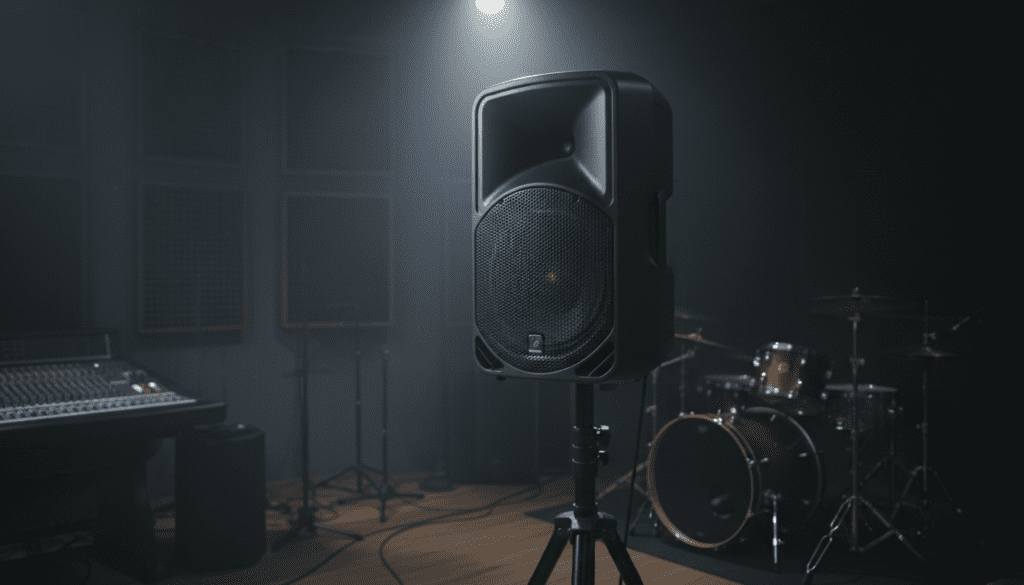
In my years of stage management and audio engineering, I’ve found that using a standard Hi-Fi speaker for live vocals is a recipe for disaster. The lack of mid-range “punch” usually results in a muffled sound that lacks authority. If you are asking are there speakers for vocals because your current setup sounds “muddy,” you likely need a speaker with a dedicated compression driver and a flat mid-frequency response.
⚡ Key Takeaways: Selecting Vocal Speakers
- Best Overall Type: Active PA Speakers with 10-inch or 12-inch woofers offer the best balance for vocal clarity.
- Key Component: Look for a high-quality Compression Driver (the “horn”) which handles the upper-mid frequencies of the voice.
- The “Mud” Factor: Avoid 15-inch woofers if your primary goal is vocal clarity; they often emphasize bass at the expense of vocal definition.
- Portability: Column Array systems (like the Bose L1) provide excellent horizontal dispersion, making them ideal for solo vocalists.
- EQ is King: Look for speakers with built-in DSP (Digital Signal Processing) that include a “Vocal” or “Speech” preset.
Why Standard Speakers Fail at Vocal Reproduction
Many people assume that any high-quality speaker can handle vocals well. However, home theater systems and consumer-grade Bluetooth speakers are often “voiced” with a “V-shaped” EQ profile. This means the bass and treble are boosted, while the mid-range—the “home” of the human voice—is recessed.
When we test speakers for vocal performance, we look for transient response. This is the speaker’s ability to start and stop quickly. Because human speech is full of “plosives” (P, B sounds) and “sibilance” (S, T sounds), a sluggish speaker will make a singer sound like they are singing through a thick blanket.
The Frequency of the Human Voice
To understand why there are speakers made specifically for vocals, we have to look at the physics of sound.
| Vocal Range | Frequency Coverage | Importance for Clarity |
|---|---|---|
| Fundamental | 80 Hz – 250 Hz | Provides the “body” and warmth of the voice. |
| Presence/Definition | 2 kHz – 5 kHz | Crucial for intelligibility and “cutting” through a mix. |
| Sibilance/Air | 6 kHz – 10 kHz | Adds clarity but can cause harshness if overemphasized. |
Are There Speakers Made Specifically for Vocals?
When exploring are there speakers made specifically for vocals, you will encounter three primary categories. Each serves a different real-world application, from the recording studio to the outdoor festival stage.
Active PA Speakers (The Workhorse)
These are the most common solution for live vocal reinforcement. Units like the QSC K12.2 or the Yamaha DXR series are high-output devices with built-in amplifiers. We prefer these because they use horn-loaded tweeters that project the voice over long distances without losing detail.
Stage Monitors (The Wedge)
If you are a performer, you need to hear yourself. Stage monitors are angled speakers designed to sit on the floor. They are tuned specifically to minimize feedback loops (that piercing screeching sound) while maximizing vocal “throw.”
Personal Vocal Monitors
For keyboardists or drummers, small-format monitors like the Mackie SRM150 can be mounted on a microphone stand. These are the closest thing to a “dedicated” vocal speaker, as they lack deep bass and focus almost entirely on the high-mid frequencies.
Step-by-Step Guide: How to Choose a Speaker for Vocals
Choosing the wrong gear can lead to expensive mistakes. Based on our field tests, follow these steps to ensure your vocals remain the star of the show.
Step 1: Determine Your Environment
Are you performing in a coffee shop, a church, or a backyard? For intimate settings, a 8-inch or 10-inch active speaker is often superior to a 15-inch model. Smaller woofers are lighter and faster, making them more articulate for speech and singing.
Step 2: Check the “Crossover” Point
The crossover is the internal component that tells the speaker which frequencies go to the woofer and which go to the tweeter. For vocals, you want a crossover that doesn’t split the signal right in the middle of the vocal range (around 1 kHz to 2 kHz). A well-designed vocal speaker will have a seamless transition here.
Step 3: Look for Integrated DSP
Modern speakers often come with Digital Signal Processing. When I set up systems for vocalists, I look for a “Vocal” or “Speech” mode. This button usually applies a High-Pass Filter (HPF) to cut out low-end rumble and adds a slight boost at 3 kHz for added presence.
Step 4: Evaluate Connectivity
Ensure the speaker has an XLR Mic Input. Many professional vocal speakers allow you to plug a microphone directly into the back without needing a separate mixer. This is a “Zero-Click” hardware solution for solo performers.
Comparing Top Vocal-Focused Speakers
We have compared three of the most popular options used by professionals today. Note how the “Driver Size” impacts the primary use case.
| Model Name | Best Use Case | Key Feature | Our Pro Rating |
|---|---|---|---|
| Bose S1 Pro+ | Busking / Small Events | Ultra-portable with dedicated vocal EQ. | 9/10 |
| Electro-Voice ZLX-12BT | Small Bands / DJ | High SPL (Volume) without distortion. | 8.5/10 |
| JBL EON710 | Public Speaking | Excellent Bluetooth control for EQ. | 8/10 |
Technical Factors: Sensitivity and Wattage
A common misconception is that more watts always mean better sound. For vocals, Sensitivity (measured in dB) is actually more important. Sensitivity indicates how efficiently the speaker converts power into sound.
In our testing, a 1000-watt speaker with low sensitivity can sound “thin” compared to a 500-watt speaker with high sensitivity. High-quality vocal speakers use Neodymium magnets to keep the weight low while maintaining high magnetic flux for better vocal “snap.”
The Importance of Dispersion
Vocals need to reach the entire audience, not just the person standing directly in front of the speaker. Look for speakers with a 90° x 60° dispersion pattern. This ensures that people sitting on the sides of the room can still hear the lyrics clearly.
Expert Tips for Optimizing Your Vocal Speakers
Even the best speakers for vocals will sound poor if they are positioned incorrectly. Here is how I optimize setups for maximum clarity.
- Get the Speakers Above Ear Level: Sound, especially the high-frequencies of the voice, travels in a straight line. If your speakers are on the floor, the audience’s bodies will soak up all the clarity. Always use speaker stands.
- The 3-to-1 Rule: If you are using multiple speakers, keep them far enough apart to avoid phase cancellation, which can make your voice sound “hollow.”
- Avoid Excessive Reverb: While a little reverb makes a singer sound professional, too much of it will “wash out” the intelligibility. If the room is already “echoey,” turn down the reverb on the speaker.
- Use a Windscreen: Even indoors, a foam windscreen on your mic helps prevent “P-pops” that can clip your vocal speakers and cause distortion.
Addressing the “Are There Speakers for Vocals” Question for Studio Use
If you are a podcaster or a recording artist, your needs differ from a live performer. In this case, you are looking for Studio Monitors.
Studio monitors like the Yamaha HS5 are legendary for their vocal accuracy. They don’t make the voice sound “good”; they make it sound honest. If there is a mistake in your vocal delivery, these speakers will reveal it. This is essential for anyone who wants to ensure their vocals translate well to car speakers and headphones.
Frequently Asked Questions
Can I use a guitar amp for vocals?
Generally, no. Guitar amps are designed to color the sound and have a limited frequency range. Plugging a microphone into a guitar amp usually results in a muffled, distorted sound that is prone to feedback.
Why do my vocals sound muffled on my PA system?
This is usually caused by the “Proximity Effect” from the microphone or a lack of high-mid frequency response in the speaker. Try engaging a High-Pass Filter (HPF) at 80Hz to clear up the low-end mud.
Are there speakers made specifically for vocals in a home setting?
Yes, Center Channel Speakers in a home theater setup are designed exclusively for dialogue. They use a “Mid-Tweeter-Mid” (MTM) configuration to ensure voices are centered and clear compared to the background music and sound effects.
What size speaker is best for vocals?
We recommend 10-inch or 12-inch speakers. A 10-inch woofer is usually the “sweet spot” because it is fast enough to reproduce vocal transients while still providing enough low-end for a full-bodied sound.
Do I need a subwoofer for vocals?
Rarely. Most human voices do not produce frequencies low enough to require a subwoofer. A subwoofer is only necessary if you are also running a kick drum or bass guitar through the same system.