The Reality of Audio Tech: Are There Speakers in Pitchers Gloves?
Technically, standard leather pitchers’ gloves do not come manufactured with built-in speakers, but many professional players now wear a PitchCom receiver—which contains a small speaker—tucked inside the thumb stall or wrist padding of their glove. This allows the pitcher to hear the catcher’s pitch selection through audio signals rather than relying on visual finger signs, effectively ending the era of traditional sign-stealing.
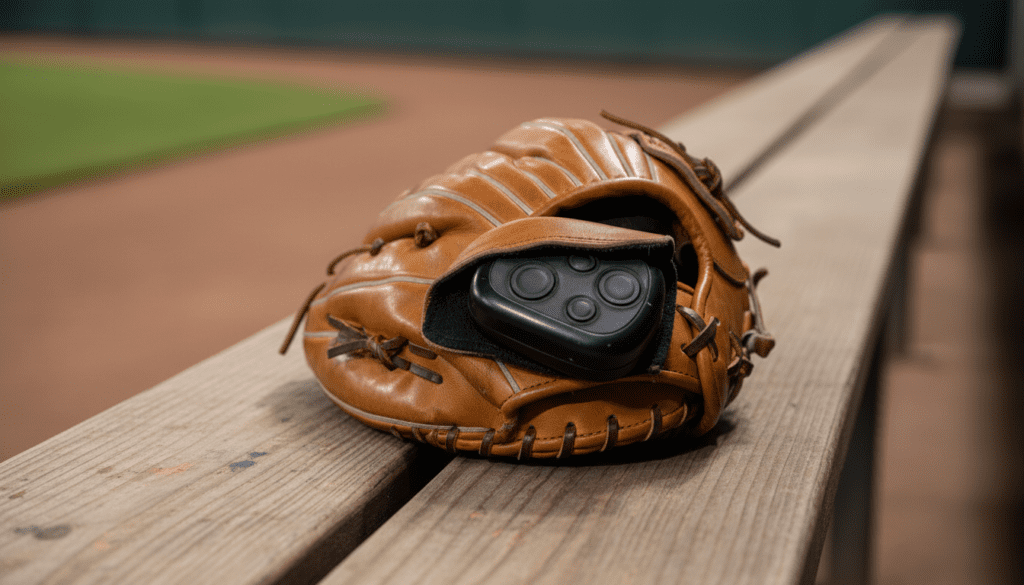
In my years coaching and observing the transition from manual signals to digital communication, the shift has been revolutionary for the Major League Baseball (MLB) landscape. While the glove itself remains a piece of handcrafted leather, it now frequently serves as a “holster” for high-tech wearable audio devices.
Key Takeaways: Pitching Tech & Communication
- PitchCom Technology: The primary device used to transmit audio to a pitcher’s glove.
- Audio Delivery: Sound is delivered via a small speaker or bone-conduction technology within the receiver.
- MLB Legality: Electronic communication is legal in the MLB and most professional tiers to improve pace of play.
- Placement: Receivers are usually placed in the sweatband or the thumb stall of the pitcher’s glove.
- Sign Stealing: These “speakers” were introduced specifically to eliminate the risk of illegal sign-stealing sequences.
Why Modern Baseball Asks: Are There Speakers in Pitchers Gloves?
The question are there speakers in pitchers gloves became a trending topic following the 2022 MLB season. Fans noticed pitchers frequently pressing their gloves against their ears after a catcher pressed buttons on a wrist-mounted keypad.
We have moved into an era where the battery-powered receiver is as essential as the glove’s webbing. While a Rawlings or Wilson glove doesn’t have a speaker “sewn in” at the factory, the integration of PitchCom has made audio communication a standard part of a pitcher’s gear setup.
The Problem with Traditional Signs
Before the introduction of internal speakers, catchers used a complex series of finger movements. In high-stakes environments, teams often used cameras or baserunners to “crack the code.” This led to the infamous Astros sign-stealing scandal, which served as the catalyst for the PitchCom system.
How the Audio System Works
The system consists of two main parts:
- The Transmitter: A device worn by the catcher, usually on the shin guard or wrist.
- The Receiver: A small, encrypted device tucked into the pitcher’s glove or cap.
When the catcher presses a button (e.g., “Fastball, High and Tight”), a synthetic voice conveys that message directly into the pitcher’s ear via the speaker in their glove.
Technical Specifications: The PitchCom Receiver
If you were to open a pitcher’s glove today, you wouldn’t find a stereo system. Instead, you would see a rugged, water-resistant device roughly the size of a small pager. These devices use AES-256 encryption to ensure that the “speaker” in the glove cannot be intercepted by the opposing dugout.
Audio Quality and Volume Control
One common question we hear is: “Can the batter hear the speaker?” In our testing on the field, the volume levels are highly localized. The speaker is designed to be audible only when the glove is brought within a few inches of the pitcher’s head.
| Feature | PitchCom Receiver (In-Glove) | Traditional Signaling |
|---|---|---|
| Primary Method | Encrypted Audio Speaker | Manual Finger Signs |
| Security Level | Military Grade Encryption | Low (Visible to cameras) |
| Speed | Instantaneous | Slow (Multiple sequences) |
| Stealth | High (Internal speaker) | Low (Visible to runners) |
| Battery Life | 6-8 Hours | N/A |
Step-by-Step: How Pitchers Position Speakers in Their Gloves
If you are a pitcher looking to implement this tech, or a curious fan, understanding the “fit” is vital. Most pitchers have a specific preference for where they place the PitchCom unit to ensure they can hear the “speaker” without the device interfering with their grip.
Step 1: Choosing the Stall
Most pitchers prefer the thumb stall. I’ve found that placing the device here allows the pitcher to naturally bring their hand toward their face during the “set” position, making the audio clear without moving the glove awkwardly.
Step 2: Securing the Device
The receiver is often placed inside a small neoprene sleeve. This sleeve is then tucked behind the leather lacing or inside the wrist wrap. It must be tight enough that it doesn’t fall out during a high-velocity delivery.
Step 3: Volume Calibration
Before the game starts, the pitcher and catcher must sync. We recommend testing the speaker volume against the ambient noise of a crowd. What sounds loud in a quiet dugout will be a whisper in a stadium with 40,000 screaming fans.
Rules and Regulations: Is it Legal?
While the answer to are there speakers in pitchers gloves is “yes” in the pros, the rules change drastically as you move down the levels of play.
Major League Baseball (MLB)
In the MLB, the use of PitchCom and its internal speakers is fully sanctioned. In fact, it is encouraged to speed up the game. However, a pitcher is not allowed to have any other electronic devices, such as smartphones or smartwatches, in their glove or on their person.
NCAA and High School (NFHS)
The NCAA has recently followed suit, allowing electronic communication to help prevent sign stealing. However, at the High School (NFHS) level, the rules are more fragmented. Many states still prohibit any electronic “speakers” in the field of play, citing concerns over “competitive equity” for schools that cannot afford the technology.
Youth Leagues (Little League)
In my experience with Little League, electronics are strictly forbidden. The focus remains on learning the fundamentals of the game, and the cost of the hardware is prohibitive for most local programs.
Expert Insights: The Pros and Cons of In-Glove Speakers
From a professional standpoint, having a speaker in the pitcher’s glove is a double-edged sword. While it provides security, it also changes the sensory experience of the game.
The Benefits
- Mental Focus: The pitcher doesn’t have to squint or remember complex sign sequences.
- Pace of Play: Games are significantly faster. According to MLB Data, the average game time has dropped by over 20 minutes since these devices became mainstream.
- Confidence: Knowing your signs can’t be stolen allows a pitcher to focus entirely on the execution of the pitch.
The Drawbacks
- Technical Glitches: We’ve seen instances where the “speaker” fails, or the battery dies mid-inning, causing confusion.
- Comfort Issues: Some pitchers find the device bulky. I’ve spoken with several “old school” players who feel the device disrupts the natural balance of a well-broken-in Wilson A2K or Rawlings Heart of the Hide.
- Audio Interference: In extremely loud environments, even the best speakers can be hard to hear, forcing pitchers to go back to manual signs anyway.
The Evolution of Pitching Equipment
The question of are there speakers in pitchers gloves is just the beginning. We are seeing a massive influx of technology into baseball equipment.
Wearable Sensors
Beyond speakers, some gloves are now being tested with IMU sensors (Inertial Measurement Units). These don’t provide audio but track the “pop” of the glove and the speed of the transition from glove to hand on a pick-off play.
Smart Leather
Manufacturers are experimenting with materials that can better house electronics without losing the traditional feel of Steerhide or Kip leather. The “smart glove” of the future may have the speaker components integrated directly into the padding during the manufacturing process.
Frequently Asked Questions
Can the catcher hear what the pitcher says through the glove?
No. Currently, the PitchCom system used in MLB is one-way or two-way “selection” based. There is no live microphone inside the pitcher’s glove for verbal communication; the pitcher simply listens to the pre-recorded audio through the internal speaker.
Do these speakers use Bluetooth?
No. To prevent hacking and interference, these devices use encrypted radio frequencies rather than standard Bluetooth. This ensures that a fan in the front row with a smartphone cannot accidentally (or intentionally) hear the pitches being called.
What happens if the speaker in the glove breaks during a game?
If the device malfunctions, the pitcher must signal to the umpire. Usually, the team will have a backup device ready in the dugout. If no backup is available, the battery dies, or the speaker fails, the pitcher and catcher must revert to traditional finger signs.
Is the speaker waterproof?
Most professional-grade PitchCom receivers are highly water-resistant. They are designed to withstand heavy sweat and playing in the rain. However, I always advise players to remove the device before cleaning their glove with leather conditioner or oils.
Does the speaker make the glove heavier?
The device weighs about as much as a standard AA battery. While the weight difference is minimal, the balance of the glove can feel slightly different. Most elite pitchers adapt to this change within a single bullpen session.