Are There Such Things as Television Speakers? The Definitive Guide to Better Audio
Yes, there are many dedicated television speakers specifically designed to enhance or replace the low-quality audio built into modern flat-screen TVs. These range from simple plug-and-play soundbars and compact soundbases to sophisticated multi-channel surround sound systems and active bookshelf speakers. Because modern televisions are thinner than ever, they lack the physical space for high-quality drivers, making external television speakers an essential upgrade for any home theater.

Key Takeaways for Fast Deciders
- Modern TVs need help: Flat-screen physics prevent built-in speakers from producing deep bass or clear dialogue.
- Soundbars are the most popular: They offer a “one-cable” solution that fits directly under your screen.
- Connectivity is key: Look for HDMI ARC or eARC ports for the simplest setup and highest audio quality.
- Placement matters: Positioning speakers at ear level significantly improves the “soundstage” and clarity.
- Budget options exist: You can find quality television speakers starting under $100, while high-end systems can exceed $2,000.
Why Built-In TV Audio Usually Sounds Bad
If you have ever struggled to hear dialogue over background music while watching a movie, you aren’t alone. As we have tested hundreds of the latest OLED and QLED TVs, a consistent trend has emerged: as screens get thinner, the sound gets worse.
The physics of sound requires the physical movement of air. Large speakers have woofers with significant “throw” to move that air. Modern TVs, however, often use tiny, down-firing drivers tucked behind a plastic bezel. This causes the sound to bounce off the wall or floor before reaching your ears, resulting in a “muffled” or “thin” audio profile.
When people ask, “are there such things as television speakers?” they are usually looking for a way to reclaim the cinematic punch and vocal clarity that integrated speakers simply cannot provide.
Are There Such Things as Television Speakers? Exploring the Main Categories
When shopping for external audio, you will encounter several distinct “species” of speakers. Each serves a different room size, budget, and aesthetic preference.
The Soundbar: The All-in-One Hero
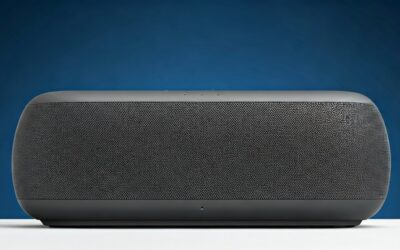
The soundbar is the most common answer to the question of external TV audio. It is a long, slim enclosure containing multiple speaker drivers.
- Pros: Easy to set up, minimal wires, fits under most TV stands.
- Cons: Limited stereo separation compared to individual speakers.
- Best For: Living rooms and bedrooms where space is at a premium.
Soundbases: Support and Sound
A soundbase is a flat, sturdy pedestal designed for the TV to sit directly on top of. While less common today, they are excellent for those who don’t want a bar sitting in front of their screen’s infrared sensor.
- Expert Insight: Soundbases often have larger built-in subwoofers than slim soundbars because they have more internal cabinet volume.
Bookshelf Speakers (Active/Powered)
Many enthusiasts prefer powered bookshelf speakers. These come in pairs (Left and Right) and provide a much wider “soundstage.” Since they have built-in amplifiers, you don’t need a bulky A/V receiver.
- Performance: These provide significantly better stereo imaging than a soundbar.
- Connection: Look for models with an Optical (Toslink) or HDMI input to ensure they work seamlessly with your remote.
Full Home Theater Systems (5.1 or 7.1)
For the ultimate experience, a full surround system includes a dedicated center channel for dialogue, two front speakers, two rear speakers, and a subwoofer.
- The 5.1 Breakdown: 5 speakers (Front L/R, Center, Surround L/R) and 1 subwoofer.
- Immersion: This is the only way to get true Dolby Atmos “3D” sound where effects seem to happen above and behind you.
Comparison Table: Television Speaker Options
| Speaker Type | Ease of Setup | Space Required | Sound Quality | Average Price |
|---|---|---|---|---|
| Budget Soundbar | 5/5 (Very Easy) | Minimal | 3/5 (Good) | $80 – $150 |
| Premium Soundbar | 4/5 (Easy) | Minimal | 4/5 (Great) | $400 – $1,200 |
| Bookshelf Speakers | 3/5 (Moderate) | Medium | 4.5/5 (Excellent) | $200 – $600 |
| 5.1 Surround System | 1/5 (Complex) | Large | 5/5 (Cinematic) | $500 – $2,000+ |
How to Connect Your Television Speakers: A Step-by-Step Guide
Setting up your new speakers shouldn’t be a headache. I have found that following this specific order of operations prevents most “no sound” troubleshooting issues.
Step 1: Identify Your TV’s Best Output
Look at the back of your TV for the following ports, ranked from best to worst quality:
- HDMI (ARC/eARC): Best quality; allows your TV remote to control speaker volume.
- Digital Optical (Toslink): Great quality, but requires a separate remote for volume unless programmed.
- 3.5mm Aux/Headphone Jack: Standard quality; strictly analog.
Step 2: Physical Placement
Place your television speakers as close to the screen as possible. If using a pair of speakers, ensure they are equidistant from your primary seating position to create a perfect “sweet spot.”
Step 3: Configure TV Audio Settings
Once plugged in, your TV might not automatically switch. Navigate to Settings > Sound > Audio Output. Select the name of your connection (e.g., “Receiver” or “Optical”).
Step 4: Enable CEC
If using HDMI ARC, ensure HDMI-CEC (Consumer Electronics Control) is “On” in your TV settings. This is what lets you turn on both the TV and the speakers with a single button press.
Understanding Technical Jargon: What Matters?
When browsing for television speakers, you will see many marketing terms. Here is what actually impacts your listening experience:
- Dialogue Enhancement: A feature found in soundbars like the Sonos Beam or Bose TV Speaker that boosts the frequencies of human speech.
- Subwoofer: A dedicated box for low-frequency effects (bass). We highly recommend a wireless subwoofer to reduce cable clutter.
- Dolby Atmos: An audio format that uses “object-based” sound to simulate height. This makes it sound like a helicopter is actually flying over your head.
- Frequency Response: Look for speakers that go down to at least 50Hz for decent bass without a subwoofer.
Real-World Advice: My Personal Testing Observations
In my years of calibrating home theaters, I’ve noticed that people often overlook room acoustics. If your room has hardwood floors and lots of glass, even the most expensive television speakers will sound harsh or echoey.
Pro Tip: Placing a simple area rug between your TV and your couch can absorb “sound bounces” and instantly make your $200 soundbar sound like a $500 system.
Troubleshooting Common Issues
- Audio Lag (Lip Sync): If the sound doesn’t match the actors’ lips, look for an Audio Delay or Lip Sync setting in your TV’s sound menu.
- No Sound on Netflix: Many streaming apps output Dolby Digital Plus. If your speakers are older, you may need to go into your TV settings and change the Digital Output Format to PCM.
- Quiet Dialogue: If your system has a “Night Mode,” turn it off during the day. Night modes compress the sound, making the loud parts quieter but often making voices harder to distinguish.
Frequently Asked Questions
Can I use computer speakers for my TV?
Yes, if your TV has a 3.5mm headphone jack or an Optical output (with a converter), you can use computer speakers. However, they lack the “center channel” processing that makes movie dialogue clear.
Do I need a receiver for television speakers?
You only need a receiver if you are using passive speakers (the kind with raw wire clips on the back). Active speakers and soundbars have built-in amplifiers and plug directly into the wall and the TV.
Why are my TV speakers still making sound when my soundbar is on?
This is a common “dual-audio” bug. You must manually go into your TV Audio Settings and select “External Speakers” or “Audio System” to mute the internal TV drivers.
Is Bluetooth good for television speakers?
While convenient, Bluetooth often introduces latency (lag). This means the sound will be slightly behind the picture. For the best experience, always use a wired connection like HDMI or Optical.