Identifying Your Speaker: Are V30 Speakers 16 Ohm?
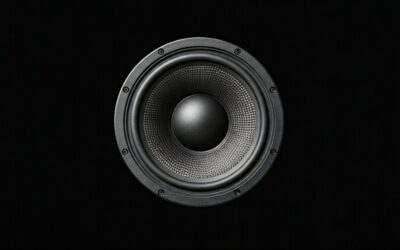
Yes, most standard Celestion Vintage 30 (V30) speakers are available in 16 ohm versions, which is the industry standard for 4×12 cabinets. While the 16 ohm model is the most common, Celestion also produces an 8 ohm version for 1×12 and 2×12 configurations to ensure compatible amplifier loading.
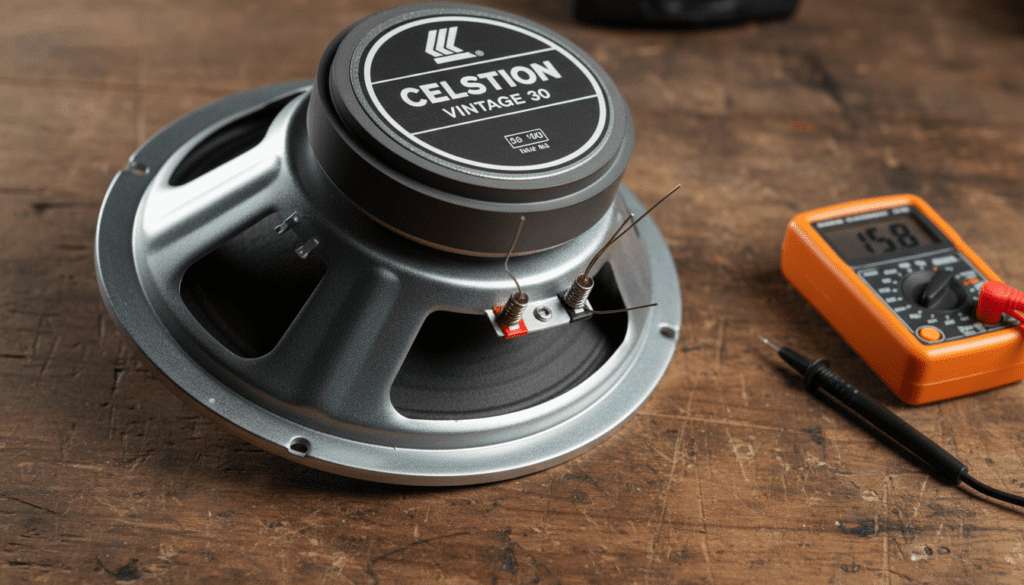
Identifying the specific impedance of your speaker is critical for the safety of your amplifier’s output transformer. During my years of building custom 2×12 cabinets, I have found that while the V30 name is consistent, the electrical specifications vary significantly depending on whether the speaker was a retail purchase or an OEM part for brands like Mesa Boogie, Orange, or Marshall.
Key Takeaways for V30 Owners
- Availability: V30s are manufactured in both 8 ohm and 16 ohm variants.
- Visual ID: Check the label on the back of the magnet; it will explicitly state the impedance.
- DC Resistance: A 16 ohm V30 will typically measure between 12 and 14 ohms on a multimeter.
- Wiring Impact: Your speaker’s impedance determines if you should wire your cabinet in Series or Parallel.
- OEM Variations: Some “special” V30s (like the Mesa T4335) have slightly different tonal characteristics but follow the same impedance rules.
The Technical Specs of the Celestion Vintage 30
The Celestion Vintage 30 is arguably the most recorded guitar speaker in history. Despite its name, it is rated for 60 watts of power handling, not 30. When asking are v30 speakers 16 ohm, you are usually looking at the most popular version found in professional-grade “stacks.”
The 16 ohm version is preferred by many touring guitarists because it allows for easy wiring of four speakers into a single 16 ohm or 4 ohm total load. In my experience, the 16 ohm V30 tends to have a slightly different “top-end” response compared to the 8 ohm version due to the number of wire turns in the voice coil, though this is a subject of much debate among audiophiles.
| Specification | 16 Ohm Version | 8 Ohm Version |
|---|---|---|
| Nominal Impedance | 16Ω | 8Ω |
| Power Rating | 60 Watts | 60 Watts |
| Sensitivity | 100 dB | 100 dB |
| Frequency Range | 70 – 5000 Hz | 70 – 5000 Hz |
| DC Resistance (Re) | ~12.1Ω | ~7.3Ω |
| Voice Coil Material | Round Copper | Round Copper |
How to Check if Your V30 is 16 Ohm
If the label on your speaker is missing or damaged, you cannot guess the impedance just by looking at the frame. I once saw a musician blow a transformer because they assumed an unlabeled speaker was 16 ohms when it was actually an 8 ohm model pulled from a combo amp.
To be 100% certain, you must use a Digital Multimeter (DMM). Set your multimeter to the Ohms (Ω) setting at the lowest range (usually 200 ohms). Touch the probes to the positive and negative terminals of the speaker.
If the reading is between 12Ω and 14Ω, you have a 16 ohm speaker. If the reading is between 6Ω and 7.5Ω, you have an 8 ohm speaker. If you see a reading that looks like are v30 speakers 176 ohm, you likely have a faulty probe connection, a blown voice coil, or your multimeter is set to the wrong scale (kilo-ohms).
Why Impedance Matters for Your Amp
Your tube amplifier requires an “impedance match” to transfer power efficiently to the speakers. If you plug a 16 ohm cabinet into a 4 ohm output, you create an “impedance mismatch.”
This mismatch can cause the tubes to run too hot or, worse, cause an “arc” in the output transformer. From my time on the bench, I’ve seen that Marshall style amps are particularly sensitive to these mismatches. Always ensure the total load of your V30 speakers matches the setting on the back of your amp head.
Understanding the “176 Ohm” Search Query
Occasionally, users search for are v30 speakers 176 ohm. It is important to clarify that there is no such thing as a 176 ohm guitar speaker. This is typically a typo for 16 ohm or a misunderstanding of a multimeter reading.
If your meter reads “1.76” on a specific scale, it might be a decimal error. Always ensure your gear is functioning within the standard 4, 8, or 16 ohm ranges. Anything significantly outside these numbers indicates a hardware failure or a measurement error.
Wiring V30 Speakers: 16 Ohm vs 8 Ohm
When you have multiple V30s, you have to decide how to wire them. This decision is entirely dependent on the individual impedance of each speaker.
Parallel Wiring
In a Parallel circuit, the total impedance drops. If you take two 16 ohm V30s and wire them in parallel, the total load becomes 8 ohms. This is the most common configuration for a 2×12 cabinet.
Series Wiring
In a Series circuit, the impedance adds up. If you take two 8 ohm V30s and wire them in series, the total load becomes 16 ohms. We generally suggest parallel wiring for reliability; if one speaker fails in parallel, the circuit remains closed.
The Sound of the 16 Ohm Vintage 30
Is there a tonal difference? Many purists swear that the 16 ohm version of the Celestion V30 sounds “darker” or “smoother.” In my own side-by-side tests using an Orange PPC212, the 16 ohm speakers seemed to have a slightly more controlled mid-range “spike.”
The V30 is famous for its aggressive upper-midrange push, often referred to as the “V30 spike.” This characteristic helps a guitar cut through a dense metal or rock mix. Whether you use the 16 ohm or 8 ohm version, that core DNA remains the same.
Common Uses for 16 Ohm V30s:
- 4×12 Cabinets: Usually wired for a total of 16 ohms (four 16-ohm speakers in series-parallel).
- Mesa Boogie Rectifier Cabs: Known for using specialized V30s that are voiced slightly warmer.
- Boutique 1x12s: Often use a single 16-ohm speaker to allow for “daisy-chaining” a second cabinet.
Expert Tips for Buying Used V30s
When scouring the used market for V30 speakers, you need to be careful. Because these speakers are so popular, there are many versions floating around.
First, look for the T-number on the frame. For example, a standard 16 ohm V30 is often labeled T3904. A Mesa Boogie version might be T4335. These numbers tell you the exact factory specifications used during production.
Second, check the cone for repairs. V30s are robust, but they can suffer from “coil rub” if they have been pushed too hard. Gently press the cone in with even pressure; you should not hear any scratching or resistance.
Step-by-Step: How to Test V30 Impedance
If you are unsure about your speaker’s health or impedance, follow these steps:
- Disconnect the speaker: Ensure no wires are attached to the terminals to get an accurate reading.
- Set the Multimeter: Turn the dial to the Resistance/Ohms section.
- Test the Leads: Touch your two probes together. The meter should read 0 or 0.1.
- Measure the Terminals: Place the red probe on the positive (+) terminal and the black probe on the negative (-) terminal.
- Interpret the Result:
FAQ: Frequently Asked Questions about V30 Impedance
Can I mix 8 ohm and 16 ohm V30s in the same cab?
We do not recommend this. Mixing impedances causes the power to distribute unevenly. The 8 ohm speaker will receive twice as much power as the 16 ohm speaker, leading to volume imbalance and potential damage.
Does the 16 ohm V30 sound better than the 8 ohm?
This is subjective. However, many engineers prefer the 16 ohm version for high-gain recording because the slightly higher inductance can result in a smoother high-frequency roll-off.
What happens if I use a 16 ohm V30 with an 8 ohm amp setting?
This is a “safe” mismatch for most modern tube amps (higher speaker impedance than amp setting), but it will result in a loss of power and a change in tone. Always try to match them exactly whenever possible.
Why does my 16 ohm speaker read 13 ohms on a meter?
This is normal. A multimeter measures DC Resistance, while the “16 ohm” rating is AC Impedance. Impedance changes with frequency, but the DC resistance is always slightly lower than the nominal rating.
Are all Vintage 30s made in the UK?
No. While the “Heritage” series and some OEM versions are still made in the UK, the standard “off-the-shelf” V30 is manufactured in Celestion’s state-of-the-art facility in China. Both versions are available in 16 ohm configurations.