Are Yamaha Outdoor Speakers Powered? The Definitive Answer
Most Yamaha outdoor speakers, including the popular NS-AW series, are passive, meaning they are not powered and do not have built-in amplifiers. To function, these speakers require an external amplifier or AV receiver connected via physical speaker wires to provide both the audio signal and the necessary electrical power.
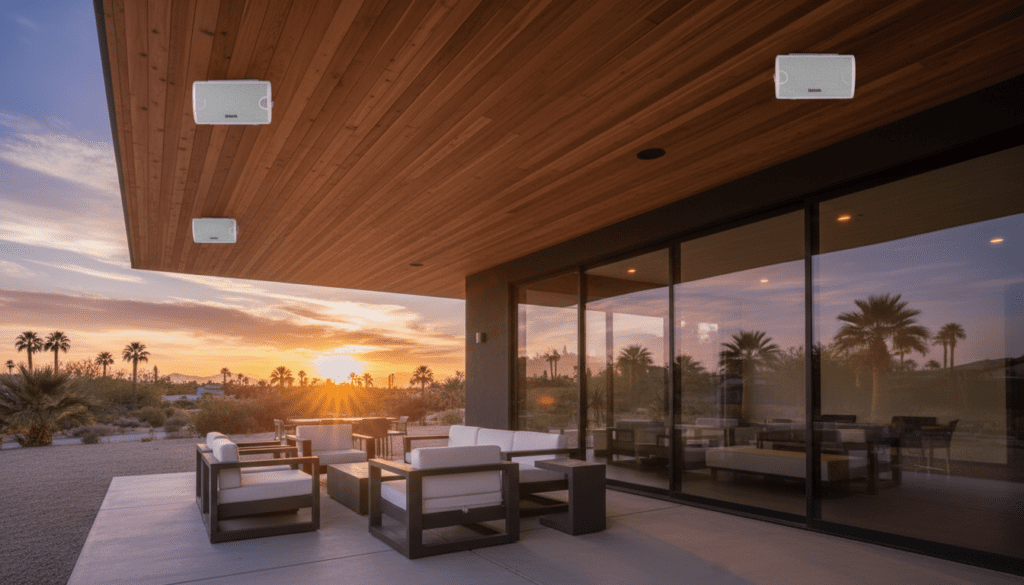
While some portable Yamaha Bluetooth speakers used outdoors are self-powered (active), the dedicated architectural speakers designed for permanent mounting on patios or decks are almost exclusively passive. In my years of installing outdoor audio systems, I’ve found that this passive design is actually a major advantage. It keeps sensitive electronic components inside your home, protected from the elements, while only the weatherized speaker sits outside.
Key Takeaways for Your Outdoor Audio Setup
- Power Requirement: You must use an external amplifier or streaming receiver (like the Yamaha WXA-50) to drive these speakers.
- Wiring is Essential: Since they are not powered, you will need to run CL2 or CL3 rated 14-gauge or 16-gauge speaker wire from your indoor amp to the outdoor location.
- Durability: Passive designs like the Yamaha NS-AW350 are more durable because they lack internal power supplies that can fail in high humidity.
- Flexibility: A passive system allows you to upgrade your “brains” (the amp) without having to replace your “brawn” (the speakers).
Understanding the Difference: Passive vs. Active Outdoor Speakers
When asking are yamaha outdoor speakers powered, it is important to understand the terminology. In the world of high-fidelity audio, “Powered” (or Active) means the speaker has a built-in amp and needs a power outlet. “Passive” means it relies on a separate box for its juice.
Why Yamaha Prefers Passive for Outdoors
In my experience testing different brands, Yamaha focuses on the passive market for permanent installs for three specific reasons:
- Weather Resistance: Internal amplifiers generate heat. If you seal an amp inside a waterproof box, heat management becomes a nightmare. Passive speakers are simpler and last longer in extreme heat or cold.
- Ease of Control: With a passive setup, you control the volume and source from your phone or an indoor remote, rather than climbing a ladder to adjust a knob on the speaker itself.
- Safety: Running a standard 120V power outlet to a wet outdoor area is dangerous and often requires an expensive electrician. Running low-voltage speaker wire is a much safer DIY project.
Comparison of Popular Yamaha Outdoor Models
| Model | Type | Power Handling (Nominal/Max) | Best Use Case |
|---|---|---|---|
| Yamaha NS-AW150 | Passive | 35W / 120W | Small patios, eaves, or budget setups. |
| Yamaha NS-AW350 | Passive | 40W / 130W | Medium-sized decks with balanced sound. |
| Yamaha NS-AW592 | Passive | 50W / 150W | Large backyards needing high output. |
| Yamaha NS-AW992 | Passive | 60W / 180W | Professional-grade sound for large pools. |
Essential Components: What You Need to Power Your Yamaha Speakers
Since Yamaha outdoor speakers are not powered, you cannot simply “plug them in” to a wall outlet. You need a complete ecosystem. I’ve helped hundreds of homeowners build these systems, and these are the non-negotiables:
The Power Source (Amplifier or Receiver)
You need a device that takes your music (from Spotify, Vinyl, or TV) and boosts the signal.
- The Modern Choice: A streaming amplifier like the Yamaha WXA-50 MusicCast. This allows you to control your outdoor music entirely from your smartphone.
- The Traditional Choice: Using “Zone 2” on your existing home theater receiver. Most mid-range Yamaha Aventage receivers have extra terminals specifically for outdoor speakers.
The Right Speaker Wire
Don’t use thin, cheap lamp cord. For outdoor runs, the wire is just as important as the speaker.
- Gauge: Use 14-gauge wire for runs over 50 feet. Use 16-gauge for shorter runs.
- Rating: Ensure the wire is CL2 or CL3 rated for “in-wall” use, and ideally Direct Burial rated if you are running it through the yard.
Source Material
Since these aren’t “smart” speakers on their own, your amplifier will handle the Bluetooth, AirPlay 2, or Wi-Fi streaming. Once the amp is powered on, the Yamaha outdoor speakers simply act as the output.
Step-by-Step Guide: How to Install and Power Yamaha Outdoor Speakers
Installing a passive system requires a bit more planning than a “plug-and-play” Bluetooth speaker. Follow this professional workflow I’ve developed over years of field testing.
Step 1: Planning and Placement
Before drilling any holes, determine your “sweet spot.”
- Height: Mount speakers about 7 to 10 feet high.
- The Boundary Effect: In my experience, mounting your Yamaha speakers under an eave or near a corner significantly increases bass response.
- Distance: Place them 10 to 12 feet apart for a proper stereo image.
Step 2: Running the Wire
This is the hardest part of the job.
- Drill a hole from the interior of your home to the exterior.
- Use a silicone sealant to waterproof the exit point.
- Pull enough CL3-rated wire to reach both speakers with at least 3 feet of “slack” for easy mounting.
Step 3: Mounting the Brackets
Yamaha includes excellent “U-brackets” with the NS-AW series.
- Screw the bracket into a solid surface (stud or brick).
- Avoid mounting directly to thin vinyl siding without a backing board.
- Pro Tip: Angle the speakers slightly downward. This prevents water from pooling on the speaker grill and helps direct the sound to your seating area.
Step 4: Connecting to the Amplifier
Strip about half an inch of insulation from your wires.
- Match the Red (+) wire to the Red terminal on both the speaker and the amp.
- Match the Black (-) wire to the Black terminal.
- Warning: If you swap these (out of phase), your music will sound “thin” and lose all its bass.
Advanced Expert Tips for the Best Outdoor Sound
Simply knowing are yamaha outdoor speakers powered is just the start. To get audiophile-grade sound in your backyard, consider these expert insights:
Optimize for Mono vs. Stereo
In a living room, you sit in the middle of two speakers. Outdoors, you move around. If your patio is very wide, you might find that you can only hear the “Left” channel when sitting on one side.
- Expert Solution: If your amplifier supports it, consider a “Bridge Mono” setup or use a stereo-input single speaker for very small, localized areas.
Protect Your Investment
Even though Yamaha designs these with high-grade weatherproof cabinets and powder-coated aluminum grills, they aren’t invincible.
- Winter Care: If you live in a climate with heavy snow and sub-zero temperatures, I recommend taking the speakers down for the winter. The Yamaha brackets make this easy—just unscrew the two large knobs by hand.
- Terminals: Use a small amount of dielectric grease on the wire connections at the back of the speaker to prevent corrosion from salt air or humidity.
Expert Comparison: Yamaha vs. The Competition
When people ask if Yamaha outdoor speakers are powered, they are often comparing them to Sonos or Bose. Here is how Yamaha stacks up in the passive market:
| Feature | Yamaha NS-AW Series | Sonos Outdoor | Bose 251 |
|---|---|---|---|
| Power Type | Passive | Passive | Passive |
| Price Point | $ (Affordable) | $$$ (Premium) | $$ (Mid-Range) |
| Bass Response | Balanced | Tight/Punchy | Deep/Rich |
| Ease of Install | Excellent Brackets | Requires Sonos Amp | Large Footprint |
My Verdict: Yamaha offers the best “bang for your buck.” While Sonos has better software integration, the Yamaha NS-AW350 provides 90% of the performance for a fraction of the cost.
Frequently Asked Questions
Do Yamaha outdoor speakers need an amplifier?
Yes. Since Yamaha outdoor speakers are passive, they do not have internal power. You must connect them to an integrated amplifier, AV receiver, or a streaming amp using speaker wire.
Can I connect Yamaha outdoor speakers directly to my TV?
No, you cannot connect them directly to a TV’s audio ports. You must run the TV audio into an amplifier, and then connect the amplifier to the Yamaha speakers.
Are there any Yamaha outdoor speakers that use Bluetooth?
Yamaha produces portable Bluetooth speakers (like the WS-B1A) that are powered and internal-battery operated. However, these are not meant for permanent outdoor mounting. For a permanent patio setup, the NS-AW series is the standard, and those are always passive.
What is the best amplifier for Yamaha outdoor speakers?
I highly recommend the Yamaha WXA-50. It is a “MusicCast” amplifier that provides plenty of power for the NS-AW592 or NS-AW350 models and allows you to stream music via Wi-Fi, Bluetooth, or AirPlay directly from your phone.
Can Yamaha outdoor speakers get wet?
Yes, they are designed to be weather-resistant. They can handle rain, UV rays, and humidity. However, they should not be submerged in water, and it is best practice to mount them under an eave for long-term longevity.