Can Bad Internet Make Speakers on Laptop Lag? The Short Answer
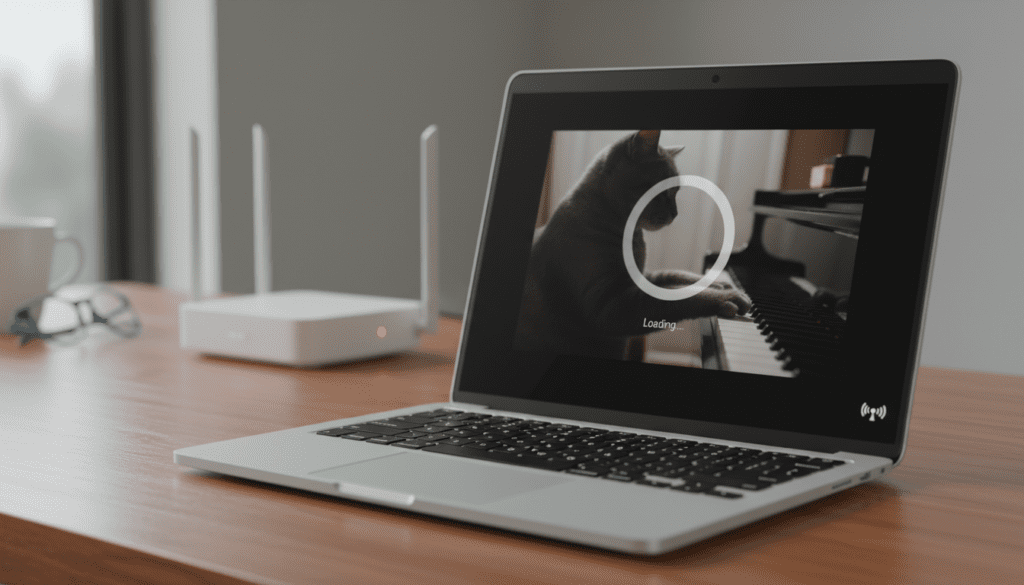
Yes, bad internet can absolutely make speakers on your laptop lag, but only when you are streaming content from the web. When your bandwidth is low or your ping is high, the audio data cannot reach your laptop fast enough, causing stuttering, robotic sounds, or a complete delay between the video and the sound. However, if your local files (like a downloaded movie) are lagging, the issue is likely your hardware or drivers rather than your connection.
I have spent over a decade troubleshooting audio-visual setups, and I’ve seen countless users mistake a failing Wi-Fi chip or packet loss for a broken set of speakers. In this guide, I will walk you through exactly how to diagnose whether your internet is the culprit and provide actionable steps to fix the lag for good.
TL;DR: Key Takeaways for Fixing Audio Lag
- Internet Impact: Bad internet only affects streaming audio (YouTube, Spotify, Zoom, Netflix).
- Packet Loss: High packet loss causes “robotic” voices and audio dropouts.
- Local vs. Stream: If offline files play perfectly, your internet or browser is the problem.
- Quick Fix: Restart your router, move closer to the Wi-Fi access point, or use an Ethernet cable.
- Software Culprit: Outdated audio drivers or too many Chrome tabs can also mimic internet lag.
Understanding Why Bad Internet Makes Speakers on Laptop Lag
To understand why your audio is stuttering, we need to look at how data travels. When you stream a video, the audio and video data are sent in small “packets.” If your internet connection is unstable, these packets arrive out of order or go missing entirely.
The Role of Latency and Ping
Latency (or Ping) is the time it takes for data to travel from a server to your laptop. If your ping is over 150ms, you will notice a visible “lip-sync” issue where the person on screen moves their mouth before you hear the sound. This is a classic symptom of network-induced audio lag.
Bandwidth Throttling
When your ISP (Internet Service Provider) throttles your speed, your laptop cannot fill its “audio buffer” fast enough. The buffer is a small amount of pre-downloaded audio that allows for smooth playback. Once that buffer runs dry due to slow speeds, the speakers will stop or “stutter” while the computer waits for more data.
Internet Lag vs. Hardware Lag: How to Tell the Difference
Before you buy new speakers, you must identify the root cause. Use the table below to diagnose your specific issue.
| Symptom | Likely Cause | Test to Confirm |
|---|---|---|
| Audio stutters only on YouTube/Zoom | Bad Internet | Play a downloaded MP3 file. |
| Audio lags in all apps (Offline & Online) | Hardware/Drivers | Update your Realtek/Audio drivers. |
| Robotic, metallic sounding voices | Packet Loss | Run a Ping Test (cmd: ping google.com -t). |
| Crackling or popping sounds | DPC Latency/Hardware | Plug in headphones to see if it persists. |
| Video plays, but audio is 2 seconds behind | Network Latency | Connect via Ethernet cable. |
Step-by-Step Guide: How to Fix Laptop Speaker Lag
If you’ve determined that bad internet is making your speakers on your laptop lag, follow these steps in order to resolve the issue.
Step 1: Perform a Network Stress Test
I always recommend starting with a baseline. Go to Speedtest.net or Fast.com.
- Look for a Download Speed of at least 5 Mbps for HD streaming.
- Check your Jitter; if it is above 30ms, your audio will likely stutter.
- Ensure your Upload Speed is at least 2 Mbps for lag-free Zoom calls.
Step 2: Reduce Network Congestion
Your laptop speakers might be lagging because five other devices are using the same Wi-Fi. Bandwidth hogging from gaming consoles or 4K TV streams can starve your laptop of the data it needs for clear audio. Try turning off Wi-Fi on your phone or tablet to see if the audio quality improves.
Step 3: Toggle Hardware Acceleration
If you notice the lag specifically in Google Chrome or Microsoft Edge, it might be how the browser handles data.
- Go to Browser Settings.
- Search for “System”.
- Turn off “Use hardware acceleration when available”.
- Relaunch the browser. This often fixes the synchronization between the web data and your speakers.
Step 4: Update Your Wireless and Audio Drivers
Sometimes, it isn’t the internet itself, but how your laptop’s Network Card talks to your Sound Card.
- Right-click the Start button and select Device Manager.
- Expand Network adapters and right-click your Wi-Fi card to select Update driver.
- Expand Sound, video and game controllers and update your Realtek High Definition Audio or equivalent driver.
Deep Dive: The Science of Packet Loss and Audio Stuttering
We often talk about “speed,” but for audio, stability is more important. Even if you have 100 Mbps download speeds, you can still experience lag if your Packet Loss is high.
What is Packet Loss?
Imagine a sentence being sent as ten individual words. If words 3 and 7 get lost in transit due to a weak Wi-Fi signal, your laptop tries to “guess” what those sounds were. This results in the distorted, robotic audio that many users mistake for a hardware failure.
The 2.4GHz vs. 5GHz Conflict
Most laptops use the 2.4GHz Wi-Fi band, which is crowded with interference from microwaves, baby monitors, and Bluetooth devices. Bluetooth interference is a major reason why bad internet can make speakers on laptop lag. Since Bluetooth and Wi-Fi often share the same frequency and even the same internal chip, a heavy internet load can “choke” the audio signal being sent to your speakers.
Expert Tips to Prevent Future Audio Lag
After years of testing different configurations, I’ve found these three “pro-level” tweaks make the biggest difference:
- Use a DNS Jumper: Sometimes, your ISP’s default DNS is slow at resolving media addresses. Switching to Google DNS (8.8.8.8) or Cloudflare (1.1.1.1) can decrease the initial “handshake” time for streaming audio.
- Adjust Windows Power Settings: Many laptops throttle the Wireless Adapter to save battery. Change your Power Plan to “High Performance” to ensure the Wi-Fi card gets full power, preventing audio dropouts.
- Disable Audio Enhancements: Windows has “Enhancements” that process sound. When the internet is already slow, this extra processing creates more lag. Disable these in Sound Settings > Properties > Enhancements > Disable all.
When It’s Not the Internet: Hardware Red Flags
If you’ve followed the steps above and can bad internet make speakers on laptop lag still seems like the wrong question, it might be your hardware.
- DPC Latency: This is a hidden Windows issue where drivers take too long to respond, causing “audio dropouts.” Use a tool like LatencyMon to check this.
- Overheating: If your laptop CPU is too hot, it will slow down everything, including the “encoding” of audio streams.
- Blown Speakers: If the sound is “fuzzy” rather than delayed, the physical speaker cone may be damaged.
Frequently Asked Questions (FAQ)
Why does my audio lag only when I’m on a Zoom or Teams call?
This is usually due to Upload Latency. Video calls require you to send data and receive it simultaneously. If your upload speed is low, your laptop prioritizes the video stream, causing the audio to lag or “cut out.”
Can a VPN make my laptop speakers lag?
Yes. A VPN adds an extra layer of encryption and routes your data through a distant server. This increases your ping, which directly contributes to the delay between the video you see and the audio you hear from your speakers.
Does clearing my cache help with audio lag?
Yes, especially for browser-based streaming. A cluttered browser cache can slow down the processing of incoming data packets, making it appear as though your internet is the problem when it is actually a software bottleneck.
Will using headphones fix internet-related audio lag?
If the lag is caused by the internet, switching to wired headphones won’t fix it. However, if you are using Bluetooth headphones, the interference between the Bluetooth signal and your Wi-Fi could be the cause. Switching to a wired connection will eliminate that specific conflict.
How much internet speed do I need for lag-free audio?
For standard music streaming (Spotify), 0.5 Mbps is enough. For high-definition video with synchronized audio (Netflix/YouTube), you should aim for a stable 5 Mbps to 10 Mbps.
Final Thought: While it is frustrating, most laptop audio lag is a temporary communication error between your router and your device. By narrowing down whether the issue is network stability or local processing, you can enjoy crystal-clear sound without spending a dime on repairs.