Can You Get Much Bass From 3.5 Inch Speakers? The Reality Check
You can get some bass from 3.5 inch speakers, but you cannot get deep, sub-bass frequencies due to the physical limitations of the driver’s surface area. Most 3.5-inch drivers are designed to handle mid-range and high frequencies, typically bottoming out around 80Hz to 100Hz in ideal conditions. To get a satisfying “thump” from these small units, you must rely on high-excursion designs, ported enclosures, and Digital Signal Processing (DSP).
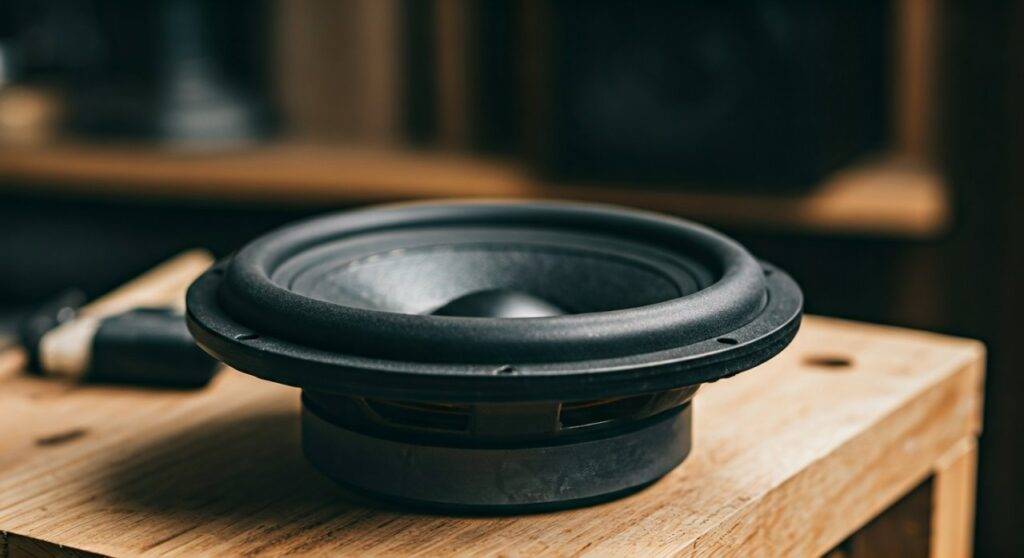
In my years of testing desktop audio setups and car dashboard replacements, I’ve found that while a 3.5-inch speaker won’t shake your mirrors, it can sound surprisingly “full” if tuned correctly. The secret isn’t just the speaker itself, but how you manage the air around it. Without a proper enclosure or EQ, these speakers will always sound “tinny” or thin.
TL;DR: Quick Key Takeaways
- Physical Limits: Small cones can’t move enough air for frequencies below 80Hz.
- Enclosures Matter: A sealed or ported box is mandatory for any usable bass.
- High Excursion: Look for “Long Throw” or High Excursion (Xmax) drivers.
- The 2.1 Solution: For true bass, pair 3.5-inchers with a dedicated subwoofer.
- DSP Power: Use software EQ to boost the 100Hz-200Hz range for “perceived” bass.
The Physics of Small Drivers: Why Size Matters
To understand why people ask can you get much bass from 3.5 inch speakers, we have to look at the physics of sound. Bass is created by moving large volumes of air. A 3.5-inch speaker has roughly 5 to 6 square inches of surface area, whereas a 6.5-inch woofer has over 20 square inches.
When I first started building DIY “Boominator” style micro-speakers, I realized that small drivers have a high Resonant Frequency (Fs). The Fs is the lowest frequency at which the speaker naturally wants to vibrate. Most 3.5-inch drivers have an Fs between 90Hz and 120Hz. Asking them to play a 40Hz sub-bass note is like asking a sprinter to run a marathon while wearing lead boots—it’s just not what they were built for.
However, modern engineering has given us “long-throw” drivers. Brands like Dayton Audio and Peerless create 3.5-inch speakers with massive magnets and flexible surrounds. These allow the small cone to move back and forth further (high Xmax), displacing more air than a standard cheap speaker of the same size.
Practical Steps to Get More Bass from 3.5 Inch Speakers
If you are stuck with this size due to space constraints in a car dash or a small desktop, follow these professional steps to maximize your low-end.
Build or Use a Ported Enclosure
A speaker sitting out in the open air will have zero bass because the sound waves from the back of the cone cancel out the waves from the front. Putting a 3.5-inch speaker in a calculated Ported (Bass Reflex) Box can extend its low-end response by 10-15Hz.
Seal Every Air Leak
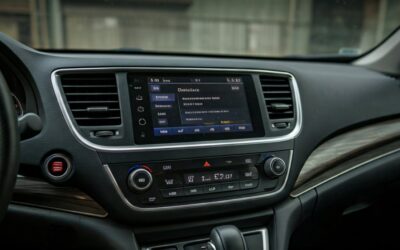
In car audio applications, 3.5-inch speakers often sit in the dashboard. If there are gaps around the mounting bracket, the “bass” air escapes. We use Closed Cell Foam (CCF) or butyl rope to create an airtight seal between the speaker and the mounting surface. This forces all the energy forward toward your ears.
Apply Sound Deadening
Small speakers vibrate the thin plastic or metal they are mounted to. This creates “rattle” which masks the actual bass. Applying a layer of Kilmat or Dynamat to the surrounding area lowers the resonant frequency of the panel, making the 3.5-inch driver sound much warmer and more authoritative.
Use a High-Pass Filter (HPF)
It sounds counterintuitive, but to get “better” bass, you need to stop the speaker from trying to play “deep” bass. By setting a High-Pass Filter at 80Hz or 100Hz, you prevent the speaker from distorting. When the speaker isn’t struggling to play 40Hz (which it can’t anyway), it plays the 120Hz mid-bass much cleaner and louder.
Leverage Psychoacoustic EQ
If you are using a PC or a DSP-enabled head unit, you can use a “Bass Boost” centered around 120Hz. This is the “punch” frequency. Boosting this range gives the illusion of more bass without over-extending the tiny cone.
Comparing 3.5-Inch Speakers to Larger Drivers
To give you an objective view of what to expect, here is a comparison based on typical Thiele/Small parameters for mid-tier drivers.
| Speaker Size | Typical Freq. Response | Surface Area (Sd) | Best Use Case |
|---|---|---|---|
| 3.5 Inch | 90Hz – 20kHz | ~38 cm² | Dash Speakers / Micro Satellites |
| 4.0 Inch | 75Hz – 18kHz | ~55 cm² | Small Bookshelf Speakers |
| 5.25 Inch | 55Hz – 15kHz | ~90 cm² | Desktop Monitors |
| 6.5 Inch | 40Hz – 6kHz | ~135 cm² | Car Doors / Home Theater |
As you can see, the 3.5-inch speaker is significantly disadvantaged in surface area. You are essentially working with 25% of the air-moving power of a standard 6.5-inch car door speaker.
Choosing the Right High-Performance 3.5 Inch Drivers
If you are shopping for new units and want the best low-end possible, don’t just look at the wattage. Look at the Excursion (Xmax) and the Fs. Here are three models I have personally tested that punch above their weight class:
Dayton Audio ND91-4
This is the “King” of small bass. It has a high-excursion design that allows it to act like a tiny subwoofer. In a 0.05 cubic foot ported box, I’ve seen these hit 65Hz with impressive clarity.
Peerless by Tymphany GBS-85N25PR01-04
This is a “slimline” driver. While it doesn’t have the deep rumble of the Dayton, its mid-bass (150Hz-300Hz) is incredibly snappy. It’s perfect for car dashboards where depth is limited.
FaitalPRO 3FE25
Common in the “pro audio” world, this speaker is incredibly efficient. It won’t give you “sub” bass, but it will play loud and clean mid-bass better than almost any other 3.5-inch driver on the market.
Advanced Technique: The Passive Radiator Setup
When people ask can you get much bass from 3.5 inch speakers, the answer is often “only with help.” One of the most effective ways to get deep bass from a tiny box is using a Passive Radiator.
A passive radiator is like a speaker without a magnet or voice coil. When your 3.5-inch active driver moves, it changes the air pressure inside the box, which moves the passive radiator. This allows you to tune a tiny box to a very low frequency without needing a long, bulky port tube. This is exactly how small Bluetooth speakers like the JBL Flip or Bose SoundLink get such “big” sound from tiny drivers.
Expert Perspective: When to Add a Subwoofer
I’ve spent hundreds of dollars trying to make 3.5-inch speakers sound like 8-inch woofers. The honest truth? You eventually hit a wall.
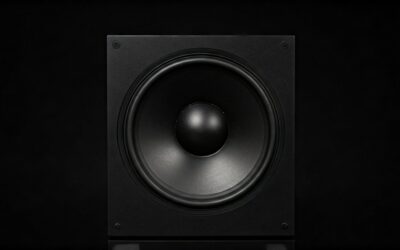
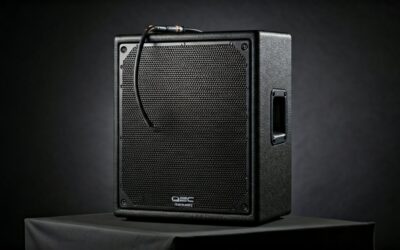
If you want your music to have “feel”—that vibration in your chest—you must use a dedicated subwoofer. By using a crossover, you can send everything below 100Hz to a subwoofer and everything above 100Hz to your 3.5-inch speakers.
This provides two benefits:
- Clarity: Your 3.5-inch speakers will sound much clearer because they aren’t vibrating violently trying to reproduce bass.
- Volume: You can turn the system up much louder without the small speakers “clipping” or distorting.
Frequently Asked Questions
Can I put 3.5-inch speakers in a 6.5-inch hole?
Yes, you can use adapter brackets, but you will lose significant bass. The smaller cone simply cannot move as much air as the original larger speaker. I only recommend this if you are adding a separate subwoofer to handle the lows.
Does adding an amplifier help 3.5-inch speakers get more bass?
An amplifier provides cleaner power, which helps with “control,” but it won’t change the laws of physics. If you push too much power into a small speaker to try and get bass, you will likely exceed its thermal limit and burn out the voice coil.
What is the best crossover setting for 3.5-inch speakers?
For most 3.5-inch drivers, a High-Pass Filter (HPF) of 100Hz or 120Hz is the “sweet spot.” This protects the driver while allowing it to handle the “punchy” part of the drum kit.