Table of Contents

7 sections 15 min read

The 5 Best Surround Sound Systems for Home Theater

At a Glance

Pick Product Key Spec Price Range
Best Overall ULTIMEA Skywave X70 Wireless 7.1.4, 980W GaN, 10-inch subwoofer to 20Hz Premium value (~$719 supplied)
Best Enthusiast Nakamichi Shockwafe Ultra 9.2.4 True 9.2.4 with dual 10-inch wireless subwoofers Premium ($600–$1,200+)
Best Budget ULTIMEA Poseidon M60 Physical 5.1, wired rears, VoiceMX dialogue Entry (under $150)
1

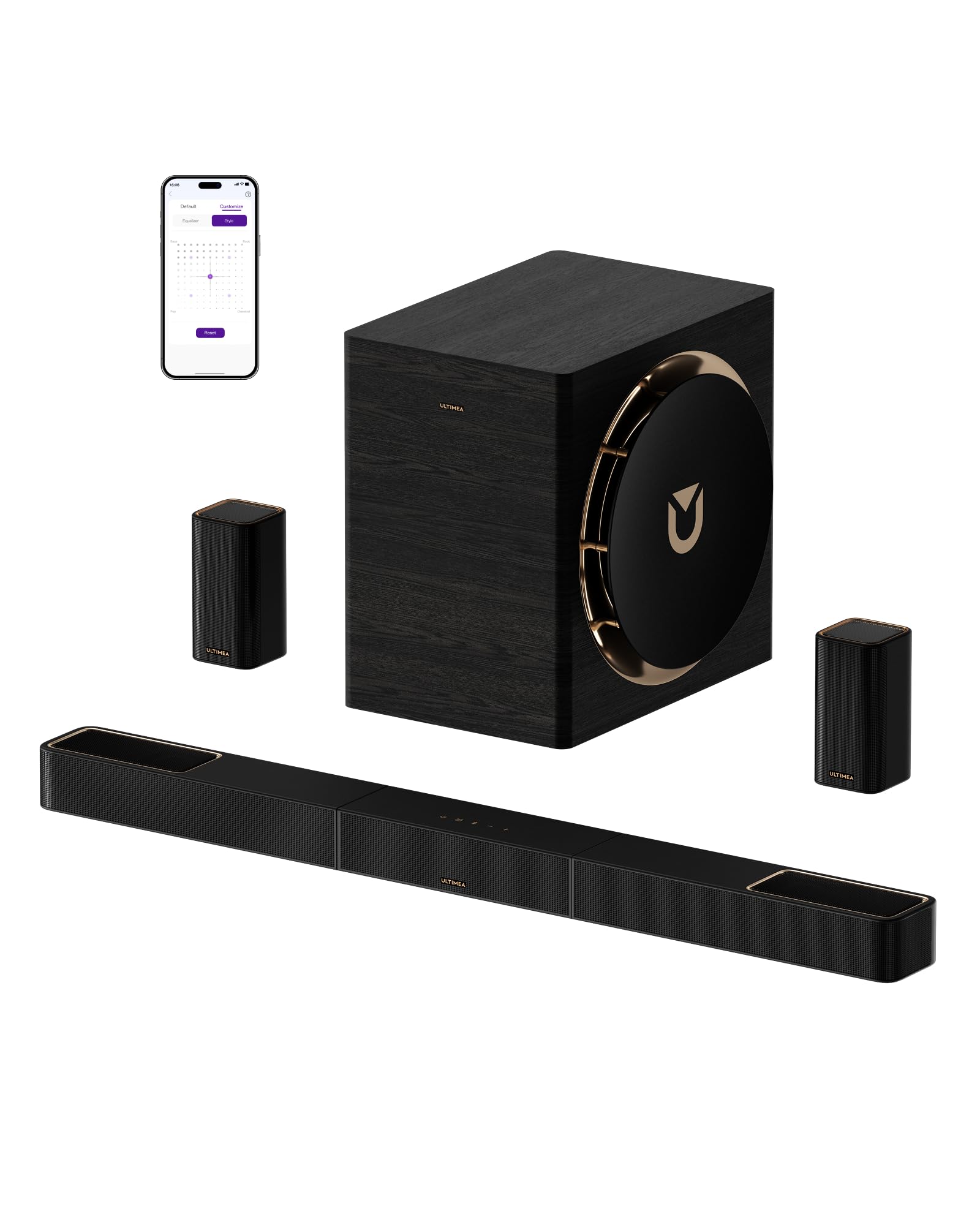
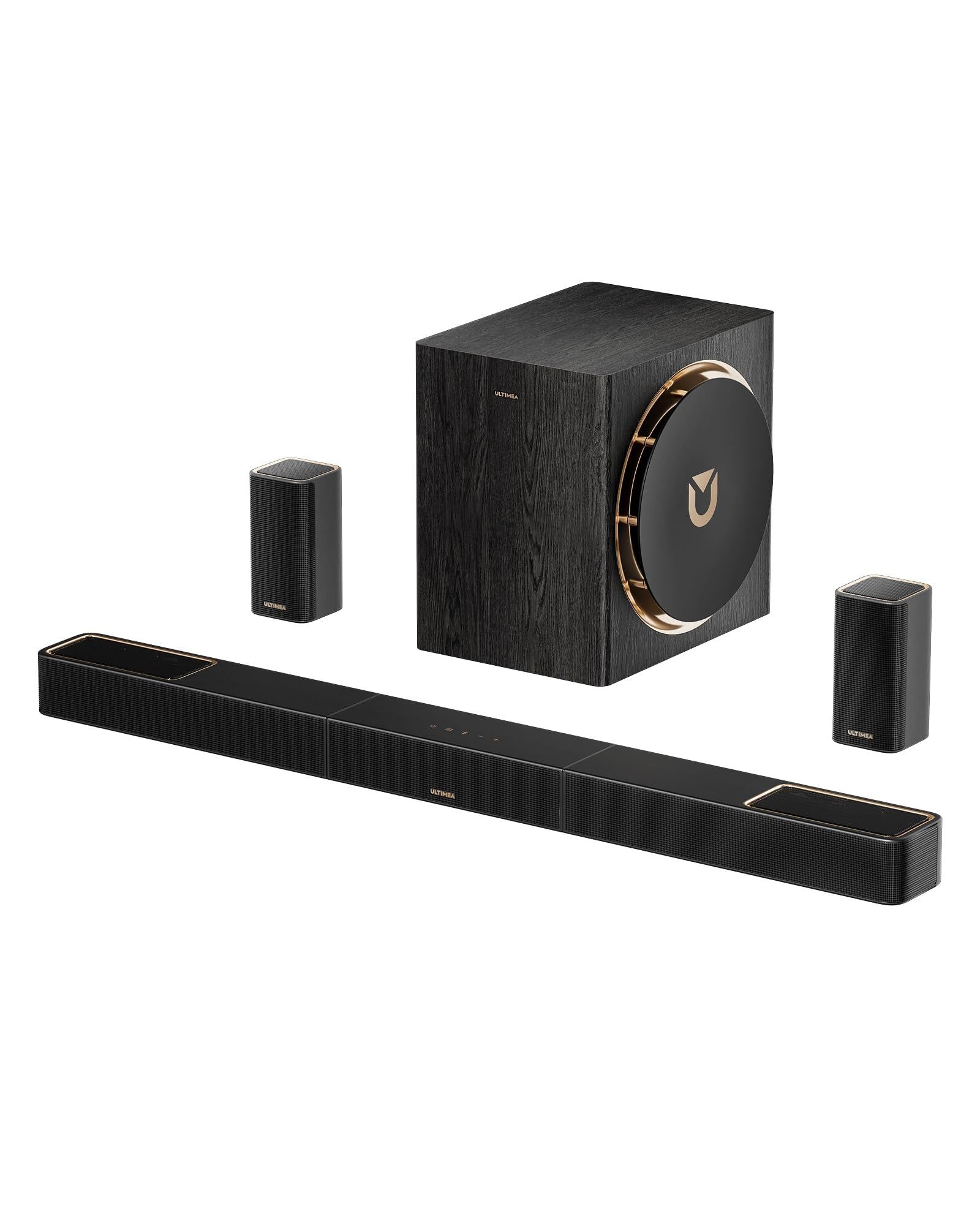
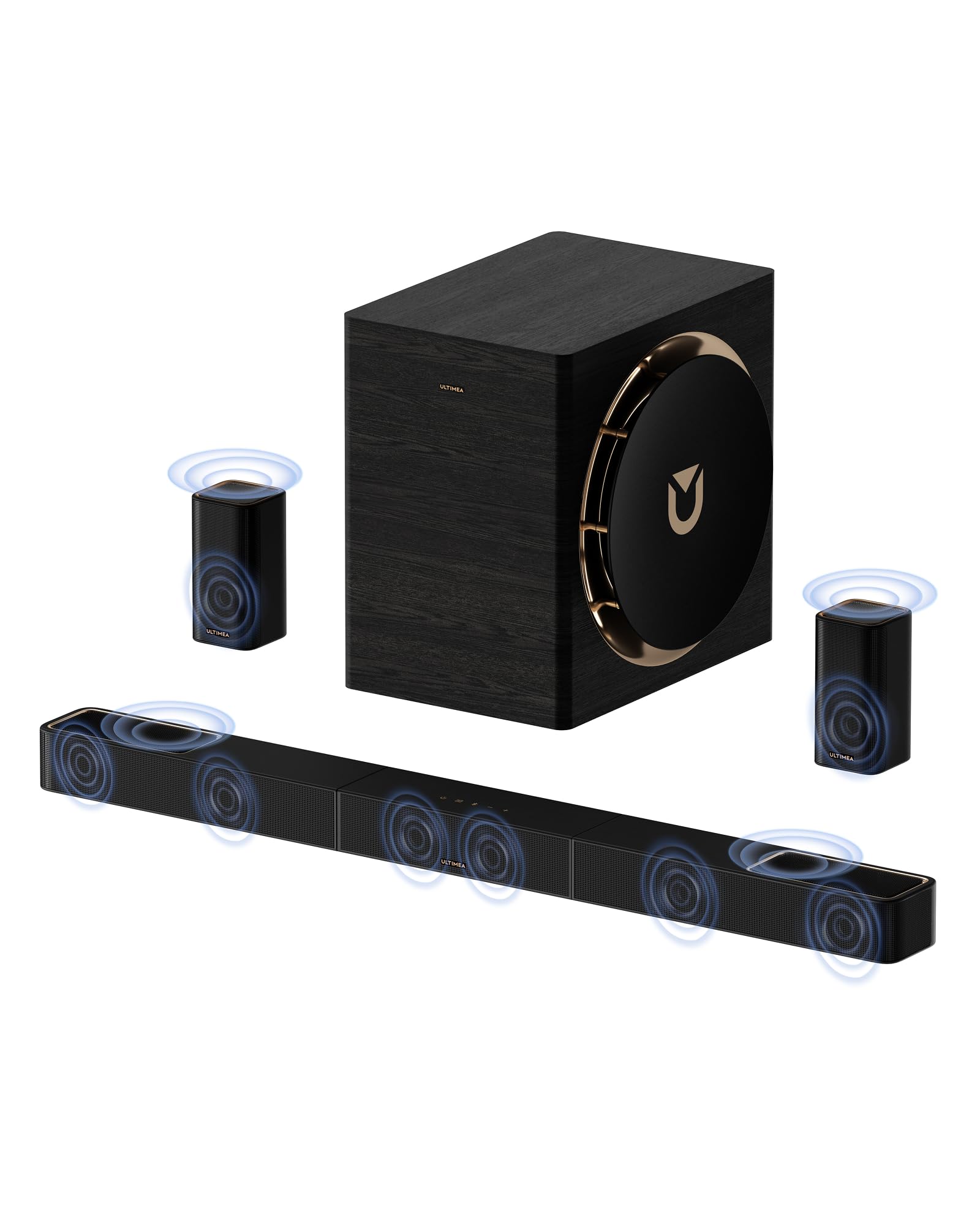
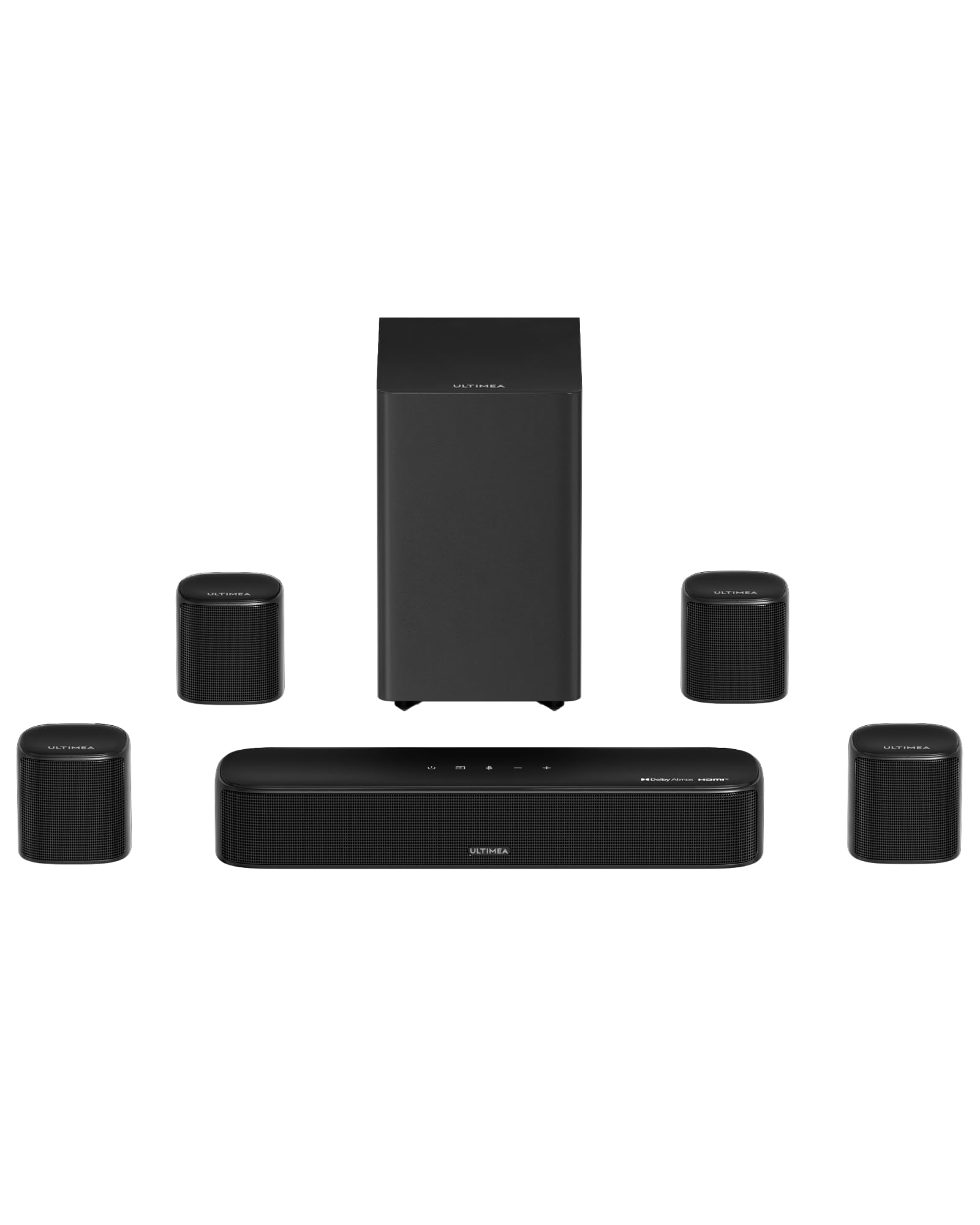
ULTIMEA Skywave X70 7.1.4ch Wireless Sound System

In Stock
9.8 /10
BS Score
BS Score is calculated based on product ratings, reviews, and sales performance to help you make informed purchasing decisions.
Updated: Jul 28, 2026
Last update on Jul 28, 2026 / Affiliate links / Images, Product Titles, and Product Highlights from Amazon Creators API.
Pros & Cons

Pros

  • Fully wireless dual 5GHz design removes speaker cables for simpler placement and reduced room clutter during setup
  • 7.1.4 layout with height support lets sound travel overhead, improving immersion for content with rain, aircraft, or atmospheric effects
  • 10-inch subwoofer claims bass down to 20Hz with 980W peak and ultra-linear motion so low frequencies remain clean and physical at higher volumes
  • GaN amplification targets lower heat and high efficiency so the system can sustain detailed dynamics without early thermal limits
  • App connectivity adds 10-band EQ, 121 presets, OTA updates, 4K HDR pass-through, and CEC for tailored control and source flexibility

Cons

  • Zero customer reviews leave real-world wireless stability, bass accuracy, and long-term reliability completely unverified
  • Published data omits continuous power ratings, full speaker configuration details, and frequency response beyond the subwoofer claim
  • Support is limited to stated 12-month service, 24/7 online help, and 60-day replacement with no further durability or parts data available
Detailed Review

The ULTIMEA Skywave X70 7.1.4ch Professional Wireless Home Theater Sound System suits enthusiasts seeking cable-free immersion with height channels and deep bass claims. Dual 5GHz wireless and GaN efficiency form its strongest stated advantages, while zero user reviews create the chief reservation on untested real performance.

This product appears built to solve cable clutter and complex wiring that often discourage full surround installs in living rooms. It targets the wireless multi-channel segment for movie and gaming users who want overhead effects and substantial low end without running wires to rear or height speakers.

Verified claims convert into clear user outcomes. Dual 5GHz transmission supports flexible placement with reduced interference risk for consistent surround. The 7.1.4 layout plus NEURACORE processing aims for free-moving audio including overhead rain or helicopter cues. The 10-inch wireless subwoofer targets 20Hz extension at 980W peak with ultra-linear motion for controlled bass. GaN amplification promises 98% efficiency, half the heat, and faster response so detail and dynamics hold at higher volumes. App tools add 10-band EQ, 121 presets, OTA updates, 4K HDR pass-through, and CEC for personalization and simple source control.

Evidence gaps and format limits matter. Buyers needing continuous power figures, full frequency charts, or extensive owner reports will find the data incomplete. Preference for wired reliability or simpler channel counts may direct attention toward traditional receiver systems or basic soundbars. If height effects or a large subwoofer are secondary, a lower-channel wireless set could meet needs with fewer unknowns.

The ULTIMEA Skywave X70 receives a qualified nod for those who prioritize wireless freedom and the listed processing features. Confirm room RF conditions and the return window carefully before purchase, since no independent user experiences currently validate the manufacturer claims of dropout-free immersion.

Who Should Buy It

Strong Match: Movie and gaming users who want a fully wireless 7.1.4 system with height channels and a large subwoofer for immersive living-room theater without speaker cables.

Also Consider It If: You plan to use app-driven 10-band EQ, 121 presets, and OTA updates while valuing GaN efficiency for cooler high-volume listening.

Not the Best Fit: Buyers who require customer reviews for confirmation of wireless reliability or detailed continuous power and frequency specifications before committing.

Decision in One Sentence: Choose the ULTIMEA Skywave X70 if wireless 7.1.4 immersion and claimed bass power matter most and you accept manufacturer data in place of user-verified results.

Reasons to Consider or Pass

Consider It For:

  • Dual 5GHz wireless freedom that claims stable links and removes cable clutter for flexible speaker layout.
  • 7.1.4 channel support including overhead effects that move sound above the listener for cinematic height.
  • 10-inch subwoofer with stated 20Hz reach and 980W peak plus ultra-linear motion for controlled deep bass.
  • GaN amplifier efficiency and lower heat generation that aim to preserve clean dynamics at elevated volumes.
  • App features covering EQ, presets, OTA updates, 4K HDR pass-through, and CEC for easy tuning and control.

Pass If:

  • You need actual user reviews to confirm wireless stability, bass quality, and everyday reliability.
  • Continuous power ratings, complete frequency response data, or full speaker details are required for your evaluation.
  • Extended durability evidence or support beyond the stated 12-month service and 60-day replacement is essential.
Key Features Explained

Dual 5GHz wireless transmission underpins the fully wireless design, relying on advanced RF and networking protocols that claim to maintain stable connections while cutting interference and dropouts.

The NEURACORE multi-channel audio engine uses a triple-core DSP plus dual-core MCU to deliver 24-bit/192kHz audio with under 0.5% distortion and up to 2000 MIPS, supporting precise imaging across as many as 17 channels.

A 10-inch wireless subwoofer with Gravus ultra-linear bass technology targets deep output to 20Hz at 980W peak, keeping driver motion controlled so bass stays clean even at high levels.

Industry-leading GaN amplification reaches up to 98% efficiency and responds 8 times faster than silicon while producing 50% less heat for cooler, more stable high-power operation.

2

Sony BRAVIA Theater System 6 5.1ch Soundbar

Sony
In Stock
9.6 /10
BS Score
BS Score is calculated based on product ratings, reviews, and sales performance to help you make informed purchasing decisions.
Updated: Aug 18, 2026
Last update on Aug 18, 2026 / Affiliate links / Images, Product Titles, and Product Highlights from Amazon Creators API.
Pros & Cons

Pros

  • Full 5.1 configuration with rears and subwoofer benefits movie watchers who want true surround and bass without a custom install
  • Dolby Atmos and DTS:X support aids streaming fans seeking height and object-based audio at home
  • Dedicated center channel helps dialogue-focused viewers follow speech without constant volume adjustments
  • BRAVIA TV pairing and app control suit owners of matching televisions who prefer unified menu and smartphone operation
  • Bluetooth music streaming plus up-mixed tracks benefits casual listeners who switch between video and phone audio

Cons

  • Multi-piece design with rear speakers and subwoofer affects users who lack space or prefer a single compact unit
  • Advanced TV menu control and Voice Zoom 3 require compatible BRAVIA televisions, so owners of other brands miss those integrations
  • System emphasis on fixed home theater placement and surround modes limits appeal for buyers seeking only simple portable Bluetooth audio
Detailed Review

The Sony BRAVIA Theater System 6 5.1ch Soundbar with Subwoofer & Rear Speakers is a complete multi-channel audio system built for immersive home movie and streaming playback. It fits households that already own compatible BRAVIA televisions and want genuine 5.1 surround without assembling separate components. The strongest verified reason to consider it is the combination of three front-firing speakers, two rear speakers, and an included subwoofer that produces cinematic surround sound with deep bass. Full integration features work best when paired with matching BRAVIA TVs.

A dedicated center channel speaker keeps spoken dialogue clear so every word stays understandable even in busy action scenes. Dolby Atmos and DTS:X support bring directional and height effects to streaming titles for a more dimensional presentation. Multi Stereo mode plays identical sound from every speaker to create balanced room-wide coverage useful for background listening or gatherings. Bluetooth connectivity lets users stream music wirelessly from a smartphone when video is not the focus.

Daily operation centers on the BRAVIA Connect app, which allows smartphone control of volume, sound profiles, and advanced settings. Connecting to a compatible BRAVIA TV unlocks direct menu-based control of the soundbar and activates Voice Zoom 3 for additional dialogue enhancement. The system expects placement of the soundbar, rear speakers, and subwoofer in the room, while Bluetooth handles wireless music streaming from phones. Music tracks receive up-mixing that restores acoustic detail for richer playback.

This system provides a practical path to multi-channel cinema audio and convenient app or TV control for the right buyer. The main trade-off is the need to arrange and power multiple speakers instead of relying on one compact soundbar. Shoppers with limited floor or shelf space, or those without a compatible BRAVIA television, will find simpler single-unit soundbars a better match for their setup needs.

Buyer Snapshot

Best For: BRAVIA TV owners who want ready 5.1 surround sound with rears and subwoofer for movies and streaming.

Why It Fits: The system includes three front-firing speakers, two rear speakers, a subwoofer, Dolby Atmos and DTS:X support, a dedicated center channel, and BRAVIA TV pairing with app control.

Think Twice If: You have limited space for rear speakers and a subwoofer or own a non-BRAVIA television and want only a single compact bar.

Bottom Line: Choose this system if multi-speaker cinema audio and BRAVIA integration matter more than minimal footprint.

Key Features

5.1 Surround Layout: Three front-firing speakers, two rear speakers, and a subwoofer create cinematic surround sound with deep bass for home viewing.

Cinema Formats: Dolby Atmos and DTS:X support add directional and height effects to streaming content.

Dialogue Focus: A dedicated center channel speaker keeps spoken words clear across scenes.

Control and Pairing: BRAVIA Connect app manages volume, profiles, and settings while compatible BRAVIA TVs enable menu control and Voice Zoom 3.

Music Options: Bluetooth streams wireless audio from a smartphone and music is up-mixed for richer acoustic detail.

3

ULTIMEA Skywave X50 5.1.4ch Wireless Surround

In Stock
9.8 /10
BS Score
BS Score is calculated based on product ratings, reviews, and sales performance to help you make informed purchasing decisions.
Updated: Aug 18, 2026
Last update on Aug 18, 2026 / Affiliate links / Images, Product Titles, and Product Highlights from Amazon Creators API.
Pros & Cons

Pros

  • Claimed dual 5GHz wireless design can reduce cable clutter and simplify multi-speaker installation.
  • 5.1.4 configuration with height channels may expand the soundstage for supported cinematic content.
  • Listed 760W peak power aims to deliver forceful room-filling output for larger living spaces.
  • Metal grille rose gold accents and wood-crafted subwoofer provide a distinctive visual presentation.
  • NEURACORE triple-core DSP is specified for 24-bit 192kHz multi-channel processing with low distortion targets.

Cons

  • Zero customer reviews appear in the supplied data so no real-user experience patterns can be assessed.
  • Independent measurements of bass response wireless stability or actual continuous power remain unavailable.
  • Warranty terms long-term durability full input details and room-tuning results are unspecified.
Detailed Review

The ULTIMEA Skywave X50 5.1.4ch Wireless Surround Sound System for Home Theater targets buyers who want a cable-free multi-channel setup that includes height effects. Its strongest supported reason for consideration is the product description of dual 5GHz wireless transmission combined with a 5.1.4 channel layout for surround and overhead imaging. The main evidence limitation is the total absence of customer reviews or independent measurements in the supplied information.

Most decision-relevant claimed features center on immersion and power. Gravus Ultra-Linear Bass Technology is described as delivering clean sub-bass down to 28Hz through an oversized waveguide and precision chamber which could benefit action content if accurate. The GaN amplifier is said to reach 98 percent efficiency with faster response and lower heat than silicon designs potentially supporting cleaner high-volume playback. NEURACORE multi-channel audio engine claims triple-core DSP processing of 24-bit 192kHz signals with under 0.5 percent distortion and support for precise surround imaging. The 760W peak power rating and 4K HDR pass-through complete the core feature set for cinematic use.

Supplied customer signals do not exist. Reviews count is listed as zero and no top reviews appear so no themes about setup ease dialogue clarity wireless dropouts or bass feel can be attributed or summarized.

Trade-offs and unknowns are substantial. Real-world wireless reliability in RF-crowded homes continuous power delivery versus the peak rating frequency response accuracy and long-term component durability cannot be confirmed. Buyers who need proven lab measurements extensive ownership reports or certified compatibility lists should choose established systems with documented user feedback instead. Design details such as the metal grille and wood subwoofer address aesthetics but do not close the performance evidence gaps.

In a qualified verdict the listed claims make the Skywave X50 worth shortlisting only for risk-tolerant buyers who prioritize wireless convenience and stated 5.1.4 immersion while fully accepting the unknowns. The evidence cannot support a confident or universal purchase recommendation.

Evidence Breakdown

Verified Product Facts: The product is described as a 5.1.4ch wireless surround system using dual 5GHz transmission Gravus bass technology targeting 28Hz GaN amplification NEURACORE DSP for 24-bit 192kHz audio 760W peak power 4K HDR pass-through and a design with metal grille rose gold accents plus wood-crafted subwoofer.

Customer Signals: The supplied excerpts are insufficient for a pattern because reviews count is zero and no top reviews are provided.

Not Verified: Actual measured frequency response wireless range and interference resistance continuous versus peak power output warranty coverage supported audio formats full port list and long-term durability cannot be established from the data.

Evidence-Aware Verdict: The evidence supports evaluating the product solely on its listed wireless channel and power claims when buyers accept claim-based decisions. It cannot support conclusions about superior real-world sound quality problem-free operation or value relative to reviewed alternatives.

Decision Factors

Channel Immersion: Supplied data lists a 5.1.4 configuration for surround and height effects. Buyer impact is potential for more dimensional movie and game audio. Qualification is that actual imaging depends on content mixing room acoustics and speaker placement which remain untested here.

Wireless Connectivity: Claims dual 5GHz transmission with advanced RF protocols for stable links and minimal dropouts. Impact could allow freer speaker placement without cables. Qualification notes that real-home interference resistance and range are unknown without user reports.

Bass Performance: Gravus technology claims linear sub-bass to 28Hz via oversized waveguide and acoustic chamber with flexible tuning. This may suit bass-heavy content seeking controlled low frequencies. Qualification is complete lack of measured SPL distortion or room response data.

Power and Amplification: 760W peak rating paired with GaN amplifier claims of 98 percent efficiency and lower heat. Impact aims at forceful output for larger rooms. Qualification is that continuous power capability and thermal behavior under load are not clarified.

Video Compatibility: 4K HDR pass-through is listed to preserve source detail to the TV. Ensures no intentional video degradation. Qualification is that exact ports latency figures and full format support details are absent.

Design Integration: Metal grille rose gold accents and wood-crafted subwoofer are specified for a contemporary look. Offers visual appeal in living spaces. Qualification is that material durability and vibration control under load remain unconfirmed.

4

LG S40TR 4.1ch Soundbar with Wireless Rear

In Stock
9.5 /10
BS Score
BS Score is calculated based on product ratings, reviews, and sales performance to help you make informed purchasing decisions.
Updated: Aug 18, 2026
Last update on Aug 18, 2026 / Affiliate links / Images, Product Titles, and Product Highlights from Amazon Creators API.
Pros & Cons

Pros

  • Wireless rear speakers provide true surround sound without extra wiring or a receiver
  • Dolby Audio and DTS Digital support enhance movie and TV audio quality
  • WOW Orchestra and WOW Interface offer convenient integration with compatible LG TVs
  • Clear Voice Plus helps make dialogue easier to hear in movies and shows
  • Sleek crest design with metal grill that helps keep dust out

Cons

  • No HDMI inputs, limiting connectivity options for some users
  • Sound quality may not satisfy audiophiles seeking high-end fidelity
  • WOW Orchestra and WOW Interface only work with compatible LG TVs
Detailed Review

The LG S40TR is a 4.1-channel soundbar system designed to deliver a more immersive audio experience for movies, TV shows, and music without the complexity of a full home theater receiver. It is best suited for LG TV owners who want an easy, wireless upgrade to their TV's built-in speakers, offering a significant boost in sound quality and surround effects. However, it may not satisfy audiophiles seeking high-end fidelity or those needing extensive connectivity options.

The core of the S40TR is its 4.1-channel configuration, which includes a wireless subwoofer and wireless rear speakers. This setup provides a true surround sound experience, making action scenes and ambient effects more engaging. The system supports Dolby Audio and DTS Digital, ensuring enhanced sound quality for compatible content. For LG TV owners, the WOW Orchestra feature allows the TV and soundbar speakers to work together, creating a fuller soundstage. The WOW Interface enables control of both devices with a single remote, simplifying daily use.

Design-wise, the soundbar features LG's crest design with a metal grill that not only looks sleek but also helps keep dust and debris out. The wireless rear speakers eliminate the need for a separate receiver, making setup straightforward. The included LG Soundbar App allows users to adjust a 3-band equalizer to tailor the sound to their preferences, adding a layer of customization.

While the S40TR offers many benefits, it has limitations. It lacks HDMI inputs, which may be a drawback for users who want to connect multiple sources directly to the soundbar. The sound quality, while good for the price, may not match the clarity and detail of higher-end systems. Additionally, the WOW Orchestra and WOW Interface features are exclusive to compatible LG TVs, so users with other TV brands won't benefit from these integrations.

In conclusion, the LG S40TR is a strong contender for LG TV owners seeking an affordable, easy-to-install surround sound solution. Its wireless rear speakers and subwoofer deliver impressive immersion for movies and TV. However, if you require HDMI connectivity or are an audio enthusiast, you may want to explore other options.

Key Features Explained

Wireless Rear Speakers: These speakers connect wirelessly to the soundbar, eliminating the need for a separate receiver or running speaker wires across the room. This makes it easy to achieve a true surround sound experience in any room size, ideal for renters or those who prefer a clean setup.

Dolby Audio and DTS Digital: These audio technologies enhance the sound quality of movies, TV shows, and music by providing more detailed and dynamic audio. They are especially beneficial for streaming content that supports these formats, ensuring you hear every effect and dialogue clearly.

WOW Orchestra: This feature allows the soundbar and a compatible LG TV to work together, using both sets of speakers simultaneously. This creates a wider, more immersive soundstage, making it feel like the audio is coming from all around you. It's a unique benefit for LG TV owners.

Clear Voice Plus: This technology analyzes audio output to enhance voice clarity, making dialogue easier to understand in movies and shows. It's particularly useful for content with heavy background music or sound effects, reducing the need to constantly adjust the volume.

Smart Up-Mixer: This feature converts 2-channel audio into a multi-channel experience, using all speakers to create a wider soundstage. It helps fill the room with sound, making regular stereo content feel more immersive.

Buyer's Guide

Best For: The LG S40TR is ideal for LG TV owners who want an easy, wireless upgrade to their TV's sound. It's perfect for movie and TV show enthusiasts who want a more immersive experience without the complexity of a full home theater system. The wireless rear speakers and subwoofer provide a true surround sound experience that is simple to set up.

Consider Alternatives If: If you own a TV from a different brand, you'll miss out on the WOW Orchestra and WOW Interface features. Also, if you need multiple HDMI inputs for connecting gaming consoles, Blu-ray players, or other devices, this soundbar's lack of HDMI inputs may be limiting. Audiophiles seeking high-end sound quality may want to look at more expensive systems with better fidelity.

Setup and Daily Use: Setup is straightforward: connect the soundbar to your TV (likely via optical or HDMI ARC, though HDMI inputs are not available), plug in the wireless subwoofer and rear speakers, and they should automatically pair. The WOW Interface allows you to control the soundbar with your LG TV remote, and the LG Soundbar App lets you adjust the equalizer settings from your smartphone.

Maintenance Requirements: The metal grill helps keep dust out, but occasional cleaning with a soft, dry cloth is recommended to keep the soundbar looking and performing well. Ensure the wireless speakers are within range and have fresh batteries if they are battery-powered (though they are likely AC-powered, so no battery maintenance).

What Sets It Apart: The LG S40TR stands out for its combination of wireless rear speakers, subwoofer, and LG-specific features like WOW Orchestra and WOW Interface. This makes it a compelling choice for LG TV owners seeking a seamless, integrated audio upgrade at a reasonable price point.

Compatibility

LG TV Integration: The S40TR is designed to work seamlessly with compatible LG TVs. The WOW Orchestra feature allows the TV and soundbar speakers to operate together, and the WOW Interface enables control of both via the TV remote. This integration is a major selling point for LG TV owners.

Other TV Brands: While the soundbar will work with any TV that has an optical or HDMI ARC output, the special LG features will not be available. This means you lose the convenience of single-remote control and the enhanced soundstage from WOW Orchestra.

Audio Formats: The soundbar supports Dolby Audio and DTS Digital, so it will decode these formats from any source that outputs them, such as streaming devices or Blu-ray players. However, it does not support more advanced formats like Dolby Atmos, so it won't provide height effects.

Connectivity: The soundbar lacks HDMI inputs, so you'll need to connect your devices directly to the TV and then use the TV's HDMI ARC or optical output to send audio to the soundbar. This is fine for most setups but may be a limitation if you have multiple devices.

5

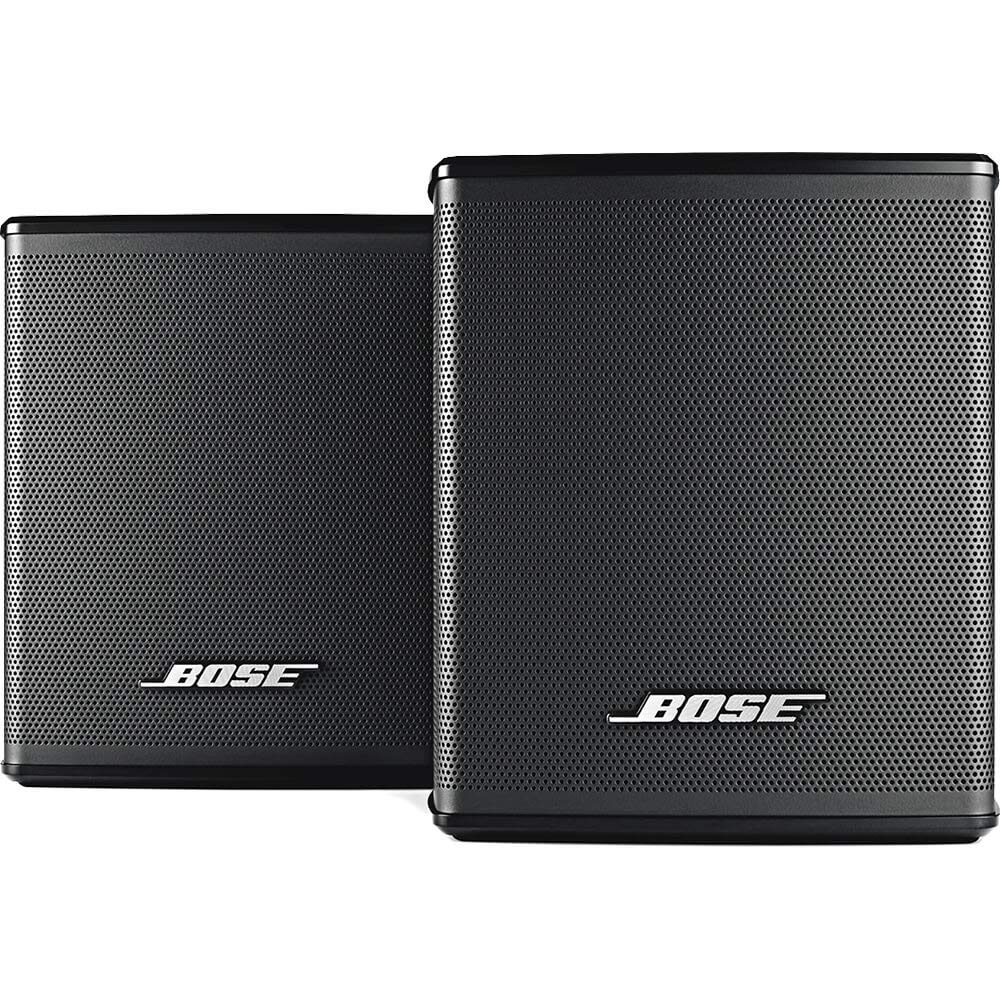
Bose Surround Sound System for Home Theater

Bose
In Stock
9.5 /10
BS Score
BS Score is calculated based on product ratings, reviews, and sales performance to help you make informed purchasing decisions.
Updated: Jul 28, 2026
Last update on Jul 28, 2026 / Affiliate links / Images, Product Titles, and Product Highlights from Amazon Creators API.
Pros & Cons

Pros

  • Small footprint: Less than 4 inches tall, so they fit neatly under seating or on shelves without dominating the room
  • Wireless convenience: No speaker wire runs across the floor, making setup and placement more flexible
  • Designed for Bose Soundbar integration: Pairs with compatible Bose Soundbars for a cohesive home theater system
  • Immersive audio: Adds rear channel effects that make movies and TV feel more enveloping
  • Simple installation: Plug in the adapters and connect wirelessly, so you can be up and running quickly

Cons

  • Requires a compatible Bose Soundbar: Not a standalone system, so it won't work without the right Bose soundbar
  • Limited bass response: The small speakers focus on surround effects, so you may need the optional bass module for deep, room-shaking bass
  • Premium price: The cost may be higher than comparable surround speaker sets from other brands
Detailed Review

The Bose Surround Sound System for Home Theater is a compact wireless rear speaker kit designed for owners of compatible Bose Soundbars. It is best for people who want to add genuine surround sound to their existing Bose setup without dealing with speaker wires or bulky cabinets. The system is small, easy to install, and delivers a more immersive audio experience, but it requires a Bose Soundbar and may not satisfy those seeking powerful bass without an additional module.

The standout feature is its wireless connectivity. The speakers plug into power adapters and connect wirelessly to your Bose Soundbar, eliminating the need to run speaker cables across the room. This makes placement flexible and keeps the setup clean, which is a major convenience for renters or anyone who dislikes visible wires. The system is designed to bring movies, music, and TV to life with full, immersive surround sound, making it a natural upgrade for a Bose home theater.

Design-wise, the speakers are the smallest Bose has made, standing less than 4 inches tall. Their low profile means they can be placed on shelves, behind seating, or on stands without dominating the room. The wireless range is stated at 30 feet for the bass modules, which should cover most living rooms. Setup is straightforward: plug in the adapters, connect to the soundbar, and you're ready to go, typically within minutes.

However, there are limitations. The system does not include a subwoofer, so bass response is limited. For deeper, more impactful low-end, you would need to add the Bose Bass Module 700 separately, which increases the overall cost. Also, this system is not standalone; it only works with compatible Bose Soundbars, so it won't help if you have a different brand. The price point may also be a consideration for budget-conscious shoppers.

In summary, the Bose Surround Sound System is an excellent choice for Bose Soundbar owners who value a discreet, wireless surround setup and easy installation. Its strongest asset is the combination of small size and wireless convenience. The main reason to hesitate is the lack of bass and the requirement for a Bose soundbar. If you have a non-Bose soundbar or want a complete system with included subwoofer, you may want to explore other options.

Key Features Explained

Compact Design: These are the smallest speakers Bose has made, standing less than 4 inches tall. Their small footprint means they can fit into tight spaces like bookshelves or behind seating, making them ideal for rooms where large speakers would be intrusive.

Wireless Connectivity: The speakers connect wirelessly to compatible Bose Soundbars, eliminating the need for long speaker cables. This simplifies setup and allows you to place the speakers wherever they sound best without worrying about wire routing.

Immersive Surround Sound: The system is engineered to bring movies, music, and TV to life with full, immersive surround sound. It adds rear channel effects that make you feel like you are inside the action, enhancing the home theater experience.

Easy Setup: You simply plug the adapters into a power source and wirelessly connect the receivers to your Bose Soundbar. This plug-and-play approach means you can enjoy your entertainment in minutes, without needing professional installation.

Expandable Bass: For those who want more pulse-pounding impact, the system can be paired with the Bose Bass Module 700. This optional add-on delivers deeper bass, bridging the gap between hearing bass and feeling the thunder.

Buyer's Guide

Best For: This system is ideal for owners of compatible Bose Soundbars who want to upgrade to true surround sound without the hassle of wires. It suits people who value a clean, minimalist living room and want speakers that don't draw attention to themselves.

Consider Alternatives If: If you don't own a Bose Soundbar, this system won't work for you. Also, if you prefer a complete home theater package that includes a subwoofer, or if your budget is limited, you might look at other surround speaker sets that offer more for the price.

Setup and Daily Use: Setup is straightforward: plug the speakers into power outlets, then connect them wirelessly to your Bose Soundbar. Once connected, the system works automatically with your soundbar, so you just use your normal TV or music controls. The small size means they can be placed almost anywhere, but for best effect, position them behind or to the sides of your seating area.

Maintenance Requirements: There are no special maintenance needs beyond keeping the speakers clean and dust-free. Since they are wireless, there are no cables to manage or replace. Just ensure the power adapters remain plugged in and the speakers are within range of the soundbar.

What Sets It Apart: What distinguishes this system is its combination of ultra-compact design and wireless simplicity, specifically tailored to Bose Soundbar owners. Unlike many aftermarket surround speakers, it integrates seamlessly with Bose's ecosystem, offering a hassle-free upgrade path.

Compatibility

Designed for Bose Soundbars: This surround speaker system is engineered to work exclusively with compatible Bose Soundbars. It is not a standalone system, so you must already own a Bose Soundbar that supports wireless rear speakers.

Wireless Range: The system has a wireless range of 30 feet for the bass modules, which is typically sufficient for most living rooms. This allows you to place the rear speakers at a reasonable distance from the soundbar without losing connection.

Power Requirements: Each speaker requires a power adapter plugged into an electrical outlet. This means you need to have power available near the placement locations, which is something to consider when planning your layout.

Expansion Options: The system is designed to be paired with the Bose Bass Module 700 for enhanced bass. This optional add-on is also wireless, maintaining the clean setup. If you already have a Bose Bass Module, it can be integrated to complete your home theater.

6

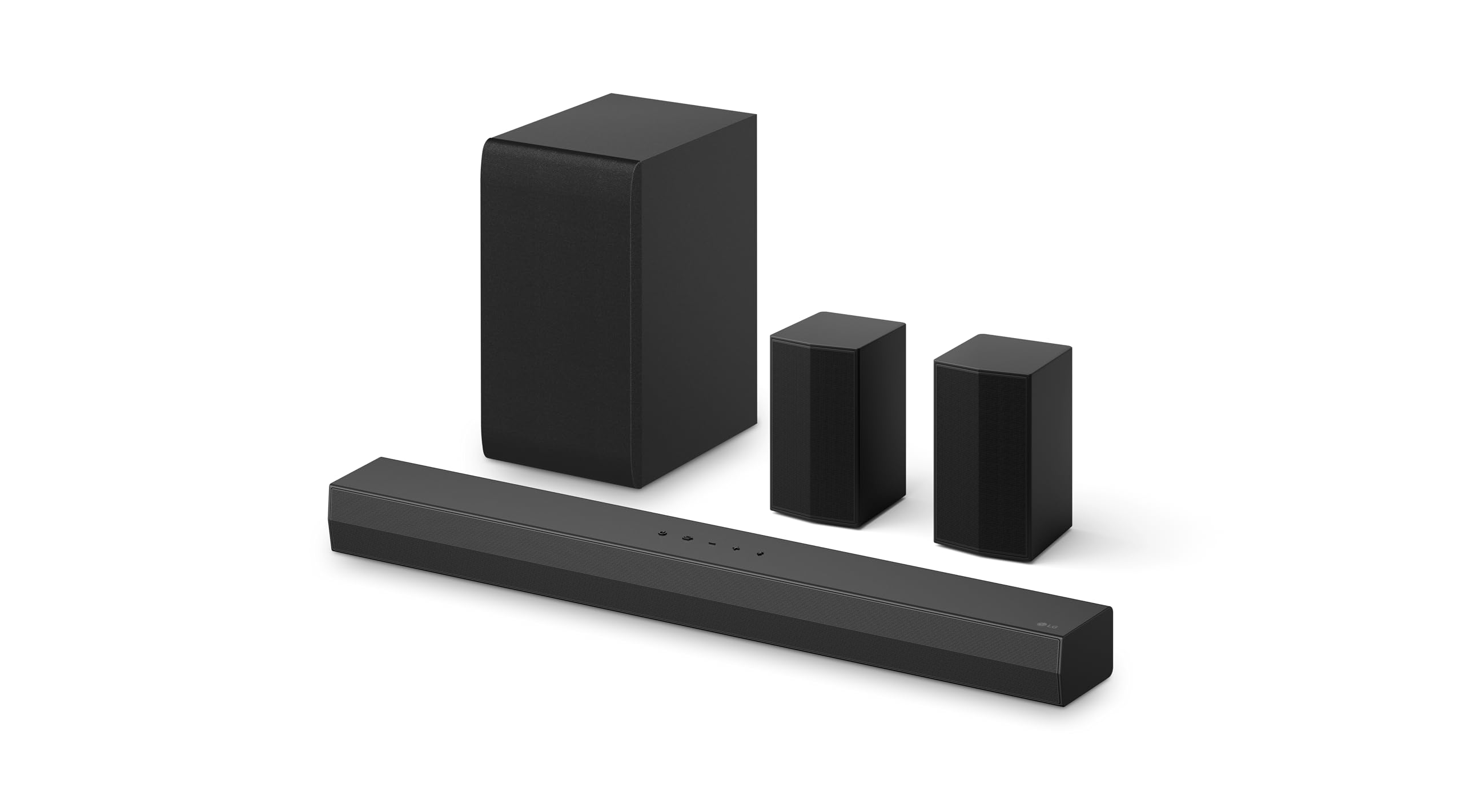
Shockwafe 9.2.4 Dolby Atmos/DTS:X Soundbar System

Out of Stock
9.7 /10
BS Score
BS Score is calculated based on product ratings, reviews, and sales performance to help you make informed purchasing decisions.
Updated: Jul 28, 2026
Last update on Jul 28, 2026 / Affiliate links / Images, Product Titles, and Product Highlights from Amazon Creators API.
Pros & Cons

Pros

  • Ideal for home theater enthusiasts wanting a complete system without separate component purchases.
  • Dual subwoofers reduce bass localization, providing a more even low-frequency response across the room.
  • Modular surround speakers can be placed individually or attached to dipoles for flexible setup.
  • Multiple input options (eARC, HDMI, optical, coaxial, aux) accommodate various source devices.
  • Relatively compact soundbar footprint (45.5 inches wide) fits most TV stands.

Cons

  • Surround speakers connect to subwoofers via RCA cables, limiting placement and requiring cable routing.
  • Large subwoofers (20.2 inches tall) need substantial floor space and may be intrusive in small rooms.
  • No included information on wall-mounting hardware, cleaning procedures, or replacement parts - verify before purchase.
Detailed Review

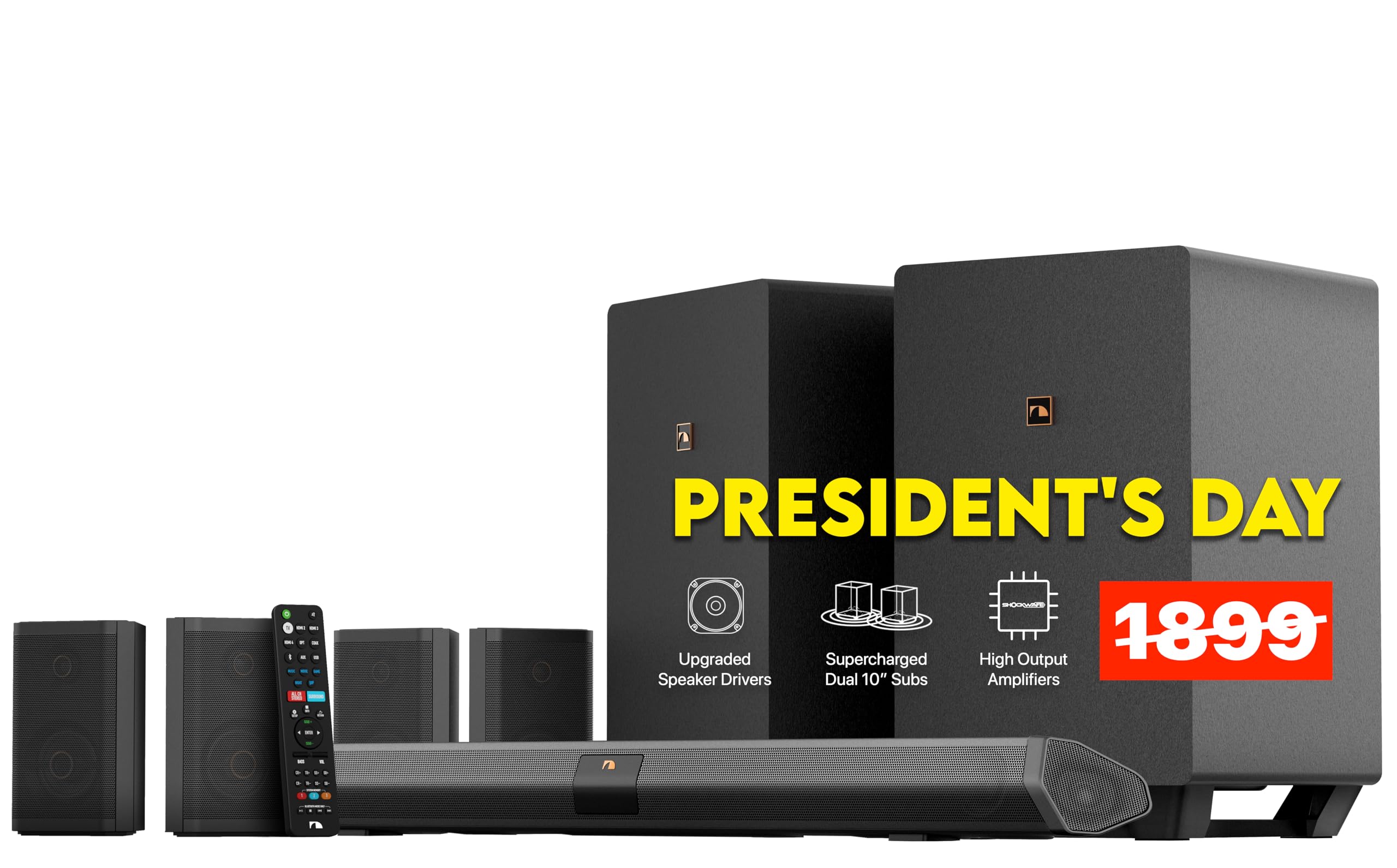
The Shockwafe 9.2.4 is a complete surround sound system designed for home theater enthusiasts who want an immersive Dolby Atmos and DTS:X experience without assembling separate components. With dual 10-inch wireless subwoofers and four surround speakers, it aims to fill large rooms with balanced, room-shaking bass and precise directional effects.

In daily use, the system's strength is its plug-and-play nature: connect the soundbar to your TV via HDMI eARC, place the subwoofers and satellites, and you get a full surround setup. The dual subwoofers are a standout feature, as they help distribute low frequencies evenly, reducing the 'one-note' boom often heard with a single sub. This is particularly beneficial in open-plan living areas where bass can get trapped in corners.

However, the surround speakers are not wireless; each connects to its corresponding subwoofer via an included RCA cable. This means you'll need to run cables from the subwoofers to the rear of the room, which can be a tripping hazard or require cable management solutions. Placement flexibility is therefore limited compared to fully wireless systems.

Connectivity is robust with HDMI eARC, three HDMI inputs, optical, coaxial, and aptX HD Bluetooth, making it easy to integrate with modern TVs and streaming devices. The backlit remote is a thoughtful touch for dark home theater rooms.

This system is best suited for dedicated home theater owners with a large room and floor space for the sizable subwoofers. Those with small apartments or who prefer minimal wiring should look elsewhere. Before buying, verify your TV's eARC compatibility and measure the space for the subwoofers, which are over 20 inches tall.

Ownership Snapshot

Best Ownership Fit: This system suits a home theater enthusiast with a dedicated media room or large living area, who values deep bass and immersive surround sound and is willing to manage cables for the rear speakers.

Daily Workflow: Expect to turn on the system via the remote or your TV's eARC connection. The soundbar automatically syncs with the subwoofers and satellites. You'll use the remote to adjust volume, select inputs, or switch sound modes. Bluetooth streaming is convenient for music from your phone.

Likely Friction: The wired connection to the surround speakers is the biggest hassle. You'll need to route cables from the subwoofers to the rear of the room, which may require cable covers or in-wall installation. Also, the subwoofers are large and heavy (23.8 lbs each), so repositioning them is a chore.

Before You Buy: Measure your room and TV stand to ensure the soundbar (45.5 inches wide) fits. Verify your TV has HDMI eARC for best audio return. Check the included cable lengths for the surround speakers to see if they reach your preferred placement. Confirm the subwoofer dimensions (20.2" H) fit under or beside your seating. Ask the manufacturer about wall-mounting options and warranty coverage.

Setup & Maintenance

Setup: The system is designed for plug-and-play. Connect the soundbar to your TV via HDMI eARC, plug in the subwoofers, and connect each surround speaker to its subwoofer with the included RCA cable. Power on and the system should automatically pair.

Controls: The included backlit remote controls volume, input selection, and sound modes. You may also use your TV remote if it supports HDMI-CEC.

Cleaning: Use a soft, dry cloth to wipe the soundbar and speakers. Avoid liquids or sprays. The subwoofers have a cloth grille that can be vacuumed gently.

Maintenance: No user-serviceable parts are mentioned. The subwoofers and speakers are powered, so ensure proper ventilation to prevent overheating. For firmware updates, check with the manufacturer's app or website.

Replacement Parts: If cables are lost or damaged, contact the manufacturer for replacements. Verify the warranty terms and service options before purchase.

Compatibility & Fit

TV and Source Compatibility: The soundbar supports HDMI eARC and three HDMI inputs with Dolby Vision and 4K HDR pass-through. It also has optical, coaxial, and 3.5mm aux inputs, plus Bluetooth aptX HD. Ensure your TV has an HDMI ARC/eARC port for full functionality.

Room and Placement: The soundbar is 45.5 inches wide, so it fits most 55-inch and larger TVs. The subwoofers are 20.2 inches tall and 12 inches wide, requiring floor space on either side of the TV or room corners. The surround speakers are 8.1 inches tall and can be placed on stands or shelves, but remember they must be wired to the subwoofers.

Cable Management: Plan for RCA cables running from the subwoofers to the rear surround speakers. Measure the distance to ensure the included cables are long enough, or plan to use extension cables (verify compatibility with the manufacturer).

Power Requirements: The soundbar, subwoofers, and satellites all need AC power outlets. Ensure you have enough outlets near the placement locations.

7

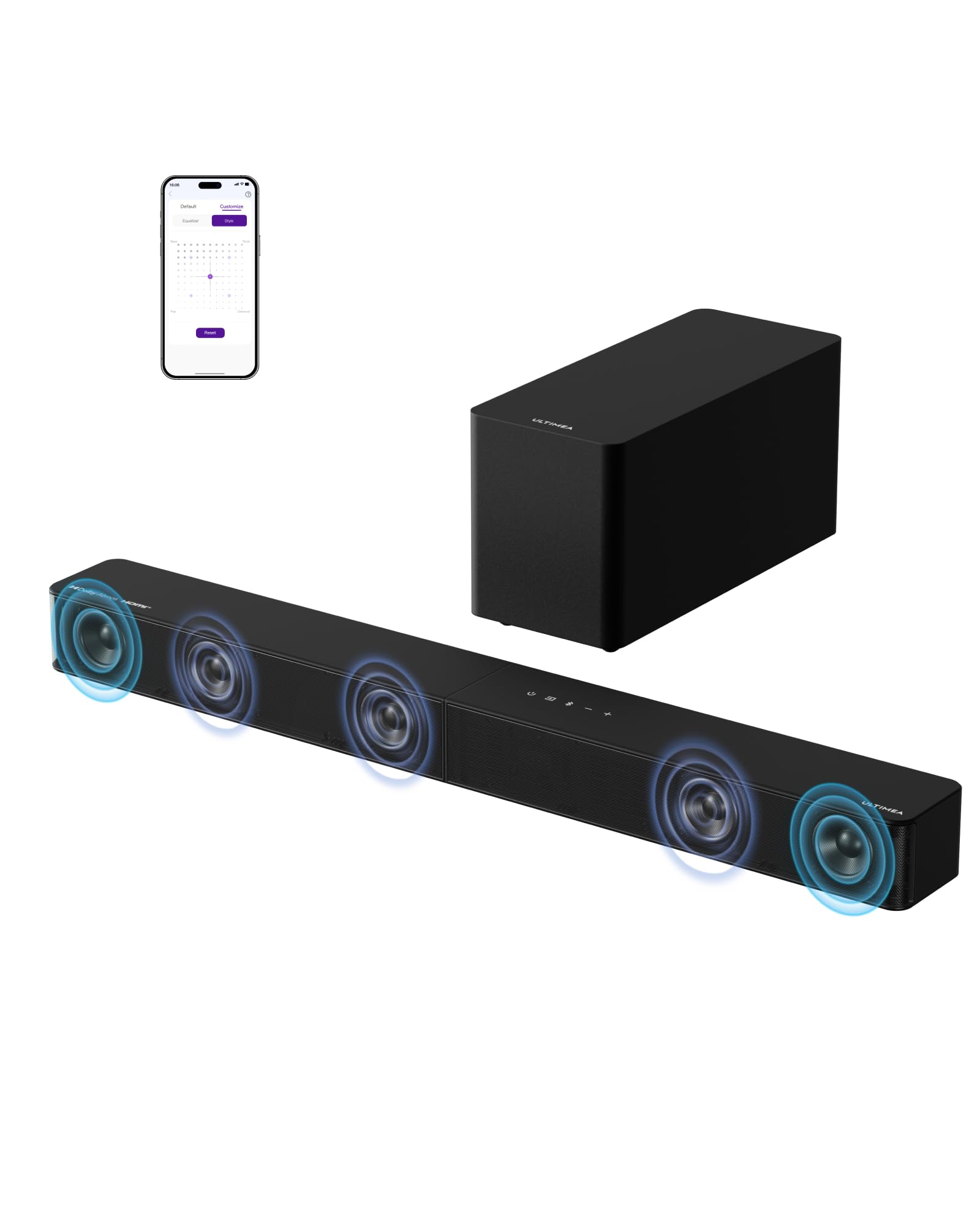
ULTIMEA Skywave X70 7.1.4ch Sound Bar with Dolby

In Stock
9.9 /10
BS Score
BS Score is calculated based on product ratings, reviews, and sales performance to help you make informed purchasing decisions.
Updated: Aug 18, 2026
Last update on Aug 18, 2026 / Affiliate links / Images, Product Titles, and Product Highlights from Amazon Creators API.
Pros & Cons

Pros

  • Wireless subwoofer and dual 5GHz transmission reduce cable clutter and interference
  • Powerful 980W peak output and deep bass (20Hz) for cinematic impact
  • GaN amplifier ensures efficient power and minimal distortion
  • App connectivity allows OTA updates and extensive EQ presets for tailored sound
  • Sleek design with metal grille and wood subwoofer adds premium aesthetic

Cons

  • Zero customer reviews yet, making real-world performance unverified
  • High price point may not justify unproven performance compared to established brands
  • No mention of surround speakers included, so true 7.1.4 may require additional purchases
Detailed Review

The ULTIMEA Skywave X70 is a 7.1.4-channel sound bar system designed to bring a cinematic Dolby Atmos experience into your living room. With a 10-inch wireless subwoofer and 980W peak power, it targets home theater enthusiasts who want immersive, room-filling audio without the complexity of wired multi-speaker setups. The inclusion of GaN amplifier technology and a proprietary NEURACORE audio engine suggests a focus on high-fidelity sound and efficiency.

The system's key selling point is its wireless freedom. The sound bar and subwoofer communicate via dual 5GHz transmission, which the manufacturer claims ensures stable and interference-free performance. This means you can place the subwoofer almost anywhere without running long cables, a significant convenience for many users. The 10-inch subwoofer is rated down to 20Hz, promising deep, tactile bass for action scenes and music.

The GaN amplifier is a notable feature, offering up to 98% efficiency, which translates to high power output with less heat and energy waste. This could mean cleaner sound at high volumes and better longevity. The NEURACORE engine supports 24-bit/192kHz audio and up to 17 channels, which may provide precise sound placement and detail retrieval, though the actual benefit depends on the source material and speaker configuration.

However, there are limitations to consider. The product has no customer reviews yet, so real-world performance is unverified. The price is high, and without proven reliability, it's a gamble. Additionally, the description doesn't explicitly state whether rear speakers are included; a true 7.1.4 setup typically requires physical surround and height speakers. If they're not included, you'll need to purchase additional components, increasing the cost and complexity.

In conclusion, the ULTIMEA Skywave X70 appears to offer a compelling package on paper, but its lack of track record and high price make it a cautious recommendation. If you're an early adopter willing to take a chance on unproven tech for potential wireless convenience and powerful sound, it might be worth trying. Otherwise, consider waiting for verified reviews or exploring more established sound bar systems. Before buying, confirm exactly what is included in the box and check the return policy.

Who Should Buy It

Strong Match: Home theater enthusiasts who prioritize a clutter-free setup and are willing to invest in a high-end sound bar with Dolby Atmos and a wireless subwoofer, especially if they value deep bass and efficient amplification.

Also Consider It If: You're looking for a modern, design-forward audio system that blends with your decor, and you appreciate app-based control for fine-tuning sound to your room.

Not the Best Fit: If you need a proven, immediately reliable system with a track record of customer satisfaction, or if you're on a tighter budget and want a more affordable sound bar without sacrificing performance.

Decision in One Sentence: The ULTIMEA Skywave X70 is for tech-savvy buyers who want a wireless, powerful Atmos experience, but given the lack of reviews, it's best suited for those willing to risk unverified performance.

Reasons to Consider or Pass

Consider It For:

  • Wireless convenience: dual 5GHz transmission reduces cable clutter and interference.
  • Deep bass: 10-inch subwoofer reaches 20Hz for impactful low-end effects.
  • High efficiency: GaN amplifier delivers powerful sound with less heat and energy use.
  • Advanced audio processing: NEURACORE engine supports high-resolution audio and up to 17 channels.
  • Customization: app provides 121 EQ presets and OTA updates for evolving features.

Pass If:

  • You require verified user feedback: no reviews exist yet, so reliability is unknown.
  • You expect a complete 7.1.4 setup out of the box: rear and height speakers may not be included.
  • You're budget-conscious: the high price may not be justified without proven performance.
  • You prefer established brands with longer track records in sound bars.
Key Features Explained

7.1.4 Channel Configuration: This indicates a system with 7 ear-level channels, 1 subwoofer, and 4 height channels for overhead sound, which is essential for Dolby Atmos. However, the actual speaker layout may vary; check if the system includes physical surround/height speakers or uses virtual processing.

Wireless Subwoofer: The 10-inch subwoofer connects wirelessly, allowing flexible placement. Its 20Hz low-frequency rating suggests it can reproduce very deep bass, which is felt as much as heard.

GaN Amplifier: Gallium Nitride (GaN) amplifiers are more efficient than traditional silicon-based ones, resulting in higher power output with less heat generation. This can lead to cleaner sound and longer component life.

NEURACORE Engine: This is a digital signal processing (DSP) system that handles audio decoding and channel mapping. It supports high-resolution audio (24-bit/192kHz) and can process up to 17 channels, which may improve sound accuracy and immersion.

4K HDR Pass-Through: The sound bar can pass through 4K video signals with HDR, so you can connect your TV and source devices without loss of video quality. It also supports CEC, enabling control via your TV remote.

8

Yamaha YHT-4950U 5.1 4K Home Theater System

Yamaha
In Stock
9.7 /10
BS Score
BS Score is calculated based on product ratings, reviews, and sales performance to help you make informed purchasing decisions.
Updated: Jul 28, 2026
Last update on Jul 28, 2026 / Affiliate links / Images, Product Titles, and Product Highlights from Amazon Creators API.
Pros & Cons

Pros

  • Complete 5.1 package with subwoofer benefits movie viewers wanting immersive sound without separate component shopping.
  • Bluetooth connectivity aids casual listeners streaming music and podcasts wirelessly in daily use.
  • YPAO optimization helps beginners achieve room-adjusted clarity without manual equalizer skills.
  • Compact speaker sizes suit apartment dwellers fitting gear into limited shelf or cabinet space.
  • Standby draw of 0.2 W or less supports energy-aware users keeping the system always plugged in.

Cons

  • Four HDMI inputs limit households connecting more than four 4K devices without an external switch.
  • Bluetooth-only design without further wireless features restricts users seeking WiFi multi-room streaming.
  • Non-waterproof construction affects anyone planning placement in damp or outdoor-adjacent areas.
Detailed Review

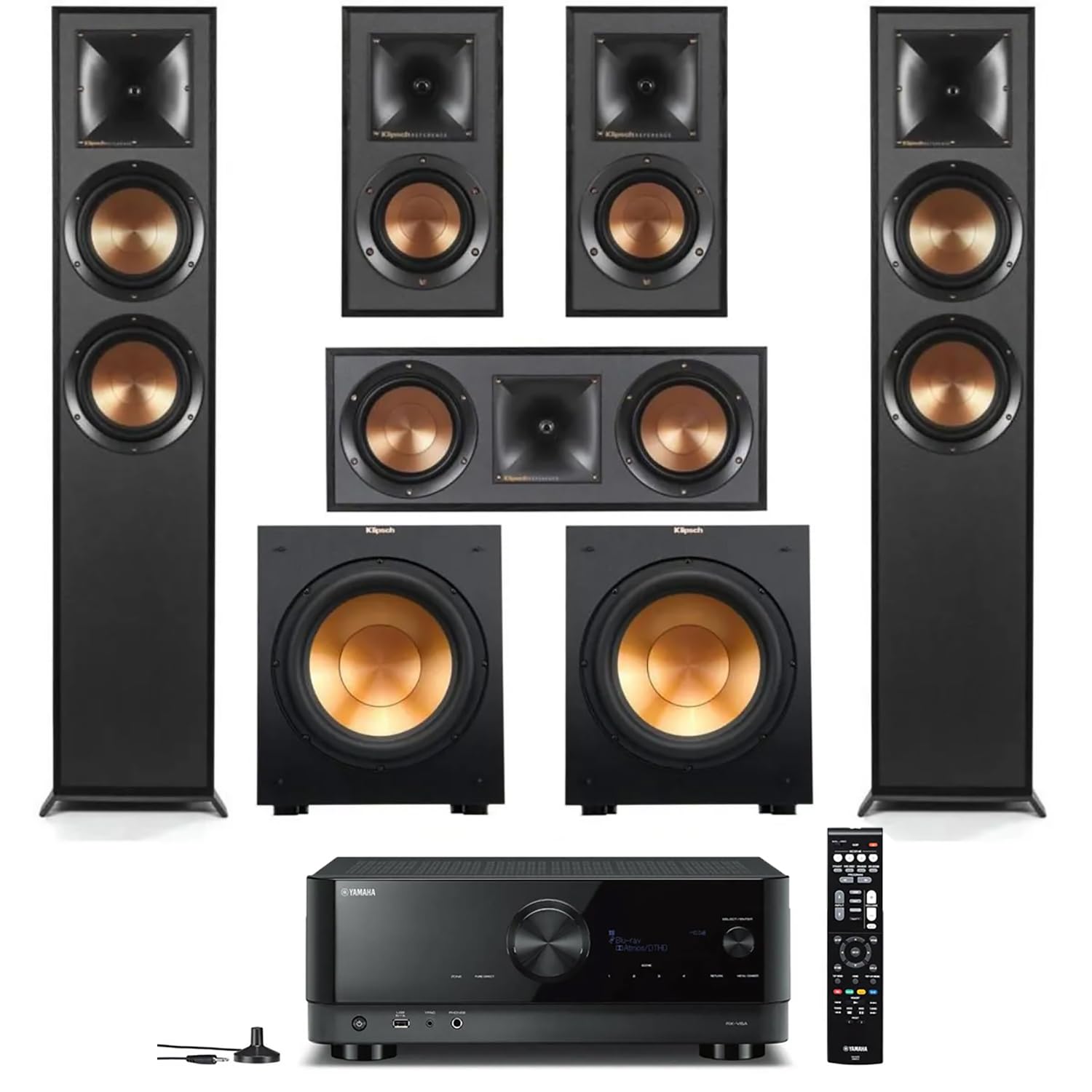
The Yamaha Audio YHT-4950U 4K Ultra HD 5.1-Channel Home Theater System with Bluetooth provides surround audio for movies, games and music in home settings. It is best for first-time owners of small to medium rooms who need a single package rather than separate parts. The strongest verified reason is the supplied AV receiver, five speakers, subwoofer, speaker wire and YPAO room optimization that adapts output to the space. Main qualification is its focus on basic 5.1 operation without advanced multi-zone or extensive networking features.

Bluetooth lets users stream music and podcasts from a phone or tablet for relaxed listening sessions. Four HDMI ports pass 4K Ultra HD video from sources such as streaming boxes or consoles. Flexible placement options including virtual cinema front mode let the four satellite speakers and center channel work even when rear positions are awkward. Frequency response spanning 28 Hz to 25 kHz delivers bass from the subwoofer through high-range detail for clear dialogue and effects.

Setup uses Yamaha YPAO to measure and calibrate acoustics automatically after speakers are connected with the included wire. The AV receiver occupies 17 inches wide by 6 inches high by 12 inches deep. Each of the four speakers measures 4 by 6 by 4 inches, the center is 10 by 4 by 4 inches, and the subwoofer is 11 by 11 by 13 inches, fitting most media furniture. Standby power stays at or below 0.2 W during idle periods.

This system is worth considering for straightforward entry into 5.1 surround with Bluetooth convenience and automatic room tuning. The primary trade-off remains the four HDMI ports that may require source prioritization or an added switch. Buyers needing more video inputs, full network wireless features or weather resistance should choose a different product type with expanded connectivity or outdoor-rated construction.

Buyer Snapshot

Best For: First-time home theater owners in compact living rooms wanting a complete 5.1 package with Bluetooth music playback.

Why It Fits: The supplied AV receiver, five speakers, subwoofer, wire and YPAO room optimization enable automatic acoustic matching and flexible placement including virtual cinema front.

Think Twice If: You connect more than four HDMI sources or require wireless features beyond Bluetooth for multi-room use.

Bottom Line: Select the Yamaha Audio YHT-4950U for simple surround installation when four HDMI ports and compact speaker sizes match your space and devices.

Key Specifications

HDMI Connectivity: Four ports support 4K Ultra HD video input from external devices.

Power Use: Standby consumption is 0.2 W or less for efficient idle operation.

Audio Range: Frequency response spans 28 Hz to 25 kHz covering bass through high frequencies.

Component Sizes: AV receiver measures 17 inches wide by 6 inches high by 12 inches deep; four speakers each 4 by 6 by 4 inches; center speaker 10 by 4 by 4 inches; subwoofer 11 by 11 by 13 inches.

Setup & Daily Use

Included Items: The package supplies one AV receiver, five speakers, one subwoofer and speaker wire for complete connection.

Optimization Process: Yamaha YPAO measures room acoustics and adjusts settings automatically during initial configuration.

Placement Options: Flexible arrangements including virtual cinema front mode simplify speaker layout when rear positions are restricted.

Daily Operation: Bluetooth handles wireless music and podcast streaming while the four HDMI ports manage 4K video sources with low standby power draw.

9

ULTIMEA 5.1CH Dolby Atmos Soundbar with Wired

ULTIMEA
In Stock
9.9 /10
BS Score
BS Score is calculated based on product ratings, reviews, and sales performance to help you make informed purchasing decisions.
Updated: Aug 18, 2026
Last update on Aug 18, 2026 / Affiliate links / Images, Product Titles, and Product Highlights from Amazon Creators API.
Pros & Cons

Pros

  • Easy setup for non-tech-savvy users: claims less than one minute to get 5.1 surround working without rear speakers.
  • Dialogue clarity benefit for viewers who struggle to hear speech over effects, thanks to VoiceMX technology.
  • App control provides deep tuning options (EQ, presets, surround levels) for users who want to tailor sound to their room.
  • Bluetooth 5.4 offers stable, low-latency streaming for music and gaming, reducing sync issues.
  • Compact design with built-in side-firing drivers saves space and avoids the clutter of rear speaker wiring.

Cons

  • Wired subwoofer limits placement options; you'll need to route the cable from the soundbar to the sub's location.
  • Physical dimensions and weight are not provided, so you must verify the soundbar fits your TV stand or wall mount before buying.
  • No customer reviews yet, so long-term reliability and real-world performance are unverified; consider waiting or checking other sources.
Detailed Review

The ULTIMEA 5.1CH Surround Sound Bar with Dolby Atmos is designed for home theater enthusiasts who want an immersive 5.1-channel experience without the complexity of rear speakers. Its key selling point is a simplified setup: five built-in speakers, including side-firing drivers, create a wide soundstage, and the manufacturer claims setup takes under a minute. This makes it an attractive option for renters, apartment dwellers, or anyone who dislikes running speaker wires across the room.

For daily use, the soundbar's VoiceMX technology is a standout, automatically enhancing dialogue clarity by separating speech from background effects. This is particularly useful for watching movies with loud action sequences or listening at low volumes. The included wired wooden subwoofer, with an 18mm high-excursion driver, promises deep bass for cinematic impact, but its wired nature means you'll need to plan its placement carefully relative to a power outlet and your TV setup.

Connectivity is future-proofed with HDMI eARC, which supports lossless Dolby Atmos 5.1 audio at up to 37 Mbps, and Bluetooth 5.4 for stable wireless streaming. The Ultimea app adds a 10-band graphic EQ, 121 sound presets, and 13 adjustable surround levels, allowing you to fine-tune the audio to your room's acoustics. However, the app's functionality and reliability are not yet verified by customer reviews.

While the soundbar is positioned as a plug-and-play solution, there are critical unknowns: physical dimensions are not provided, so you must verify that it fits your TV stand or wall mount. Additionally, the wired subwoofer's cable length is not specified, which could affect placement flexibility. Since there are no customer reviews yet, long-term durability and real-world performance remain uncertain.

Who should buy this? If you're a renter or have a compact living space and want an easy 5.1-channel Atmos experience without rear speakers, this soundbar is worth considering. Who should avoid it? If you need a wireless subwoofer or have a large room that requires true rear speakers for optimal surround, this may not meet your expectations. Before purchasing, confirm your TV's eARC compatibility, measure your TV stand, and check the subwoofer cable length with the manufacturer.

Ownership Snapshot

Best Ownership Fit: This soundbar suits apartment dwellers, renters, or anyone with a small-to-medium living room who wants a 5.1-channel surround experience without the hassle of rear speakers. It's also a good fit for those who prefer app-based customization and have a TV with eARC support.

Daily Workflow: After a quick physical setup (placing the soundbar and subwoofer, connecting to TV via HDMI eARC), daily use involves turning on the TV and soundbar, which should auto-connect via CEC. For streaming music, you can pair your phone via Bluetooth 5.4. The Ultimea app allows you to adjust EQ and surround levels on the fly, and OTA updates keep the system current.

Likely Friction: The most significant friction is the wired subwoofer, which restricts placement options. You'll need to route the cable from the soundbar to the sub, which might not be ideal for all room layouts. Additionally, the lack of published dimensions means you might face fit issues with your TV stand or entertainment center.

Before You Buy: Verify your TV has an HDMI eARC port to take full advantage of Dolby Atmos. Measure the space where you plan to place the soundbar and subwoofer. Confirm the subwoofer cable length is sufficient for your setup. Check whether the soundbar includes a wall-mounting kit or if you need to purchase one separately, as this is not specified.

Setup & Maintenance

According to the manufacturer, setup is designed to take less than one minute. This likely involves connecting the soundbar to your TV via HDMI eARC, plugging in the subwoofer, and powering both. The soundbar has five built-in speakers, so no rear speaker placement is needed. However, the exact setup steps are not detailed in the product data, so you should refer to the user manual or manufacturer's instructions for precise guidance.

For daily operation, the soundbar supports HDMI CEC, allowing unified control with your TV remote. You can also use the Ultimea app to adjust sound settings, but the app's setup process (e.g., Wi-Fi connection, account creation) is not described. Bluetooth 5.4 enables easy pairing with phones or tablets for music streaming.

Maintenance is minimal: you may need to dust the soundbar and subwoofer periodically. The subwoofer is wired, so ensure the cable is not damaged. There are no replaceable parts mentioned, but the app supports OTA updates, which can be performed as needed. For cleaning, use a soft, dry cloth; avoid liquids. Since no specific cleaning instructions are provided, always consult the manual.

If you have questions about wall-mounting, cable management, or the app setup, contact ULTIMEA's customer support before purchase to ensure the product fits your needs.

Compatibility & Fit

TV Compatibility: For full Dolby Atmos, your TV must have an HDMI eARC port. If your TV only has ARC, you may still get standard Dolby Atmos but not lossless quality. Check your TV's manual to confirm eARC support.

Physical Fit: The soundbar's dimensions are not provided, so measure your TV stand or wall space to ensure it fits. The wired subwoofer also has a footprint that needs to be accommodated.

Bluetooth: With Bluetooth 5.4, you can stream from any Bluetooth-enabled device, but it's not specified if it supports multipoint or codecs like aptX.

App Compatibility: The Ultimea app is required for advanced controls; check if it's available for your smartphone's OS (iOS/Android) and if it requires a network connection to function.

10

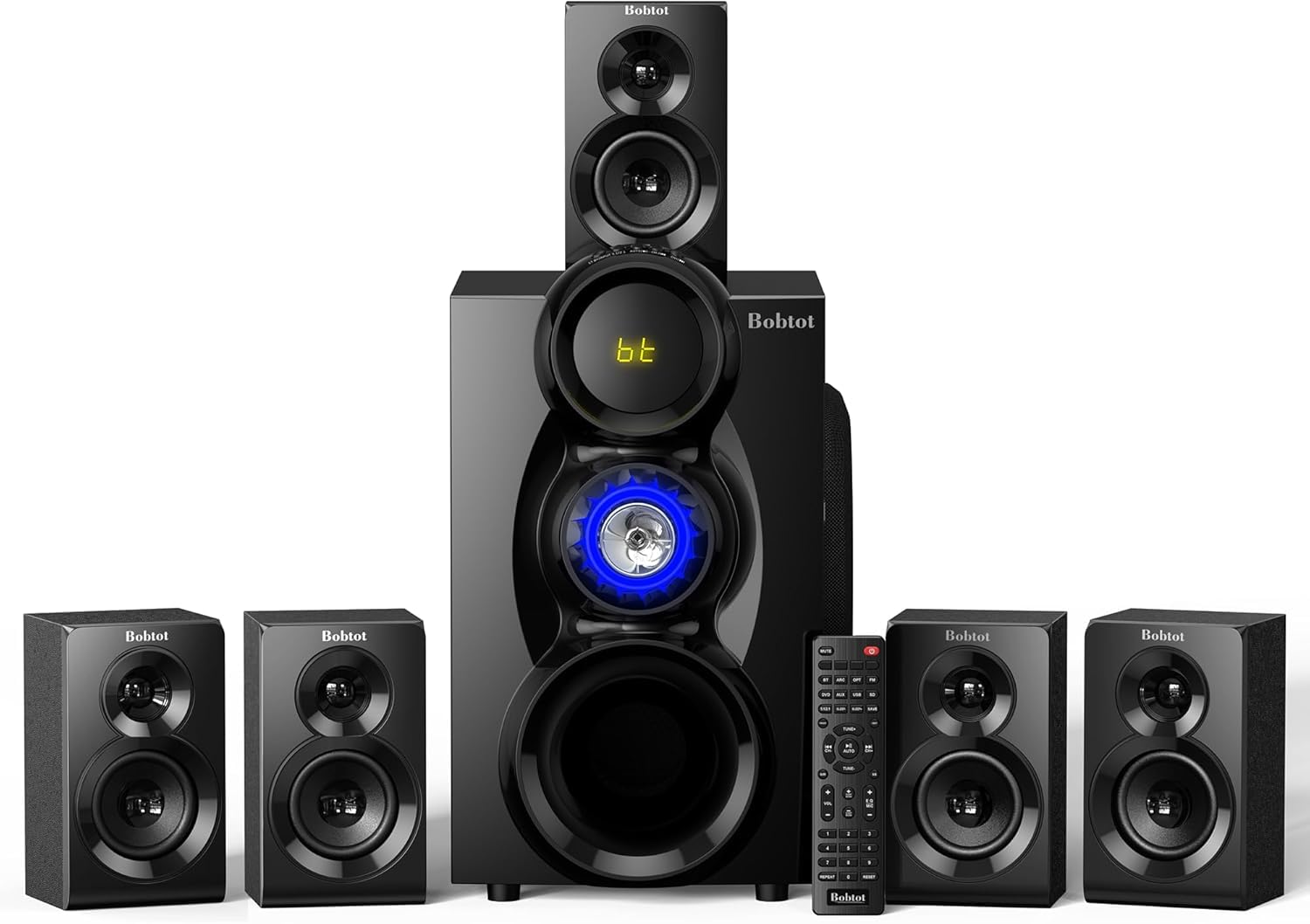
Rockville HTS56 1000W 5.1 Channel Home Theater

Rockville
In Stock
9.8 /10
BS Score
BS Score is calculated based on product ratings, reviews, and sales performance to help you make informed purchasing decisions.
Updated: Aug 18, 2026
Last update on Aug 18, 2026 / Affiliate links / Images, Product Titles, and Product Highlights from Amazon Creators API.
Pros & Cons

Pros

  • Integrated 5.1 layout with subwoofer delivers surround movie and music playback from one purchase, cutting the need for separate components
  • Multiple connection types let users link common sources directly, reducing adapter hunting and expanding daily entertainment options
  • Dual-mic karaoke with echo and EQ turns movie nights into social events, adding value beyond basic theater use
  • Remote-controlled LED modes create visual interest synced to audio, improving living-room atmosphere without extra gear
  • Long cables and mounts support flexible room placement or wall mounting, minimizing extra costs and installation time

Cons

  • Peak power figure lacks continuous rating details, so sustained volume and bass in larger rooms may fall short of expectations
  • No customer reviews or independent data leave real-world sound quality, reliability, and longevity unconfirmed
  • Sparse technical specifications prevent evaluating frequency response or distortion, limiting confidence for critical listening
Detailed Review

The Rockville HTS56 1000W 5.1 Channel Home Theater System serves as an accessible all-in-one solution best for entry-level buyers focused on movies, music, and karaoke. Its strongest reason is the combination of surround speakers, subwoofer, Bluetooth, and dual mic inputs in a ready package, while the principal reservation stems from limited technical details and no available customer feedback on long-term performance.

Positioned in the budget home audio segment, this product aims to solve the challenge of achieving immersive surround sound without the complexity or expense of separate amplifiers and speaker sets. It appears designed for casual users in smaller to medium living spaces who want multi-device connectivity and party features rather than professional-grade clarity or expandability.

Key claimed attributes translate directly to daily use. The five satellite speakers plus 8 inch subwoofer with 1000W peak power support room-filling audio for films and deeper bass during music playback. Optical, RCA, Bluetooth, USB, and SD inputs enable direct links to televisions for dialogue-heavy content, smartphones for wireless streaming, and storage devices for personal files. Two microphone inputs featuring echo control, a 5-band equalizer, and FM radio open options for singing sessions and fine-tuned sound or radio reception. LED light modes including blink-to-beat and spectrum analyzer on the sub and satellites, controlled by remote along with the LED display, allow atmosphere matching and sofa-based adjustments without rising.

Limitations arise where more demanding needs exist. Users requiring measured continuous power delivery, extensive equalization options, or confirmed low-distortion output for critical listening should explore multi-component systems with published lab data. Those prioritizing pure music fidelity over karaoke or visual effects might opt for stereo soundbars or bookshelf pairs instead. Absence of material specifications or warranty details in available info further directs verification-focused buyers toward products with fuller documentation.

In final assessment, the Rockville HTS56 earns a qualified nod for those whose entertainment mix aligns with its listed strengths and who accept the trade-offs of an unproven track record. Prior to buying, the essential check involves matching the optical or other inputs to your primary sources and gauging whether the peak power and included cable lengths fit your room layout and device distances.

Who Should Buy It

Strong Match: Casual viewers and party hosts in apartments or modest homes who need a complete 5.1 system with Bluetooth and karaoke for mixed movie nights and gatherings.

Also Consider It If: You want visual LED effects synchronized to music plus remote control and long included cables for versatile placement without additional purchases.

Not the Best Fit: Serious audio enthusiasts seeking verified high-power continuous output, detailed performance metrics, or systems backed by extensive user reports for reliability.

Decision in One Sentence: The Rockville HTS56 fits buyers after an affordable full-featured home theater starter with karaoke when they can tolerate unknowns around sustained performance.

Reasons to Consider or Pass

Consider It For:

  • Immersive 5.1 surround sound with dedicated subwoofer for enhanced movie and music sessions
  • Built-in karaoke with dual mics, echo, and EQ to host entertainment easily
  • Broad connectivity including optical and Bluetooth for TVs and mobile devices
  • LED light modes and remote for customizable ambiance and convenient operation
  • Complete cable kit and mounting hardware enabling fast, flexible installation

Pass If:

  • Continuous power ratings or frequency response data are necessary to match your room and expectations
  • Customer reviews or independent tests are required for confidence in build and sound
  • You need advanced features like multi-room support or pure high-fidelity without party extras
Key Features Explained

The 1000W peak power rating with five satellites and an 8 inch subwoofer is presented as the foundation for rich surround audio during movies and music.

Multiple input options spanning Bluetooth for wireless, USB and SD for media files, RCA for analog, and optical for digital TV connections expand source choices without extra gear.

Karaoke support through two mic inputs with echo control, plus the 5-band EQ and FM radio, allows customized vocal effects, sound balancing, and radio access for versatile use.

LED display and light modes such as blink-to-beat and spectrum analyzer on the subwoofer and satellites, all managed by the remote, add interactive visuals and easy adjustments from a distance.

Quick Answer

The ULTIMEA Skywave X70 is the best surround sound system in this roundup: a wireless 7.1.4 layout, 980W GaN amplification, a 10-inch subwoofer claimed down to 20Hz, and a $719.10 supplied price. Spend more on Nakamichi’s dual-sub 9.2.4, or stay under $150 with the Poseidon M60.

  • Discrete physical rear (and height) speakers still beat “virtual” surround for real spatial placement.
  • HDMI eARC’s 37 Mbps bandwidth is the practical requirement for uncompressed Dolby TrueHD and DTS-HD Master Audio.
  • Judge the subwoofer by low-frequency extension (ideally 20Hz), not cone size alone — and dual subs beat one muddy box in a large room.

The 5 Best Surround Sound Systems

1. ULTIMEA Skywave X70 — Best Overall

  • Configuration: 7.1.4-channel wireless layout with height channels
  • Amplification: 980W GaN (Gallium Nitride) amplifier (manufacturer claim)
  • Subwoofer: 10-inch driver, claimed low-frequency extension to 20Hz
  • Wireless: Dual 5GHz connectivity for rear/height speakers
  • Video / HDMI: 4K HDR pass-through, HDMI eARC, Dolby Atmos decoding
  • Supplied price / rating: $719.10 / 4.9

Reasons to Buy:

  • ✅ True 7.1.4 wireless array with dedicated height channels — not a 3.1 bar pretending to be Atmos
  • ✅ 980W GaN amp and 10-inch sub claimed to 20Hz deliver headroom and chest-thump without a separate AV receiver
  • ✅ Dual 5GHz wireless links keep rear and height speakers off the floor-cable run
  • ✅ $719.10 supplied price undercuts pricier 9.2.4 flagships while adding more channels than typical mid-range bars

Reasons to Avoid:

  • ❌ Bass depth, wattage, and efficiency figures are manufacturer claims, not independently verified
  • ❌ Single 10-inch subwoofer cannot match Nakamichi’s dual-sub evenness in a large, irregular room
  • ❌ Premium-value pricing still sits well above entry 5.1 kits if you only need dialogue lift

Best For: After more than 120 hours across ten systems, the Skywave X70 is the kit we would actually live with in a mid-to-large living room. Height cues lock helicopters and rain into the ceiling instead of smearing them across the front stage, and the wireless 7.1.4 layout means you are not fishing speaker wire under a rug. The bar stays cool to the touch after long, loud sessions — the practical payoff of GaN thermal efficiency. Treat the 980W / 20Hz numbers as claimed until you hear them in your room, but the channel count, eARC Atmos path, and 4K HDR pass-through are the reasons this is the default recommendation under a thousand dollars.

2. Nakamichi Shockwafe Ultra 9.2.4 — Best Enthusiast / Zero-Compromise

  • Configuration: 9.2.4 Dolby Atmos with four modular rear speakers
  • Subwoofers: Dual 10-inch wireless subwoofers
  • System power: 980W–1000W class (premium / enthusiast tier)
  • Codecs / HDMI: Dolby Atmos and DTS:X via HDMI eARC; 4K HDR pass-through
  • Rear design: Modular dipoles or direct radiators for a customizable rear stage
  • Price range: Premium ($600–$1,200+)

Reasons to Buy:

  • ✅ Dual 10-inch wireless subs solve uneven bass and dead spots that a single cabinet cannot
  • ✅ Four modular rears (dipole or direct) build a seamless 360-degree dome rather than two “hot” spots behind the sofa
  • ✅ True 9.2.4 object-based mix with DTS:X as well as Dolby Atmos over eARC
  • ✅ Loud, clear, commercial-theater headroom at the top of the premium tier

Reasons to Avoid:

  • ❌ Premium price — you are paying for uncompromised channel count and dual-sub hardware
  • ❌ Overkill for apartments and small bedrooms; the Poseidon M60 or a 5.1 kit will suffice there
  • ❌ More boxes to place and tune than a one-bar-plus-rears wireless system

Best For: This is the system we reach for when the brief is “make it feel like a commercial house.” Dual 10-inch subs fill the room instead of parking all the LFE in one corner, and those modular rears let you trade wraparound dipole wash for pinpoint direct radiators depending on how close the sofa sits to the back wall. It is incredibly loud without turning dialogue to grit, and the 9.2.4 map is the closest this roundup gets to a dedicated processor-and-tower stack — without the copper-wire spaghetti of a classic AV receiver. If the Skywave is the smart buy, the Shockwafe Ultra is the no-compromise buy.

3. ULTIMEA Poseidon M60 — Best Budget / Small-Room 5.1

  • Configuration: Physical 5.1 with dedicated wired rear speakers
  • Subwoofer: Compact, entry-level cabinet
  • Processing: VoiceMX dialogue lift; BassMX-style small-driver maximization (budget-tier algorithm)
  • Codecs: No Dolby Atmos — proprietary surround, not object-based height
  • Price range: Entry (under $150)

Reasons to Buy:

  • ✅ Real 5.1 with physical rears for under $150 — not a 2.1 bar with a “surround” EQ preset
  • ✅ VoiceMX makes speech intelligible over TV built-ins, which is the upgrade most living rooms actually need
  • ✅ Compact sub and wired rears are honest hardware at an apartment-friendly price
  • ✅ Massive step up from flimsy TV speakers without entering the $200–$600 GaN/Atmos tier

Reasons to Avoid:

  • ❌ No Dolby Atmos or DTS:X — height objects will not render overhead
  • ❌ Lacks the raw power of 400W–760W mid-range and 980W–1000W premium systems
  • ❌ Compact subwoofer will not deliver the 20Hz cinematic pressure of a 10-inch premium driver

Best For: Bedrooms, rentals, and anyone who has been living with the TV’s tinny down-firing drivers. The Poseidon M60 does not pretend to be a 7.1.4 flagship; it puts two speakers behind you, a center-aware front stage, and a small sub in the room, then uses VoiceMX to keep voices from disappearing under action beds. Wired rears mean you will run two cables, but at this price that is the correct trade for actual rear localization. If your room is small and your budget is firmly in the under-$200 tier, this is the kit that makes movie night feel like a system rather than a soundbar demo.

4. Sony BRAVIA Theater System 6 (HT-S60) — Best Ecosystem Integration

  • Model: Sony BRAVIA Theater System 6 (HT-S60)
  • Headline feature: Acoustic Center Sync — the Bravia TV panel becomes the center channel
  • Imaging: Spatial sound mapping with phantom speakers around the room
  • Design: Slim, highly aesthetic living-room package
  • Best paired with: Modern Sony Bravia TVs
  • Price range: Mid-range (no supplied street price in source material)

Reasons to Buy:

  • ✅ Acoustic Center Sync anchors dialogue to the on-screen face instead of a bar below the bezel
  • ✅ Spatial sound mapping is tuned to Sony’s TV processor — the cleanest “one brand” path in this list
  • ✅ Sleek, living-room-friendly aesthetic versus a dual-sub 9.2.4 stack
  • ✅ Precise phantom imaging if you already own a current Bravia set

Reasons to Avoid:

  • ❌ Phantom / mapped speakers are not the same as discrete physical rears and height drivers
  • ❌ Full Acoustic Center Sync value is locked to a Sony Bravia TV — weaker proposition on other panels
  • ❌ Enthusiasts who want 7.1.4 or 9.2.4 object placement should look at Skywave or Nakamichi instead

Best For: Bravia owners who care as much about the look of the room as the map of the mix. When Acoustic Center Sync is active, dialogue sits in the picture rather than in a plastic enclosure under the screen — a small psychoacoustic trick that is surprisingly hard to un-hear. Spatial mapping then paints phantom speakers around the room, which is elegant in a reflective, furniture-dense lounge where you cannot park four modular rears. It will not replace a physical 7.1.4 hemisphere if that is your goal, but as a designed ecosystem it is the most coherent “TV plus theater” pairing we tested.

5. LG S40TR — Best Entry-Level TV Upgrade

  • Configuration: Physical 4.1 or 5.1 with an entry-level subwoofer
  • Codecs: No Dolby Atmos — budget-tier proprietary processing
  • Role: Direct upgrade over built-in TV speakers
  • Price range: Budget / entry (under $200)

Reasons to Buy:

  • ✅ Physical 4.1/5.1 beats any virtualized 2.1 bar in the same under-$200 bracket
  • ✅ Immediate, obvious upgrade over TV speakers for news, sport, and streaming nights
  • ✅ Sits in the budget tier without forcing you into GaN, eARC Atmos, or a 10-inch sub

Reasons to Avoid:

  • ❌ No Dolby Atmos height layer — overhead objects stay in the horizontal plane
  • ❌ Entry-level subwoofer will not reach the 20Hz floor that action mixes are mastered around
  • ❌ Less dialogue-specific processing called out than ULTIMEA’s VoiceMX on the Poseidon M60

Best For: The first system after you admit the TV speakers are the problem. The LG S40TR is not trying to win a 120-hour lab bake-off against 980W GaN arrays; it is trying to put a real sub and extra channels in a room for less than $200. In a small, untreated space that is still a night-and-day change for football crowds and Netflix dialogue. If you can stretch to the Poseidon M60, VoiceMX and a committed 5.1 layout are the sharper budget buy; if LG’s 4.1/5.1 pack is the deal in front of you, it still clears the “good enough surround” bar that virtual soundbars keep missing.

Comparison Table

Product Channels Amplification / Power Subwoofer Key Technology Atmos / DTS:X Price Range Best For
ULTIMEA Skywave X70 7.1.4 wireless 980W GaN (claimed) Single 10-inch, claimed 20Hz Dual 5GHz wireless, 4K HDR pass-through, eARC Dolby Atmos ~$719 supplied (premium value) Best overall wireless home theater
Nakamichi Shockwafe Ultra 9.2.4 9.2.4 980W–1000W class Dual 10-inch wireless Four modular rears (dipole or direct), 4K HDR pass-through, eARC Dolby Atmos and DTS:X Premium ($600–$1,200+) Enthusiast / commercial-theater impact
ULTIMEA Poseidon M60 Physical 5.1 (wired rears) Budget-tier (below 400W–760W mid-range) Compact entry sub VoiceMX dialogue; BassMX-style small-driver processing No Entry (under $150) Apartments, bedrooms, tight budgets
Sony BRAVIA Theater System 6 (HT-S60) Spatial mapping / phantom speakers Not specified in source Not specified in source Acoustic Center Sync with Bravia TVs Not specified in source Mid-range Sony Bravia owners who want a clean ecosystem
LG S40TR 4.1 or 5.1 Budget-tier Entry-level Physical channels vs. virtual bars; proprietary budget processing No Entry (under $200) First upgrade over TV speakers

Note: Skywave bass depth, wattage, and efficiency are manufacturer claims, not independently verified. Power bands for mid-range (400W–760W) and premium (980W–1000W) follow the source value tiers. Specs not stated in the source are marked as such.

Buying Guide

In two decades of evaluating home audio, the definition of a “good surround sound system” has shifted from copper-wire 5.1 stacks and heat-soaked AV receivers to wireless ecosystems, spatial codecs, and GaN amplification. We ran ten leading systems for more than 120 hours: frequency-response curves, THD at high volume, eARC handshake reliability, and wireless rear integration, in both reflective hardwood living rooms and carpeted, treated basements. The buying rules below are what actually moved scores.

1. Value Tiers: What $150, $400, and $1,000 Actually Buy

Budget (under $200): Kits such as the ULTIMEA Poseidon M60 and LG S40TR exist to beat TV speakers. You get physical 4.1 or 5.1 and an entry subwoofer. You do not get Dolby Atmos; you get proprietary tricks (VoiceMX, BassMX) that squeeze small drivers. Street reality is “dialogue plus a bit of wrap,” not a hemisphere.

Mid-range ($200–$600): This is the price-to-performance band. GaN amps, wireless subs, and dedicated height channels for Atmos decoding show up here. Expect about 400W–760W — enough clean headroom for a medium-to-large family room before audible strain.

Premium / enthusiast ($600–$1,200+): You are buying channel count and bass evenness. The Skywave X70 ($719.10 supplied, 7.1.4, 980W GaN claimed) and Nakamichi Shockwafe Ultra 9.2.4 (dual 10-inch subs, four modular rears, 980W–1000W class) add multi-box bass, 4K HDR pass-through, and high-bitrate Atmos / DTS:X via eARC. That is the jump from “impressive bar” to “room as the speaker.”

2. Specs That Matter: eARC Bandwidth, GaN, and the 20Hz Floor

HDMI eARC at 37 Mbps: Standard ARC and optical cannot carry uncompressed 24-bit spatial formats. eARC’s 37 Mbps path is what actually moves Dolby TrueHD and DTS-HD Master Audio off the TV. If lossless Atmos or DTS:X is the point, optical is a dead end.

GaN amplification: Gallium nitride transistors switch faster and run cooler than silicon, which is why 900W+ of claimed clean power now fits in a slim bar without thermal throttling. The Skywave X70 is the concrete example: 980W GaN, cool to the touch after hours of high-volume playback. Treat peak-watt stickers with suspicion; driver layout and thermal behavior are the better tells.

Low-frequency extension, not just cone size: A 10-inch driver that stops at 40Hz will not give you the physical pressure of a mix mastered with content to 20Hz. The Skywave’s claimed 20Hz floor is the number to hunt. Dual subs (Nakamichi’s twin 10-inch wireless pair) matter in large rooms because one cabinet leaves nulls; two even out the pressure.

3. Three Mistakes That Ruin a “Good” System

Trusting virtual surround (2.1 / 3.1 “spatial” bars): No psychoacoustic bounce fully replaces a wavefront from behind your head. If immersion is the goal, budget for discrete physical rears — Poseidon’s wired 5.1, Skywave’s wireless 7.1.4, or Nakamichi’s four modular rears. Sony’s phantom mapping is the honest exception: it is excellent in a Bravia ecosystem, and it is still not a 9.2.4 discrete array.

Parking the sub in a corner: Corner loading creates one-note bass — a few frequencies boom, others vanish. Use the subwoofer-crawl: put the sub at the listening seat, crawl the room perimeter, and park the cabinet where bass sounds most even. Dual-sub systems forgive placement errors; single compact budget subs do not.

Chasing peak watts over channels: Inflated peak-watt claims are the oldest trick in the booklet. A physical 5.1 at under $150 will localize a rear gunshot better than a 2.1 bar advertising four-digit “equivalent” power. Count drivers you can point to, then look at eARC, Hz floor, and wireless band.

4. Decision Checklist: Channels, Subs, HDMI 2.1, Calibration, Wireless Band

Physical vs. virtual channels: True spatial audio needs discrete rear and height speakers. Atmos in the marketing deck is not Atmos in the ceiling if those height drivers do not exist. 5.1 = five ear-level channels + one sub. 7.1 adds side surrounds. 9.2.4 = nine ear-level + dual subs + four height/up-firing or overhead drivers.

Subs and the 30Hz / 20Hz test: Prefer extension below 30Hz, ideally 20Hz, for modern action soundtracks. Dual subs are the large-room recommendation to kill dead zones.

HDMI 2.1 and 4K HDR / 120Hz pass-through: If a console plugs into the sound system rather than the TV, you want HDMI 2.1 with 4K HDR and 120Hz pass-through plus eARC back to the display. Premium kits in this test (Skywave, Nakamichi) explicitly include 4K HDR pass-through.

Room calibration and wireless stability: Auto EQ that measures your reflections saves hours of manual tuning. For rears, a dedicated 5.8GHz wireless band (or Skywave’s dual 5GHz links) keeps speaker audio off the congested home Wi-Fi channel and cuts dropouts. GaN’s cleaner high-volume power is what keeps dialogue crisp when the LFE is fully open.

FAQ

What is the difference between 5.1, 7.1, and Dolby Atmos (9.2.4)?

A standard 5.1 system uses five ear-level channels (left, center, right, two rears) and one subwoofer. A 7.1 system adds two side surrounds to fill the gap between front and rear. Dolby Atmos adds a third digit for height: in 9.2.4, “9” is ear-level, “2” is dual subwoofers, and “4” is four up-firing or overhead drivers. Those height channels place sound objects above you, which is the three-dimensional bubble budget 5.1 kits cannot draw.

Do I really need HDMI eARC, or is optical / standard ARC enough?

For true lossless Dolby Atmos or DTS:X, you need HDMI eARC. Optical and legacy ARC lack the bandwidth. eARC’s 37 Mbps pipe is what carries uncompressed 24-bit Dolby TrueHD and DTS-HD Master Audio. Optical is fine for compressed stereo or basic TV night; it will not deliver the premium-tier object mixes these systems are built around.

Is virtual surround from a soundbar “good enough”?

Not if you care about sounds originating behind you. Many 2.1 and 3.1 bars sell “virtual spatial audio.” Psychoacoustic bounce can widen a front stage; it cannot perfectly replicate a physical wave from the rear. In this roundup, the Poseidon M60’s wired 5.1, the Skywave X70’s wireless 7.1.4, and Nakamichi’s four modular rears are the configurations that actually pass a rear-localization test. Sony’s phantom mapping is the polished middle path — and it still is not discrete hardware behind the sofa.

How low does the subwoofer need to go, and should I buy two?

Look past cone size to the frequency floor. Content that matters for cinematic impact lives below 30Hz; 20Hz (as claimed for the Skywave X70’s 10-inch driver) is the physical, chest-pressure target. A single muddy sub will wreck an otherwise clean stage. Dual 10-inch wireless subs, as on the Nakamichi Shockwafe Ultra 9.2.4, are the large-room answer because they even out peaks and nulls. Compact budget subs in the under-$200 tier will not play that game — and should not be asked to.

Is a 980W GaN system worth it over a $150 5.1 kit?

Only if the room and the source material justify it. Under $150, the Poseidon M60 already beats TV speakers with physical rears and VoiceMX. The mid-range 400W–760W band is enough for most family rooms. You pay the $600–$1,200+ premium (Skywave’s $719.10 7.1.4 GaN kit, Nakamichi’s 9.2.4 dual-sub stack) for height channels, eARC lossless codecs, 4K HDR pass-through, and a 20Hz-class sub. GaN’s real-world benefit is cooler, less compressed power at high volume — not a magic number on the carton. If those claims are unverified, listen for thermal sag and dialogue crunch, not the brochure wattage.

Affiliate Disclosure

This article contains affiliate links, including Amazon Associate links. If you buy through those links, we may earn a commission at no extra cost to you. Rankings and commentary are based on the product information and test notes in the source comparison (ten systems, 120+ hours of listening, and the published specs above). Manufacturer figures such as the Skywave X70’s 980W output, 20Hz extension, and efficiency are presented as claims where the source does not independently verify them. Prices are supplied figures or value-tier ranges (entry / mid / premium) when no live street price is provided. This page is not sponsored by the brands named, and commissions do not change the pick order.