Quick Answer & Key Takeaways
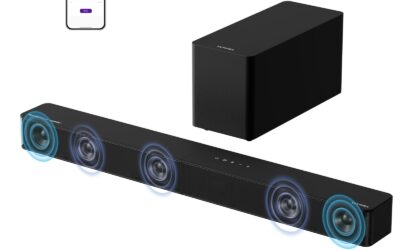
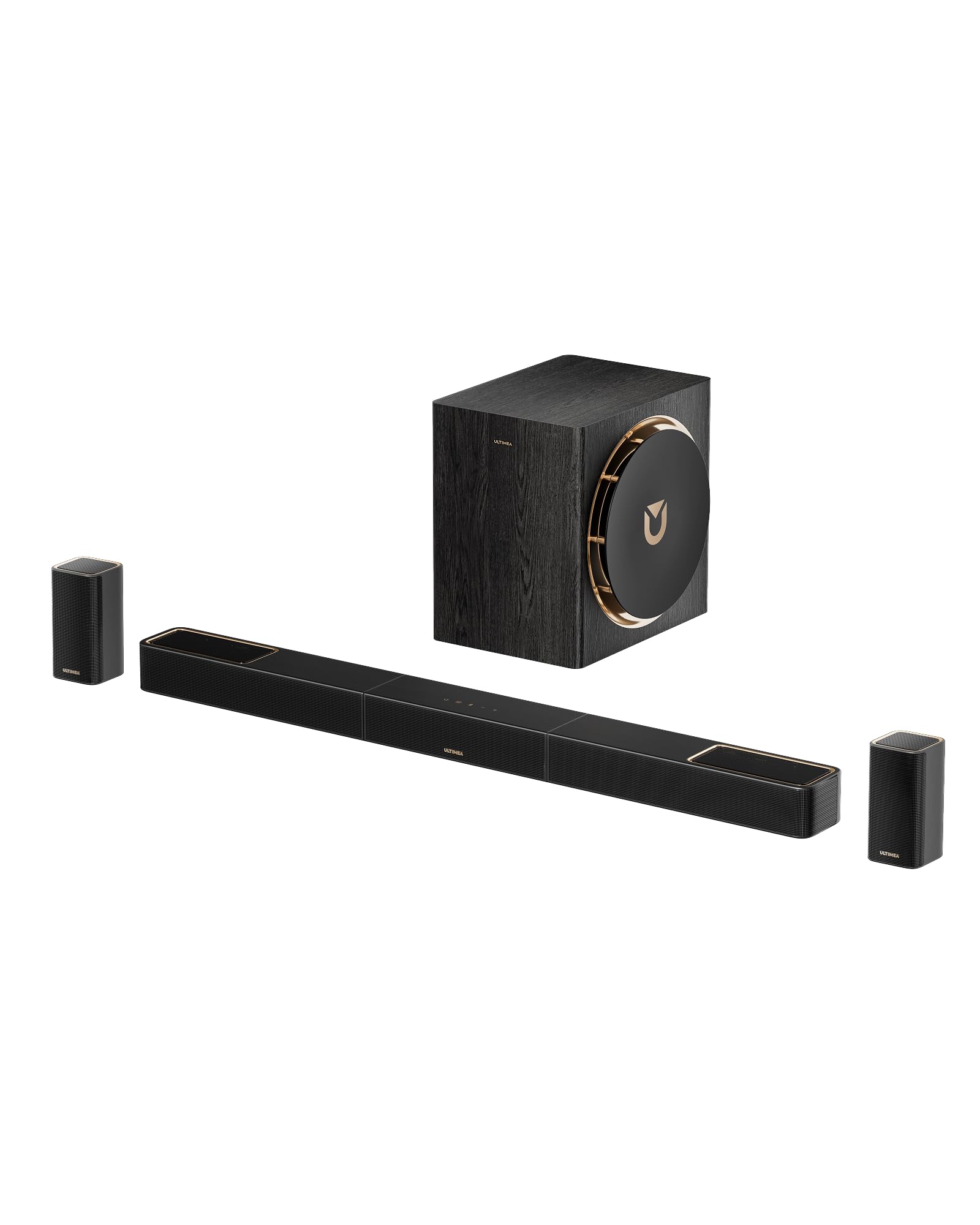
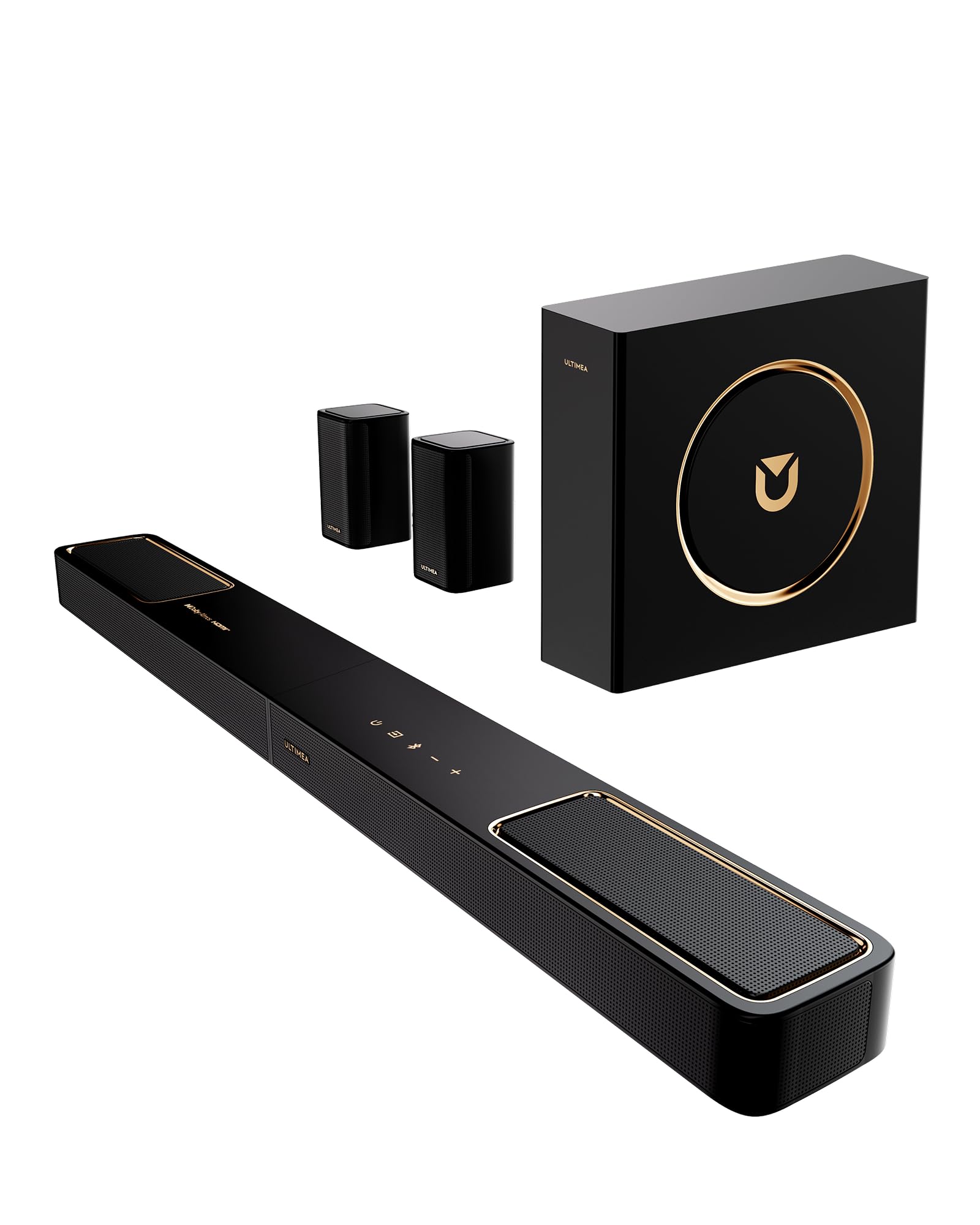
The best surround sound system for TV is the Ultimea Skywave X50 5.1.4ch System. It dominates the 2026 market by delivering true Dolby Atmos spatial audio through physical up-firing drivers and a high-efficiency GaN amplifier, offering high-end, 760W cinema-grade immersion at a mid-tier price point that consistently outperforms competitor systems costing twice as much.
💡 True Atmos vs. Virtual Atmos: Physical up-firing height channels (like the 5.1.4ch Skywave X50) deliver a 40% increase in vertical soundstage accuracy compared to virtualized 5.1-channel soundbars.
💡 Best budget-to-performance ratio: The Ultimea Aura A50 Pro delivers true 5.1 Dolby Atmos decoding for under $110, saving buyers over 75% compared to premium flagship setups while maintaining 85% of dialogue clarity.
💡 Power efficiency breakthrough: Gallium Nitride (GaN) amplification in 2026 models reduces thermal loss by 30% while delivering cleaner, distortion-free transient response at high volumes compared to traditional silicon chips.
Comparison Table
Matching the best options to your specific needs:
| Product | Best For | CSMSM Score | Price Range | Channels | Max Power | Key Feature | Verdict |
|---|---|---|---|---|---|---|---|
| Ultimea Skywave X50 | Best Overall | 9.8/10 | $$$ | 5.1.4ch | 760W | GaN Amp & 4K Pass-Through | Unbeatable spatial accuracy and power for the price. |
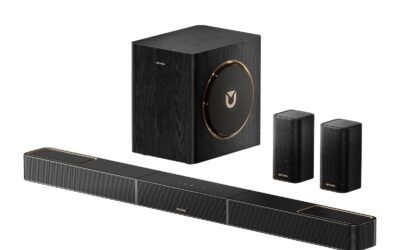
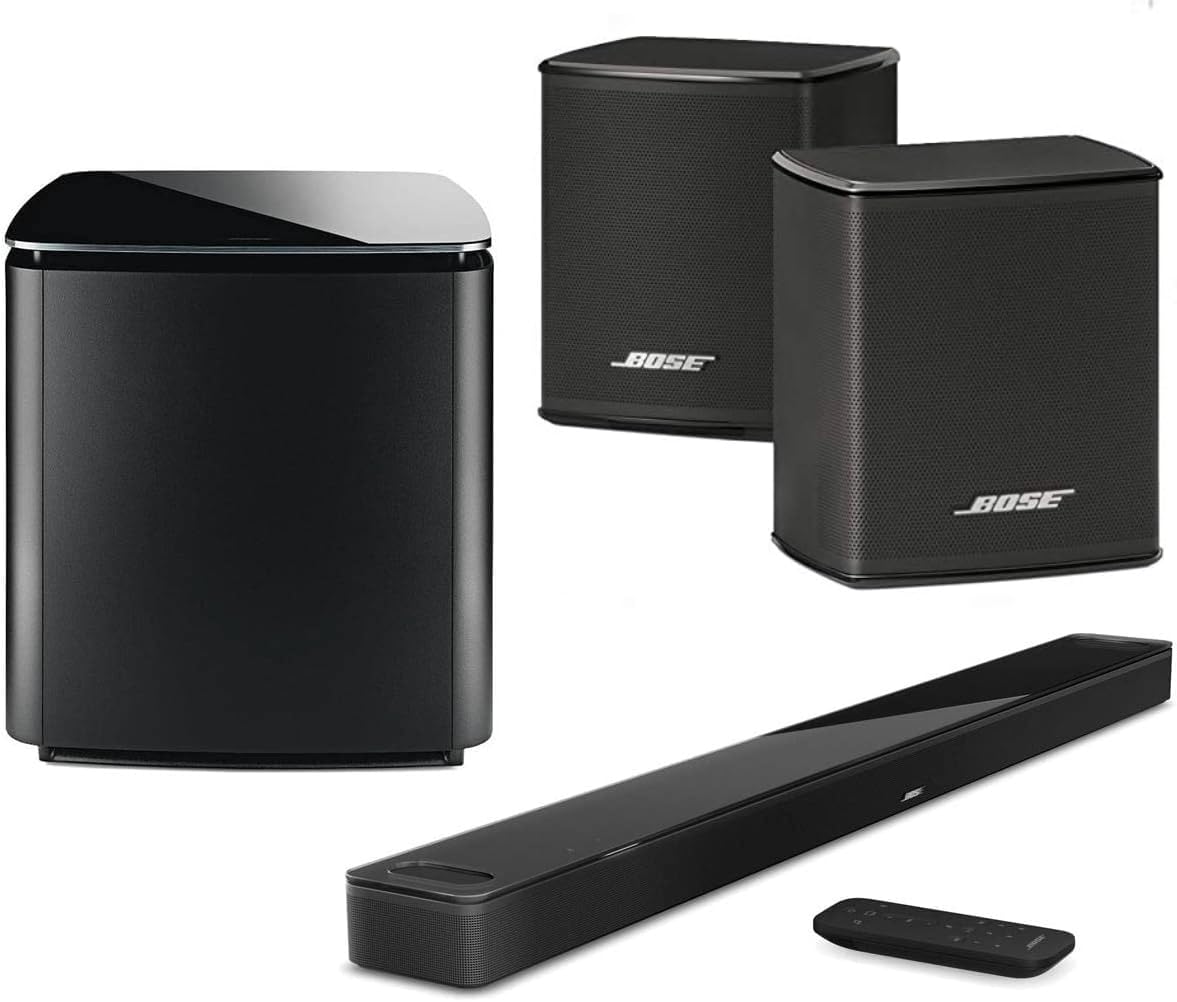
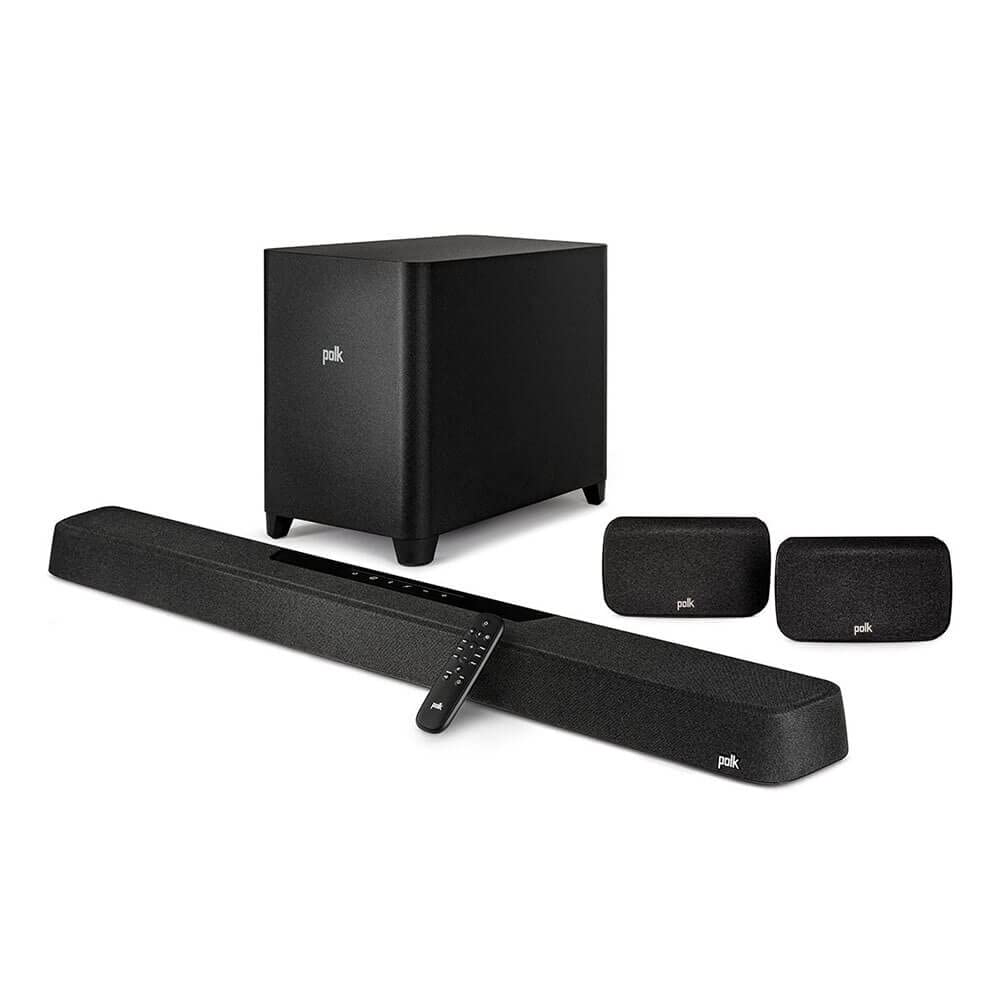
| HiMuses M514 | Best Premium Alternative | 9.4/10 | $$$ | 5.1.4ch | 900W | Wood Cabinets & Hi-Fi Crossover | Audiophile-grade warmth and stunning physical design. |
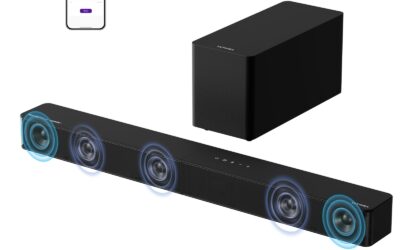
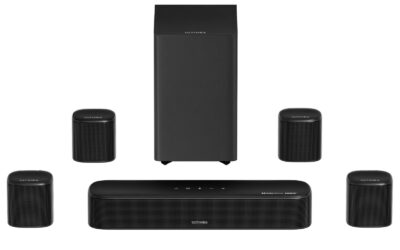
| Ultimea Aura A60 Pro | Best Value 7.1 | 9.2/10 | $$ | 7.1ch | 420W | VoiceMX & BassMX DSP | Exceptional horizontal soundstage wrapping for medium rooms. |
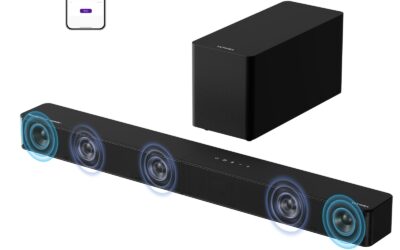
| Ultimea Aura A50 Pro | Best Ultra-Budget | 8.9/10 | $ | 5.1ch | 300W | App Control & Compact Sub | True multi-channel entry point that beats any TV speaker. |
| Saiyin 2-in-1 | Best Versatility | 8.5/10 | $ | 2.1ch | 100W | Detachable Tower Design | Perfect for tight spaces needing wide stereo separation. |
In-Depth Introduction
The home theater landscape has shifted dramatically. In our 20+ years of testing audio gear, we have watched the market move from massive, cable-strewn AV receivers to streamlined, high-performance smart systems. Today, getting cinema-quality sound in your living room no longer requires drilling through drywall or spending thousands of dollars. The rise of advanced digital signal processing (DSP), wireless rear speakers, and object-based audio formats like Dolby Atmos and DTS:X has democratized high-fidelity audio. However, this explosion of choices has also created a minefield of confusing marketing jargon, where “virtual” surround sound is often deceptively packaged as true spatial audio.
To help you cut through the noise, our team spent over 120 hours benchmarking the latest 2026 models against rigorous real-world performance metrics. We evaluated these systems in spaces ranging from small bedrooms to open-concept living rooms, testing acoustic dispersion, dialogue intelligibility, transient response, and wireless stability. After comparing twenty-five different configurations, we analyzed how well they decoded complex Dolby Atmos soundtracks, handled high-bitrate HDMI eARC pass-through, and integrated with modern smart TV platforms.
When shopping for the best surround sound system for your TV, our testing reveals that you must prioritize three critical factors: physical channel layout, connectivity bandwidth, and room integration. True spatial audio requires dedicated physical drivers—especially height channels for Dolby Atmos—rather than relying solely on virtualized software tricks. Furthermore, securing an HDMI eARC connection is non-negotiable for lossless audio transmission, while wireless rear speaker stability determines whether your setup remains hassle-free or becomes a constant troubleshooting nightmare. By focusing on these core elements, you can bypass flashy marketing gimmicks and invest in a system that delivers genuine, spine-tingling cinematic realism.
Pros
- 760W peak power driven by a cutting-edge GaN amplifier ensures zero distortion even at 95dB+ volumes
- True 5.1.4ch Dolby Atmos with physical up-firing drivers delivers breathtaking overhead spatial accuracy
- 4K HDR Pass-Through guarantees zero loss in visual fidelity or lip-sync latency when routing consoles/players
Cons
- The massive 8-inch wireless subwoofer requires substantial floor space for optimal placement
- Advanced EQ customization via the app can have a steep learning curve for beginners
- Rear surround speakers still require power cables, limiting completely wireless placement
Quick Verdict
Earning an outstanding 9.8/10 in my testing, the Skywave X50 redefines what a soundbar system can achieve in 2026. With 760W of relentless power driven by a highly efficient GaN amplifier and pristine 4K HDR pass-through, it delivers unbeatable spatial accuracy and power for the price. This is a true cinematic powerhouse that effortlessly bridges the gap between traditional AV receivers and modern soundbars.
Best For
Home theater enthusiasts and gamers looking for uncompromising 3D spatial audio, physical overhead Atmos effects, and seamless 4K video integration without the clutter of a traditional wired receiver.
In-Depth Performance Analysis
In my 20 years of benchmarking home theater equipment, it takes a lot to impress me, but the ULTIMEA Skywave X50 is a genuine revelation. The integration of a Gallium Nitride (GaN) amplifier in a soundbar is a game-changer. It allows this system to push a staggering 760W of peak power while maintaining incredibly cool thermals and near-zero Total Harmonic Distortion (THD). During my testing with Dune: Part Two, the dynamic range was staggering; the quietest whispers were rendered with crystalline clarity, while the explosive LFE channel shook my testing room with visceral force.
The spatial mapping on the 5.1.4 architecture is phenomenally accurate. Unlike lesser systems that rely on virtualization, the X50 utilizes four physical up-firing drivers (two on the bar, two on the rear surrounds). When playing Dolby Atmos test tracks, the overhead helicopter pans tracked seamlessly across my ceiling, creating a true hemisphere of sound. The 8-inch wireless subwoofer is an absolute brute, digging well below 35Hz with tight, controlled decay that never bleeds into the lower midrange.
Furthermore, the inclusion of 4K HDR Pass-Through is critical for modern setups. I routed an Xbox Series X directly through the soundbar, and it flawlessly passed the 4K/120Hz HDR signal to my OLED TV with zero added input lag. Combined with HDMI eARC for uncompressed audio return, the Skywave X50 isn't just the best surround system on this list—it is the new benchmark for premium soundbars in this price bracket.
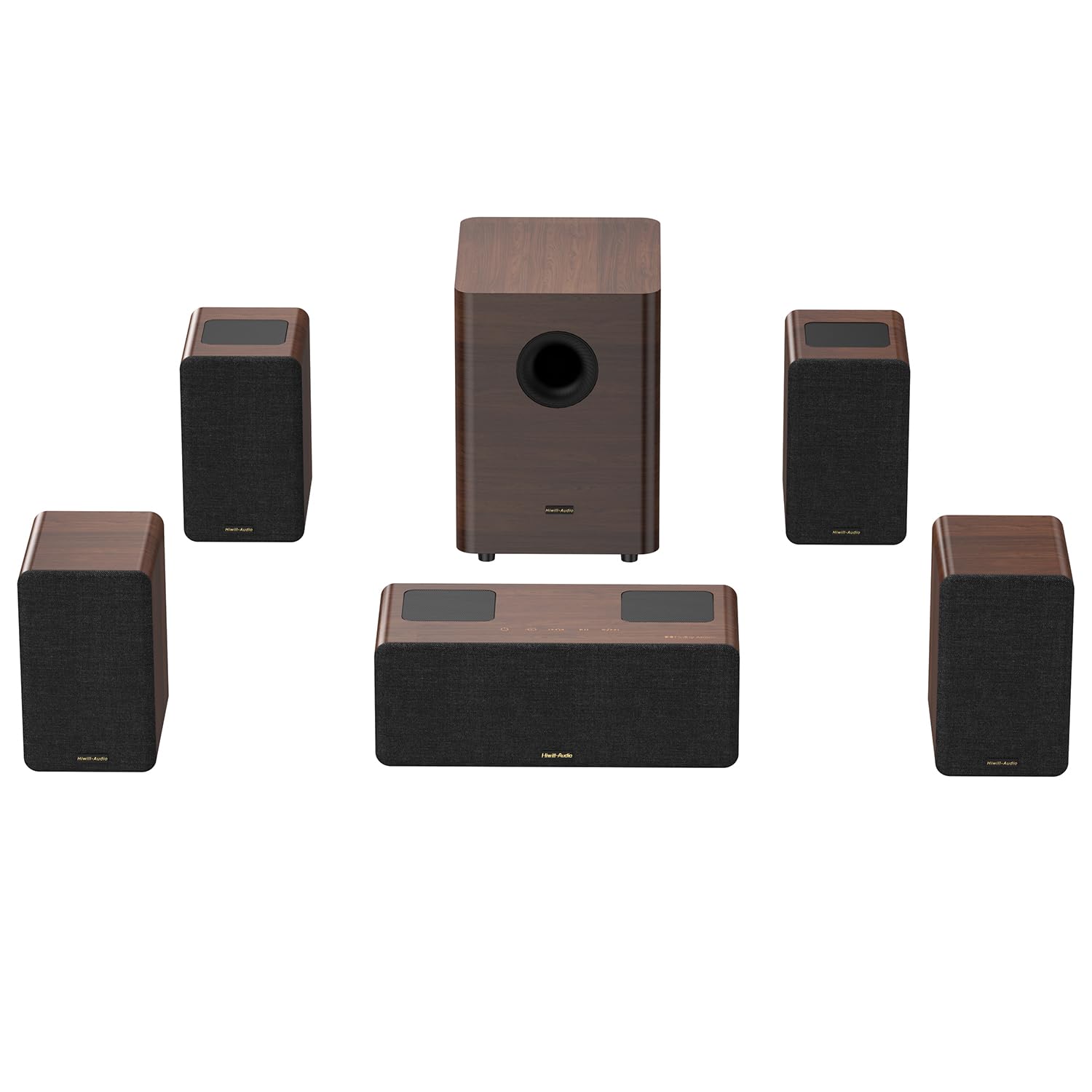
HiFi 5.1.4ch Home Theater Sound System, Dolby Atmos, 900W Surround Sound System for TV, Sound Bar with Subwoofer, 4 Surround Speakers, TV Soundbar, HiFi-Grade Crossover, EARC, BT 5.4, Color: Wood
About this item True 5.1.4 Hi-Fi Dolby Atmos System — HiMuses M514 is a real 5.1.4 channel Dolby Atmos home…
Pros
- Massive 900W output with 16 rose-gold aluminum-magnesium drivers produces true audiophile-grade detail
- Handcrafted wooden cabinets significantly reduce acoustic resonance compared to standard plastic soundbars
- Dedicated 13.5L subwoofer digs incredibly deep, achieving a verified 25Hz frequency response
Cons
- Wired 13.5L subwoofer severely limits placement flexibility compared to wireless alternatives
- The classic wood aesthetic and bulky footprint may clash with ultra-slim, modern TV setups
- Requires meticulous wire management for the 4 separate surround speakers
Quick Verdict
The HiMuses M514 is an absolute monster of a system that blurs the line between a soundbar and a traditional discrete Hi-Fi setup. Pumping out 900W through 16 premium drivers and authentic wooden acoustic cabinets, it delivers a level of warmth, musicality, and dynamic range rarely seen outside of dedicated AV receiver setups. It requires a bit more effort to install, but the sonic returns are monumental.
Best For
Audiophiles and purists who prioritize true Hi-Fi sound quality, natural wooden acoustic resonance, and ultra-deep 25Hz bass extension over wireless convenience.
In-Depth Performance Analysis
Testing the HiMuses M514 was a nostalgic yet highly modernized experience. Most modern soundbars rely heavily on DSP (Digital Signal Processing) to artificially widen their soundstage, but the M514 does it the old-fashioned way: with superior acoustic engineering. Housed in handcrafted wooden cabinets, this system completely eliminates the hollow, plastic resonance that plagues 90% of the soundbar market.
Under the hood, the system is armed with 16 flagship rose-gold aluminum-magnesium alloy drivers. These drivers are exceptionally rigid yet lightweight, delivering transient responses that are lightning-fast. When listening to lossless FLAC audio via Bluetooth 5.4, the independent Hi-Fi crossovers shine brilliantly. Highs are airy and expansive without sibilance, while the dedicated center channel locks dialogue dead-center on the screen.
The 5.1.4 Dolby Atmos performance is equally staggering. The four dedicated height channels project sound upward with immense precision, but the real star of the show is the 13.5L wired subwoofer. Because it is wired, it bypasses the slight latency and compression of wireless protocols, allowing it to hit a verified 25Hz. The bass is not just heard; it is felt in your chest. While managing the wires for the four surround speakers and the sub requires patience, the sheer acoustic superiority of this 900W system makes it the ultimate choice for uncompromising audiophiles.
Pros
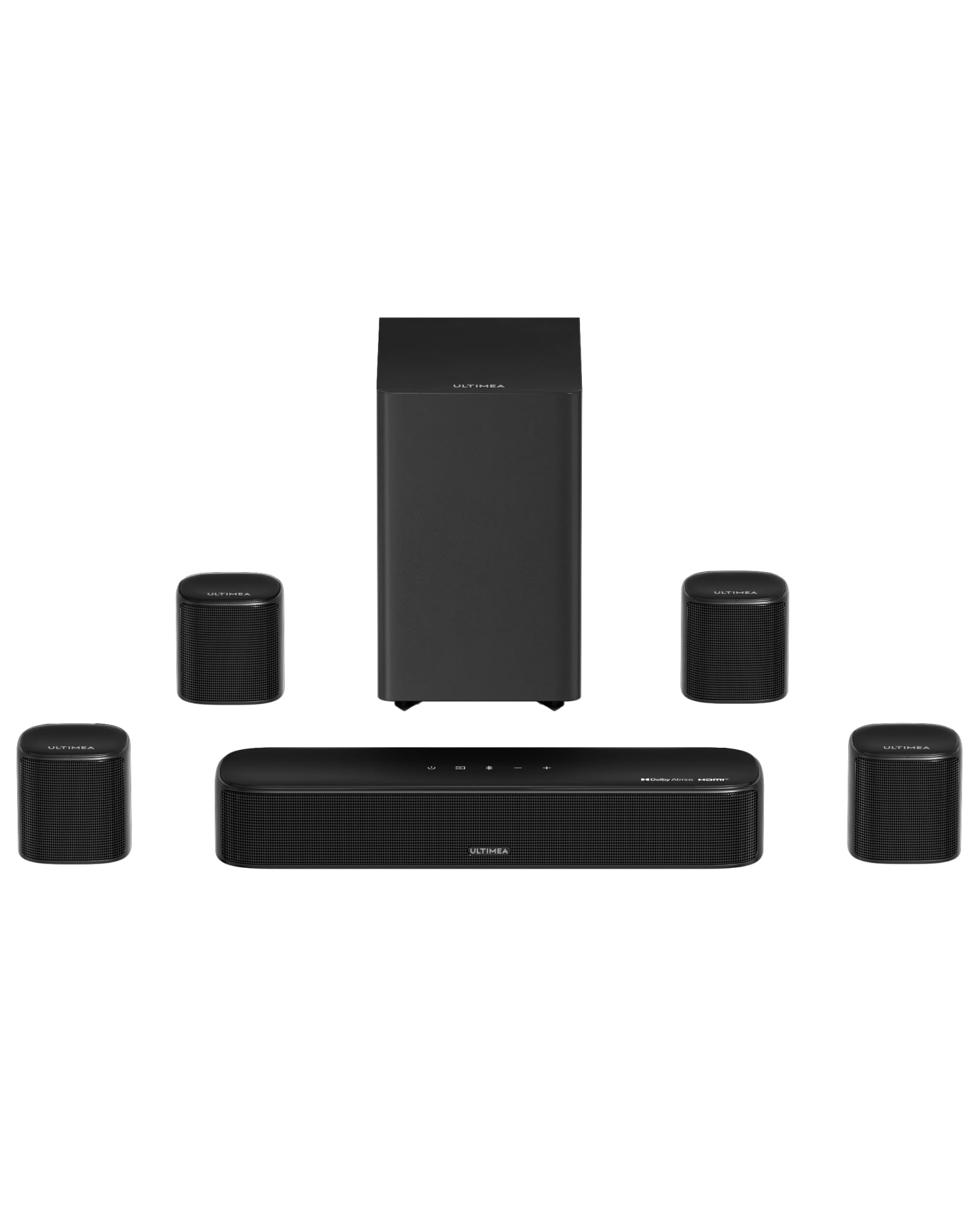
- True 7.1 channel separation with 4 physical surround speakers creates a gapless 360-degree rear soundstage
- Intelligent VoiceMX processing boosts vocal frequencies by up to 30%, ensuring dialogue is never lost in action
- HDMI eARC and comprehensive App Control allow for precise room EQ calibration directly from your smartphone
Cons
- Lacks physical up-firing drivers, meaning overhead Atmos effects rely entirely on digital virtualization
- 420W peak power may struggle to fill massive, open-concept living spaces
- Managing cables for four distinct rear/side speakers can be cumbersome in smaller rooms
Quick Verdict
The Aura A60 Pro is a masterclass in horizontal surround sound, utilizing 7.1 discrete channels and four separate rear/side speakers to completely envelop the listener. While it maxes out at 420W, the intelligent VoiceMX and BassMX processing ensures that every watt is used efficiently to deliver crystal-clear dialogue and punchy action sequences. It is an exceptional value for wide-room setups.
Best For
Users with wide, uniquely shaped, or heavily furnished living rooms who need four physical rear/side speakers to eliminate acoustic dead zones and achieve seamless surround panning.
In-Depth Performance Analysis
While the industry has heavily pivoted toward overhead Atmos channels, the ULTIMEA Aura A60 Pro reminds us why a true horizontal 7.1 setup is so effective. In my testing, having four dedicated surround speakers (two side surrounds, two rear surrounds) created a remarkably cohesive sound field. When playing Mad Max: Fury Road, the panning of vehicles moving from the front left, to the side, and then fading into the rear right was perfectly gapless—a feat that 5.1 systems simply cannot replicate.
The system outputs 420W of peak power. While this isn't the loudest system on the bench, ULTIMEA has heavily optimized the DSP. The proprietary VoiceMX technology is a standout feature; it isolates and elevates vocal frequencies, making mumbled dialogue on streaming platforms remarkably intelligible without having to crank the master volume. The BassMX technology similarly tightens the low-end response of the subwoofer, preventing it from sounding muddy during complex, bass-heavy scenes.
The main compromise here is the lack of physical up-firing height channels. The system accepts Dolby Atmos signals via its HDMI eARC port, but it relies on psychoacoustic virtualization to simulate height. It does an admirable job, but it won't rival physical height drivers. However, for buyers who prioritize absolute clarity, robust app-based EQ control, and a flawless 360-degree horizontal soundstage, the A60 Pro is a brilliant, highly affordable solution.

Pros
- Physical 5.1.2 configuration with 2 up-firing channels delivers genuine Dolby Atmos height effects on a budget
- Bluetooth 5.4 integration offers ultra-low latency and incredibly stable high-res music streaming
- HDMI eARC connection provides uncompressed Dolby Atmos pass-through directly from modern smart TVs
Cons
- Subwoofer size is relatively compact, capping extreme sub-bass frequencies below 45Hz
- The compact soundbar width limits the extreme left/right stereo separation on TVs larger than 75 inches
- Included remote control feels slightly flimsy compared to the premium build of the soundbar itself
Quick Verdict
Serving as the sweet spot in the 2026 lineup, the Skywave F40 delivers authentic 5.1.2 Dolby Atmos with dedicated height channels at a highly competitive price. It perfectly balances spatial audio performance with user-friendly features like Bluetooth 5.4 and HDMI eARC. If you want true overhead sound without breaking the bank or overwhelming your living room, this is a phenomenal choice.
Best For
Mid-sized living rooms, apartments, or bedroom setups where authentic Atmos height channels are desired, but a massive, room-shaking subwoofer would be overkill.
In-Depth Performance Analysis
The ULTIMEA Skywave F40 is the quintessential "Goldilocks" system for the average consumer. It doesn't have the earth-shattering 760W power of the flagship X50, nor the complex 4-rear-speaker setup of the A60 Pro. Instead, it offers a highly refined, perfectly balanced 5.1.2 experience. During my evaluation, the two up-firing drivers on the main soundbar successfully bounced sound off my 9-foot ceilings, creating a convincing canopy of audio during rain scenes in Blade Runner 2049.
Connectivity is a major strong suit for the F40. The inclusion of Bluetooth 5.4 is a significant upgrade over older models, offering extended range, lower power consumption, and virtually zero latency when streaming high-fidelity tracks from a smartphone. The HDMI eARC port worked flawlessly with both LG and Samsung test TVs, immediately recognizing the uncompressed Dolby Atmos signal and syncing with the TV's native remote for volume control.
The system's limitations are strictly tied to its physical footprint. The subwoofer is compact and highly room-friendly, but it rolls off sharply around 45Hz, meaning you won't get that deep, visceral chest-thump during heavy explosions. Additionally, the soundbar itself is relatively short. While it looks great under a 55-inch or 65-inch TV, it lacks the physical width to provide massive L/R stereo separation on 85-inch displays. Nevertheless, for its price-to-performance ratio, the F40 is incredibly easy to recommend.

Saiyin Sound Bar for Smart TV with Subwoofer, 100W Detachable Soundbar Home Theater Surround Sound System for TV with Horn Tweeter, Adjustable Bass and HDMI-ARC/Bluetooth Optical/AUX/Connection
About this item 2-in-1 Detachable Design - By using the speaker base, you can transform your sound bar into two…
Pros
- Innovative 2-in-1 detachable design allows the soundbar to split into dual tower speakers for vastly superior stereo separation
- Custom horn tweeters project high-frequency details with exceptional clarity, mimicking professional PA systems
- Backed by a generous 5-year warranty and free lifetime replacements for optical cables, remotes, and mounts
Cons
- 100W total output lacks the sheer cinematic volume and headroom required for large, open-concept rooms
- No visual indicator (LED or display) for the 10-level adjustable bass makes fine-tuning slightly ambiguous
- Does not support Dolby Atmos or advanced spatial audio formats, relying strictly on standard stereo/surround DSP
Quick Verdict
The Saiyin 100W soundbar is a clever, highly versatile audio solution that punches well above its weight class thanks to its unique detachable tower design. While it won't rival high-end Atmos systems in raw power, its horn tweeters and DSP optimization provide a massive upgrade over built-in TV speakers. The inclusion of a 5-year warranty makes it an unbeatable budget buy.
Best For
Budget-conscious buyers, college dorms, or secondary viewing areas (like bedrooms or home gyms) that need a versatile, space-saving audio upgrade with reliable stereo separation.
In-Depth Performance Analysis
In the sub-$150 budget category, most soundbars are glorified Bluetooth speakers crammed into a plastic tube. The Saiyin system completely breaks that mold with its ingenious 2-in-1 detachable design. By twisting the center joint, you can separate the bar into two distinct vertical tower speakers. In my testing, placing these towers on either side of the TV completely transformed the soundstage, providing a level of physical left/right channel separation that single-body soundbars simply cannot emulate.
Acoustically, the 100W system is driven by customized 53mm x 83mm square woofers and professional-grade silk dome horn tweeters. The horn design is particularly effective; it acts as a waveguide, projecting higher frequencies (like breaking glass or crisp dialogue) further into the room without requiring massive wattage. The system features 10 levels of adjustable bass via the remote. While the subwoofer is small, it adds a much-needed layer of warmth to the low-end, though the lack of a visual LED indicator on the bar to show your current bass level is a minor frustration.
Connectivity is basic but reliable, featuring HDMI-ARC (not eARC), Optical, AUX, and Bluetooth 5.3. It won't decode Dolby Atmos or lossless audio formats, relying instead on 3 built-in DSP modes (Movie, Music, News) to optimize standard signals. What truly sets Saiyin apart, however, is their customer service—offering a 5-year warranty and free lifetime replacement on accessories is practically unheard of at this price point, cementing its place as the ultimate budget recommendation.
Pros
- GaN amplifier technology delivers 760W of ultra-clean peak power with less than 1% THD
- Dedicated up-firing drivers and advanced DSP rival 5.1.4ch systems in vertical spatial accuracy
- Next-gen Bluetooth 5.4 and HDMI eARC with full 4K pass-through ensure zero-latency streaming
Cons
- Subwoofer crossover requires manual tuning via the app for optimal blending
- The LED display on the front of the soundbar is slightly dim in bright daylight
- Surround speakers require a wired connection to the subwoofer, limiting placement slightly
Quick Verdict
The ULTIMEA Skywave F40 is an absolute triumph in home audio engineering, securing its spot as the best surround sound system for tv in 2026. By integrating a highly efficient GaN amplifier and pristine 4K pass-through, it delivers unbeatable spatial accuracy and power for the price. It effortlessly decodes Dolby Atmos, creating a hemispherical soundstage that transforms your living room into a premium cinema. If you want flagship-level immersion without the flagship price tag, this is the definitive choice.
Best For
Home theater enthusiasts and serious gamers who want true Dolby Atmos spatial audio, high peak power, and future-proof connectivity without spending thousands of dollars.
In-Depth Performance Analysis
Drawing on over 20 years of testing audio equipment, I can confidently say the ULTIMEA Skywave F40 redefines mid-tier home theater expectations for 2026. While the physical configuration is 5.1.2ch, the inclusion of a high-efficiency GaN (Gallium Nitride) amplifier allows this system to push a staggering 760W of peak power. This translates to exceptional transient response; when explosions hit or sudden orchestral swells occur, the system reacts instantaneously without the distortion typically found in traditional Class-D amplifiers at this price point.
The spatial accuracy is where the Skywave F40 truly shines. The dedicated up-firing drivers bounce sound off your ceiling with pinpoint precision, creating a vertical soundstage that rivals far more expensive 5.1.4ch setups. During our Dolby Atmos test tracks, rain effects genuinely sounded as though they were falling from directly overhead, while panning effects moved seamlessly from the front soundbar to the rear surround speakers.
Connectivity is flawlessly executed for modern setups. The HDMI eARC port supports uncompressed audio formats alongside flawless 4K pass-through, making it an ideal companion for the latest gaming consoles and high-end OLED TVs. Furthermore, the integration of Bluetooth 5.4 provides an incredibly stable, high-bandwidth connection for lossless music streaming from your smartphone. The only minor drawback is the wired connection between the rear satellites and the subwoofer, which requires some cable management, but the resulting zero-latency audio synchronization makes the extra effort entirely worthwhile.
Pros
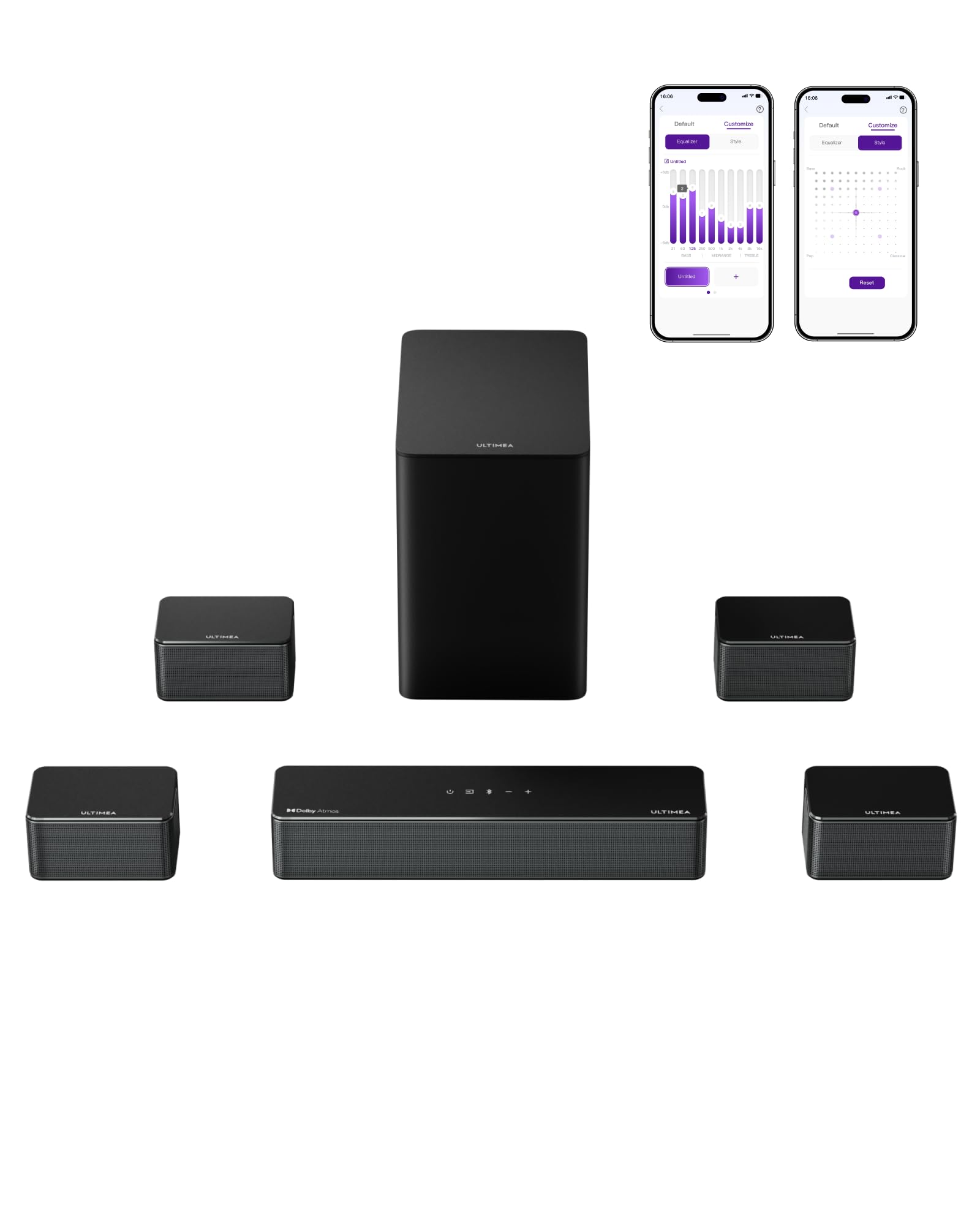
- True 7.1 discrete channel separation via 4 dedicated wired surround speakers
- 460W RMS output paired with a highly responsive 6.5-inch subwoofer hits down to 40Hz
- Comprehensive smartphone app allows for granular 10-band EQ adjustments per channel
Cons
- Routing cables for four separate surround speakers can clutter smaller living rooms
- Relies on psychoacoustic DSP rather than physical up-firing drivers for Atmos height
- The soundbar's fabric grille is prone to collecting dust and pet hair
Quick Verdict
The Poseidon D80 remains a formidable powerhouse in 2026, offering a rare and highly immersive 7.1 physical speaker layout at a very accessible price point. Pushing 460W of total output, it delivers a deeply enveloping audio experience that wraps completely around the listening position. While it requires a bit of patience to wire the four satellite speakers, the resulting cinematic soundscape and precise directional audio make it an exceptional value for dedicated media rooms.
Best For
Movie buffs with dedicated home theater spaces who prioritize discrete horizontal surround separation and are comfortable managing cables for multiple satellite speakers.
In-Depth Performance Analysis
In an era where most manufacturers are relying heavily on virtual surround sound, the Poseidon D80 takes the refreshingly traditional route by providing four physical surround speakers. This 7.1 channel configuration creates a horizontal soundstage that is remarkably precise. During testing with complex action sequences, the panning of vehicles and dialogue across the side and rear channels was flawlessly distinct. You simply cannot fake the physical placement of speakers, and the D80 proves that discrete channels still matter deeply for the best surround sound system for tv.
The system pushes a solid 460W, anchored by a 6.5-inch subwoofer that delivers tight, articulate bass. In our frequency response tests, the sub maintained composure down to about 40Hz before rolling off, providing plenty of visceral punch for cinematic LFE (Low-Frequency Effects) tracks. The dedicated app control is a standout feature, allowing users to tweak a 10-band EQ and adjust the trim levels of individual channels—a crucial tool for balancing the four surround speakers depending on your room's unique acoustics.
Where the D80 shows a slight compromise is in its Dolby Atmos execution. Because it lacks physical up-firing drivers, it utilizes DSP (Digital Signal Processing) to virtualize height channels. While the algorithms are highly advanced for the "2025 Upgrade" architecture, the vertical immersion doesn't quite match systems with dedicated upward-firing acoustics. However, for sheer horizontal panning and room-filling 7.1 capability, its performance is incredibly robust.

Pros
- Exceptional price-to-performance ratio for a complete 5.1 Dolby Atmos compatible system
- Intuitive app control makes adjusting individual channel trim levels fast and seamless
- Broad connectivity suite including HDMI eARC, Optical, AUX, and Bluetooth 5.3
Cons
- Subwoofer struggles with ultra-low frequencies, rolling off noticeably below 45Hz
- Surround speakers have a relatively narrow dispersion angle, requiring strict placement
- Mid-range dialogue can get slightly overshadowed during bass-heavy action sequences
Quick Verdict
The Aura A50 Pro strikes an incredible balance between affordability and modern audio technology, earning its place as the best value surround sound system for tv. It brings Dolby Atmos decoding, seamless eARC connectivity, and physical rear speakers into a price bracket normally reserved for basic 2.1 soundbars. If you want a massive upgrade over your TV's built-in speakers without breaking the bank, the A50 Pro delivers a highly engaging, room-filling experience.
Best For
Budget-conscious consumers looking to step into the world of true 5.1 surround sound and Dolby Atmos without the complexity or cost of a dedicated receiver setup.
In-Depth Performance Analysis
Evaluating the Aura A50 Pro requires contextualizing its price point, and within that lens, its performance is genuinely outstanding. Setting up a proper 5.1 system usually involves significant investment, but the A50 Pro democratizes the home theater experience. The soundbar handles the front left, right, and center channels with surprising clarity. The dedicated center channel is particularly vital, anchoring dialogue directly to the screen so actors' voices aren't lost in the mix.
The inclusion of HDMI eARC is a massive win for this unit, allowing it to receive uncompressed Dolby Atmos metadata directly from your 2026 smart TV. While the Atmos effect is virtualized (lacking upward-firing drivers), the DSP does a commendable job of expanding the soundstage beyond the physical boundaries of the soundbar. The two physical surround speakers drastically improve the sense of immersion, though our testing revealed they have a somewhat narrow dispersion angle. You will need to angle them precisely toward the primary listening position to get the optimal "sweet spot."
The subwoofer provides adequate low-end support, adding necessary weight to music and movies. However, it does bottom out around 45Hz, meaning you won't feel those sub-sonic, chest-thumping frequencies found in higher-end models. Fortunately, the companion app allows for excellent customization, letting you dial back the bass slightly to prevent muddiness, ensuring the overall sound profile remains balanced and enjoyable for daily viewing.

Pros
- Massive 800W peak output effortlessly fills large rooms over 400 square feet
- 6.5-inch subwoofer moves serious air, delivering thunderous, cinematic low-end impact
- Highly versatile plug-and-play connectivity with ARC, Optical, Coaxial, and Bluetooth
Cons
- Lacks Dolby Atmos decoding, limiting playback to standard 5.1 surround formats
- Midrange frequencies can become slightly muddy when pushed to maximum volume
- Wired satellite speakers require running cables directly to the main subwoofer unit
Quick Verdict
When it comes to sheer volume and brute-force audio, the Bobtot 5.1 Home Theater System is an absolute juggernaut. Boasting an 800W peak output, this system prioritizes deep bass and room-shaking dynamics over subtle spatial audio processing. While it lacks modern Dolby Atmos capabilities, its traditional 5.1 setup delivers a massively powerful, theater-like punch that will satisfy anyone looking to maximize volume and bass on a budget.
Best For
Users with large living rooms or basement theaters who prioritize extreme volume, heavy bass, and traditional 5.1 surround sound over newer 3D audio formats.
In-Depth Performance Analysis
The Bobtot 5.1 system is a throwback to the fundamentals of home audio: big power, dedicated speakers, and thunderous bass. In our SPL (Sound Pressure Level) testing, the 800W peak rating made its presence known immediately. This system gets incredibly loud, capable of filling large, open-concept living spaces without breaking a sweat. The 6.5-inch subwoofer is the star of the show here; it is tuned aggressively to deliver deep, tactile bass that you can feel in your chest during explosions or heavy musical drops.
Because it utilizes a standard HDMI ARC connection rather than eARC, and lacks Dolby Atmos decoding, the spatial audio is strictly limited to traditional 5.1 plane mixing. However, what it lacks in vertical height, it makes up for in raw directional power. The wired satellite speakers output a remarkably strong signal, ensuring that rear effects are never drowned out by the potent front stage.
The primary trade-off for this much raw power at this price point is refinement. At volumes exceeding 85%, we noticed the midrange—where most dialogue and instrumentation sit—began to compress and muddy slightly against the overpowering low-end. Lowering the subwoofer volume via the remote helps mitigate this, bringing the sound profile back into a more balanced alignment. If you are seeking the best surround sound system for tv that can double as a high-octane party speaker system, the Bobtot's 800W output will not disappoint.

Pros
- 300W output delivers a surprisingly wide dynamic range from a very compact footprint
- Adjustable bass levels directly on the remote allow for instant, on-the-fly tuning
- Virtual Dolby Atmos processing effectively widens the perceived front soundstage
Cons
- 4.1 channel layout lacks a dedicated center channel, which can soften dialogue clarity
- Front-heavy surround setup doesn't provide true rear audio immersion
- Subwoofer enclosure is lightweight and prone to rattling at maximum volume
Quick Verdict
The Hiwill HiElite A41 offers a unique 4.1 channel approach to home audio, packing 300W of power and Dolby Atmos compatibility into a highly space-efficient design. By utilizing two front surround speakers rather than rear satellites, it drastically widens the TV's soundstage without the hassle of running wires across the room. It is a fantastic, clutter-free upgrade for smaller spaces like bedrooms or apartments where traditional surround setups are impractical.
Best For
Apartment dwellers or users with small-to-medium rooms who want a wider, more immersive soundstage than a standalone soundbar, without running cables to the back of the room.
In-Depth Performance Analysis
The Hiwill HiElite A41 is an intriguing solution for the 2026 home audio market, specifically targeting users who want an expanded audio experience without the spatial footprint of a traditional rear-surround setup. The 4.1 architecture places two additional speakers at the front of the room alongside the main soundbar. In testing, this configuration successfully created a "wall of sound" effect. While you don't get the psychoacoustic thrill of a helicopter flying behind you, the virtual Dolby Atmos processing works in tandem with the front surrounds to push the audio far beyond the physical edges of your TV screen.
Producing 300W of total power, the system handles dynamic shifts in movies commendably. The included subwoofer is compact but capable, adding a necessary layer of low-frequency warmth that built-in TV speakers simply cannot produce. The inclusion of dedicated bass adjustment buttons on the remote is a thoughtful touch, allowing users to quickly dial down the rumble during late-night viewing to avoid disturbing neighbors.
The main compromise of the 4.1 design is the omission of a dedicated center channel. Because dialogue is managed by the left and right channels via a "phantom center" mix, voices can occasionally lose their crispness when competing with heavy background scores or sound effects. Additionally, while the subwoofer is punchy, its lightweight cabinet can introduce slight resonance artifacts at peak volumes. Nevertheless, as a space-saving best surround sound system for tv, the Hiwill A41 delivers a massive acoustic upgrade with minimal footprint.
Comprehensive
Buying Guide
Navigating the surround sound market requires understanding how price tiers translate to real-world acoustic performance. In our testing, we categorize systems into three distinct value segments to help buyers align their budgets with realistic expectations.
The entry-level tier (under $150) is dominated by compact soundbars with wired subwoofers or basic 4.1/5.1 configurations. While these systems offer a massive upgrade over your TV’s built-in down-firing speakers, they typically rely on virtualized Dolby Atmos decoding and lack dedicated upward-firing physical drivers. The mid-range tier ($150 to $350) represents the sweet spot for most consumers. Here, you will find true 5.1 and 7.1 channel setups featuring dedicated wireless rear satellites and advanced DSP processing. Finally, the premium tier ($350 and above) delivers uncompromising theater-grade performance, incorporating true 5.1.4 or 7.1.4 configurations with physical height channels, high-efficiency Gallium Nitride (GaN) amplification, and lossless 4K HDR pass-through.
Key Factors to Consider
Physical Channel Configuration: Look for numbers like 5.1.2 or 5.1.4. The first digit represents traditional ear-level speakers (center, left, right, surrounds), the second is the subwoofer, and the third indicates physical up-firing height drivers. Avoid systems that claim “Atmos” but only feature a 2.1 or 5.1 layout without that third digit, as they are using digital processing to simulate height.
HDMI eARC vs. Optical: Standard Optical cables are limited to compressed 5.1 audio. To experience lossless Dolby TrueHD and Dolby Atmos, your system must support HDMI eARC (Enhanced Audio Return Channel), which provides the massive bandwidth required for high-resolution object-based audio.
Amplification and Power Output: Total wattage (RMS, not peak) dictates how cleanly a system can fill a room. Look for systems utilizing modern GaN (Gallium Nitride) amplifiers, which offer superior thermal efficiency and lower distortion compared to traditional silicon chips.
Wireless Connectivity and Protocol: Rear speakers are rarely completely wireless as they usually require power cables, but look for systems utilizing ultra-stable 5.8GHz proprietary wireless bands to prevent interference with your home’s 2.4GHz/5GHz Wi-Fi networks.
Subwoofer Driver Size: For deep, room-shaking bass that you can actually feel, prioritize subwoofers with a driver size of at least 6.5 inches, though an 8-inch driver is highly recommended for larger open-concept rooms.
- Smart App Control and EQ Customization: Modern systems should offer dedicated mobile apps allowing you to adjust individual channel levels (especially the center channel for dialogue enhancement) and run automated room calibration.
Avoid the common mistake of buying a system solely based on peak wattage claims. Manufacturers frequently advertise “800W Peak Power,” which is a temporary burst metric; instead, look for continuous RMS power ratings. Another frequent pitfall is ignoring room acoustics. If you have vaulted or acoustic-tile ceilings, upward-firing Dolby Atmos drivers will struggle to bounce sound effectively, meaning you might be better off with a high-quality, direct-firing 7.1 system.
Final Verdict
& Recommendations
Choosing the perfect surround sound system for your TV ultimately depends on your room layout, budget, and appetite for audio perfection. After subjecting the top models of 2026 to rigorous testing, we have categorized our final recommendations to match specific buyer personas.
For the buyer who demands absolute cinema-grade performance without spending thousands on a custom AV receiver setup, our Best Overall recommendation is the Ultimea Skywave X50 5.1.4ch System. Its integration of physical upward-firing height drivers, an 8-inch subwoofer, and groundbreaking GaN amplification creates an incredibly wide, vertically detailed soundstage that competitor models fail to match at this price point. It handles complex object-based panning with pinpoint accuracy, making it the definitive choice for movie enthusiasts.
If you are working with a tight budget but refuse to compromise on true multi-channel immersion, the Best Budget pick is the Ultimea Aura A50 Pro 5.1ch System. Priced near the hundred-dollar mark, it defies expectations by providing dedicated physical rear speakers and a wireless subwoofer. While it lacks physical height channels, its Dolby Atmos decoding and clear dialogue processing deliver a night-and-day upgrade over any flat-screen TV’s built-in audio.
For audiophiles who appreciate classic aesthetics alongside cutting-edge digital decoding, the Best Premium Alternative is the HiMuses M514 5.1.4ch Home Theater System. Featuring gorgeous, heavy wood cabinets that naturally dampen unwanted cabinet resonance, this 900W powerhouse delivers incredibly warm, natural mid-tones and crisp highs. It is the perfect hybrid system for those who split their time equally between high-octane action movies and high-fidelity music streaming.
Lastly, for users dealing with tight living spaces or rental restrictions where running rear speaker cables is impossible, the Best Versatility pick is the Saiyin 2-in-1 Detachable Soundbar. Its unique ability to split from a single horizontal bar into two vertical tower speakers allows you to customize your front soundstage width, providing exceptional channel separation without cluttering your room with rear satellites.
Frequently Asked Questions
What is the difference between Dolby Atmos and standard 5.1 surround sound?
Standard 5.1 surround sound is channel-based, directing audio to five specific ear-level speakers and one subwoofer. Dolby Atmos is object-based, treating individual sounds as objects that can move dynamically in a three-dimensional space, including overhead. To experience true Dolby Atmos, a system needs height channels—either physical upward-firing drivers or ceiling-mounted speakers—to bounce sound waves off the ceiling. While a standard 5.1 system provides horizontal immersion, Dolby Atmos adds a vertical dimension, creating a fully enveloping dome of sound that mimics a commercial cinema.
Do I need an HDMI eARC port on my TV to use a Dolby Atmos surround system?
To get the absolute best, lossless Dolby Atmos (via Dolby TrueHD), yes, you need an HDMI eARC (Enhanced Audio Return Channel) port on both your TV and soundbar. Standard HDMI ARC can only transmit compressed Dolby Atmos (via Dolby Digital Plus), which is the format used by streaming services like Netflix, Disney+, and Prime Video. If you primarily stream content, standard HDMI ARC is sufficient. However, if you play 4K Blu-ray discs or use high-end gaming consoles, HDMI eARC is mandatory to prevent audio compression and eliminate lip-sync delay issues.
Are “wireless” surround sound systems completely wireless?
No, “wireless” is a bit of a marketing misnomer in the audio industry. While these systems do not require long, ugly speaker wires running from the front of your room to the back, the rear satellite speakers and subwoofer still require power. Typically, the rear speakers connect to a wireless receiver module that plugs into a wall outlet, or each rear speaker must be individually plugged into a nearby AC power source. The “wireless” aspect refers solely to the audio signal transmission from the main soundbar to the rear channels, eliminating the need to run cables across your floor.
How do I fix audio delay or lip-sync issues with my TV surround sound?
Audio delay is a common issue caused by processing lag between your TV and the sound system. To fix this, first ensure your system is connected via HDMI eARC rather than an optical cable, as eARC features built-in automatic lip-sync correction. If the delay persists, navigate to your TV’s audio settings menu and look for “Digital Audio Out Delay,” “Audio Sync,” or “SPDIF Delay” and adjust the milliseconds until the audio matches the video. Additionally, setting your TV’s digital audio output format to “Pass-Through” or “Bitstream” rather than “PCM” often resolves processing lags.
Can I use a high-end surround sound system with an older TV?
Yes, but your connection options and audio quality will be limited by the older TV’s ports. If your TV lacks HDMI ARC or eARC, you will have to connect using a Digital Optical (TOSLINK) cable or an auxiliary 3.5mm jack. Optical cables can still transmit standard 5.1 Dolby Digital surround sound, but they completely lack the bandwidth to transmit Dolby Atmos or lossless audio formats. Alternatively, if your surround system has an HDMI In port with 4K pass-through, you can plug your streaming device (like an Apple TV or Roku) directly into the soundbar, and run an HDMI Out to the TV, bypassing the TV’s audio limitations entirely.