Quick Answer
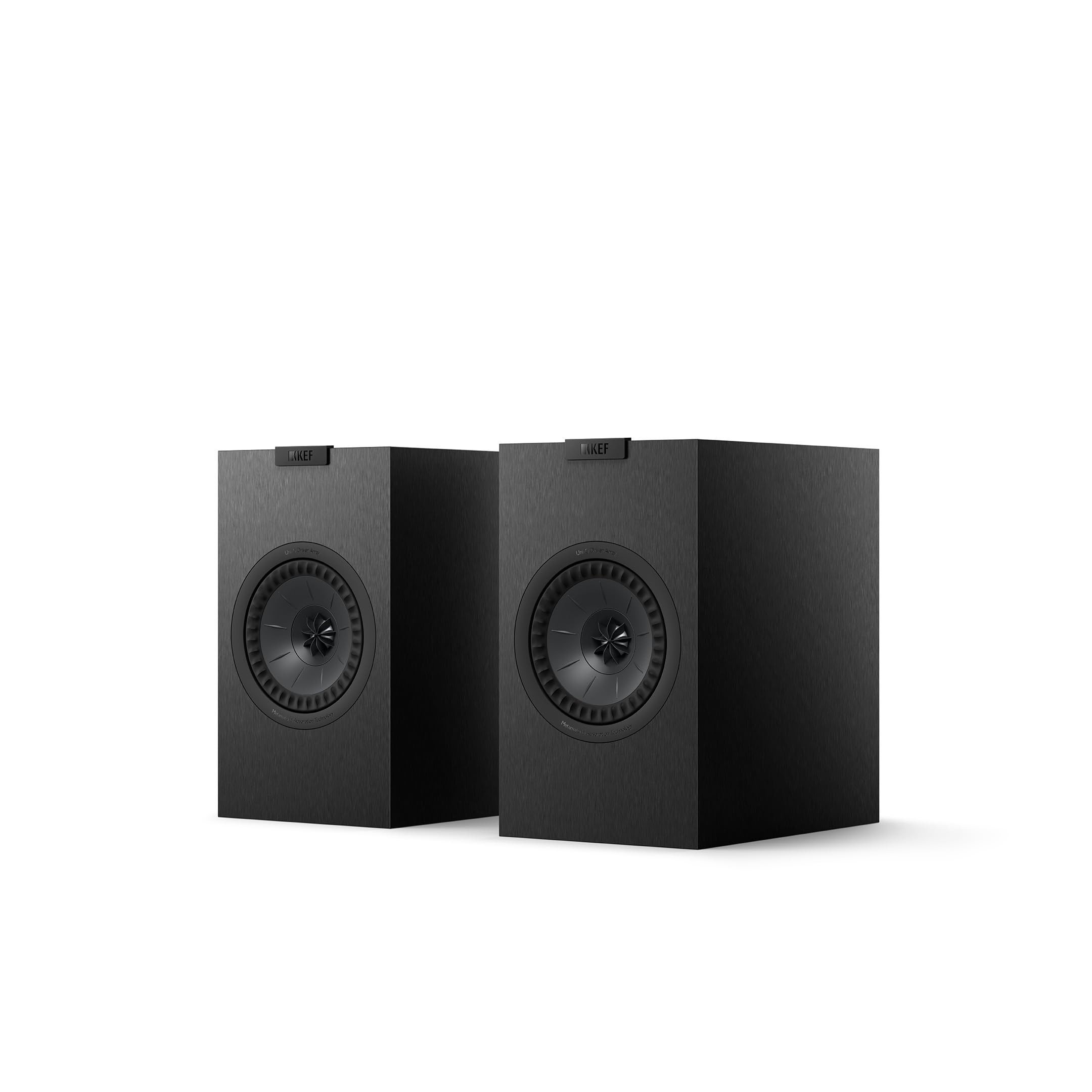
The KEF Q3 Meta is the best KEF bookshelf speaker for most rooms. It pairs a 6.5-inch 12th-generation Uni-Q driver with MAT, which KEF says absorbs 99% of unwanted rear-driver noise, and reaches 47Hz. Step up to the three-way Q Concerto Meta for larger spaces, or the Q1 Meta for desktops.
Pros
- Each speaker carries a 280 watt amplifier for the midrange driver and a 100 watt amplifier for the tweeter, an active design that removes guesswork about amplifier matching
- HDMI eArc support means a single cable can carry television audio, which simplifies living room use compared with speakers that only accept optical or analog input
- The streaming platform list spans Spotify Connect, Tidal, Amazon Music, Qobuz, Deezer, QQ Music, internet radio, and podcasts, so switching services later does not strand the hardware
- Roon Ready and UPnP compatibility make the pair a straightforward endpoint for listeners who already run a networked music library at home
- Handling of files up to 384kHz/24bit depending on connection gives high-resolution download owners headroom without a separate outboard converter
Cons
- Both speakers are powered, which means two mains outlets plus an inter-speaker connection at the listening position, an obstacle for anyone wanting a tidy single-cable run to a remote right channel
- Bluetooth 4.2 is the listed wireless standard and sits behind the network streaming options in capability, so guests casting quickly from a phone get the least capable path into the system
- This is a two-speaker system with no subwoofer supplied, so buyers who want deep low end for movies or bass-heavy genres should budget for an additional component
The KEF LS50 Wireless II is a pair of powered stereo speakers in a Mineral White finish, aimed at the listener who wants one purchase to replace a stack of separates. Amplification, streaming, and digital inputs are built in, so the buyer skips shopping for an integrated amp and network player. Anyone who specifically wants to choose their own amplifier should look elsewhere.
The feature that changes daily use most is the input list. HDMI eArc allows the pair to take audio directly from a television, which turns a music system into a living room system without a separate soundbar. TOSLINK and digital coaxial cover older disc players and cable boxes, the 3.5mm analog input handles a headphone-jack source, and RJ45 Ethernet gives a wired network path when Wi-Fi is congested. Supported resolution reaches 384kHz/24bit depending on connection, so the input you choose determines the ceiling.
On the streaming side, the pair works as a native endpoint for Spotify Connect, Tidal, Amazon Music, Qobuz, Deezer, QQ Music, internet radio, and podcasts. AirPlay 2, Google Chromecast, Roon Ready, UPnP, and Bluetooth 4.2 sit alongside those services. Practically, that means an iPhone household, an Android household, and a Roon subscriber can all use the same speakers without anyone changing their software habits.
The compromises are structural rather than cosmetic. Each speaker holds a 280 watt midrange amplifier and a 100 watt tweeter amplifier, so both cabinets need power and a connection to each other, which constrains where the second speaker can sit. Bluetooth 4.2 is the weakest of the wireless paths on offer. No subwoofer is included, so bass-focused listeners and home theater buyers will want to plan for one.
Buy the LS50 Wireless II if you want a compact, self-contained two-channel system that also serves your television over one HDMI cable. Hesitate if your room layout makes running power to both speaker positions awkward, or if you want the freedom to upgrade amplification separately later. Buyers chasing large-room volume or cinema-grade low end should consider a subwoofer-equipped or multichannel system instead.
HDMI eArc Input: This is the feature that lets the pair replace a soundbar. One HDMI cable from the television carries audio to the speakers, so you control volume from the TV remote in most setups and avoid the extra box a passive system would need. Buyers who split their listening between music and television get the most value here.
Dual Amplification Per Speaker: Each cabinet houses a 280 watt amplifier for the midrange and a 100 watt amplifier for the tweeter. Because each driver gets its own dedicated amplifier, you never have to research amplifier pairing or worry about underpowering the speakers. The trade-off is that both speakers require mains power rather than speaker cable from a central amp.
Native Streaming Services: Spotify Connect, Tidal, Amazon Music, Qobuz, Deezer, QQ Music, internet radio, and podcasts are supported directly. That matters because native support keeps your phone out of the signal path, so calls and notifications do not interrupt playback and battery drain drops. Subscribers who change services occasionally avoid stranding the hardware.
AirPlay 2, Chromecast, and Roon Ready: These three cover the main ecosystems a household is likely to use. Apple users cast from any app, Android users use Chromecast targets, and Roon subscribers add the pair as a certified endpoint. Mixed-device households benefit most, since nobody has to switch phones or software to play music.
384kHz/24bit Resolution Ceiling: Support reaches 384kHz/24bit depending on connection, which means high-resolution download owners can play files without an outboard converter. The qualification matters: the actual ceiling depends on which input you use, so an optical or Bluetooth connection will not match a network or wired digital path.
Wired Input and Network Options: TOSLINK, digital coaxial, 3.5mm analog, and RJ45 Ethernet give fallbacks when wireless is unreliable. Ethernet in particular helps in apartments with crowded Wi-Fi, where high-resolution streams are most likely to stutter. Owners of older CD players, game consoles, or turntables with built-in preamps can also stay connected.
Television Connection: HDMI eArc is the primary television path, which suits any reasonably current TV with an eArc or ARC labeled HDMI port. If your television only offers optical output, TOSLINK is the fallback. Check the back panel of your set before buying, since the HDMI route is the main reason many buyers choose this pair over a music-only system.
Phone and Tablet Casting: Apple devices connect through AirPlay 2, and Android devices connect through Google Chromecast, so no household needs to standardize on one platform. Bluetooth 4.2 exists as a universal fallback for guests or laptops without network access, though it is the least capable of the wireless options listed and is best treated as a convenience rather than a primary path.
Network and Library Playback: Roon Ready certification and UPnP compatibility cover the two most common ways of serving a personal music library at home. Roon subscribers can add the speakers as an endpoint directly, and UPnP handles NAS-based collections. RJ45 Ethernet is available if you would rather not depend on Wi-Fi for large high-resolution files.
Legacy and Wired Sources: Digital coaxial and TOSLINK accept older CD players, disc transports, and set-top boxes, while the 3.5mm analog auxiliary input handles anything with a headphone or line output. Turntable owners should note that no phono stage is described in the supplied data, so a separate phono preamp would be needed before connecting to the analog input.
Best For: Listeners furnishing a small to medium room, a home office, or a desktop who want one purchase to handle streaming, television audio, and amplification. The mix of Spotify Connect, Tidal, Qobuz, AirPlay 2, Chromecast, and Roon support makes this a sensible fit for a household where different people use different phones and services. It also suits anyone short on shelf space for separate components.
Consider Alternatives If: You want to select and upgrade your own amplifier over time, a passive speaker pair gives more freedom. If your seating position is far from any outlet on one side of the room, the powered design creates a cabling problem. Buyers focused on cinema impact or bass-heavy genres should look at systems that include a subwoofer, since none is supplied here.
Setup and Daily Use: Expect to place both speakers within reach of mains power, connect them to each other, then join your network by Wi-Fi or the RJ45 Ethernet port. Television users add a single HDMI eArc cable. After that, most listening happens through the app or service you already use, with wired inputs available for older sources.
What Sets It Apart: The combination of a full native streaming service list and HDMI eArc in one product is the differentiator. Many wireless speakers do one or the other well. Here, the same pair can act as a network music endpoint during the day and a television sound system at night, which reduces the number of boxes and remotes in the room.
Pros
- The three-way layout with a dedicated 6.5-inch hybrid aluminum bass driver means the midrange driver is not also asked to move low-frequency air, which typically keeps voices and instruments clearer at higher volumes
- Uni-Q's coincident tweeter and midrange design widens the usable seating area, a real advantage in living rooms where not everyone can sit in the sweet spot
- Stated response reaching 28kHz at the top end gives headroom above the audible band, useful for high-resolution and hi-res streaming listeners
- Stand-mount format fits rooms where floorstanders would visually or acoustically overwhelm the space, while still using flagship-series drivers
- Four finish options, including the Indigo Gloss special edition, make it easier to match an existing room instead of settling for standard black
Cons
- The 58Hz (±3dB) low-frequency limit means home theater users and bass-focused listeners will probably want a subwoofer, adding cost and setup complexity
- At roughly 63 pounds for the pair, these are heavy for bookshelf speakers and demand solid, properly rated stands; the matching S2 stands are a separate purchase, so budget accordingly
- This is a premium-tier stand-mount, and buyers who care mainly about maximum output and low bass for the money may get more of both from floorstanders in a similar bracket
The KEF R3 Meta is a pair of three-way bookshelf speakers aimed at listeners who want serious two-channel or front-channel performance without floorstanders dominating the room. KEF states these share drivers with the range-topping R11 Meta, which is the main reason to consider them. The qualification is that a stated 58Hz lower limit means deep bass will need help.
The three-way architecture matters more than the spec sheet suggests. In most bookshelf speakers, one driver handles both midrange and bass, which forces compromises as volume rises. Here a 6.5-inch hybrid aluminum bass driver takes the low end while the 12th-generation Uni-Q array handles midrange and treble. Practically, that tends to mean dialogue and vocals hold their composure when you push the system, and instruments stay separated in busy passages.
Uni-Q positions the tweeter at the acoustic center of the midrange cone. The consequence for setup is a broader listening window, so a sofa with three seats is less of a problem than it is with speakers that beam their treble at one spot. KEF also credits Metamaterial Absorption Technology with absorbing 99% of unwanted sound behind the tweeter, a claim aimed at reducing the hardness some metal-dome designs exhibit. Stated response runs 58Hz to 28kHz within ±3dB.
The compromises are physical and financial. Each cabinet is substantial, with the pair listed near 63 pounds, so a real bookshelf is the wrong home for them. They want rigid, correctly sized stands, and KEF's S2 stands are sold separately. The 58Hz figure also means action movies and electronic music will feel incomplete without a subwoofer. Buyers who want maximum bass extension and output per dollar should compare floorstanders in the same range.
Buy the R3 Meta if you want flagship-derived driver technology and three-way clarity in a footprint that suits a small or medium room. Hesitate if your budget cannot absorb stands and possibly a subwoofer on top of the speakers. Choose floorstanders instead if untreated low bass and large-room volume are your priorities, since no stand-mount of this size will match them there.
True Three-Way Design: Bass, midrange, and treble are each handled by a dedicated driver rather than shared between two. That division of labor reduces the intermodulation strain that occurs when one cone tries to reproduce a bass line and a voice simultaneously. Listeners who play at moderate to high volumes, or who care about vocal and acoustic-instrument clarity, benefit most from this arrangement.
12th-Generation Uni-Q Array: The tweeter sits at the acoustic center of the midrange driver, so both sound as if they originate from one point. The practical payoff is a wider area where imaging and tonal balance stay consistent, which matters in shared living rooms where listeners sit off to one side rather than dead center between the speakers.
Metamaterial Absorption Technology: KEF states MAT absorbs 99% of unwanted sound generated behind the tweeter, energy that would otherwise reflect back and color the high frequencies. If the claim holds in your room, the audible result should be a cleaner, less fatiguing treble. This is a supplied manufacturer claim rather than something we measured independently.
6.5-Inch Hybrid Aluminum Bass Driver: A dedicated bass driver of this size is what makes the three-way layout viable in a stand-mount cabinet. Aluminum construction favors stiffness, which helps the cone move as a unit at higher output. For buyers, it means usable low-end weight from a compact box, though not the extension a larger floorstanding cabinet delivers.
Shared R11 Meta Drivers: KEF states the R3 Meta uses the same drivers as the flagship R11 Meta in the R Series. That trickle-down matters if you want the series' core sonic character but lack the floor space or budget for the largest model. What you give up is cabinet volume, which is where bass extension and maximum output mostly come from.
Four Finish Options: Black Gloss, White Gloss, Walnut, and this Indigo Gloss special edition let the pair blend into a room instead of announcing itself. Gloss finishes show dust and fingerprints more readily than matte veneers, so factor in occasional wiping with a soft dry cloth if you choose the Indigo Gloss version.
Brand: KEF
Model: R3 Meta
Configuration: Three-way bookshelf speakers, sold as a pair
Finish: Indigo Gloss Special Edition (also offered in Black Gloss, White Gloss, and Walnut)
Color: Blue
Driver Array: 12th-generation Uni-Q with Metamaterial Absorption Technology
Bass Driver: 6.5-inch hybrid aluminum
Frequency Response (±3dB): 58Hz to 28kHz
Dimensions: 13.2 x 16 x 16.6 inches
Weight: Approximately 62.6 pounds as listed
Stands: S2 speaker stands sold separately
Product Group: Electronics
Customer Rating: 4.3 out of 5
Best For: Listeners building a premium two-channel system in a small or medium room, or someone who wants high-quality front left and right channels in a home theater without floorstanders taking over the space. The three-way design and flagship-derived drivers make the most sense for people who listen attentively rather than as background noise.
Consider Alternatives If: You need substantial output in a large room, or you want deep bass without adding a subwoofer. The stated 58Hz lower limit puts the bottom octave out of reach, so floorstanders or a stand-mount plus subwoofer combination will serve bass-heavy tastes better. Buyers on a tighter budget should also note that stands are an additional purchase.
Setup and Daily Use: Plan the installation around the weight, listed near 63 pounds for the pair, and use stands rated for it. KEF offers matching S2 stands separately. Because the Uni-Q array widens the consistent listening area, you have more freedom in seating placement than with speakers that require precise on-axis positioning, though careful toe-in and distance from walls still pay off.
Maintenance Requirements: Little upkeep beyond keeping the gloss finish clean. A soft, dry cloth is the safe choice for the Indigo Gloss cabinets, since high-gloss surfaces show dust and fingerprints more than matte finishes. Check that stand fixings stay tight over time given the cabinet mass.
What Sets It Apart: The combination of a genuine three-way layout, the 12th-generation Uni-Q coincident driver, and MAT in a stand-mount cabinet is the differentiator here, along with sharing drivers with the top model in the same series. Many competing bookshelf speakers at any price use two-way designs, so the extra dedicated midrange path is the structural distinction rather than a marketing one.
Pros
- Compact stated footprint of roughly 14.19 x 13 x 13.88 inches, which makes it easier to place in a small or furnished room than typical large-driver subwoofers, assuming placement still allows for EQ correction.
- Dual-driver force-cancelling layout is a specific engineering approach rather than a generic claim, and it addresses a real problem for apartment dwellers and buyers with wood-framed floors.
- Connection flexibility covering SmartConnect, speaker-level input, and filtered line output means fewer buyers will be blocked by an incompatible amplifier or receiver.
- Onboard EQ presets reduce dependence on external room correction software, which benefits buyers running simple stereo systems without a processor.
- Stated 50.8 pound weight signals substantial cabinet construction relative to the small dimensions, which is consistent with a sealed high-output design, though bracing and materials are not documented here.
Cons
- The supplied listing contains no review text at all, so the displayed high rating cannot be treated as meaningful customer evidence and no reliability, longevity, or satisfaction pattern can be established.
- No frequency response range, maximum SPL, driver excursion, or distortion measurement is supplied, so the low-frequency extension and output capability cannot be compared against larger subwoofers or against a buyer's room size.
- This is a high-priced item in its category and the supplied data omits warranty terms, service coverage, and whether the amplifier module is user-serviceable, which are significant unknowns at this price level.
The KEF KC92 in Black Gloss is a powered subwoofer built around two 9-inch drivers in a force-cancelling arrangement, driven by a stated 1000W RMS amplifier. On the supplied evidence, its best-fit buyer is someone assembling a compact high-performance system, particularly a KEF owner who wants matched integration, or a listener whose room cannot accommodate a large ported cabinet. The strongest supported reason to consider it is the combination of dual opposed drivers and a small stated footprint, which addresses cabinet vibration and placement constraints simultaneously. The central evidence limitation is that no measured performance data and no customer review text accompany this listing, so every performance claim here originates from the manufacturer.
Three supplied features carry real decision weight. The force-cancelling driver layout is a documented design choice, not a marketing adjective, and it is directly relevant to buyers on suspended floors or in shared buildings where cabinet resonance transmits through structure. The five placement EQ presets matter because subwoofer performance is dominated by room interaction, and onboard correction gives buyers a remedy when the only viable position is a corner. The input set, covering KEF SmartConnect and speaker-level inputs, plus a line output with a high-pass filter, means the subwoofer is specified to work in both AV receiver chains and older stereo systems lacking a subwoofer output.
Regarding customer feedback, there is nothing to report. The supplied data includes no review excerpts and no usable review body, so no themes, complaints, or endorsements can be attributed. A displayed rating without accompanying review text is not a basis for any claim about reliability or listener satisfaction.
The trade-offs are mostly about what is absent. Without a stated frequency response, maximum output figure, or distortion measurement, there is no way to judge whether this subwoofer suits a large open-plan room or a buyer who prioritises very low bass for film. Buyers with those priorities may be safer choosing a product with published measurements or an audition, or considering a larger cabinet where extension is documented.
Qualified verdict: on supplied evidence, the KC92 is a defensible candidate for a space-constrained buyer who values low cabinet vibration and flexible connectivity, and who can audition it or buy with return protection. It is not a purchase this data alone can justify for anyone whose decision depends on measured extension, output ceiling, or long-term reliability.
Verified Product Facts: The listing supplies the following as product claims and specifications.
- Two 9-inch drivers in a force-cancelling arrangement.
- Stated amplification of 1000W RMS.
- Hybrid aluminium and paper cone material, with an oversized motor system and a vented voice coil design.
- Five built-in EQ presets described as placement related.
- Inputs include KEF SmartConnect and speaker-level; a line output with high-pass filter is included.
- Dimensions listed as 14.19 x 13 x 13.88 inches; weight listed as approximately 50.8 pounds; colour black; product group electronics.
- Processing described by the manufacturer as KEF Music Integrity Engine.
Customer Signals: The supplied data contains no review excerpts and no review text of any kind. There is no basis to identify a recurring theme, and the supplied material is insufficient to establish any customer pattern. A numeric rating unaccompanied by review content should not be read as customer evidence in either direction.
Not Verified:
- Measured performance, including frequency response limits, maximum SPL, group delay, and distortion at high output.
- Long-term durability of the amplifier module, drivers, and gloss finish.
- Warranty length, regional service coverage, and whether the amplifier is repairable or replaceable.
- Actual integration behaviour with specific amplifiers, receivers, or speaker models, including how SmartConnect behaves outside KEF systems.
- Enclosure construction details such as internal bracing, cabinet material, and whether the design is sealed or ported.
Evidence-Aware Verdict: The evidence supports treating the KC92 as a well-specified compact subwoofer with unusually flexible connectivity and a vibration-focused driver layout, and it supports shortlisting on those grounds. The evidence does not support any claim about how deep or how loud it plays, how it compares to specific competitors, how reliable it is over years of use, or that customers have validated it, because none of that information is present in the supplied data.
Output Capability: The supplied evidence gives two 9-inch drivers and a stated 1000W RMS amplifier, which places this in the serious rather than entry tier of compact subwoofers. Buyer impact is that a driver pair of this size is generally aimed at small to medium rooms rather than large open volumes. Qualification: no maximum SPL or low-frequency limit is supplied, so room size suitability cannot be established from this data and should be checked against manufacturer documentation or an audition.
Compatibility: The listing specifies KEF SmartConnect and speaker-level inputs, plus a line output with a high-pass filter. Buyer impact is broad: buyers with an AV receiver subwoofer output, buyers with a stereo integrated amplifier and no sub output, and buyers wanting to high-pass their main speakers all have a documented path. Qualification: the behaviour and requirements of SmartConnect with non-KEF equipment are not described here, so buyers outside the KEF ecosystem should confirm before purchase.
Controls and Room Adaptation: Five EQ presets tied to placement are supplied as a feature. Buyer impact is meaningful, since placement is usually dictated by furniture rather than acoustics, and presets offer correction without external processing. Qualification: the specific filter behaviour of each preset, and whether phase, crossover, and level are independently adjustable, is not stated in the supplied data.
Placement and Physical Fit: Stated dimensions of roughly 14.19 x 13 x 13.88 inches and a weight near 50.8 pounds describe a dense cube-like cabinet. Buyer impact is that it fits beside a rack or in an alcove more readily than large subwoofers, while the weight means it is a two-hand lift and not something to reposition casually. Qualification: clearance requirements for driver movement and rear connections are not documented, so measure the intended position with allowance behind and beside the unit.
Structural Noise and Neighbours: The force-cancelling driver arrangement is the most decision-relevant claim for anyone in an apartment, on a suspended timber floor, or near sensitive equipment such as a turntable. Buyer impact is potentially reduced cabinet walk and reduced structure-borne transmission. Qualification: the supplied data provides no vibration measurement, and force cancelling addresses cabinet motion, not airborne low-frequency energy travelling through walls, which remains a real consideration in shared housing.
Ownership Cost and Support: This sits in the premium tier of its category, which raises the importance of service terms. Buyer impact is that a failed integrated amplifier module in a powered subwoofer can be expensive or impractical to repair out of warranty. Qualification: warranty duration, regional coverage, parts availability, and serviceability are entirely absent from the supplied data and should be confirmed with the seller or manufacturer before committing.
Brand: KEF.
Model: KC92 Subwoofer (Black Gloss).
Category: Subwoofers.
Colour: Black.
Drivers: 2 x 9-inch, force-cancelling arrangement.
Cone Material: Hybrid aluminium and paper.
Amplification: 1000W RMS as stated by the manufacturer.
EQ Presets: Five built-in placement presets.
Inputs: KEF SmartConnect and speaker-level.
Outputs: Line output with high-pass filter.
Processing: KEF Music Integrity Engine.
Dimensions: 14.19 x 13 x 13.88 inches.
Weight: Approximately 50.8 pounds.
Product Group: Electronics.
Pros
- Tonal matching with other R Series models removes the guesswork from assembling a front three, since the same Uni-Q array with MAT is used across the line
- Stated frequency response reaches 28 kHz at the top end, which covers high-resolution source material without needing a supplementary tweeter
- Dual 6.5 inch hybrid aluminium woofers give it more cone area than a typical two-driver bookshelf speaker, useful in larger rooms where a smaller center channel runs out of headroom
- The horizontal three-way layout is designed for the wide, short space above or below a display, a spot where many tall tower speakers simply do not fit
- Sold individually, which lets you buy exactly one for center duty or three for LCR instead of paying for an unwanted pair configuration
Cons
- Low-frequency response is specified only down to 65 Hz at plus or minus 3 dB, so anyone wanting deep movie bass will need a subwoofer, and that added cost should be part of the plan from the start
- At roughly 46 pounds and about 24.6 inches wide, it demands a deep, rated shelf or dedicated stand, which rules out slim media consoles and most light-duty brackets
- This is a passive speaker with no supplied amplifier or processing details, meaning buyers without an existing receiver or power amp face an additional purchase and a system-matching decision
The KEF R6 Meta is a passive three-way speaker built around the brand's 12th generation Uni-Q driver array with Metamaterial Absorption Technology, and it is aimed at listeners assembling a serious multichannel front stage rather than a casual desktop setup. It suits buyers who already own or plan to own other R Series models and want guaranteed tonal consistency across channels. The qualification is straightforward: its specified response stops at 65 Hz, so a subwoofer is part of the equation.
Two features drive the practical case for this speaker. The Uni-Q array places the tweeter at the acoustic center of the midrange driver, which is intended to keep imaging stable rather than shifting as you move along a couch. Paired with two 6.5 inch hybrid aluminium bass drivers, that arrangement gives the speaker enough midbass output to carry dialogue and score weight without asking a subwoofer to reach up into vocal territory. KEF also specifies that MAT absorbs 99 percent of unwanted sound behind the driver, a claim aimed at reducing the edge that can build up during long viewing sessions.
Physically, this is a substantial component. The listed dimensions of 13.3 by 24.6 by 7.9 inches and a weight near 46 pounds describe a wide horizontal cabinet meant for the space above or below a display, or for use on its side in an LCR row. Three finishes are offered, Black Gloss, White Gloss, and Walnut, with the Walnut version reviewed here fitting rooms where the speaker reads as furniture rather than equipment.
The compromises are real. Nothing in the supplied data covers amplification, mounting hardware, or connection details, so system matching falls to the buyer. The 65 Hz figure means it is not a full-range solution on its own. Anyone shopping for a compact speaker for a small apartment or an all-in-one powered pair should look elsewhere, because the mass and width here assume a room designed around it.
Buy the R6 Meta for the tonal match and horizontal flexibility it brings to an R Series front array. Hesitate if you have no subwoofer, no capable amplifier, or no shelf rated for this weight. Small-room listeners and plug-and-play shoppers are better served by powered bookshelf speakers.
12th Generation Uni-Q Driver Array: This concentric design mounts the tweeter in the middle of the midrange cone so both leave the cabinet from the same point. In practice that means the sound stays coherent whether you sit dead center or off to one side, which matters most for households where the good seat is not the only seat used.
Metamaterial Absorption Technology: MAT targets sound radiating backward from the tweeter, which KEF specifies is absorbed at 99 percent. Rear-radiated energy is a common source of hardness in treble reproduction, so the practical payoff is treble that stays comfortable through a full film or a long album rather than only in short bursts.
Dual 6.5 Inch Hybrid Aluminium Bass Drivers: Two mid-sized woofers move more air than one, which raises usable output in larger rooms and reduces how hard each driver has to work at a given volume. For movie watchers, that means explosions and low male voices keep their body instead of thinning out when you turn things up.
R Series Tonal Matching: Because the same driver array appears across R Series stereo models, this speaker is designed to sound like its siblings rather than approximate them. That removes the most common home theater frustration, where a mismatched center channel makes dialogue sound like it comes from a different system than the effects.
LCR Configuration Flexibility: KEF specifies the R6 Meta can serve in left, center, or right positions. Buyers with a dedicated theater room can run three identical speakers across the front, which is the cleanest way to guarantee that panning effects move smoothly instead of changing character mid-sweep.
Frequency Response to 28 kHz: The stated upper limit extends well beyond standard audio bandwidth, giving headroom for high-resolution formats. This benefits listeners feeding the system from a well-recorded digital source, though it is worth noting that the more consequential number for most rooms is the 65 Hz lower limit.
Brand: KEF
Model: R6 Meta
Category: Bookshelf Speakers
Color and Finish: Walnut (also offered in Black Gloss and White Gloss)
Driver Array: 12th generation Uni-Q with Metamaterial Absorption Technology
Bass Drivers: Two 6.5 inch hybrid aluminium
Frequency Response: 65 Hz to 28 kHz (plus or minus 3 dB)
Dimensions: 13.3 x 24.6 x 7.9 inches
Weight: Approximately 46.3 pounds
Configuration Support: LCR (left, center, right) placement
Sold As: Each (single speaker)
Product Group: Electronics
Customer Rating: 4.3 out of 5
Best For: Home theater builders who already run KEF R Series speakers and need a center channel or a full LCR front row that matches them. The shared 12th generation Uni-Q array with MAT is the specific reason to choose this over a generic center speaker, and larger rooms benefit most from the two 6.5 inch woofers.
Consider Alternatives If: You want one speaker to handle everything. The specified 65 Hz lower limit means bass below that is not part of the design brief, so a subwoofer is effectively required for movies. Apartment dwellers, desktop listeners, and anyone wanting powered convenience should look at compact active speakers instead, since this is a passive design that needs external amplification.
Setup and Daily Use: Plan the placement before purchase. At roughly 46 pounds and about 24.6 inches across, it needs a shelf, stand, or cabinet rated for the load and deep enough for the 7.9 inch dimension plus cable clearance. Once it is positioned and connected to a receiver or amplifier, daily operation is entirely through your source components; the speaker itself has no controls to manage.
Maintenance Requirements: Upkeep is limited to keeping the cabinet clean and the connections secure. The Walnut finish should be dusted with a dry or barely damp soft cloth, and it is worth checking speaker terminal tightness after any system rearrangement so channel levels stay consistent.
What Sets It Apart: The combination of a horizontal three-way layout, dual mid-sized woofers, and single-unit purchasing is the differentiator. Many center channels are designed as a compromise for a shape rather than as a full member of the range, while this one is specified to share its driver technology with the stereo models in the same series.
Best Use Case, Multichannel Movie Playback: This is where the design intent is clearest. KEF positions the R6 Meta for immersive film reproduction and for LCR duty, and the pairing of a coincident tweeter and midrange with two 6.5 inch woofers addresses the two things center channels most often get wrong, namely dialogue clarity and midbass weight.
Full LCR Front Stage: Using three identical units across the front is the configuration that extracts the most from this speaker. Because every channel then shares the same driver array, effects that sweep from left to right should hold their tonal character rather than shifting as they cross the center, which is the usual giveaway of a mismatched front three.
Room Size Considerations: Two 6.5 inch bass drivers give this speaker more cone area than a typical single-woofer center, which generally translates to more comfortable output in medium and large rooms. In a small room, that extra capability may go unused, and the cabinet size becomes a liability rather than an asset.
Where a Subwoofer Becomes Essential: The specified 65 Hz lower limit sits above the range where film soundtracks place much of their impact. Treat a subwoofer as part of the system rather than an upgrade, particularly if you watch action content or listen to material with significant low-end energy.
Music Listening: The stated response reaching 28 kHz and the MAT treatment of rear-radiated treble energy suggest the speaker is intended to hold up on high-resolution music, not just film. Stereo listeners should note, however, that KEF frames this model around versatility and LCR use, so the dedicated stereo models in the same series are the more direct fit for a two-channel system.
What We Cannot Confirm: No measured output levels, amplifier requirements, or listening results are supplied here, and we have not tested this speaker. The rating available is based on a very limited number of customer responses, so it should not be read as an established consensus on real-world performance.
Pros
- Flexible placement: the same speaker can serve as a surround, a rear, or an upward-firing height channel, which simplifies planning a 5.1.2 or larger layout.
- Wall mounting is built into the design, so renters and anyone unwilling to open ceilings can still add height or surround channels.
- The Uni-Q coaxial array places the tweeter at the center of the midrange driver, a layout that helps keep the sound consistent as listeners move around a sofa.
- MAT is applied to absorb unwanted rearward tweeter output, which KEF states reaches 99 percent, aimed at reducing coloration in the treble.
- Walnut, Black Gloss, and White Gloss finishes make it easier to blend with an existing R Series system or a living room rather than a dedicated theater.
Cons
- Rated response begins at 97 Hz, so it depends on a subwoofer and capable front channels for anything below the midbass. Buyers hoping for a standalone full-range speaker should look elsewhere.
- The listing covers a single unit, which means surround pairs or Atmos pairs multiply the outlay. Anyone budgeting for one item may be surprised at checkout quantity.
- The supplied data does not state impedance, sensitivity, power handling, or what mounting hardware is included, so amplifier matching and wall anchoring need to be confirmed before ordering. That matters most to first-time multichannel builders and to anyone mounting a roughly 25 pound cabinet on drywall.
The KEF R8 Meta in Walnut is a compact multichannel speaker meant to fill the surround, rear, or Dolby Atmos height role in a home theater, and it fits the buyer who is expanding an existing system and wants matched KEF voicing without construction work. The strongest reason to consider it is placement flexibility from a single model. The qualification is that it is listed individually, so most systems need more than one.
Two supplied features shape how it behaves in a room. The first is KEF's 12th generation Uni-Q array with MAT, a coaxial layout that positions the tweeter inside the midrange driver so output radiates from one point rather than two. In practice, that design goal matters most for surround duty, where listeners are rarely seated on axis and effects need to stay coherent across a wide sofa. The second is the rated response of 97 Hz to 17.5 kHz within plus or minus 3 dB, which tells you the speaker is built for effects and dialogue support rather than bass, and confirms that a subwoofer is not optional.
Physically, the cabinet is listed at 10.2 by 14 by 6.9 inches with a listed weight near 25 pounds, and the wall mount feature is integrated rather than sold as a separate bracket concept. KEF also describes setting the unit on top of another speaker so height information reflects off the ceiling, which gives Atmos coverage in rooms where in-ceiling speakers are impractical. Walnut, Black Gloss, and White Gloss are the available finishes.
The compromises are real. Ceiling bounce performance depends on a reasonably flat, reflective ceiling, and vaulted or heavily treated ceilings undercut the effect. Wall mounting a cabinet of this weight calls for solid anchoring. The supplied data also omits electrical specifications and published owner feedback is thin, so amplifier pairing should be verified against KEF documentation rather than assumed.
Buy it for placement flexibility and timbre matching within an R Series setup. Hesitate over the per-unit cost structure and the 97 Hz lower limit. Anyone wanting invisible installation should choose true in-ceiling speakers instead.
12th Generation Uni-Q Array: Mounting the tweeter at the acoustic center of the midrange driver makes the speaker behave closer to a single sound source. For surround and height duty that reduces how much the effect changes when a listener shifts one seat over, which is the practical problem in rooms where nobody sits in the sweet spot. Buyers with wide seating benefit most.
Metamaterial Absorption Technology: KEF states MAT absorbs 99 percent of unwanted sound radiating backward from the tweeter. The stated goal is to keep that energy from re-entering the room and blurring treble detail. In a surround channel, cleaner high frequencies help ambient cues and object effects read as separate from the front soundstage rather than smeared into it.
Integrated Wall Mount Feature: Because mounting is designed into the speaker, adding surround or rear channels does not require in-wall cutouts, patching, or a custom installer. That makes the R8 Meta workable in rentals and finished rooms. Plan for a wall anchor rated well above the listed weight of roughly 25 pounds, and confirm included hardware before installation day.
On-Speaker Atmos Height Placement: Setting the unit on top of a floorstander and aiming height content at the ceiling delivers Dolby Atmos layers without cutting into drywall. This suits apartments and rooms with finished ceilings. The catch is that reflection depends on ceiling geometry, so slanted, beamed, or acoustically absorbent ceilings weaken the illusion.
Rated Response of 97 Hz to 17.5 kHz: This range defines the speaker's job. It covers effects, ambience, and vocal support, then hands lower frequencies to a subwoofer through the receiver crossover. Setting a crossover near or above the lower limit keeps the small cabinet out of trouble at high volume. Listeners without a subwoofer should treat one as a required purchase.
Brand: KEF
Model: R8 Meta
Color and Finish: Walnut, with Black Gloss and White Gloss also offered
Driver Array: 12th generation Uni-Q with Metamaterial Absorption Technology
Frequency Response (plus or minus 3 dB): 97 Hz to 17.5 kHz
Dimensions: 10.2 x 14 x 6.9 inches
Listed Weight: Approximately 25 pounds
Mounting: Integrated wall mount feature, or placement on top of another speaker for ceiling-bounce height channels
Quantity: Sold individually
Product Group: Electronics
Best For: Home theater owners adding surround, rear, or Dolby Atmos height channels to an existing R Series or comparable system, especially in finished living rooms and apartments where in-wall and in-ceiling work is off the table. The walnut finish also suits shared spaces where gloss black would stand out.
Consider Alternatives If: You want one speaker to handle full-range music duty, since the rated response stops near 97 Hz and leans on a subwoofer. Look at in-ceiling models if you want height channels to disappear visually, and at smaller surrounds if wall load or shelf depth is tight. Buyers on a strict single-item budget should note that surround and height layers require multiples.
Setup and Daily Use: Decide the role first, because it changes the install. Wall mounting uses the integrated mount feature and needs anchoring suited to a cabinet near 25 pounds. Height duty instead means resting the speaker on top of a larger speaker and letting the receiver's Atmos configuration handle the rest. Set the subwoofer crossover with the 97 Hz lower limit in mind.
What Sets It Apart: The dual-role design is the differentiator. Many surround speakers do one job, while this model is described for surround, rear, and ceiling-bounce height use, which simplifies buying a matched set across positions.
Before You Order: Confirm quantity, since the listing covers a single unit, and check the finish selection. This item also appears under a speaker mounts style category, so verify the product page is showing the speaker itself. Published owner feedback for this listing is limited, so weigh KEF's own documentation and your receiver's requirements more heavily than the star rating.
Pros
- Stated size of 9.7 by 10.1 by 9.8 inches with the rear panel and feet included in the measurement satisfies the requirement of anyone whose only available spot is a bounded opening, because the listed number already accounts for the parts that usually stick out past a cabinet quoted dimension.
- Stated frequency response of 11 Hz to 200 Hz at plus or minus 3 dB satisfies a buyer who needs a subwoofer whose quoted range reaches up past the point where compact bookshelf speakers typically stop, giving room to pick a crossover point that matches the speakers you already own.
- A listed weight of 30.9 pounds concentrated in a roughly ten inch enclosure satisfies the requirement of a single person moving the unit without a hand truck, while still being heavy enough that a shelf needs to be rated above that figure.
Cons
- The supplied data lists no input connections, no crossover or phase control values, and no maximum output level, so anyone matching this to a specific receiver, processor, or second subwoofer must confirm those figures on the listing itself before assuming compatibility.
- The five DSP settings are named modes with no supplied values attached, so they indicate which placements the design anticipates but do not tell you how much correction any mode applies, which a buyer relying on apartment mode for shared wall use should verify.
- No customer feedback was supplied, so nothing here reflects a recurring owner signal about long term behavior, and buyers who weight owner reports should read them directly on the listing.
The KEF KC62 is a compact powered subwoofer sold in black. The single supplied specification that governs the outcome is its size: 9.7 inches high, 10.1 inches wide, and 9.8 inches deep, measured with the rear panel and feet included. That makes the whole product about the footprint of a ten inch cube, so the reader it suits is someone whose available space is a bounded opening or a small pocket of floor rather than a wide open corner. The listing describes a small enclosure first and a bass output device second, and the size figure is what decides whether the rest of the sheet matters.
Three further supplied figures change what you would notice. The frequency response, given as 11 Hz to 200 Hz at plus or minus 3 dB, sets the stated span of what the unit reproduces, and the upper end of that span is what gives you room to choose a crossover point that meets small main speakers instead of leaving a gap. The claimed 1000 Watt RMS power rating describes the amplification behind the output, though no output level in decibels is supplied to translate it into loudness. Dual 6.5 inch drivers describe how that output is produced inside the small cabinet. The 30.9 pound weight means one person can move it, and also means a shelf must be rated above that load.
For fit planning, the width and depth figures multiply to just under 99 square inches of surface, an arithmetic estimate derived from the listed dimensions. Because the supplied dimensions already include the rear panel and feet, an installer still needs additional room behind and around the unit for cable exit and airflow, and the supplied data does not state how much. The five DSP settings are labeled for free space, next to a wall, in a corner, in a cabinet, and apartment mode, which signals that enclosed and boundary placements are anticipated, but the data attaches no values to those labels.
What the sheet clearly covers is size, weight, stated range, driver count, and driver diameter, which is enough to settle whether it fits your space and whether your shelf holds it. What it leaves open is significant for integration: no input or output connections, no maximum output level, no crossover or phase values, no voltage or power consumption, no included cables, and no warranty term. The verdict follows the fit check rather than a cutoff. If your measured opening exceeds every listed dimension with clearance to spare and your surface is rated above 30.9 pounds, the size case is settled and the remaining question is connection compatibility, which you must confirm on the listing.
- Dimensions, 9.7 by 10.1 by 9.8 inches with rear panel and feet: this controls where the unit can physically go, and because the figure already includes the protruding rear panel and the feet, the outcome is that a bounded opening only needs to clear these numbers plus your own allowance for cables and airflow rather than a larger unstated envelope.
- Weight, 30.9 pounds: this controls handling and surface loading, and the outcome is a unit one adult can reposition by hand, though any shelf, console, or wall support must be rated above that figure before you commit to an elevated placement.
- Frequency response, 11 Hz to 200 Hz at plus or minus 3 dB: this is the stated span the subwoofer reproduces within that tolerance, and the outcome you would notice is coverage of low content at the bottom and enough reach at the top to meet small speakers that stop early, which is what makes a clean crossover setting possible.
- Power rating, 1000 Watt RMS: this describes the amplification driving the cones, and the outcome is limited to a claim about drive capability, because no output level, room size, or test condition is supplied to convert it into loudness you would hear.
- Drivers, two at 6.5 inch diameter: this controls how much air the unit moves and how that movement is distributed, and the outcome is a design that pursues low output from a small box using a pair of modest cones rather than one large one.
- DSP settings, five named placements including free space, next to a wall, in a corner, in a cabinet, and apartment mode: these control preset response shaping, and the outcome is that the enclosed or boundary placement you already have is a selectable option, though the labels remain labels because the supplied data attaches no correction values to them.
- Figures the listing leaves open: the supplied data states no input or output connection types, no maximum output level in decibels, no crossover or phase adjustment range, no voltage or power consumption, no included cables, and no warranty term, so look for each of those on the product listing before assuming integration with your existing system.
If you need it to live inside a cabinet or console bay: compare the listed 9.7 by 10.1 by 9.8 inches, which already includes the rear panel and feet, with the interior height, width, and depth you measure yourself, and require every one of your figures to exceed the listed value with room left for cable exit. The supplied data does not state a required clearance behind or around the unit, so treat your own allowance as the missing requirement to settle before buying.
If you need a shelf, desk, or furniture placement: compare the listed 30.9 pound weight with the load rating of the surface or bracket you plan to use, and require the surface rating to exceed that figure. The supplied data establishes the product weight but does not establish any mounting method or support requirement, so no numeric mounting cutoff can be drawn from it.
If you need to blend it with speakers you already own: compare the listed 200 Hz upper end of the response range with the point where your main speakers stop delivering usable low output, and confirm the two overlap. The supplied data does not state a crossover adjustment range or phase control, so the missing detail is what filter settings the unit actually offers, which the listing must supply.
If you need it to connect to a specific receiver or processor: treat this as a categorical check against the input and output types the unit provides, and confirm those match the subwoofer output your source device has. The supplied data lists no connection types at all, so nothing here can confirm compatibility and the connection panel details must come from the listing.
If you need it for an apartment or a shared wall: compare the named apartment mode and the next to a wall and in a corner settings with your actual placement, and treat them as evidence the design anticipates constrained rooms. The supplied data attaches no decibel or reduction value to any mode, so there is no supported threshold for how much low frequency energy reaches a neighbor.
Where This Product Lands: the requirement level this clearly covers is a placement bounded to roughly a ten inch cube on a surface rated above 30.9 pounds, where a stated 11 Hz to 200 Hz range and a compact enclosure matter more than anything else. A reader whose requirement is a documented output level, a specific set of inputs, adjustable crossover and phase values, or a stated power draw should look at listings that publish those figures, or at a larger cabinet class where those specifications are typically part of the published sheet.
Overall envelope: the supplied dimensions are 9.7 inches high, 10.1 inches wide, and 9.8 inches deep, and the listing states that measurement includes the rear panel and the feet. The practical outcome is that you can measure an opening against these three numbers directly instead of guessing how much a rear connection panel adds.
Surface area consumed: multiplying the listed width of 10.1 inches by the listed depth of 9.8 inches gives just under 99 square inches, an arithmetic estimate derived from the listed figures. That is the amount of shelf, console, or desk surface that disappears, which is useful when the placement is shared with other components.
Weight and support: at a listed 30.9 pounds inside a roughly ten inch enclosure, the unit is dense for its size. One adult can carry it, and the load is concentrated over a small area, so a shelf or floating surface needs a rating above 30.9 pounds rather than a rating chosen for a lighter component.
What the dimensions do not settle: the supplied data does not state a minimum clearance for airflow, a minimum distance from a wall, whether the feet are removable, or any wall or ceiling mounting provision. Anyone planning a tight enclosed installation should look for a stated clearance requirement on the listing rather than relying on the outside dimensions alone.
The 1000 Watt RMS figure: the supplied data gives the power rating with no accompanying output level, room size, or measurement condition, so it cannot be translated into how loud the unit plays in your space. It is a supplied claim about drive capability, not the spec that decides this purchase. The figures that decide it here are the listed dimensions and the 30.9 pound weight, because those determine whether the product can go where you need it.
The count of five DSP settings: five is a quantity of named presets, not a measured capability. Free space, next to a wall, in a corner, in a cabinet, and apartment mode tell you which placements the design anticipates, which is genuinely useful context, but no supplied value describes what each mode changes. Do not read the count as a performance figure.
Driver size and count as a stand in for output: two 6.5 inch drivers describe the construction, and the supplied data pairs them with the frequency response rather than with any output level. Reading driver diameter as loudness is the common misstep here, and the supplied sheet does not support that link.
What to compare instead: for this listing, the decisive comparisons are your measured opening against 9.7 by 10.1 by 9.8 inches, your surface rating against 30.9 pounds, and the 200 Hz upper limit against where your main speakers roll off. Everything else on the sheet is context until the listing supplies output, connection, and filter figures.
Pros
- Dolby Atmos and DTS:X compatibility enables immersive surround sound for home theater fans.
- Power Port technology enhances bass output and reduces distortion, benefiting music and movie listeners.
- High sensitivity and impedance flexibility make them easy to drive with a wide range of AV receivers.
- Timbre-matched design ensures consistent sound when paired with other Signature Elite speakers.
- Multiple mounting options (stand or wall) offer placement flexibility for various room layouts.
Cons
- Bass response is not as deep as a dedicated subwoofer, so bass-heavy listeners may need to add one.
- Speaker stands are sold separately, adding to the total cost for optimal placement.
- Large size may not suit very small rooms or shelves, limiting placement options.
The Polk Signature Elite ES20 bookshelf speakers are a pair of high-performance speakers designed for home theater and music enthusiasts who want a cinematic audio experience. They are best suited for buyers building a Dolby Atmos or DTS:X surround sound system, as they are compatible with these formats and are timbre-matched with other Signature Elite speakers for seamless integration. The strongest reason to consider them is their combination of Hi-Res Audio certification and patented Power Port technology, which delivers clear, detailed sound with enhanced bass response.
The 1-inch Terylene tweeter and 6.5-inch woofer work together to create a lifelike soundstage, making dialogue and effects in movies crisp and immersive. The Power Port technology is a key feature: it produces 3dB louder bass than conventional ported speakers while minimizing turbulence and distortion, so you can feel the impact of explosions and music without sacrificing clarity. Additionally, the speakers have high sensitivity and are compatible with both 4- and 8-ohm amplifiers, ensuring they work with most AV receivers.
Setup is flexible: you can place them on stands (sold separately) or mount them on walls using the keyhole slots. They can be used as side, rear, or elevation surround speakers, making them versatile for various room configurations. However, note that they are bookshelf speakers, so they are not designed to produce the deepest sub-bass; for a full home theater experience, you may want to add a subwoofer.
Overall, the Polk Signature Elite ES20 speakers offer excellent value for those building a timbre-matched surround system. The main trade-off is that they require additional components (stands and possibly a subwoofer) to reach their full potential. If you are looking for a simple two-channel music setup without room for extra gear, you might consider floor-standing speakers instead.
Best For: Home theater enthusiasts building a Dolby Atmos or DTS:X surround system who want high-quality, timbre-matched bookshelf speakers for side, rear, or elevation channels.
Why It Fits: The ES20 speakers are Hi-Res Audio certified and feature Power Port technology for enhanced bass, plus they are compatible with Atmos/DTS:X receivers and are designed to blend seamlessly with other Signature Elite speakers.
Think Twice If: You need deep, room-shaking bass without a separate subwoofer, or if you prefer a simple two-channel stereo setup without the need for stands or wall mounting.
Bottom Line: These speakers are a solid choice for a cinematic surround system, but be prepared to invest in stands and a subwoofer for the best experience.
Dynamically Balanced Acoustic Array: Precision crossovers and a 1-inch Terylene tweeter with a 6.5-inch woofer deliver clear, lifelike sound.
Power Port Technology: Patented design provides 3dB louder bass with reduced turbulence and distortion for impactful audio.
Hi-Res Audio Certified: Ensures high-fidelity reproduction of high-resolution audio files.
Versatile Placement: Can be used as side, rear, or elevation surround speakers; mount on stands or walls.
Timbre-Matched: Designed to blend seamlessly with other Signature Elite series speakers for a cohesive home theater system.
Amplifier/Receiver: High sensitivity and 4- and 8-ohm compatibility work with most amplifiers and AV receivers, including those supporting Dolby Atmos and DTS:X.
System Integration: Timbre-matched with the Signature Elite series, allowing you to combine with ES60 towers, ES35 center channel, and any subwoofer for a complete 5.1 setup.
Placement Options: Use as side, rear, or elevation surround speakers; place on stands (sold separately) or mount on walls via screw inserts and keyhole slots.
Pros
- Sold as a matched pair, which spares the buyer assembling a stereo set from separate listings and matching finishes across purchase dates
- Passive operation suits anyone consolidating around one receiver or integrated amp, since volume, source switching, and room correction stay in a single box instead of spreading across powered cabinets
- Magnetic grille attachment benefits households that need the drivers covered day to day but want them off for critical listening, as the swap takes seconds and leaves no visible hardware
- Dual binding posts serve the buyer who expects to expand the system, allowing bi-amping from a multi-channel amp or bi-wiring without opening the cabinets
- Ebony finish and a single stated variant simplify matching a center channel or surrounds from the same Reference Premiere family if the system grows later
Cons
- The rear-firing port makes these a poor candidate for tight bookshelf cubbies or cabinets pushed flush to a wall, and no manufacturer-recommended clearance distance is supplied here to guide you
- No dimensions, weight, impedance, sensitivity, or amplifier power recommendation appear in the supplied data, so shelf fit, stand rating, and amp matching cannot be confirmed before you check the manufacturer listing
- Being passive, these require a separate amplifier or receiver plus speaker cable, and the supplied data does not state whether any cable, stands, or mounting hardware are included in the box
The Klipsch RP-600M Reference Premiere bookshelf speakers arrive as a pair in ebony and are aimed at a listener who already runs, or intends to run, a separate amplifier or receiver. That is the core ownership qualification. These are passive cabinets with no built-in power, no volume control, and no inputs beyond speaker terminals, so the job they do well is act as the front end of a two-channel or home theater system that someone else in the rack is powering. The strongest verified convenience is the matched pair packaging combined with dual binding posts, which means you can wire them conventionally today and move to bi-wiring or bi-amping later without buying different speakers.
Two supplied features shape daily placement more than anything else. The bass-reflex system vents through a rear-firing Tractrix port, so the space behind each cabinet is part of the sound, not dead space. Practically, that argues against sliding these into a closed shelf cubby or hard against drywall, and it means moving them a few inches during a furniture rearrangement is a change you will hear. The 6.5-inch spun copper Cerametallic woofers set the cabinet class: this is a mid-size bookshelf speaker rather than a desktop mini, which affects shelf depth, stand selection, and how much of a console top each one consumes.
The 1-inch titanium LTS vented tweeter sits on a hybrid Tractrix horn. For an owner, the relevant consequence is that horn-loaded designs tend to be directional, so toe-in angle and seating position become setup decisions worth spending time on rather than afterthoughts. The removable magnetic grilles help households that want the drivers protected during the week and uncovered for focused listening, since there are no push-pin holes left behind.
The supplied data includes a high average rating but no customer review excerpts, so there is no recurring owner signal here to separate from manufacturer claims. Everything above rests on stated features alone.
Buy if you have an amp, speaker cable, and wall clearance. Avoid if you need self-powered speakers or a flush cabinet install. Before purchasing, verify cabinet dimensions and weight, impedance and sensitivity, the recommended amplifier power range, and whether stands, jumpers, or cable ship in the box.
Best Ownership Fit: A household or listening room where a receiver or integrated amplifier already exists and there is open space behind the speakers, whether on stands, a wide console, or an open shelf that does not enclose the rear panel. Suits a listener comfortable stripping and terminating speaker wire and willing to experiment with placement. Frequency of use ranges from background listening to daily critical sessions; nothing in the supplied features suggests limits either way. Homes with pets or small children benefit from the magnetic grilles staying on between listening sessions.
Daily Workflow: Routine use is passive by design. Power and source selection happen at the amplifier, so the speakers themselves have no controls to touch day to day. The only regular interaction supported by the supplied data is removing and reattaching the magnetic grilles, and occasionally checking that the binding post connections remain tight after moving furniture. If you bi-wire or bi-amp, that is a one-time wiring decision rather than a daily step.
Likely Friction: The rear-firing Tractrix port is the recurring constraint. It makes wall proximity and cabinet enclosure genuine fit questions, and the supplied data gives no recommended clearance figure. Compounding this, no dimensions, weight, impedance, sensitivity, or amplifier power recommendation are supplied, so you cannot confirm shelf fit, stand weight rating, or amp compatibility from this listing alone.
Before You Buy: Measure your shelf or stand depth and the distance from the mounting surface to the wall, then verify the manufacturer's stated cabinet dimensions and recommended rear clearance for the port. Confirm impedance, sensitivity, and recommended amplifier power against what your receiver or amp delivers per channel; these figures are not supplied here. Check whether the pair ships with binding post jumpers installed, since removing them is required for bi-wiring and their inclusion is not stated. Confirm whether stands, wall mounts, or speaker cable are included or must be purchased separately.
Initial Placement: Because the bass-reflex port fires from the rear, position is the first setup decision, not the last. Give each cabinet open air behind it and expect to adjust distance from the back wall while listening. Enclosed cabinet installations and flush-to-wall placements work against this design. The supplied data does not state a minimum clearance, so confirm the manufacturer's placement guidance before committing to a shelf or built-in.
Wiring: These are passive speakers requiring a separate amplifier or receiver and speaker cable, neither of which is listed as included. The dual binding posts accept a standard single-cable connection with the factory jumpers in place, or two cable runs per speaker for bi-wiring, or separate amplifier channels for bi-amping. Verify with the manufacturer whether jumpers are installed from the factory and what termination types the posts accept, since bare wire, banana plug, and spade compatibility are not specified in the supplied data.
Aiming and Angle: The tweeter sits on a hybrid Tractrix horn, a design that concentrates output along an axis. Plan on spending time on toe-in angle and tweeter height relative to your seated ear level. This is a one-time setup investment rather than ongoing maintenance, but skipping it wastes the design.
Grille Handling: The magnetic grilles are described as strong, flexible, and removable, so they lift off and reseat without tools or exposed hardware. Store removed grilles flat and away from foot traffic to avoid creasing the frame. No cleaning instructions for the grille cloth, the ebony cabinet finish, or the copper woofer cones are supplied, so check the manufacturer's care guidance before using any cleaner or damp cloth on the drivers or finish.
Ongoing Maintenance and Parts: The supplied data lists no consumables, filters, or scheduled maintenance, which is consistent with a passive speaker. The only realistic recurring task is periodically confirming binding post tightness. Availability of replacement grilles, jumpers, or drivers is not stated here; contact the manufacturer or an authorized dealer for parts and warranty terms rather than assuming a service path exists.
Amplification Requirement: Nothing in the supplied feature list indicates built-in amplification, and the presence of binding posts confirms these are passive. Budget for a receiver or integrated amplifier and speaker cable if you do not already own them. Impedance, sensitivity, and a recommended power range are not supplied, so match to your amplifier only after checking the manufacturer's published specifications.
Bi-Wire and Bi-Amp Paths: The dual binding posts open two upgrade routes. Bi-wiring runs two cables from one amplifier channel per speaker; bi-amping drives the high and low sections from separate amplifier channels. Both require removing the factory jumpers and doubling your cable runs, which affects how you route and conceal wire behind furniture. Whether jumpers ship installed is not stated in the supplied data.
Physical Fit Unknowns: Cabinet height, width, depth, and weight are not supplied. Those four numbers determine whether these clear your shelf, whether a stand's top plate supports the footprint, and whether the stand's weight rating is adequate. Wall mounting compatibility, including any threaded inserts or keyhole slots, is likewise not stated. Verify all of it against the manufacturer's specification sheet before ordering stands or brackets.
System Expansion: The pair is part of the Reference Premiere line and finished in ebony, which makes matching a center channel or surround pair from the same family a reasonable path if the system grows. Confirm current finish availability and model matching directly with the manufacturer, since the supplied data covers only this bookshelf pair.
Pros
- Verified hi-res audio certification ensures playback of high-resolution files, beneficial for audiophiles on a budget.
- Dolby Atmos and DTS:X support future-proofs your home theater for object-based audio formats.
- Compact design with a 6.5-inch woofer offers a balance of size and bass output for small to medium rooms.
- Timbre-matched series allows you to build a complete system without tonal mismatches.
- 4- and 8-ohm compatibility gives flexibility with a wide range of AV receivers.
Cons
- No independent measurements of frequency response, distortion, or bass extension are supplied, so actual sound quality is unverified.
- No user reviews are available in the provided data, so real-world reliability and satisfaction remain unknown.
- The supplied description claims 'punchy bass' but does not specify low-frequency extension, so suitability for bass-heavy music without a subwoofer is uncertain.
The Polk Monitor XT20 pair is a set of passive bookshelf speakers designed for home theater and music listening. They are best suited for budget-conscious buyers building a stereo or surround system who value high-resolution audio support and modern surround formats. The strongest supported reason to consider them is their verified Hi-Res Audio certification and Dolby Atmos/DTS:X compatibility, which are rare at this price point. However, the supplied data includes no independent test results or customer reviews, so real-world performance remains unverified.
Key verified features include a 1-inch Terylene tweeter and a 6.5-inch Dynamically Balanced woofer, which are typical for bookshelf speakers aiming for clear highs and decent bass. The speakers are 4- and 8-ohm compatible, offering flexibility with most AV receivers. Their compact size allows placement on bookshelves or stands, and they can serve as front, surround, or rear channels. The timbre-matched design means they can be paired with other Polk Monitor XT series speakers (like the MXT60 towers or MXT30 center) for a seamless home theater setup.
Customer signals from the supplied data are minimal; no reviews are provided, so we cannot gauge typical user satisfaction or common issues. The description's claims of 'lifelike sound' and 'punchy bass' are marketing language and not verified. Without measurements, we don't know the actual frequency response or bass extension, which are critical for assessing performance.
Trade-offs include the need for an external amplifier or receiver, as these are passive speakers. Also, for deep bass, a subwoofer may be necessary. If you are considering these for music, note that bookshelf speakers often lack the lowest octave. For buyers who prioritize measured performance or have a strict budget, alternatives with published test data might be safer. But if you want a flexible, Atmos-ready pair at an affordable price, the XT20s are a compelling option, provided you accept the uncertainty.
Verdict: The evidence supports that these speakers offer verified features for hi-res and surround sound at a competitive price. However, the lack of independent testing and reviews means you are buying on spec and brand reputation. They are a reasonable choice for an entry-level home theater, but for critical listening or long-term reliability, further research is advised.
Verified Product Facts: The Polk Monitor XT20 pair includes a 1-inch Terylene tweeter and a 6.5-inch Dynamically Balanced woofer. They are Hi-Res Audio Certified and compatible with Dolby Atmos and DTS:X. They have 4- and 8-ohm impedance. They are designed for versatile placement and can be used as front, surround, or rear speakers. The series is timbre-matched for system expansion.
Customer Signals: The supplied data includes no customer reviews, so there are no signals to summarize. The provided excerpts are insufficient to establish any pattern of user satisfaction or issues.
Not Verified: The supplied data does not include independent measurements of sound quality, such as frequency response, distortion, or bass extension. Long-term durability and reliability are unverified. Warranty details are not provided. Compatibility with specific receivers is not fully established beyond impedance. Real-world performance in various room sizes is unknown.
Evidence-Aware Verdict: The evidence supports that these speakers offer verified features for high-resolution audio and surround sound at an affordable price. It does not support claims of superior sound quality or long-term reliability without additional testing or user feedback. Buyers should weigh the verified specs against the lack of independent validation.
Compatibility: The speakers are 4- and 8-ohm compatible, which means they should work with most AV receivers. However, the supplied data does not specify power handling, so you must ensure your amplifier can drive them adequately. Buyer impact: flexibility, but check receiver specs.
Placement: They are compact bookshelf speakers, but the description notes that stands are sold separately. This adds to the total cost if you need stands. Buyer impact: budget for stands if you don't have shelves.
System Expansion: The timbre-matched design allows you to build a complete Polk Monitor XT system. If you plan to expand, these are a good starting point. Buyer impact: future upgrade path.
Sound Quality: The supplied data includes no measurements, so the actual sound quality is unknown. The description claims 'punchy bass' but without a frequency response spec, you cannot predict bass output. Buyer impact: may need a subwoofer for full-range sound.
Ownership Cost: The price is $249 for the pair, but you'll need an amplifier and possibly stands. The description mentions a subwoofer and other components for a full system, which increases total investment. Buyer impact: consider the whole system cost.
Pros
- Detailed and accurate sound reproduction across a wide frequency range
- Compact footprint makes them easy to place on shelves or stands
- Wide dispersion super tweeter provides a spacious, immersive soundstage
- Hi-Res Audio support ensures high-resolution music playback
- Bass reflex design helps produce deeper bass than sealed enclosures of similar size
Cons
- 5.12-inch woofer may not deliver deep, powerful bass for large rooms or bass-heavy music
- No reviews yet, so long-term reliability and real-world performance are unverified
- Requires a compatible amplifier or receiver; not self-powered
The Sony SS-CS5M2 bookshelf speakers offer a compelling package for budget-conscious audiophiles seeking detailed, high-resolution sound in a compact form. These 3-way, 3-driver speakers are designed to fit small spaces while delivering a wide frequency response from 53 Hz to 50 kHz, covering the audible spectrum and beyond for Hi-Res audio formats. The best-fit buyer is someone setting up a stereo or home theater system in a small to medium room, who values clarity and soundstage over earth-shaking bass.
These speakers appear designed to solve the problem of getting high-fidelity sound without the bulk of floor-standing towers. The compact bookshelf design allows for flexible placement on shelves, stands, or desktops, making them ideal for apartments, offices, or dedicated listening rooms. The 3-way configuration with a 5.12-inch woofer, a high-precision tweeter, and a wide-dispersion super tweeter suggests a focus on accurate reproduction of vocals, instruments, and ambient details, with the super tweeter extending the high frequencies to create an expansive soundstage.
Key features translate into real-world benefits: the bass reflex enclosure helps produce surprisingly deep bass for the size, the reinforced cellular cone aims to minimize distortion, and the Hi-Res Audio certification ensures compatibility with high-resolution music files. The wide-dispersion super tweeter is particularly notable, as it can make the speakers sound larger than they are, filling the room with a convincing stereo image.
However, the 5.12-inch woofer has physical limits. While it can deliver satisfying bass for many genres, listeners who crave powerful, sub-20Hz impact or who have large rooms will likely need to add a subwoofer. Additionally, with no customer reviews yet, long-term reliability and real-world performance compared to the original SS-CS5 remain unknown. Potential buyers should also consider that these are passive speakers, requiring an external amplifier or AV receiver, and they are not designed for placement inside enclosed cabinets without proper ventilation.
In conclusion, the Sony SS-CS5M2 are a strong choice for those seeking a detailed, Hi-Res capable speaker system in a compact package. Their strengths lie in clarity, soundstage, and versatility. The primary reservation is the bass output, so if you prioritize deep, powerful low-end, consider a larger bookshelf speaker or budget for a subwoofer. Before purchasing, ensure your amplifier can handle the speaker's impedance and power requirements, and verify the physical dimensions will fit your intended placement.
Strong Match: Audiophiles on a budget who want high-resolution audio in a small space, such as a bedroom, office, or apartment living room.
Also Consider It If: You are building a home theater system with a subwoofer and need compact, accurate front or surround speakers that can handle dynamic soundtracks.
Not the Best Fit: If you listen to bass-heavy music (EDM, hip-hop) at high volumes or have a large open-concept room, these speakers may not deliver the visceral impact you desire without a subwoofer.
Decision in One Sentence: The Sony SS-CS5M2 bookshelf speakers are an excellent choice for detail-oriented listeners in small to medium rooms who can pair them with a subwoofer for full-range performance.
Consider It For:
- Detailed, accurate sound reproduction across a wide frequency range.
- Compact size that fits easily on shelves or stands.
- Hi-Res Audio support for high-resolution music files.
- Wide dispersion tweeter creates a spacious soundstage.
- Bass reflex design offers deeper bass than typical small speakers.
Pass If:
- You need deep, powerful bass without a subwoofer.
- You have a very large room that requires high volume levels and maximum output.
- You prefer powered speakers with built-in amplification.
- You are concerned about the lack of customer reviews and want proven long-term reliability.
3-Way, 3-Driver System: This design uses a dedicated woofer, tweeter, and super tweeter to handle different frequency ranges, reducing distortion and improving clarity.
5.12-Inch Woofer: The woofer handles low frequencies, providing the foundation of the sound. Its size is a compromise between bass extension and cabinet size.
High-Precision Tweeter: Reproduces mid-to-high frequencies, ensuring accurate vocals and instruments.
Wide Dispersion Super Tweeter: Extends the high frequencies beyond 20 kHz, enhancing spatial cues and creating a wider soundstage.
Bass Reflex Enclosure: A ported design that uses the rear wave of the woofer to reinforce bass output, yielding deeper and more efficient low-frequency reproduction.
Hi-Res Audio: Certified to reproduce frequencies up to 50 kHz, ensuring compatibility with high-resolution audio formats that exceed CD quality.
Pros
- Horn-loaded tweeter offers efficient, detailed highs, ideal for listeners who value clarity
- Spun-copper woofers are lightweight and rigid, contributing to punchy bass
- Compact size suits small to medium rooms or desktop setups
- Rear-firing port allows flexible placement if you can keep space behind the speakers
- Black finish blends with most decor
Cons
- Rear-firing port requires at least several inches of clearance from walls to avoid muddied bass
- No grilles included? (Verify if grilles are included or sold separately)
- Sensitivity and impedance not specified; check if your amplifier can drive them effectively
The Klipsch R-51M bookshelf speakers are designed for music enthusiasts and home theater builders seeking a compact, high-efficiency speaker pair. Their core job is to deliver clear, dynamic audio in small to medium-sized rooms, and they achieve this through a combination of a 1-inch aluminum LTS tweeter with a 90x90 Square Tractrix Horn and dual 5.25-inch spun-copper IMG woofers. The horn-loaded tweeter is particularly notable for its controlled dispersion, which can help with imaging and detail at moderate volumes.
For daily use, the rear-firing bass-reflex port is a key consideration. It means the speakers need some breathing room behind them to avoid bass boom and muddiness. In a typical bookshelf or stand setup, you'll need to ensure at least a few inches of clearance from the wall. This is a practical constraint that affects placement and could be a dealbreaker for tight spaces.
The speakers' dimensions (13.3" x 7" x 8.5") make them easy to fit on bookshelves, stands, or desktops. However, the supplied data does not specify the included accessories, such as grilles or mounting brackets, so you should verify what's in the box before purchasing.
Customer reviews are not available, so we rely on the manufacturer's claims and typical Klipsch reputation. The brand is known for its dynamic sound, but individual results depend on your room acoustics and amplifier pairing. Since sensitivity and impedance are not provided, confirm that your receiver or amplifier can drive them adequately.
In summary, the R-51M is a solid choice for budget-conscious audiophiles who value clarity and can accommodate rear-port placement. Avoid if you need a wall-mount flush or have very limited space. Before buying, verify the included accessories, amplifier compatibility, and whether grilles are necessary for your household.
Best Ownership Fit: These speakers suit a music lover or home theater enthusiast with a small to medium room, who can place them on stands or shelves with some space behind. They are ideal for those who appreciate horn-loaded tweeters' efficiency and clarity.
Daily Workflow: Expect to connect them to an amplifier or receiver via standard speaker wire. The rear-firing port means you'll need to ensure clearance, but once placed, they operate passively with no daily adjustments. You'll simply enjoy music, movies, or gaming.
Likely Friction: The most significant friction is the rear-firing port, which requires careful placement to avoid bass boom. Additionally, without grilles, the exposed drivers may be vulnerable to curious pets or children, so you might need to purchase grilles separately if not included.
Before You Buy: Measure your intended placement to ensure at least 6-8 inches of clearance behind the speakers. Verify your amplifier's power output and impedance compatibility (since specs are not provided). Check the package contents to see if grilles, mounting brackets, or speaker wire are included. Also, consider the finish (black) and whether it matches your decor.
Setup: The speakers are passive and require connection to an amplifier or receiver via speaker wire. The rear-firing port dictates that you place them at least a few inches away from walls to allow bass to breathe. Position them at ear level for optimal soundstage. No powered subwoofer is included, so you may need one for deep bass if desired.
Controls: There are no controls on the speakers themselves; all volume and tone adjustments are made on your amplifier or source device.
Cleaning: Use a soft, dry cloth to dust the cabinets. Avoid using liquids or sprays near the drivers. If the drivers accumulate dust, a gentle brush or compressed air can be used, but be careful not to damage the cones.
Maintenance: The speakers have no user-serviceable parts. The drivers and tweeters are sealed units; if you notice any damage or malfunction, contact the manufacturer for repair options. Ensure the port is not blocked by objects or dust.
Replacement Parts: If grilles are not included and you need them, check with Klipsch or third-party sellers for compatible grilles. Speaker wire is not included, so purchase appropriate gauge wire for your setup.
Pros
- Versatile connectivity: Bluetooth 5.0, optical, coaxial, and line-in cover almost any source
- Subwoofer output with automatic detection and crossover makes adding a sub simple
- Soundfield Spatializer enhances stereo imaging for a wider soundstage
- Side panel bass and treble controls allow quick sound adjustment to taste
- Remote control offers convenient access to volume, mute, and input selection from across the room
Cons
- 42W RMS output may be modest for large rooms or those who listen at very high volumes
- No built-in Wi-Fi or multi-room support, so streaming is limited to Bluetooth
- Wood grain finish may not match all modern decor styles
The Edifier R1280DBs are a pair of powered bookshelf speakers designed for music lovers and home theater enthusiasts who want a simple, high-quality audio solution without a full receiver. With Bluetooth 5.0, optical and coaxial inputs, and a subwoofer output, these speakers are a great fit for anyone looking to upgrade their TV sound, connect a computer, or stream music from a phone or tablet. They offer a balanced, distortion-free listening experience in a compact package, but their power output means they are best for smaller to medium-sized rooms.
One of the standout features is the connectivity options. Bluetooth 5.0 allows for easy wireless streaming from any compatible device, while the optical and coaxial inputs ensure a lossless connection to TVs and computers, which is ideal for movies and gaming. The subwoofer output with automatic detection and built-in crossover lets you add a subwoofer later without needing extra equipment, giving you flexibility to expand your system as your needs grow.
The speakers themselves feature a 13mm silk dome tweeter and a 4-inch woofer, which together produce clear highs and decent midrange. The Soundfield Spatializer enhances the stereo image, making the sound feel wider and more immersive. The side panel controls for bass, treble, and volume give you quick access to EQ adjustments, and the included remote control allows you to change inputs, adjust volume, and mute from across the room, adding convenience to daily use.
However, the 42W RMS output is not extremely powerful, so if you have a large room or like to listen at very high volumes, you may find the speakers straining. Additionally, they lack Wi-Fi connectivity, so you won't have multi-room audio or high-resolution streaming over your network. The wood grain finish, while classic, may not appeal to everyone's aesthetic.
In conclusion, the Edifier R1280DBs are a solid choice for those who want a versatile, easy-to-use speaker system for a bedroom, office, or small living room. They offer excellent connectivity and sound quality for the price, and the subwoofer output is a valuable feature for future expansion. If you need more power or Wi-Fi streaming, you might consider other options, but for most casual listeners, these speakers deliver great value.
Bluetooth 5.0: This allows you to stream music wirelessly from your smartphone, tablet, or laptop without dealing with messy cables. It ensures a stable connection and is perfect for quick, casual listening sessions.
Optical and Coaxial Inputs: These digital inputs provide a lossless connection to your TV or computer, preserving the original audio quality. This is ideal for watching movies or playing games where sound clarity matters.
Subwoofer Output: This lets you connect a powered subwoofer to add deeper bass. The automatic detection and built-in crossover make it easy to integrate, so you can enjoy a fuller sound without complex setup.
Soundfield Spatializer: This feature widens the stereo image, making the sound seem more spacious and immersive. It's great for music and movies, creating a more engaging listening experience.
Remote Control: The included remote lets you control volume, mute, and input selection from across the room. It adds convenience, especially when the speakers are placed at a distance or mounted on a wall.
Best For: The Edifier R1280DBs are best for individuals or households looking to upgrade their TV or computer audio without a full home theater receiver. They are also great for small to medium-sized rooms like bedrooms, offices, or dorm rooms, where their compact size and versatile inputs shine.
Consider Alternatives If: If you have a large living room or frequently host parties where high volume is essential, you might need speakers with more power or a larger driver. Also, if you prefer a wireless multi-room system, these speakers lack Wi-Fi, so you'd need to look at smart speakers.
Setup and Daily Use: Setting up the speakers is straightforward: place the active speaker on a shelf or stand, connect the passive speaker with the included cable, and plug in the power. You can then connect your TV via optical cable, your computer via USB or aux, or simply pair your phone via Bluetooth. The remote control and side panel knobs make daily adjustments easy.
Maintenance Requirements: These speakers require minimal maintenance. Just dust the cabinets occasionally with a soft cloth, and avoid exposing them to moisture. There are no consumables to replace, so you can enjoy them for years with proper care.
What Sets It Apart: Unlike many powered speakers in this price range, the R1280DBs offer both optical and coaxial inputs plus a subwoofer output, giving you flexibility that is often reserved for more expensive models. The combination of Bluetooth 5.0 and a remote control also makes them particularly user-friendly.
Bluetooth Devices: With Bluetooth 5.0, you can connect any smartphone, tablet, Mac, or laptop that supports Bluetooth audio streaming. This includes both iOS and Android devices, as well as Windows and macOS computers.
TVs and Computers: The optical and coaxial inputs allow you to connect to TVs and computers that have these outputs. Most modern TVs have an optical output, and many computers have either optical or coaxial outputs. This ensures a lossless digital connection for high-quality sound.
Subwoofer Expansion: The subwoofer output lets you add any powered subwoofer with a line-level input. This is a great way to enhance bass performance without needing a separate amplifier.
Other Audio Sources: The line-in input (likely a 3.5mm aux) allows you to connect devices like CD players, MP3 players, or older computers that lack digital outputs. This makes the speakers versatile for various setups.
Pros
- Versatile connectivity: Bluetooth, optical, coaxial, and line-in suit multiple devices.
- Subwoofer output future-proofs the system for bass enthusiasts.
- Soundfield Spatializer enhances stereo imaging for immersive listening.
- Remote control offers convenience from across the room.
- Side panel EQ knobs allow personalized sound tuning.
Cons
- No built-in subwoofer means bass-heavy listeners may need to purchase one separately.
- The 4-inch drivers may not satisfy those seeking very loud or deep bass in large rooms.
- Remote control requires line of sight and may be less convenient for some users.
The Edifier R1280DBs is a pair of active Bluetooth bookshelf speakers designed for everyday listening at home. It is best for people who want a simple, compact speaker system that can connect to TVs, computers, and mobile devices without extra equipment. The strongest verified reason to consider it is its combination of Bluetooth 5.0, optical/coaxial inputs, and a subwoofer output, all in a 42W RMS package. The main qualification is that it lacks a built-in subwoofer, so those wanting deep bass may need to add one.
Key features translate into practical benefits: Bluetooth 5.0 enables wire-free streaming from phones or laptops; optical and coaxial inputs ensure lossless audio from TVs and computers; and the subwoofer output with auto crossover detection lets you easily add a powered subwoofer for richer low-end. The 13mm silk dome tweeter and 4-inch woofer deliver clear mids and highs, while the Soundfield Spatializer widens the soundstage.
Setup is straightforward: the active speaker houses all controls and connections, and the passive speaker connects via included speaker wire. The side panel knobs for volume, bass, and treble allow quick adjustments, and the wireless remote adds convenience for switching inputs or muting. The compact size fits on desks, shelves, or TV stands, but you'll need space for the speakers and any additional subwoofer.
Overall, the Edifier R1280DBs offers excellent versatility and sound quality for its class, making it a strong choice for mixed-use audio. The main trade-off is the lack of a built-in subwoofer; if you prioritize deep bass without extra components, consider a 2.1 system or add a subwoofer to this setup.
Best For: The Edifier R1280DBs is ideal for home listeners who want a compact, versatile speaker system for TV, music, and computer audio.
Why It Fits: It offers multiple inputs (Bluetooth, optical, coaxial, line-in) and a subwoofer output, making it adaptable to various sources and future expansion.
Think Twice If: You need deep bass from a single unit, have a very large room, or require smart assistant features.
Bottom Line: Choose the Edifier R1280DBs for reliable, clear sound with flexible connectivity, but plan to add a subwoofer if bass is critical.
Bluetooth 5.0: Stream wirelessly from smartphones, tablets, or laptops without cables.
Optical and Coaxial Inputs: Connect to TVs and computers for lossless audio transmission.
Subwoofer Output: Add a powered subwoofer easily with auto crossover detection.
Soundfield Spatializer: Enhances stereo imaging for a wider soundstage.
Remote and Side Controls: Adjust volume, bass, treble, and input modes conveniently.
Pros
- Microphone-free design removes the always-on mic concern entirely, which benefits privacy-conscious buyers and anyone placing a speaker in a bedroom or workspace.
- Sonos positions the Era 100 SL as either a starting point or an add-on, so it fits both first-time Sonos buyers and owners expanding coverage to another room.
- Line-in connectivity benefits vinyl listeners and anyone with a wired audio source that will not stream.
- Dual tweeters and a midwoofer in one compact enclosure benefit listeners in small to mid-size rooms who do not want a stereo pair taking up space.
- Sonos describes setup as a plug-in followed by the Sonos app, which suits buyers who want minimal configuration before playback.
Cons
- No built-in microphone means no hands-free voice assistant control, which affects buyers who rely on spoken commands rather than an app or physical controls.
- Setup runs through the Sonos app, so the speaker depends on a phone or tablet and a Sonos account rather than working as a standalone plug-and-play box.
- Sonos does not supply dimensions, weight, power draw, or driver specifications here, so buyers with tight shelf space or specific placement needs cannot confirm fit before ordering.
The Sonos Era 100 SL is a compact, microphone-free WiFi speaker built to serve as either a first Sonos speaker or an additional room in an existing Sonos system. It suits a listener who wants networked multi-room audio without an always-present microphone in the room. The strongest supplied reason to consider it is the combination Sonos describes: dual angled tweeters and a midwoofer producing stereo sound with deep bass from one small unit. The qualification is that the SL designation refers to the absence of a microphone, so voice control is not part of the package.
The driver arrangement matters in practice because angled tweeters aim sound outward rather than straight ahead, which is what allows a single-box speaker to attempt stereo separation instead of mono playback. Connectivity covers three routes: WiFi streaming for normal use, Bluetooth for a guest or a phone that is not on the home network, and a line-in connection for a turntable or another wired source. That line-in is the feature that separates this from speakers limited to wireless input only, and it is the reason a vinyl owner might shortlist it.
Setup, per Sonos, is a plug-in followed by configuration in the Sonos app, which means a phone or tablet is required rather than optional. Trueplay then measures the room and adjusts output, which is most useful when the speaker sits somewhere acoustically compromised such as a bookshelf, a corner, or a hard-surfaced kitchen. Placement flexibility is therefore a genuine part of the value here.
Overall, the Era 100 SL is a reasonable pick for someone who wants Sonos ecosystem audio in a small footprint and actively prefers no microphone. The trade-off is exactly that: no hands-free voice control at all. Buyers who want to call out commands, or who want a speaker that runs without an app and an account, should look at a microphone-equipped model or a simpler standalone Bluetooth speaker instead.
Best For: A privacy-minded listener furnishing a bedroom, home office, or small living space who wants a compact networked speaker and either has no Sonos gear yet or is adding one more room.
Why It Fits: Sonos builds the Era 100 SL without a microphone, pairs dual angled tweeters with a midwoofer for stereo sound with deep bass, and supports WiFi, Bluetooth, and line-in, with Trueplay tuning output to the room it occupies.
Think Twice If: You expect to control music by speaking to the speaker, or you want a device that works immediately without installing the Sonos app on a phone or tablet.
Bottom Line: Choose the Era 100 SL if a microphone-free compact speaker with turntable-capable line-in fits your room, but skip it if hands-free voice control is a requirement rather than a preference.
WiFi Streaming: Sonos lists WiFi as the primary connection method, which is what enables the speaker to operate as part of a Sonos system rather than as an isolated Bluetooth box.
Bluetooth Pairing: Bluetooth is supported alongside WiFi, giving a direct phone-to-speaker option for a visitor or for audio that does not route through the Sonos app.
Line-In: Sonos states the Era 100 SL accepts a turntable and other wired sources through line in, so analog gear can feed the speaker instead of being limited to wireless input.
No Microphone Input: The SL model is microphone-free by design. There is no voice assistant path, so all control happens through the app, physical controls on the unit, or the connected source.
Room Tuning: Trueplay adjusts playback for the acoustics of the specific room, which is the setting most worth revisiting if you move the speaker to a different surface or space.
Pros
- Combines Bluetooth, optical, and coaxial connectivity in one pair, so a single set of speakers can serve a desk, a TV, and a phone
- Powered configuration removes the cost, shelf space, and wiring complexity of an external amplifier
- Physical bass and treble controls on the active speaker allow real tonal adjustment instead of forcing you into software EQ
- Remote control for volume and input toggling makes couch-distance listening and source switching practical
- A 4 inch woofer paired with a 13mm silk dome tweeter targets near-field listening, where compact speakers usually perform best
Cons
- The 4 inch driver and 42W RMS rating point toward small rooms and desktop distances, so buyers wanting deep bass or high volume in a large space will likely want a subwoofer or a larger system
- Bass and treble knobs sit on the side of the active speaker, which can be awkward to reach if you push that speaker into a corner or against a wall
- One speaker needs power and a connecting cable to the other, so the pair is not fully wireless and placement is limited by cable reach and outlet location
The Edifier R1280DB is a powered bookshelf speaker pair built for the listener who wants respectable sound from a desk, a small living room, or a TV stand without assembling a component stereo system. Amplification is built in, and the connection list covers Bluetooth plus optical and coaxial digital inputs. The qualification worth stating up front is size: these are 4 inch, 42W RMS near-field speakers, not a large-room solution.
Connectivity is the main practical argument for this model. Optical and coaxial inputs let you run a direct digital line from most TVs and computers, which is useful because many modern TVs no longer offer a usable analog output. Bluetooth handles the casual case, letting an iPhone, Android phone, tablet, PC, or Mac stream without cabling. The remote adds volume control and input toggling, so switching between a TV feed and a phone does not require standing up and reaching behind the speaker.
Driver configuration is a 4 inch bass unit paired with a 13mm silk dome tweeter, a layout aimed at controlled sound at close and moderate listening distances. The cabinets use a wood grain finish, which tends to blend into desks and shelving better than gloss plastic. Bass and treble knobs live on the side panel of the active speaker, giving you direct tonal adjustment rather than depending on whatever EQ your source device provides.
The limitations follow from the format. A single 4 inch woofer per cabinet and a 42W RMS rating suggest this pair suits near-field and small-room use rather than a large open plan space or bass-heavy movie playback. Only one speaker is powered and carries the controls, so it needs an outlet and a run of cable to its partner, and pushing it into a tight corner makes those side knobs harder to reach. Anyone wanting real low-end extension should plan on a subwoofer or a bigger system.
Buy the R1280DB if you value one compact pair that can serve a computer, a television, and a phone through separate inputs with no receiver in the chain. Hesitate if your room is large or your listening leans toward deep bass. Home theater buyers and large-space listeners should look at a larger tower or a system with dedicated subwoofer support instead.
Optical and Coaxial Digital Inputs: These solve the most common TV audio headache, which is a television with no practical analog output. A direct digital connection from a TV or computer keeps the signal in the digital domain until the speaker converts it, and it usually means the TV remote or menu can manage source routing. Buyers pairing speakers with a flat panel TV or a desktop PC benefit most.
Bluetooth Wireless Streaming: Bluetooth covers casual listening from an iPhone, Android device, tablet, PC, or Mac. This matters when a guest wants to play something, or when you would rather not tether a laptop to the desk with a cable. It suits people who switch sources often, though anyone doing critical listening will generally prefer one of the wired digital inputs.
Built-In Amplification: Because the speakers are powered, you do not need a separate receiver or integrated amp. That removes an entire purchase, a shelf's worth of space, and a set of speaker wire runs from the project. First-time buyers and small apartment listeners gain the most, since the whole system reduces to two cabinets, a power cord, and one source cable.
Side Panel Bass and Treble Controls: Physical tone knobs on the active speaker let you compensate for the room and the placement. A speaker pushed near a wall often sounds boomy, and a desk setup can sound thin, both of which respond to knob adjustment. The catch is location: side mounting means you should leave that speaker accessible rather than wedging it into a corner.
Remote Control: The included remote handles volume and input switching, which changes how usable these speakers are across the room. Under a TV, reaching a side-mounted volume knob every time is impractical, and the remote removes that friction. Anyone using the pair for television or seated listening will use this more than they expect.
4 Inch Woofer and 13mm Silk Dome Tweeter: This driver pairing is a near-field oriented design, meaning it is tuned to sound coherent at desk and small-room distances. Silk dome tweeters are commonly chosen for a less aggressive treble character. The consequence for buyers is straightforward: expect clarity at moderate distances rather than the output and low-end weight of a larger cabinet.
Televisions: The optical and coaxial inputs are the relevant ones here, and the supplied product information states these digital inputs are intended to connect to most TVs. Check your TV's rear panel for an optical output port before buying, since some sets route audio only over HDMI ARC. If your TV lacks a digital audio output, you will need to confirm an alternative connection path.
Computers: Desktop and laptop users can connect through the digital inputs where the machine provides them, or stream over Bluetooth from a PC or Mac. For a desk setup, the near-field driver design and the side panel tone controls both work in your favor, since you sit close and can reach the knobs.
Phones and Tablets: Bluetooth pairing is listed for iPhone, Android, and tablet devices, which covers the everyday streaming case without any cable. This is the simplest way to get audio playing quickly, and the remote lets you manage volume from the speaker side rather than fumbling with the phone.
Placement and Power: One speaker in the pair is the active unit, meaning it holds the amplification, the controls, and the input connections. It requires an outlet, and the second speaker connects to it. Plan your shelf or desk layout around cable reach and around keeping that active speaker's side panel accessible if you intend to use the bass and treble knobs.
What Is Not Confirmed: The supplied product information does not specify Bluetooth version, codec support, cable lengths, or included accessories beyond the remote. If any of those details are decision-critical for your setup, verify them on the current product listing before ordering.
Best For: The R1280DB fits a desktop workstation, a bedroom, a home office, a dorm, or a modest living room where a TV needs better sound than its built-in drivers provide. It suits the buyer who wants one pair of speakers to handle several sources and who has no interest in shopping for a separate amplifier. The mix of digital inputs and Bluetooth makes it flexible for a household with multiple devices.
Consider Alternatives If: A large open plan room, a serious home theater build, or bass-forward listening will expose the limits of a 4 inch woofer and a 42W RMS rating. Look toward floor-standing speakers, a system with subwoofer support, or a full receiver-based setup in those cases. Buyers who need multi-channel surround decoding should also look elsewhere, since this is a stereo pair.
Setup and Daily Use: Expect to position the two cabinets, connect the passive speaker to the active one, plug the active speaker into an outlet, and run either an optical or coaxial cable from your TV or computer, or pair over Bluetooth. Day to day, the remote handles volume and input switching, while the side knobs get set once for your room and then mostly left alone.
What Sets It Apart: Compared with passive bookshelf speakers, the built-in amplification removes an entire component purchase from the equation. Compared with basic Bluetooth-only speakers, the optical and coaxial inputs plus the remote make this pair genuinely usable as a TV audio upgrade rather than a phone accessory. That combination, in a wood grain cabinet with physical tone controls, is the practical differentiator.
Comparison Table
| Product | Key Spec | Best For | Price Tier |
|---|---|---|---|
| KEF Q3 Meta | 6.5″ 12th-gen Uni-Q + MAT; bass to 47Hz; 4Ω nominal (dips to ~3.2Ω) | Medium living rooms; most music without a sub | Mid ($800–$1,000) |
| KEF Q Concerto Meta | Three-way; dedicated 6.5″ bass driver; bass to 40Hz | Larger rooms; listening distance over 8 feet | Premium ($1,300+) |
| KEF Q1 Meta | 5.25″ 12th-gen Uni-Q + MAT; bass rolls off around 47–50Hz | Desktops, bedrooms, nearfield setups | Entry ($300–$500) |
| KEF LS50 Meta | 5.25″ 12th-gen Uni-Q + MAT; 85dB; 8Ω nominal (min. 3.5Ω); 47Hz (−6dB) | Critical listening; compact high-end two-way | Premium |
| KEF LS50 Wireless II | Active 12th-gen Uni-Q + MAT; 280W per speaker (200W LF + 80W HF) | KEF sound without a separate amplifier | Premium |
| Audioengine A5+ | Powered 5″ woofers; 150W peak Class-AB; no external amp | Plug-and-play streaming and turntables | Entry–Mid |
The Differences Explained
Two-way Uni-Q vs three-way Q Concerto
Most KEF bookshelf speakers in this group are two-way designs: the tweeter sits at the acoustic center of the mid-bass cone (the Uni-Q array), so midrange and treble leave the cabinet from one point. That is the “point-source” idea behind the Q1 Meta, Q3 Meta, LS50 Meta, and LS50 Wireless II. The Q Concerto Meta is the outlier. It is a true three-way: a dedicated 6.5-inch bass driver handles the low end, and the Uni-Q array is left to midrange and treble instead of also making large bass excursions.
That split shows up in how the speakers scale. Two-way Q models are simpler to place and cheaper to buy, but the same cone that sings vocals also has to move air for bass. The Concerto’s extra driver is why it is the pick when the listening seat is more than about 8 feet away and you want more dynamic headroom without jumping to a floorstander. You pay for that with a higher price tier ($1,300+) and a larger, heavier box that still needs a 4-ohm-stable amplifier.
Driver size, cabinet volume, and bass extension
Cabinet volume and cone area set how far these speakers go before a subwoofer becomes a real need. The Q1 Meta uses a 5.25-inch Uni-Q in a small cabinet; low bass rolls off quickly below 50Hz (around 47Hz in KEF’s own figures). The LS50 Meta uses the same 5.25-inch class of Uni-Q, with KEF rating bass extension at 47Hz (−6dB) and a tighter ±3dB window that only starts at 79Hz—so it images beautifully up close but does not replace a sub for full-range music or movies. The Q3 Meta steps up to a 6.5-inch Uni-Q and more cabinet volume, with bass extension down to 47Hz that is enough to skip a sub in many average living rooms. The Q Concerto Meta’s dedicated 6.5-inch woofer pushes useful output down to 40Hz with more authority than the two-way 6.5-inch Q3.
Rule of thumb from those numbers: Q1 Meta or LS50 Meta for desks and small rooms; Q3 Meta for typical living rooms; Q Concerto Meta when the room is medium-to-large and you sit farther back. Rear ports on the Q Meta boxes still need breathing room—closer than about 12 inches to the wall, without the foam port bungs, the lower midrange bloats and the stereo image smears.
Impedance, sensitivity, and why the amp matters
Passive KEF bookshelves are not easy loads. Q-series models are typically specified at a nominal 4 ohms and often dip to about 3.2 ohms in the lower midrange. Sensitivity usually sits between 86dB and 87dB (2.83V/1m) on the Q Meta line; the LS50 Meta is rated at 85dB with an 8-ohm nominal impedance that still falls to a 3.5-ohm minimum. In every case you want an amplifier that is stable into 4 ohms. Under-powered budget receivers tend to sound thin in the bass and compressed when the music gets loud.
MAT (Metamaterial Absorption Technology) is the other split. KEF describes MAT as a maze-like absorber behind the tweeter that soaks up 99% of unwanted rear-driver energy. Independent lab confirmation of that 99% figure is not in the public record, so treat it as a manufacturer claim. What you can hang a decision on is generation: 12th-generation Uni-Q with MAT is the current Q Meta and LS50 Meta/Wireless II platform; older Q150/Q350-class boxes lack MAT. Active models (LS50 Wireless II, Audioengine A5+) sidestep the external-amp problem entirely, but only the KEF wireless pair keeps the Uni-Q point-source layout.
Passive systems vs powered alternatives
A passive Q3 Meta or Q Concerto Meta needs speaker cable, a 4-ohm-capable integrated amp or receiver, and usually a source/DAC. In return you can upgrade the electronics later and keep the speakers. The LS50 Wireless II puts 280 watts of amplification in each cabinet (200W low-frequency, 80W high-frequency), plus streaming and HDMI connectivity, so the “amp” decision is already made—at a premium price. The Audioengine A5+ is the simple, cheaper powered path: a built-in 150W-peak Class-AB amp, 5-inch woofers, and a warm, punchy presentation that works well with a turntable or a TV. It does not use a coaxial Uni-Q driver, so you give up KEF’s single-point imaging for convenience.
Individual Reviews
KEF Q3 Meta
The Q3 Meta is the default recommendation in this comparison. It puts a 6.5-inch 12th-generation Uni-Q driver and MAT in a compact, minimalist cabinet (Satin Black, White, or Walnut) that fits a living room or a dedicated listening space without the jump to the Q Concerto. KEF’s MAT claim is 99% absorption of unwanted rear-driver noise; that figure is the manufacturer’s, not an independently verified benchmark results. What is clear from the spec sheet is the extra cone area and cabinet volume versus the Q1 Meta, and bass extension down to 47Hz that covers a lot of music without an immediate subwoofer.
Strengths are the balance of cost and performance in the $800–$1,000 band, a wide Uni-Q sweet spot, and enough low end for medium rooms. It still wants a 4-ohm-stable amp (nominal 4 ohms, dips around 3.2 ohms; sensitivity in the 86–87dB range typical of this line) and rigid stands that put the coaxial driver at ear height. Rear-port placement is the usual KEF caveat: give it about a foot from the wall or use the foam bungs.
Limitations: finishes are only those three options, it is not a three-way, and large rooms past an 8-foot listening distance will show the ceiling that the Q Concerto Meta is built to raise. If your amp is a low-current entry receiver, this is the wrong speaker until the electronics catch up.
KEF Q Concerto Meta
The Q Concerto Meta is the premium bookshelf when you will not trade midrange cleanliness for a smaller price. The architecture is the point: a custom 6.5-inch bass driver takes the heavy low-frequency work so the Uni-Q array is not also trying to move a lot of air. Bass is rated with useful extension to 40Hz—deeper and more authoritative than the Q3 Meta’s 47Hz two-way alignment. That is why this model is the one to consider when the room is larger and the sofa is farther than about 8 feet from the speakers.
The upside is scale and midrange ease that the two-way Q models cannot quite match, with the same MAT-equipped Uni-Q family voicing. The downside is the $1,300+ tier, a bigger cabinet, and the same demanding 4-ohm load. You still need current, stands, and careful distance from the rear wall. If your room is a small den or a desk, you are paying for headroom you will not use; that is Q1 or Q3 Meta territory.
KEF Q1 Meta
The Q1 Meta is the entry to current Uni-Q-plus-MAT sound, in the roughly $300–$500 band. It uses a 5.25-inch 12th-generation Uni-Q in a smaller box. Detail and imaging in the nearfield are the reason to buy it; deep bass is not. Low-end output rolls off quickly below 50Hz (around 47Hz), so a desktop, bedroom, or tight apartment is the intended habitat—not a large open-plan living room.
Paired with a compact but 4-ohm-capable integrated amp, it makes a precise “listening bubble” without eating the desk. The same impedance story applies: nominal 4 ohms, modest 86dB-class sensitivity, so a weak receiver will still make it sound small and hard. If you already know you want room-filling bass, skip this and go to the Q3 Meta rather than stacking a sub on the Q1 as a first move.
KEF LS50 Meta
The LS50 Meta is KEF’s compact high-end two-way: 12th-generation 5.25-inch (130mm) Uni-Q with MAT, 85dB sensitivity, 8-ohm nominal impedance (minimum 3.5 ohms), ±3dB response from 79Hz to 28kHz, and 47Hz bass extension at −6dB. It is the LS-series counterpart to the Q Meta idea—same coaxial layout and MAT absorber, in a denser, more premium cabinet aimed at critical listening rather than budget living-room coverage.
Buy it if imaging and midrange focus matter more than cheap bass. It is still a 5.25-inch two-way, so movies and pipe organ will want a sub. The 85dB rating and 3.5-ohm minimum mean a serious amplifier, not a mini-receiver. Versus the Q3 Meta, you get the LS50 chassis and brand flagship compact tuning, not the Q3’s extra 6.5-inch cone and easier 47Hz in-room usefulness for the money. Versus the Q Concerto Meta, you lose the dedicated woofer and the 40Hz authority.
KEF LS50 Wireless II
LS50 Wireless II is the LS50 Meta idea with the amplifier and streaming stack built in. Each speaker uses the 12th-generation Uni-Q with MAT and 280W of on-board power (200W for the low-frequency driver, 80W for the tweeter). You do not match an external amp to a 3.5-ohm dip; KEF has already done that pairing. HDMI and wireless inputs make it a one-box path to KEF’s point-source sound, at a premium that sits well above the Q3 Meta’s mid tier.
The trade is flexibility. You cannot swap in a different amplifier later, and you pay LS-series money for the convenience. If the goal is “KEF, no extra boxes,” this is the coherent answer. If the goal is “KEF on a mid-fi budget,” a Q3 Meta plus a known-good 4-ohm integrated amp is the more rational split. If the goal is simply powered speakers under $500, the Audioengine A5+ is the simpler, warmer, non-Uni-Q alternative.
Audioengine A5+
The Audioengine A5+ is the non-KEF active option for people who do not want speaker wire, a separate amp, or a DAC chain. Each side uses a 5-inch woofer; the system’s built-in Class-AB amplification is rated at 150W peak. It is a plug-and-play box for a turntable, a laptop, or casual streaming, with a punchy, warm voicing rather than KEF’s coaxial “one-point” image.
That is also the limitation. There is no Uni-Q array, no MAT absorber, and no 12th-generation KEF driver to compare on imaging. Treat it as a convenience pick, not as a substitute for a Q3 Meta in a serious two-channel setup. If you later want holographic center fill and off-axis consistency, you will be shopping KEF anyway—and you will need the amp the A5+ was meant to avoid.
Which One Should You Buy?
Most buyers should take the KEF Q3 Meta. A 6.5-inch 12th-generation Uni-Q, MAT, and 47Hz bass put it in the useful middle: smaller than a floorstander, fuller than a 5.25-inch mini-monitor, and priced in the $800–$1,000 band instead of the Concerto’s $1,300+ tier. Pair it with an amplifier that is stable into 4 ohms (Class AB, or a high-current Class D design), put the coaxial driver on stands at ear height, and keep the rear ports about 12 inches from the wall—or fit the foam bungs. In a typical living room that setup removes the urgent need for a subwoofer for music.
If the room is larger, or you sit more than about 8 feet away, the Q Concerto Meta is the one that actually fills the space. The dedicated 6.5-inch bass driver and 40Hz extension are the practical differences, not a logo change. Desktop, bedroom, or nearfield listeners should stay with the Q1 Meta: 5.25-inch Uni-Q, MAT, and a box that will not dominate a desk, with the honest bass rolloff below 50Hz. If you want that same compact coaxial layout in a higher-end LS cabinet, the LS50 Meta is the two-way for critical listening—knowing the 79Hz ±3dB window and 47Hz (−6dB) rating mean a sub for true full-range work, and that 85dB/3.5-ohm-minimum load still needs a real amp.
Skip the separate amplifier only if that is a hard requirement. LS50 Wireless II keeps KEF’s 12th-generation Uni-Q and MAT and puts 280W in each speaker; it is the premium all-in-one. The Audioengine A5+ is the inexpensive powered path (150W peak Class-AB) for turntables and casual streaming, without Uni-Q imaging. Do not under-power any passive KEF, and do not skip stands: point-source drivers only show their staging when the tweeter is at ear level.
numbered=”true”] numbered=”true”] numbered=”true”] numbered=”true”] numbered=”true”] numbered=”true”] numbered=”true”] numbered=”true”] numbered=”true”] numbered=”true”] numbered=”true”]
FAQ
Why is Metamaterial Absorption Technology (MAT) important?
MAT is KEF’s maze-like absorber behind the tweeter. The company states it absorbs 99% of unwanted rearward energy from the driver so less of that energy comes back through the dome as distortion. That 99% figure is a manufacturer claim and is not independently verified here. In this lineup, treat MAT as the marker that you are on the current 12th-generation Uni-Q platform (Q1 Meta, Q3 Meta, Q Concerto Meta, LS50 Meta, LS50 Wireless II) rather than older non-MAT Q150/Q350-class speakers.
Do I need a subwoofer with KEF bookshelf speakers?
It depends on the model and the room. The Q1 Meta rolls off around 47–50Hz and is a poor full-range choice without a sub in anything larger than a small room. The LS50 Meta is similar in cone size, with 47Hz at −6dB and a ±3dB response that only starts at 79Hz. The Q3 Meta’s 47Hz extension from a 6.5-inch driver is enough for a lot of music in a medium living room. The Q Concerto Meta’s 40Hz three-way bass is the least sub-dependent bookshelf in this group. Movies, pipe organ, and large rooms still benefit from a sub on every model.
What kind of amplifier do passive KEF bookshelves need?
One that is stable into 4-ohm loads. Q Meta speakers are typically 4 ohms nominal and can dip to about 3.2 ohms; sensitivity is usually 86–87dB (2.83V/1m). The LS50 Meta is 8 ohms nominal, 3.5 ohms minimum, and 85dB. A low-current receiver will clip, thin out the bass, and harden the top. Class AB or high-quality Class D (Hypex/Purifi-class modules are a common match for this impedance shape) is the safe direction. The LS50 Wireless II and Audioengine A5+ include amplification, so this question does not apply to them.
Q3 Meta or Q Concerto Meta?
Choose the Q3 Meta if the room is small to medium, you sit closer than about 8 feet, and you want 6.5-inch Uni-Q performance in the $800–$1,000 tier. Choose the Q Concerto Meta if you want a three-way bookshelf: the extra 6.5-inch bass driver, 40Hz extension, and midrange that is not sharing heavy cone excursion. The Concerto is not a “slightly nicer Q3”; it is a different driver count and a different price class ($1,300+).
How close to the wall can I place them?
Q Meta cabinets are rear-ported. Closer than about 12 inches to the rear wall, without the included foam port bungs, the lower midrange tends to bloat and the stereo image smears. Use the bungs if you must hug the wall, and use stands that put the Uni-Q at ear height. Side-wall reflections stay relatively coherent because of KEF’s wide dispersion, but a little distance, or simple room treatment / DSP, still tightens the image. Powered models follow the same acoustic rules; the amp being inside the box does not cancel boundary bass.
Affiliate Disclosure
This article contains affiliate links, including Amazon Associates links. If you buy through those links, we may earn a commission at no extra cost to you. Rankings and product notes are based on published manufacturer specifications and the comparison points above (driver size, Uni-Q generation, MAT, bass-extension figures, impedance/sensitivity, and whether the speaker is passive or powered). Manufacturer claims such as MAT absorbing 99% of unwanted rear-driver noise are quoted as claims, not as independently audited measurements. Always check the current listing for price, finish, and included accessories before you buy.