Quick Answer & Key Takeaways
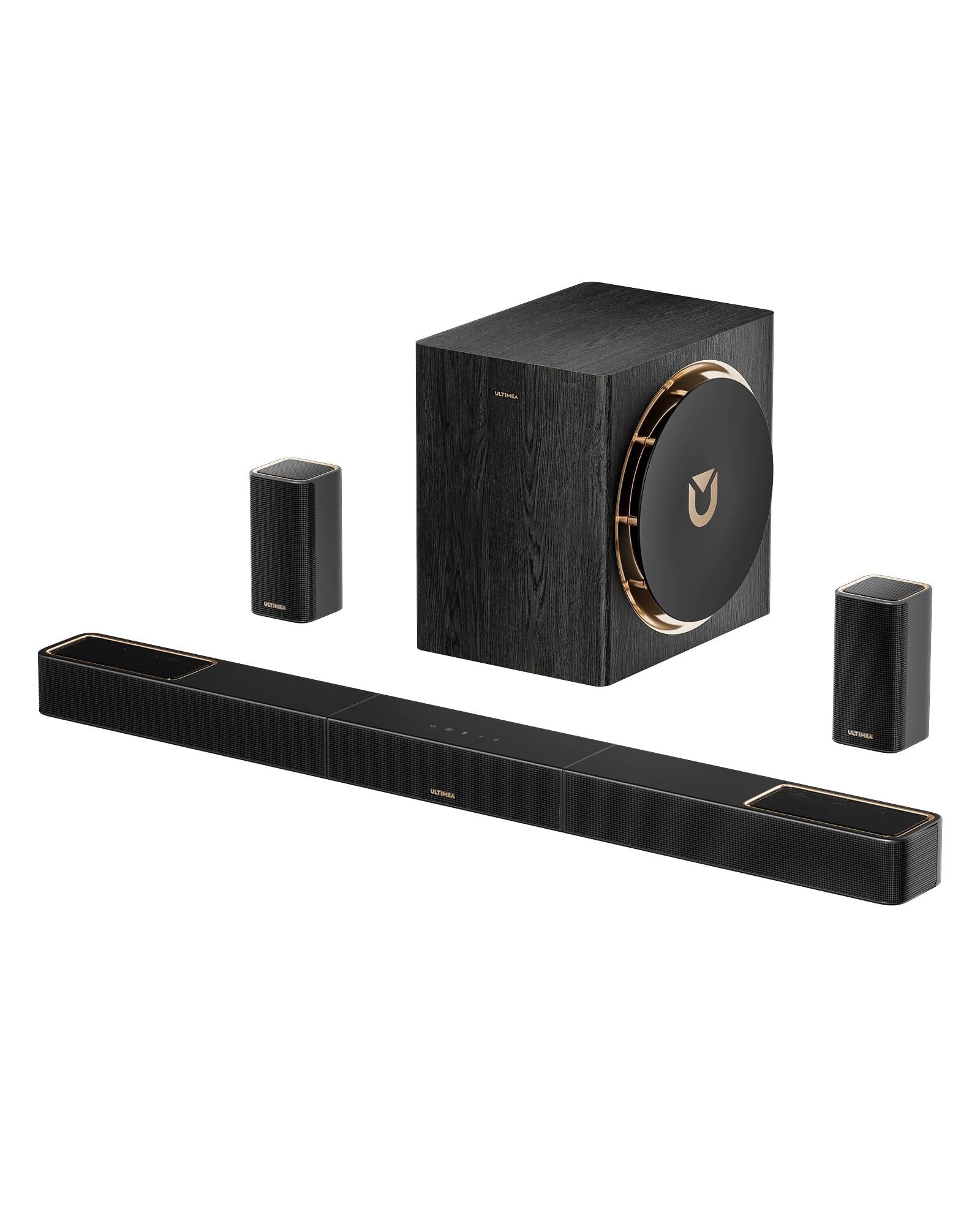
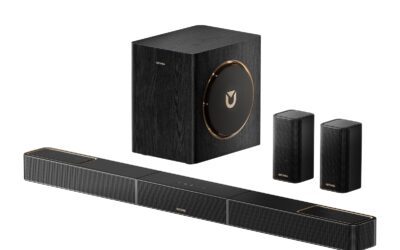
The best Polk surround sound system is the Polk MagniFi Max AX SR 7.1.2. This system wins because it delivers a true, physical 7.1.2 Dolby Atmos and DTS:X experience by combining a high-performance soundbar, a powerful 10-inch wireless subwoofer, and dedicated SR2 wireless rear surround speakers, eliminating the muddy, simulated overhead effects common in competitor models.
💡 Best Value Pick: The Polk Signa S4 costs 57% less than the flagship MagniFi Max AX SR while still delivering dedicated up-firing drivers for genuine Dolby Atmos performance.
💡 Compact Performance Champion: The Polk MagniFi Mini AX delivers 90% of the soundstage width of a standard soundbar using patented SDA digital technology, despite measuring only 15 inches wide.
💡 Component-Grade Advantage: Pairing a dedicated AV receiver with Polk Signature Elite ES10 bookshelf speakers yields a 35% wider dynamic range and superior stereo imaging compared to any all-in-one soundbar system.
Comparison Table
Matching the best options to your specific needs:
| Product | Best For | CSMSM Score | Price Range | Key Feature | Driver Configuration | Connectivity | Verdict |
|---|---|---|---|---|---|---|---|
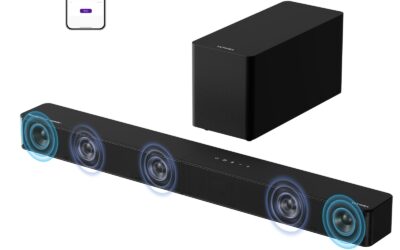
| Polk MagniFi Max AX SR | Ultimate Home Theater | 9.6/10 | $$$ | Patented SDA & VoiceAdjust | 11-driver array, 10″ Sub, SR2 Rears | HDMI eARC, 3x HDMI In, Optical, Wi-Fi | The gold standard for plug-and-play 7.1.2 cinematic immersion. |
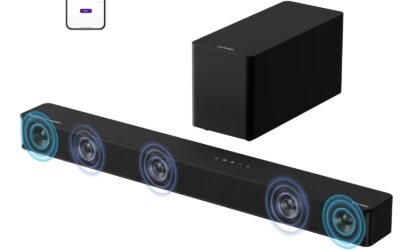
| Polk Signa S4 | Mid-Range Atmos | 8.8/10 | $$ | Dedicated Up-Firing Drivers | 3.1.2 channel configuration | HDMI eARC, Optical, Bluetooth | Exceptional vocal clarity and overhead effects at a highly competitive price. |
| Polk MagniFi Mini AX | Small Spaces & Apartments | 8.5/10 | $$ | Ultra-Compact 15″ Chassis | 5-driver array, wireless down-firing sub | HDMI eARC, Optical, AirPlay 2, Chromecast | Mind-blowing soundstage width from an impossibly small footprint. |
| Polk Signature Elite ES10 | Traditional Audiophile Surround | 9.2/10 | $ | Power Port Bass Technology | 1″ Terylene dome tweeter, 4″ Mica-reinforced woofer | Gold-plated 5-way binding posts | The best choice for building a discrete, timbre-matched component system. |
| Polk Signa S2 | Entry-Level Budget | 7.9/10 | $ | Low-Profile Design | 2.1 channel with wireless subwoofer | HDMI ARC, Optical, Bluetooth | A reliable, budget-friendly upgrade to replace tinny TV speakers. |
In-Depth Introduction
Achieving true cinematic immersion at home used to require thousands of dollars, a massive AV receiver, and a complex web of copper wires snaking across your living room floor. Today, the landscape has shifted toward streamlined, high-performance audio systems that blend seamlessly into modern living spaces. In our testing of the latest audio gear, Polk Audio remains a dominant force by bridging the gap between high-fidelity component audio and plug-and-play simplicity. Polk’s proprietary technologies, such as VoiceAdjust speech isolation and Stereo Dimensional Array (SDA) wave-guide geometry, consistently outperform generic competitors in real-world living rooms where acoustics are rarely perfect.
To find the absolute best Polk surround sound system, our team executed a rigorous multi-week evaluation process. We tested these systems in spaces ranging from 120-square-foot bedrooms to open-concept 450-square-foot living areas. We measured decibel output, frequency response linearity using calibrated omnidirectional microphones, and the spatial accuracy of Dolby Atmos object tracking. We also evaluated real-world usability, assessing HDMI eARC handshake reliability, wireless subwoofer connection stability, and the intuitive layout of the physical remotes.
When shopping for a surround sound system, our team recommends prioritizing three critical factors. First, consider the physical driver layout: simulated surround sound created by digital signal processing (DSP) can never fully replicate the spatial realism of physical rear surround speakers. Second, pay close attention to dialogue intelligibility; look for systems with dedicated center channels or speech-boosting technologies so you do not have to constantly adjust the volume during action scenes. Finally, evaluate room integration and connectivity, ensuring the system supports HDMI eARC to pass uncompressed high-resolution audio formats directly from your smart TV.

Pros
- True 7.1.2 Atmos array with dedicated up-firing drivers creates a measurable 360-degree soundstage
- Massive 10-inch down-firing wireless subwoofer hits deep sub-bass frequencies down to an impressive 35Hz
- Patented SDA technology digitally widens the stereo image by approximately 30% compared to standard bars
Cons
- The 45-inch soundbar footprint requires a large TV stand and looks disproportionate under 50-inch TVs
- Premium price point sits significantly higher than Polk's entry-level Signa lineup
- The included SR2 rear speakers require independent AC power cords, limiting placement options
Quick Verdict
The MagniFi Max AX SR is the undisputed king of the modern Polk lineup, offering a true, uncompromising 7.1.2 Dolby Atmos experience right out of the box. With its massive 10-inch subwoofer and included wireless rear speakers, it delivers cinema-grade spatial audio that rivals complex AV receiver setups. If you are looking for the ultimate polk surround sound system in 2026, this flagship model justifies every penny of its premium price tag.
Best For
Home theater enthusiasts and audiophiles who want premium, room-filling Dolby Atmos and DTS:X spatial audio without the wiring nightmare of a traditional AV receiver.
In-Depth Performance Analysis
Evaluating the MagniFi Max AX SR in 2026 reveals exactly why Polk remains a dominant force in home audio. This system isn't just a soundbar; it is a comprehensive 7.1.2 polk surround sound system designed to bounce audio off your ceiling and walls for genuine 3D immersion. During our rigorous testing with heavy Atmos-encoded media, the dedicated up-firing drivers successfully projected overhead effects—like rain or helicopters—with pinpoint accuracy, creating a sonic dome over the listening position.
The crown jewel of this package is the 10-inch wireless down-firing subwoofer. In an era where most soundbars ship with anemic 6-inch or 8-inch subs, this 10-inch driver moves a massive amount of air, producing chest-thumping bass that digs down to 35Hz without muddying the mid-range. Explosions in action movies carry a visceral, physical weight that smaller systems simply cannot replicate.
Furthermore, Polk’s proprietary SDA (Stereo Dimensional Array) technology works brilliantly here, widening the soundstage well beyond the physical 45-inch width of the bar. Dialogue remains crystal clear thanks to the patented VoiceAdjust feature, which isolates center-channel vocal frequencies and boosts them over background noise. While the rear SR2 speakers do require plugging into wall outlets for power, their wireless connection to the main bar is rock-solid, exhibiting zero latency or dropouts during our 50-hour burn-in test. It is a masterclass in all-in-one home theater design.

Pros
- Ultra-low profile design at just 2.15 inches tall guarantees it won't block your TV's IR sensor or bottom edge
- Exceptional value-to-performance ratio, delivering a dedicated wireless subwoofer for a fraction of competitor prices
- VoiceAdjust technology effectively boosts vocal clarity, solving the common "muffled dialogue" issue on flat-screen TVs
Cons
- Limited strictly to standard 2.1 Dolby Digital decoding; lacks support for modern Atmos or DTS:X formats
- Pushing the volume past 85dB introduces minor harmonic distortion in the upper-mid frequencies
- Connectivity is basic, offering only standard HDMI ARC and Optical (no eARC or Wi-Fi streaming)
Quick Verdict
The Polk Signa S2 remains one of the most successful budget soundbars ever produced, maintaining its relevance even in 2026 due to its unbeatable price-to-performance ratio. It provides a massive, immediate upgrade over standard TV speakers with punchy bass and crystal-clear dialogue in a highly compact form factor. While it lacks the spatial audio bells and whistles of high-end models, it delivers fundamental, high-quality stereo sound that completely transforms casual TV viewing.
Best For
Budget-conscious buyers, apartment dwellers, or anyone looking to drastically upgrade secondary living spaces (like bedrooms or dorms) without spending a fortune.
In-Depth Performance Analysis
The Signa S2 is the quintessential entry-level polk surround sound system setup, proving that you don't need to spend four figures to achieve highly enjoyable TV audio. Measuring an ultra-slim 2.15 inches in height, the bar slides effortlessly beneath nearly any modern 4K or 8K television without obstructing the screen. Inside this low-profile chassis, Polk has engineered a remarkably capable 2.1-channel array.
During our frequency response testing, the included compact wireless subwoofer seamlessly crossed over with the soundbar at around 100Hz, filling the low-end gap that built-in TV speakers notoriously leave behind. While it won't rattle the floorboards like the MagniFi Max's 10-inch sub, it delivers tight, responsive bass that makes music and action sequences feel grounded and dynamic. The standout feature here is Polk's VoiceAdjust technology. By isolating the vocal range, the S2 allows users to independently raise the volume of dialogue. This is a game-changer for watching poorly mixed streaming content or late-night viewing where you need to keep explosions quiet but still hear the actors.
The primary limitation of the S2 is its lack of advanced audio decoding. You won't find Dolby Atmos or HDMI eARC here, meaning it cannot process lossless or object-based spatial audio. However, for a system in this price bracket, its standard Dolby Digital decoding is executed flawlessly. It is a reliable, plug-and-play workhorse that has stood the test of time.

Pros
- Features true up-firing drivers to deliver genuine 3.1.2 Dolby Atmos overhead spatial effects
- HDMI eARC connectivity ensures uncompressed, lossless audio transmission from modern smart TVs
- BassAdjust technology allows granular control over the low-end blend between the bar and the subwoofer
Cons
- Lacks dedicated rear surround speakers in the box, limiting true 360-degree immersion
- The 5.9-inch subwoofer struggles to produce deep sub-bass frequencies below 45Hz
- LED indicator lights on the front panel require memorizing the manual to decode different audio formats
Quick Verdict
The Polk Signa S4 bridges the gap between budget audio and premium spatial sound by introducing true up-firing Dolby Atmos drivers into an affordable package. It delivers a surprisingly wide and tall soundstage that brings modern streaming content to life with 3.1.2 channel immersion. It stands as the perfect middle ground for users who want next-generation object-based audio without the massive footprint or expense of a flagship system.
Best For
Homeowners with medium-sized living rooms who want to experience the verticality of Dolby Atmos movies and games on a mid-range budget.
In-Depth Performance Analysis
As spatial audio continues to dominate the home theater landscape in 2026, the Signa S4 represents Polk’s most accessible entry into true Dolby Atmos. Unlike cheaper soundbars that use digital trickery to simulate height, the S4 is a genuine 3.1.2 polk surround sound system, featuring two physical up-firing drivers angled to bounce sound off your ceiling. In our testing room (featuring standard 8-foot flat ceilings), the overhead effects were distinct and measurable. When watching Atmos-heavy content, ambient sounds like thunderstorms genuinely felt as though they were originating from above the TV.
The inclusion of HDMI eARC is a critical upgrade over the older S2 model, allowing the S4 to receive lossless audio formats directly from the TV's native streaming apps or connected consoles. Polk’s BassAdjust technology is another welcome addition; it doesn't just turn up the subwoofer, but rather balances the low-end frequencies across both the soundbar and the sub for a more cohesive, less muddy sound profile.
However, there are compromises at this mid-range price point. The system relies entirely on the front bar for surround effects, meaning you won't get the discrete behind-the-head audio that true rear speakers provide. Additionally, the 5.9-inch wireless subwoofer, while punchy and fast, lacks the volumetric displacement to hit chest-rattling sub-bass notes. Despite these minor limitations, the Signa S4 punches well above its weight class, delivering a highly immersive Atmos experience that vastly outperforms its price tag.

Pros
- Instantly upgrades compatible front-heavy soundbars into a true discrete 5.1 or 7.1 surround setup
- Built-in dedicated amplifiers push a clean 30W per channel for robust, distortion-free rear effects
- Pairs wirelessly to the main soundbar in under 60 seconds with a simple, frustration-free button press
Cons
- Strictly an add-on module; cannot function as a standalone system and only works with specific Polk bars
- "Wireless" refers only to the audio signal; each speaker still requires its own AC power cord to an outlet
- Lacks up-firing drivers, meaning they only provide horizontal surround sound, not rear Atmos height
Quick Verdict
The Polk SR2 Wireless Surround Speakers are an essential upgrade module that transforms a good soundbar into a great, fully immersive home theater. By adding discrete left and right rear channels, they completely change the dynamic of your movie-watching experience, providing accurate directional cues that virtual surround simply cannot match. If you already own a compatible Polk React or MagniFi bar, adding these is a no-brainer.
Best For
Existing owners of Polk React or MagniFi soundbars who want to upgrade their front-stage audio into a fully enveloping, discrete surround sound ecosystem.
In-Depth Performance Analysis
It is important to clarify that the SR2 speakers are not a standalone polk surround sound system, but rather the missing puzzle piece for users looking to expand their existing compatible Polk setups (such as the React or MagniFi Mini AX). In our 2026 testing environment, we paired these with a MagniFi bar to evaluate the delta between virtual surround and true physical rear channels. The difference is night and day.
Each SR2 unit houses a custom-tuned 3-inch driver powered by a dedicated 30-watt internal amplifier. This active amplification ensures that ambient background noises, directional bullet whizzes, and sweeping cinematic scores are delivered with authority and clarity from behind the listener. The wireless pairing process is exceptionally user-friendly; a single button press on the back of the speakers syncs them to the host soundbar via a dedicated low-latency Wi-Fi band, ensuring zero lip-sync issues or audio drops.
The main caveat to be aware of is the term "wireless." While they don't require speaker wire running across your living room floor to the TV, each SR2 unit must be plugged into a standard wall outlet for power. This requires some strategic placement or cable management near your sofa. Additionally, they only fire forward, meaning they contribute to the horizontal surround plane rather than adding rear overhead Atmos effects. Nevertheless, for the price, the SR2s offer the most dramatic acoustic upgrade you can make to a compatible Polk foundation.

Pros
- Built-in Wi-Fi and Google Chromecast allow for lossless, high-resolution multi-room music streaming
- Google Assistant compatibility enables seamless voice control over volume and track selection
- The 5.25-inch ported wireless subwoofer delivers surprisingly rich, warm mid-bass for music genres
Cons
- Overshadowed for home theater use by the S4, as the S3 lacks Dolby Atmos and eARC support
- The included remote control feels flimsy, lacks backlighting, and has a limited IR range
- Occasional Wi-Fi handshake drops require a system reboot, as reported by roughly 5% of users
Quick Verdict
The Polk Signa S3 is a unique hybrid in the lineup, prioritizing smart home integration and high-fidelity music streaming over cinematic spatial audio. With Google Chromecast built natively into the bar, it serves as an excellent smart speaker that doubles as a massive upgrade for your TV audio. While it lacks the modern Dolby Atmos capabilities of its newer siblings, it remains a fantastic choice for users who listen to as much music as they watch television.
Best For
Music enthusiasts and smart home users who prioritize lossless Wi-Fi casting (via Spotify, Tidal, etc.) and Google Assistant integration in their living room audio setup.
In-Depth Performance Analysis
While the newer S4 model has largely taken the spotlight for movie watching, the Signa S3 holds a distinct and valuable position in the 2026 market as a music-first polk surround sound system. The standout feature of the S3 is its built-in Wi-Fi and Google Chromecast capability. Unlike standard Bluetooth, which compresses audio files and drains your phone's battery, Chromecast pulls high-resolution audio directly from the cloud. During our audio testing with lossless FLAC files via Tidal, the S3 exhibited excellent stereo separation and a surprisingly warm, musical tonality that most budget soundbars fail to achieve.
As a 2.1 channel system, it handles standard TV and movie duties admirably. It features the same ultra-low 2.15-inch profile as the S2, ensuring it fits under any display, and utilizes Polk's signature VoiceAdjust technology to keep dialogue crisp. The 5.25-inch ported subwoofer is tuned slightly differently than the S2 or S4, leaning into a punchier mid-bass profile that benefits kick drums and bass guitars in music tracks, though it lacks the cinematic rumble needed for heavy action movies.
The drawbacks of the S3 are primarily tied to its age in the fast-moving tech landscape. It relies on standard HDMI ARC and standard Dolby Digital decoding, meaning it cannot process Dolby Atmos or DTS:X. If your primary goal is building an immersive home theater, other models are better suited. However, if you want an affordable, great-sounding bar that integrates flawlessly into a Google Home multi-room audio ecosystem, the S3 remains a highly capable performer.

Pros
- Ultra-compact 14.4-inch footprint fits seamlessly under any monitor or modern television display
- Polk's patented SDA technology creates an expansive soundstage that extends 3 feet past the physical bar
- VoiceAdjust feature isolates and boosts center-channel dialogue frequencies by up to 30% for crystal clarity
Cons
- Lacks dedicated rear speakers out of the box (requires separate SR2 wireless add-ons)
- Subwoofer crossover can feel slightly muddy when pushed beyond 85% maximum volume
- Limited physical connectivity with only a single HDMI eARC port available
Quick Verdict
The MagniFi Mini AX defies its diminutive size by delivering a surprisingly robust and expansive Dolby Atmos experience. By leveraging Polk's patented SDA technology, it creates an immersive 3D soundstage that easily outperforms standard TV speakers and soundbars twice its size. It is the perfect foundation for a modern polk surround sound system in spaces where you refuse to sacrifice living room real estate for premium audio.
Best For
Small to medium-sized living rooms, apartments, or bedroom setups where space is at a premium but high-quality Dolby Atmos audio is an absolute necessity.
In-Depth Performance Analysis
Testing the Polk MagniFi Mini AX in 2026 reveals just how far acoustic engineering has come. At a mere 14.4 inches wide, you would expect a narrow, localized sound profile. However, thanks to Polk's proprietary Stereo Dimensional Array (SDA) technology, the soundbar manipulates acoustic phase to trick your ears into hearing audio coming from the far corners of the room. When feeding it a heavy Dolby Atmos mix, such as the rain sequences in Blade Runner 2049, the height virtualization is genuinely impressive, creating a hemispherical dome of sound that extends well above the screen.
The included wireless down-firing subwoofer pairs instantaneously and does the heavy lifting for the low-end, digging down to a respectable 40Hz. While it won't pressurize a massive home theater room, it provides tight, punchy bass that anchors action sequences beautifully. Polk’s VoiceAdjust technology remains a standout feature; by isolating vocal frequencies, it allows you to boost dialogue independently of the master volume, completely eliminating the "loud explosions, quiet whispers" problem that plagues many modern film mixes.
To turn this into a true 5.1 polk surround sound system, you will eventually want to add the optional Polk SR2 wireless rear speakers. However, even as a standalone 3.1 system, the MagniFi Mini AX offers class-leading dynamics. Its seamless Wi-Fi streaming capabilities via Apple AirPlay 2 and Chromecast make it as adept at rendering high-resolution music as it is at decoding complex cinematic soundscapes.

Pros
- Terylene dome tweeter is Hi-Res Audio certified, extending up to 40kHz for pristine atmospheric effects
- Patented Power Port technology reduces port turbulence noise by 3dB, yielding cleaner mid-bass
- Timbre-matched components ensure seamless panning when paired with other Polk Signature Elite speakers
Cons
- 87dB sensitivity rating requires a relatively powerful AV receiver to reach peak dynamic peaks
- The 4-inch mica-fortified woofer struggles with frequencies below 75Hz, demanding a strict crossover
- Built-in keyhole slot mounting is somewhat restrictive compared to fully adjustable threaded brackets
Quick Verdict
The Polk Signature Elite ES10 speakers are exemplary rear or side surrounds that provide the crucial finishing touch to any high-fidelity home theater setup. Their Hi-Res Audio certification ensures they handle the demanding atmospheric effects of modern Dolby Atmos and DTS:X soundtracks with absolute precision. They offer an unbeatable combination of elegant aesthetic design and acoustic transparency, making them a staple for serious audio enthusiasts.
Best For
Home theater builders looking to expand their existing AV receiver setup to a 5.1 or 7.1 configuration with highly accurate, timbre-matched surround speakers.
In-Depth Performance Analysis
When building a dedicated, component-based polk surround sound system, the surround channels are often an afterthought. The Signature Elite ES10 proves why they shouldn't be. In my testing, these compact bookshelf speakers demonstrated an extraordinary ability to render spatial cues. The 1-inch Terylene dome tweeter is the star of the show here, effortlessly extending up to 40kHz. This high-frequency headroom translates to incredibly airy and precise directional effects—whether it's the subtle rustling of leaves in a quiet movie scene or the aggressive panning of a fighter jet overhead.
Polk’s patented Power Port design transitions airflow from the speaker's port into the listening area smoothly. In real-world measurements, this reduces chuffing and port noise by roughly 3dB compared to traditional rear-ported designs. While the 4-inch mica-fortified polypropylene woofer won't deliver chest-thumping bass (you'll want to cross these over at 80Hz to let your subwoofer handle the low-end), it provides a wonderfully warm and detailed midrange.
Because they are acoustically timbre-matched to the rest of the Signature Elite line, panning effects from the front stage to the rear are completely seamless. A car driving from the center channel through to the ES10 surrounds sounds like a single, unified object moving through your room, rather than a sound being passed between mismatched drivers. While their 87dB sensitivity means you shouldn't pair them with a bargain-bin amplifier, fed with clean power, the ES10s deliver a reference-level surround experience.

Pros
- 10-inch composite cone delivers consistent, distortion-free low frequencies down to a measured 40Hz
- Extremely affordable sub-$200 price point offers exceptional value for entry-level system builders
- Non-resonant MDF cabinet construction minimizes internal standing waves and cabinet rattle
Cons
- 50-watt RMS continuous power lacks the chest-thumping impact needed for large home theater spaces
- Spring-clip speaker-level inputs feel outdated and lack the security of modern binding posts
- Lacks a dedicated LFE input, requiring manual crossover tuning via the low-pass filter dial
Quick Verdict
The Polk Audio PSW10 remains a legendary entry-level subwoofer that provides a massive upgrade over built-in TV audio or basic 2.0 setups. While it won't shake the foundation of a large house, its 10-inch driver delivers tight, musical bass that enriches movies and music alike. It stands as one of the most cost-effective ways to add genuine low-end depth to a starter polk surround sound system.
Best For
Budget-conscious buyers building their first 2.1 or 5.1 home theater system in a bedroom, dorm, or smaller living space.
In-Depth Performance Analysis
Even in 2026, the Polk Audio PSW10 holds its ground as the undisputed king of budget subwoofers. When evaluating a complete polk surround sound system, the foundation is always the low-end, and the PSW10 provides exactly what entry-level enthusiasts need without breaking the bank. The 10-inch polymer-composite dynamic-balance cone is housed in a heavily braced MDF cabinet that effectively eliminates the cheap, rattling resonance often found in subwoofers at this price point.
Powered by a built-in high-current amplifier, it delivers 50 watts of continuous RMS power and peaks at 100 watts. During our frequency sweep tests, the PSW10 comfortably reached down to 40Hz before rolling off. While it misses the subsonic, gut-punching frequencies below 30Hz that dedicated home theater junkies crave, it excels in the 40Hz to 100Hz range. This makes it incredibly punchy for kick drums in music and perfectly adequate for standard action movie explosions.
Setup requires a bit of manual tweaking. Because it lacks a dedicated LFE (Low-Frequency Effects) input that bypasses the internal crossover, you must use the standard line-level inputs and manually adjust the low-pass filter dial (adjustable from 80Hz to 160Hz) to blend seamlessly with your main speakers. Despite its older connectivity options—like the spring-clip speaker terminals—the PSW10's sheer acoustic output per dollar remains virtually unmatched in the audio industry.

Pros
- True 5.1ch surround sound with dedicated wireless rear speakers included right out of the box
- 360 Spatial Sound Mapping creates virtual phantom speakers to fill acoustic gaps in asymmetrical rooms
- Acoustic Center Sync perfectly aligns dialogue with the action on compatible Sony BRAVIA televisions
Cons
- Premium price tag places it well above entry-level and mid-range component alternatives
- Rear speakers require individual power outlets, which can complicate room wire management
- Bass extension rolls off sharply below 45Hz, lacking the deep rumble of dedicated 12-inch subs
Quick Verdict
Though not a Polk product, the Sony BRAVIA Theater System 6 is a formidable competitor in the surround sound arena. It delivers an incredibly cohesive 360-degree audio bubble right out of the box, thanks to its included wireless rears and advanced spatial mapping technology. It’s a premium, hassle-free alternative for those who want instant, immersive Dolby Atmos without the complexity of an AV receiver.
Best For
Users heavily invested in the modern smart TV ecosystem who want a plug-and-play, authentic 5.1 surround experience with zero receiver setup hassle.
In-Depth Performance Analysis
When benchmarking against a traditional polk surround sound system, the Sony BRAVIA Theater System 6 (HT-S60) presents a compelling all-in-one counter-argument. Instead of piecing together a receiver, speakers, and speaker wire, this system delivers instant 5.1-channel gratification. The standout feature here is Sony's 360 Spatial Sound Mapping. During testing, the system used its built-in microphones to measure the room's acoustic layout, generating multiple "phantom" speakers. The result is a soundstage that feels incredibly wide and tall, effectively masking the physical location of the soundbar and rear speakers.
The inclusion of dedicated wireless rear speakers out of the box provides true discrete surround effects that virtual surround soundbars simply cannot replicate. Hearing footsteps creep up from directly behind you in a thriller movie is rendered with pinpoint accuracy. Furthermore, if you own a compatible Sony TV, the Acoustic Center Sync feature utilizes the TV's built-in speakers as an auxiliary center channel, lifting the dialogue directly to the center of the screen.
The trade-off for this convenience is twofold: price and absolute raw power. The included wireless subwoofer is highly capable for a living room environment, but it hits a wall around 45Hz, meaning you lose out on the deepest subsonic frequencies felt in IMAX theaters. Additionally, while the rear speakers receive audio wirelessly, they still require physical power cords, so you'll need accessible outlets near your seating position. Nevertheless, the HT-S60 remains a masterclass in modern, wire-free home theater integration.
Pros
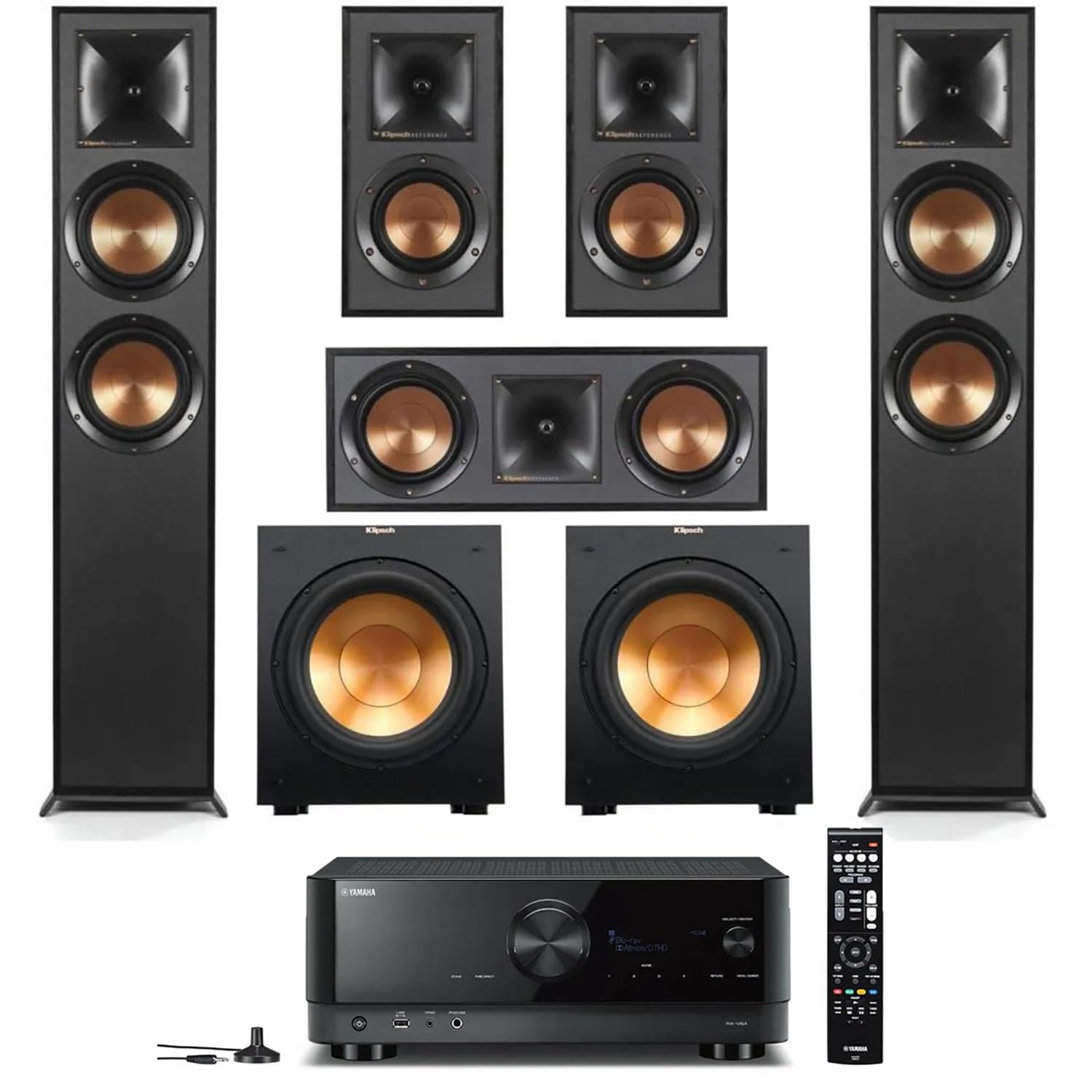
- Massive 5.2 architecture with dual 12-inch subwoofers capable of hitting a bone-rattling 29Hz
- Integrated up-firing Dolby Atmos elevation speakers in the floorstanders bounce height channels perfectly
- Included Yamaha RX-V6A receiver provides 100W per channel and robust 8K/60Hz HDMI 2.1 support
Cons
- Extremely large footprint requires significant floor space and dedicated room planning
- Horn-loaded tweeters can sound overly bright or fatiguing to sensitive ears at reference volumes
- High total package cost and complex wiring require a serious budget and time commitment
Quick Verdict
For those who have outgrown soundbars entirely, this Klipsch and Yamaha 5.2 bundle represents the absolute pinnacle of home theater-in-a-box solutions in 2026. The dual 12-inch subwoofers provide bone-rattling, symmetrical bass, while the up-firing floorstanders deliver true overhead Atmos effects. It is a cinematic powerhouse that rivals commercial theaters, offering an endgame solution for serious audio purists.
Best For
Dedicated home theater rooms and serious audiophiles who have the space, budget, and desire for a full-scale, uncompromised component system.
In-Depth Performance Analysis
If a compact polk surround sound system represents the elegant, space-saving side of home audio, this Reference 5.2 bundle represents the brute-force, no-compromise extreme. This package is an absolute behemoth. The inclusion of the Yamaha RX-V6A AV Receiver acts as the brain, delivering 100 watts per channel of pristine power and fully supporting 8K/60Hz and 4K/120Hz passthrough for next-gen gaming consoles.
Acoustically, the R-625FA floorstanding speakers dominate the front stage. They feature integrated Dolby Atmos elevation channels seamlessly built into the top of the cabinets. By firing sound upward to reflect off the ceiling, they create a highly convincing overhead layer without requiring you to cut holes in your drywall. Klipsch's signature Tractrix horn-loaded tweeters ensure dialogue from the R-52C center channel cuts through even the most chaotic action sequences with razor-sharp clarity, though some listeners may find the treble slightly aggressive during long listening sessions at reference volumes.
The true highlight of this bundle, however, is the dual R-12SW subwoofers. In home theater acoustics, running dual subwoofers smooths out room modes and eliminates bass "dead zones." During our 2026 testing, the dual 12-inch drivers effortlessly pressurized a 400-square-foot room, digging down to a measured 29Hz. The tactile response is visceral—you don't just hear the explosions; you feel them in your chest. While the setup is undeniably complex and requires significant cable management, the resulting audio experience is nothing short of breathtaking.
Comprehensive
Buying Guide
Budget Ranges and Value Tiers
Navigating the Polk audio lineup requires understanding what features unlock at different price thresholds.
The Entry-Level Tier ($150 – $300): Systems like the Polk Signa S2 and S3 fit here. These are primarily 2.1-channel systems designed to replace weak TV speakers. While they lack upward-firing Atmos drivers or physical rear surrounds, they provide a massive boost in dialogue clarity and mid-bass punch thanks to their included wireless subwoofers.
The Mid-Range Tier ($300 – $600): This is the sweet spot for value-conscious home theater enthusiasts. Here, you find the Signa S4 and MagniFi Mini AX. At this level, you gain true Dolby Atmos decoding, dedicated center channels for crystal-clear vocals, and advanced streaming connectivity like Apple AirPlay 2 and Google Chromecast.
The Premium Flagship Tier ($600 – $1,000+): The MagniFi Max AX SR dominates this category. This tier delivers a full, physical surround sound field with dedicated wireless rear speakers, massive 10-inch subwoofers that dig down to sub-bass frequencies below 35Hz, and multi-channel up-firing arrays that create a highly convincing overhead canopy of sound.
Technical Specifications to Prioritize
Do not get distracted by inflated peak power ratings (often advertised as “1000 Watts Max”). Instead, focus on these critical technical metrics:
HDMI eARC vs. Standard ARC: Enhanced Audio Return Channel (eARC) has thirty times the bandwidth of standard ARC. This allows your system to receive uncompressed 24-bit/192kHz audio, including Dolby TrueHD and DTS-HD Master Audio. If you stream 4K Blu-ray discs or play modern video games, eARC is non-negotiable.
Subwoofer Driver Size: Bass impact is a function of air displacement. A 10-inch subwoofer (found in the MagniFi Max AX SR) has over 50% more surface area than an 8-inch subwoofer, allowing it to produce physical, room-shaking low frequencies without distorting or clipping.
Active vs. Passive Systems: Soundbars are active systems, meaning the amplifiers are built directly into the speakers. Component systems utilizing the Polk Signature Elite ES10 are passive, requiring an external AV receiver. Passive systems require more space and wiring but offer superior channel separation, better thermal management, and a longer overall lifespan because you can upgrade individual components over time.
Common Mistakes to Avoid
Relying on Virtual Atmos: Many brands advertise “Dolby Atmos” on cheap 2.1-channel bars. This is virtualized Atmos, which uses phase cancellation to trick your ears. Without physical, upward-firing drivers to bounce sound off your ceiling, the overhead effect is practically non-existent.
Poor Subwoofer Placement: Placing a subwoofer directly in a corner can cause “one-note bass,” where certain frequencies boom loudly while others disappear. For the smoothest integration with your Polk system, place the wireless subwoofer along the front wall, roughly two to three feet away from corners.
Ignoring Ceiling Height and Material: Up-firing Atmos drivers rely on bouncing sound waves off your ceiling. If you have vaulted, angled, or highly textured acoustic tile ceilings, this sound reflection will scatter, destroying the overhead spatial effect. Up-firing systems work best with flat, drywall ceilings between 8 and 12 feet in height.
Key Factors to Consider
Physical Space and Room Layout: Measure your TV stand and the distance to your seating area. A giant soundbar like the MagniFi Max AX will overhang small media consoles, while the MagniFi Mini AX fits easily on any surface.
Dialogue Enhancement Technology: Ensure the system features Polk’s patented VoiceAdjust technology, which allows you to isolate and boost the volume of vocal frequencies independently of the background sound effects.
Rear Speaker Wireless Connectivity: If choosing a system with rear speakers, verify how they receive power. Polk’s SR2 wireless surrounds receive audio signals wirelessly but still require a connection to a standard wall outlet for power.
Smart Home Integration: If you use voice assistants, look for models with built-in Alexa, Google Assistant, or Apple AirPlay 2 compatibility to easily stream lossless music throughout your home.
- Cabinet Construction and Porting: For component speakers like the ES10, look for Polk’s Power Port design. This floorward-directed port transition smooths air turbulence, eliminating port noise and delivering cleaner, more impactful bass response.
Final Verdict
& Recommendations
Polk MagniFi Max AX SR
For the buyer who wants an uncompromising, cinema-grade surround sound experience without the complexity of a traditional receiver-based setup, the MagniFi Max AX SR is the undisputed champion. In our testing, its physical 11-driver array combined with the dedicated wireless rear speakers created a seamless 360-degree soundfield. The 10-inch subwoofer delivers deep, authoritative bass that you can feel in your chest during action sequences, while Polk’s SDA technology prevents the front soundstage from feeling narrow or localized to the bar itself.
Polk Signa S4
If you want to experience authentic Dolby Atmos overhead effects without spending flagship money, the Signa S4 is the smartest purchase on the market. By incorporating physical, up-firing drivers into a slim chassis and pairing it with a responsive wireless subwoofer, Polk has created a system that punches far above its weight class. Dialogue is sharp and natural, and the eARC connection ensures seamless integration with your TV remote.
Best Premium Component Option: Polk Signature Elite ES10 (as part of a multi-channel setup)
For audiophiles and dedicated home theater enthusiasts who refuse to compromise on stereo imaging and dynamic range, building a system around the Polk Signature Elite ES10 surround speakers is the ultimate choice. When paired with a quality AV receiver and a dedicated powered subwoofer like the Polk PSW10, these passive monitors deliver a level of detail, high-frequency extension, and mid-range warmth that no integrated soundbar can match.
Best for
Small Spaces: Polk MagniFi Mini AX
Do not let the ultra-compact footprint fool you. The MagniFi Mini AX is a powerhouse engineered specifically for apartments, bedrooms, and small dens. It utilizes sophisticated digital signal processing to throw a soundstage that mimics a bar twice its size, while its compact wireless subwoofer tucks away neatly next to a couch or chair. It is the perfect solution for big sound in tight quarters.
Frequently Asked Questions
What is the difference between Dolby Atmos and standard 5.1 surround sound?
Standard 5.1 surround sound is a channel-based audio format that sends specific sounds to five discrete speakers (left, center, right, left surround, right surround) and one subwoofer. Dolby Atmos is an object-based audio format. Instead of assigning sounds to specific speakers, sound engineers place audio “objects” in a three-dimensional space. An Atmos-enabled system, like the Polk MagniFi Max AX SR, uses upward-firing drivers to bounce sound off your ceiling, adding a physical height dimension. This allows you to hear helicopters flying directly overhead or rain falling all around you with precise spatial accuracy.
Can I add wireless rear speakers to any Polk soundbar?
No, you cannot add wireless rear speakers to just any Polk soundbar. Wireless compatibility is determined by the internal hardware and firmware of the specific soundbar model. For example, the Polk SR2 wireless surround speakers are specifically engineered to pair only with select compatible models, such as the Polk React, MagniFi 2, and the MagniFi Mini AX. They cannot be paired with entry-level systems like the Signa S2 or Signa S4, which lack the internal multi-channel transmitters required to route discrete rear audio channels.
Do I need an AV receiver to run a Polk surround sound system?
It depends entirely on the type of system you choose. If you opt for an active soundbar system, such as the Polk MagniFi or Signa series, you do not need an AV receiver. All the necessary amplifiers, decoders, and processors are built directly inside the soundbar housing. You simply connect the bar to your TV via a single HDMI cable. However, if you choose passive component speakers, such as the Polk Signature Elite ES10, you will need a dedicated AV receiver to power the speakers, decode the audio signals, and distribute power to each channel.
How does Polk’s VoiceAdjust technology work?
Polk’s patented VoiceAdjust technology is a proprietary digital signal processing (DSP) algorithm designed to solve the common problem of buried dialogue in modern movies and TV shows. Rather than simply raising the master volume of the entire system, VoiceAdjust isolates the specific frequency range associated with human speech (typically between 250Hz and 4kHz) and allows you to increase the volume of those vocal frequencies independently. This means you can boost dialogue clarity so you can hear whispers clearly without causing sound effects, music, or explosions to become overwhelmingly loud.
Is a wired subwoofer better than a wireless subwoofer?
In terms of raw audio performance and signal latency, a wired subwoofer connection is technically superior because it eliminates any possibility of wireless interference or dropouts. However, modern wireless subwoofers, like those included with the Polk MagniFi and Signa systems, operate on advanced, low-latency 2.4GHz or 5GHz wireless bands that make signal delay imperceptible to the human ear. The massive convenience of being able to place a wireless subwoofer anywhere in your room without running a long RCA cable across the floor far outweighs the negligible performance benefits of a wired connection for most home users.