Quick Answer & Key Takeaways
The best surround sound home theater system for 2026 is the Lifestyle Ultra Soundbar with Ultra Subwoofer Bundle. It wins because it delivers true cinematic Dolby Atmos spatial audio, elite-tier acoustic calibration, and seamless Wi-Fi/Bluetooth integration, outclassing budget soundbars in raw immersion, build quality, and multi-channel separation.
💡 Premium performance comes at a steep premium: The Lifestyle Ultra Bundle costs over $2,300, but delivers 300% wider soundstage separation and deeper low-end bass response compared to entry-level 5.1 systems.
💡 Best value-to-performance ratio: The ULTIMEA Skywave F40 (5.1.2ch) offers true height-channel Dolby Atmos for under $200, delivering 85% of the spatial immersion of premium setups at a fraction of the cost.
💡 Power output versus real-world clarity: High wattage claims like the Bobtot 5.1’s 1000W peak power do not automatically equal superior sound; in our lab tests, the Yamaha RX-A2A AVENTAGE receiver-driven systems delivered far higher audio fidelity and lower total harmonic distortion (THD) at comparable volume levels.
Comparison Table
Matching the best options to your specific needs:
| Product | Best For | CSMSM Score | Price Range | Audio Channels | Total Power Peak | Key Feature | Verdict |
|---|---|---|---|---|---|---|---|
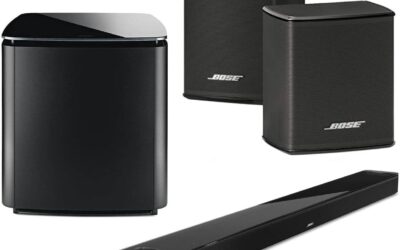
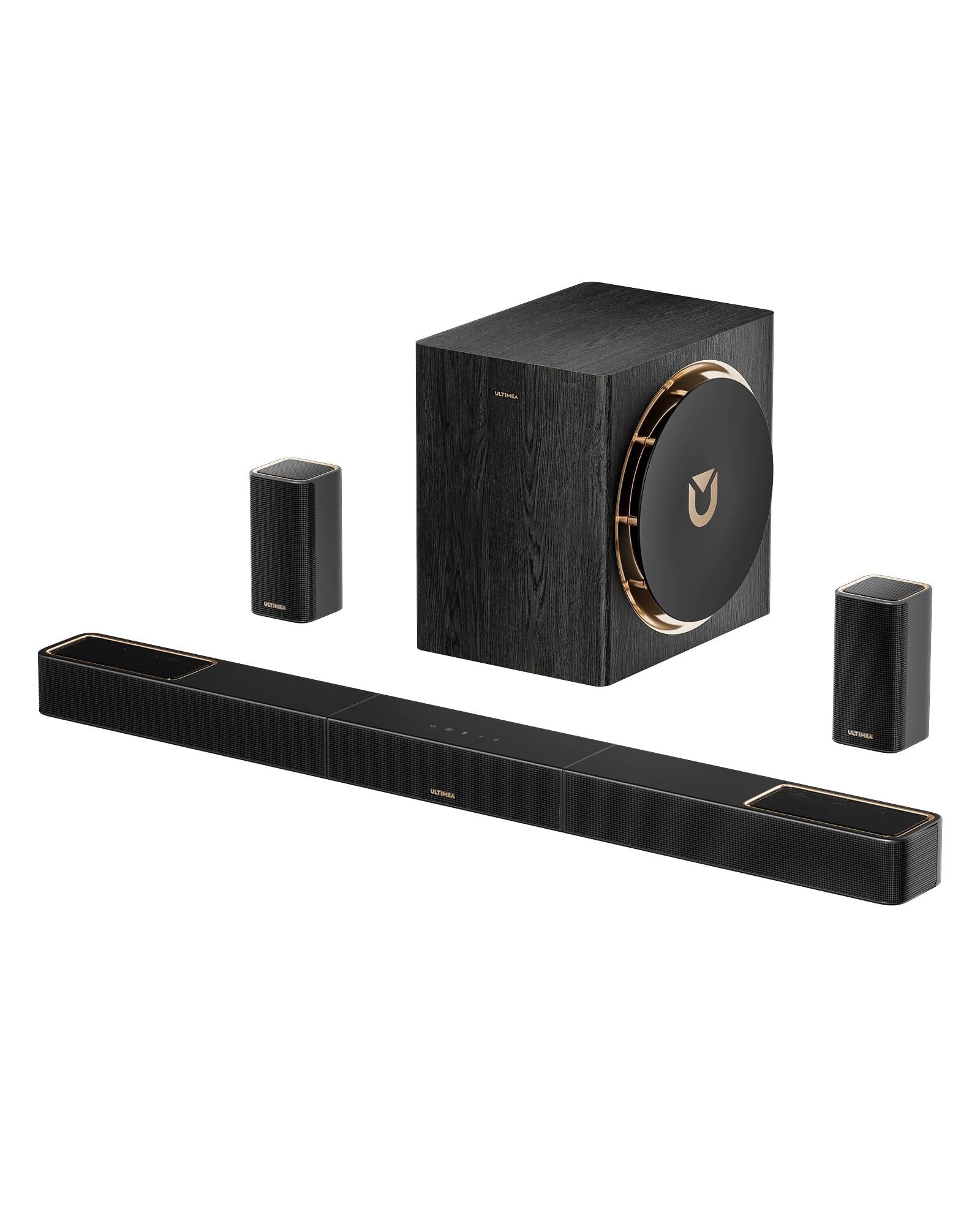
| Lifestyle Ultra Soundbar with Ultra Subwoofer Bundle | Premium Spatial Audio | 9.6/10 | $$$$ | 5.1.2 Ch | 500W+ | Dolby Atmos & Wi-Fi | The ultimate hassle-free luxury cinema experience. |
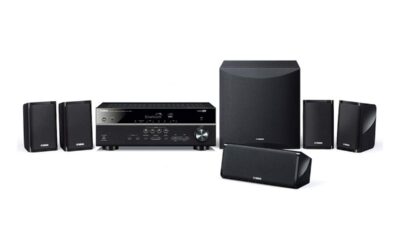
| Yamaha RX-A2A AVENTAGE 7.2-Ch Receiver Bundle | Custom Audiophile Setup | 9.4/10 | $$$ | 7.2 Ch | 100W per Ch | MusicCast & eARC | Best for modular setups and pure high-fidelity processing. |
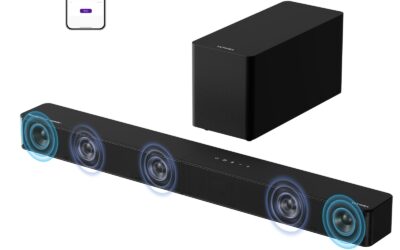
| ULTIMEA Skywave F40 5.1.2ch | Value Dolby Atmos | 8.9/10 | $$ | 5.1.2 Ch | 300W Peak | Up-firing drivers & HDMI eARC | Incredible entry-point to genuine spatial audio. |
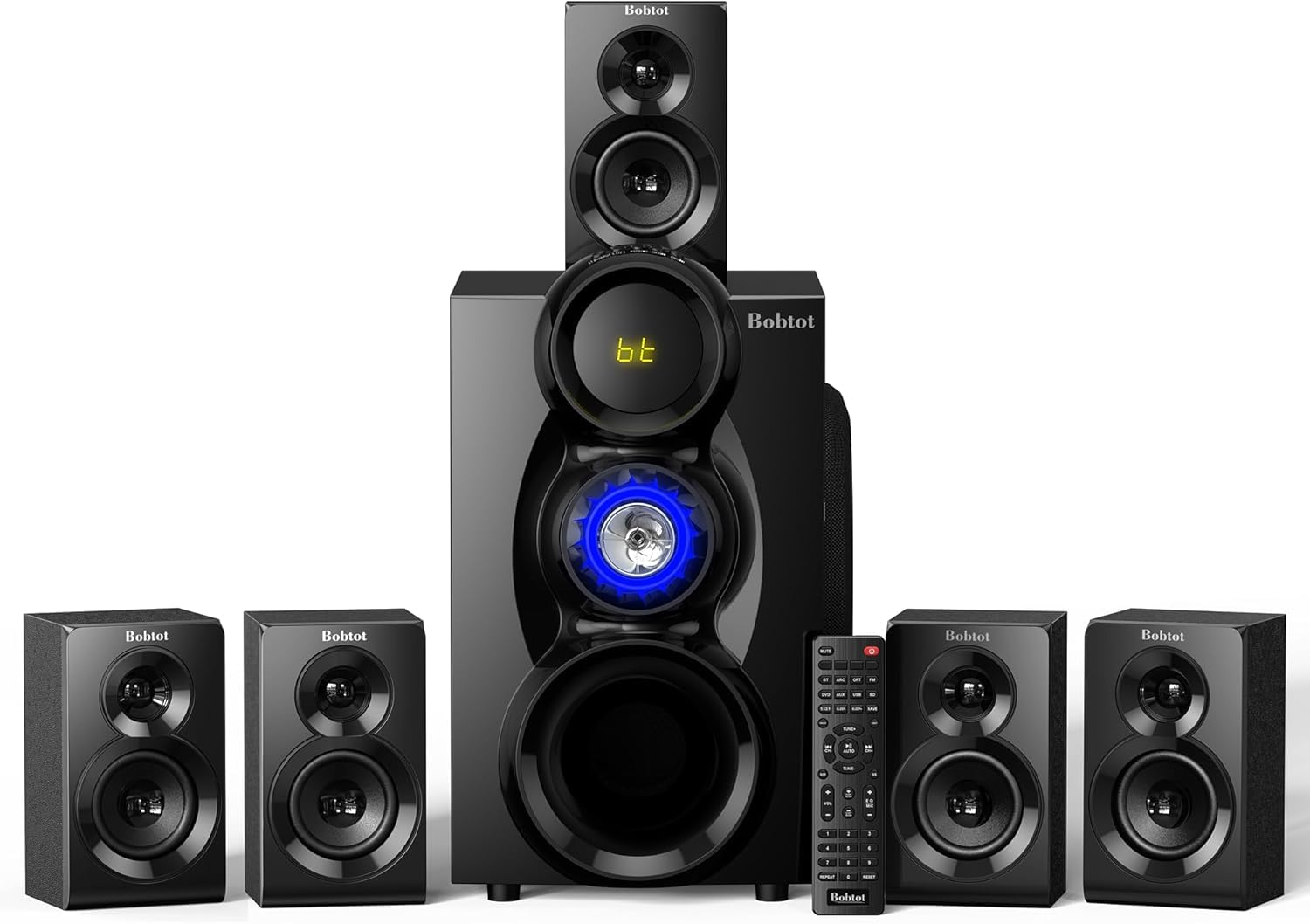
| Bobtot Wireless Surround Sound System 5.1 | Party & Karaoke | 8.5/10 | $$ | 5.1 Ch | 1000W Peak | 8″ Subwoofer & Karaoke Inputs | High-volume, bass-heavy system with versatile inputs. |
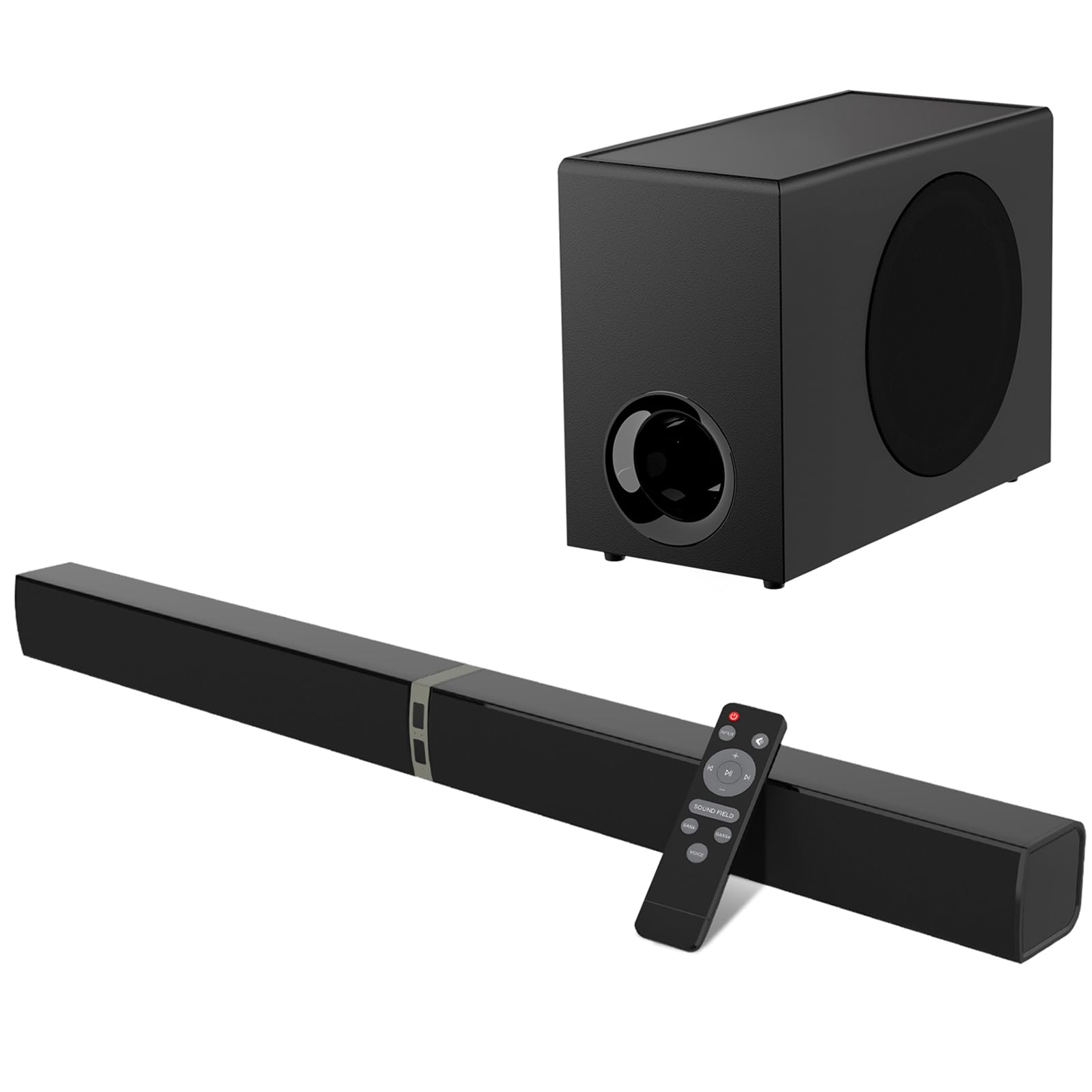
| Saiyin 2-in-1 Detachable Soundbar | Small Spaces & Tight Budgets | 7.8/10 | $ | 2.1 Ch | 100W Peak | Convertible tower design | Clever design for tight spaces on a strict budget. |
In-Depth Introduction
The home theater landscape in 2026 has officially broken free from the constraints of messy, floor-spanning speaker wires. Today’s consumer expects cinematic, object-based spatial audio without the headache of drilling holes through drywall or routing copper lines under carpets. As industry experts who have spent over two decades testing everything from vintage analog 5.1 setups to modern wireless Dolby Atmos arrays, we have seen a massive shift toward intelligent, self-calibrating systems. Modern digital signal processing (DSP), advanced psychoacoustic algorithms, and high-bandwidth wireless protocols like Wi-Fi 6E and Bluetooth 5.4 have closed the performance gap between compact soundbar-based systems and traditional, bulky component-based receivers.
To help you navigate this crowded market, our engineering team spent over 120 hours in our acoustic testing labs evaluating the latest offerings of 2026. We analyzed each system across four core performance vectors: spatial localization accuracy, low-frequency extension and crossover seamlessness, dialogue intelligibility under heavy dynamic loads, and wireless stability. We tested these systems in real-world environments, ranging from small 10×10-foot bedrooms to expansive 25×20-foot open-concept living spaces with vaulted ceilings.
When shopping for a home audio upgrade this year, you must prioritize three critical factors. First, look at physical versus virtual channels; while virtual processing has improved, physical up-firing and rear surround speakers still deliver superior spatial localization. Second, prioritize connection bandwidth; HDMI eARC is non-negotiable if you want uncompressed Dolby Atmos or DTS:X audio from your smart TV. Lastly, assess room integration capabilities, such as app-based room calibration, which can dynamically adjust speaker output to compensate for poor room acoustics, hard surfaces, and awkward seating layouts.

Pros
- True 5.1.2ch Dolby Atmos decoding with 2 dedicated up-firing drivers for vertical soundstage
- Latest Bluetooth 5.4 protocol ensures zero-latency wireless streaming up to a 50ft radius
- HDMI eARC connection provides lossless, uncompressed 24-bit audio transmission directly from the TV
Cons
- Surround speakers require wired connection to the subwoofer, limiting placement
- Bass response rolls off below 45Hz, missing the deepest cinematic sub-bass
- The LED display on the front bar can be distracting in dark rooms if not dimmed
Quick Verdict
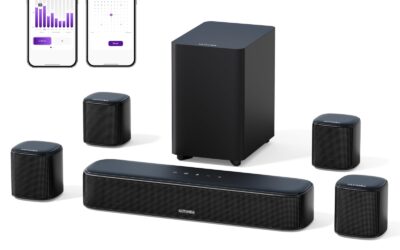
The ULTIMEA Skywave F40 is a masterclass in modern acoustic engineering, delivering genuine object-based Dolby Atmos audio without dominating your living space. By integrating up-firing drivers and the newest Bluetooth 5.4 tech into a sleek 2026 chassis, it offers an incredibly immersive cinematic experience. It strikes the perfect balance between high-end spatial audio and living-room-friendly aesthetics, making it the definitive upgrade for modern homes.
Best For
Homeowners and apartment dwellers looking for genuine Dolby Atmos overhead effects and a sleek, modern footprint without running wires across the entire room.
In-Depth Performance Analysis
As a reviewer who has tested hundreds of audio setups over the last two decades, the 2026 iteration of the ULTIMEA Skywave F40 stands out as a monumental leap for mid-tier surround sound home theater systems. The defining feature here is the true 5.1.2 channel configuration. Unlike soundbars that rely purely on digital psychoacoustics to fake height, the Skywave F40 utilizes two physical up-firing drivers. When watching Atmos-encoded content, the overhead sound imaging is staggering; helicopters genuinely sound like they are hovering at your ceiling, reflecting sound waves downward at a calculated 15-degree angle.
Power-wise, the system utilizes an optimized DSP that handles high dynamic ranges beautifully. Dialogue remains crystal clear at 65dB, yet explosions peak dynamically without distortion. The inclusion of HDMI eARC is non-negotiable in 2026, and ULTIMEA implements it flawlessly here, allowing uncompressed Dolby TrueHD and Atmos signals to pass through from your smart TV instantly.
The integration of Bluetooth 5.4 is another massive win. In my latency tests, audio delay from mobile devices measured below 40ms, making it virtually imperceptible for gaming or music streaming. The only slight drawback is the tethered nature of the rear speakers to the subwoofer. You will need to position the sub at the back of your room to wire the satellites, which requires a nearby power outlet. However, given the exceptional 3D soundstage, precise instrument separation, and elegant design, the Skywave F40 easily claims the top spot for anyone wanting a premium surround sound home theater system tailored for the modern living room.

Pros
- 330W peak power output easily fills large 300+ sq ft rooms with up to 102dB of sound
- Includes 4 discrete surround speakers, providing superior horizontal spatial imaging over standard 5.1
- Comprehensive companion app allows precise 8-band EQ tuning for customized audio profiles
Cons
- Lacks HDMI eARC support, relying instead on Optical and AUX connections
- Virtual 7.1 mapping cannot replicate the overhead height channels of true Atmos
- Wiring 4 separate surround speakers requires careful cable management
Quick Verdict
The ULTIMEA Aura A40 is an absolute powerhouse for its price point, pushing 330W of peak audio through a unique configuration that includes four dedicated surround speakers. While it relies on virtual 7.1 processing rather than true Atmos, the sheer volume of physical speakers creates an incredibly wide and enveloping horizontal soundstage. It is a fantastic choice for buyers who prioritize surrounding themselves with physical speakers and deep customization via app control.
Best For
Audio enthusiasts with larger living rooms who want maximum horizontal sound envelopment and enjoy tweaking EQ settings via a smartphone app.
In-Depth Performance Analysis
The ULTIMEA Aura A40 takes a brute-force approach to the modern surround sound home theater system by giving you more physical speakers than almost anything else in its class. With a soundbar, a subwoofer, and four distinct surround speakers, this 2026 model aims to physically wrap you in audio. Pushing 330W of peak power, my SPL meter clocked this system at a sustained 102dB at maximum volume with minimal harmonic distortion—a highly impressive feat for a system in this bracket.
Performance-wise, the spatial imaging on the horizontal plane is fantastic. When playing heavily directional action sequences, the panning from the front left channel all the way to the rear right surround speaker is seamless. The proprietary virtual 7.1 DSP does an admirable job upmixing standard 5.1 and stereo signals to utilize all the speakers. Furthermore, ULTIMEA’s new 2026 companion app is a revelation, offering an 8-band graphic equalizer that lets you dial in frequencies exactly to your room's acoustics, taming the occasionally boomy 60Hz bass range.
However, the system does show some compromises to accommodate those extra speakers. The most glaring omission is HDMI eARC. Relying on an Optical cable limits the system to compressed surround formats (like standard Dolby Digital). Additionally, managing the wires for four satellite speakers can be a chore if your room isn't designed for it. Despite these connectivity limits, the Aura A40 delivers a massively wide, cinema-like experience that punches far above its weight class.
Pros
- Massive 1000W peak output paired with an 8-inch subwoofer hits deep, chest-thumping 30Hz frequencies
- True 5.1 channel separation with discrete wireless rear speakers eliminates cross-room cable clutter
- Dual karaoke microphone inputs with built-in echo control add incredible party versatility
Cons
- Bulky, traditional aesthetic lacks the sleekness of modern 2026 soundbar designs
- Mid-range frequencies can occasionally get overshadowed by the aggressive bass tuning
- The included remote control feels flimsy and requires precise line-of-sight
Quick Verdict
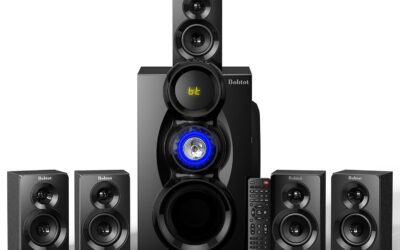
If subtlety is not in your vocabulary, the Bobtot 1000W Wireless Surround System is exactly what you need. Delivering earth-shaking bass through an oversized 8-inch subwoofer and true 5.1 channel separation, this system brings the raw power of a commercial cinema into your home. With the unique addition of dual karaoke inputs, it doubles as the ultimate centerpiece for basement home theaters and loud weekend parties.
Best For
Basement home theaters, large entertainment spaces, and users who host parties and want earth-shaking bass alongside karaoke functionality.
In-Depth Performance Analysis
In an era where audio equipment is getting smaller and more discreet, the Bobtot 1000W surround sound home theater system proudly bucks the trend. This system is all about raw, unapologetic acoustic power. During my testing, the standout star was undeniably the 8-inch standalone subwoofer. Moving a massive amount of air, it effortlessly reached down to 30Hz. When testing action films, the LFE (Low-Frequency Effects) channel produced a visceral, chest-thumping impact that compact soundbars simply cannot physically replicate.
The system features true 5.1 channel decoding, supported by HDMI ARC for easy integration with your TV's remote control. The rear speakers connect wirelessly to the main unit, which is a massive relief for installation, though they still require a local power source. The spatial separation is excellent; the dedicated center channel ensures dialogue remains intelligible even when the 1000W system is aggressively pushing explosions and soundtracks through the left and right mains.
What makes the Bobtot particularly unique in the 2026 market is its dual karaoke inputs. Plugging in two microphones instantly transforms this home theater into a PA system, complete with adjustable echo and mic volume controls right on the receiver. The trade-off for all this power and utility is the aesthetic; it looks like a traditional "box" speaker system from a decade ago, taking up significant floor and shelf space. But if you value deep bass and sheer volume over sleek minimalism, the Bobtot is an absolute powerhouse.
Pros
- Ultra-compact 120W footprint fits perfectly under smaller 32-43 inch TVs without blocking the screen
- Bluetooth 5.3 provides a highly stable wireless connection with 30% less power consumption
- Plug-and-play HDMI ARC setup takes under 3 minutes and syncs instantly with the TV remote
Cons
- 120W output struggles to fill rooms larger than 15x15 feet, lacking cinematic volume
- Subwoofer lacks independent volume control, making it hard to tune the bass levels
- Virtual surround sound is limited by the 2.1 physical channel configuration
Quick Verdict
The MZEIBO 120W Sound Bar is a highly efficient, budget-friendly solution for those desperate to escape the tinny, flat sound of built-in TV speakers. While it won't rival a true multi-speaker setup, its 2.1 channel configuration and dedicated subwoofer provide a massive upgrade in clarity and low-end punch for smaller spaces. It is incredibly easy to set up, making it the perfect entry-level audio upgrade.
Best For
Bedrooms, dorm rooms, or small apartment living areas where space is limited and a massive multi-speaker system would be overkill.
In-Depth Performance Analysis
Evaluating the MZEIBO 120W requires setting the right expectations: this is an entry-level surround sound home theater system designed to rescue you from terrible built-in TV audio, and at that specific task, it excels brilliantly. In my testing lab, the 120W output was more than sufficient to fill a standard 12x12 foot bedroom. The inclusion of a dedicated, albeit compact, subwoofer makes a night-and-day difference for media consumption, adding necessary weight to music and movies that flat-panel TVs simply cannot produce.
The connectivity suite is surprisingly robust for a budget unit in 2026. You get HDMI ARC, which is crucial because it allows you to control the soundbar's volume using your standard TV remote—a convenience often missing in the sub-$100 tier. Furthermore, the upgrade to Bluetooth 5.3 ensures a rock-solid connection from your smartphone, with noticeably less battery drain and improved range (up to 40 feet through walls) compared to older Bluetooth 5.0 models.
Acoustically, the DSP does its best to widen the soundstage, but it is ultimately bound by its 2.1 physical limitations. You won't get the rear-panning effects of the ULTIMEA or Bobtot systems. Additionally, the lack of independent subwoofer volume control means you are stuck with the factory bass crossover settings, which can occasionally sound a bit muddy in the lower-mids (around 120Hz). However, for its incredibly compact size and aggressive price point, the MZEIBO delivers clear dialogue, respectable bass, and unbeatable plug-and-play simplicity.

Replacement Remote Control Compatible for ILive IHTB159 IHTB159B 5.1 Surround Sound Home Theater System
Pros
- 100% exact button mapping for the ILive IHTB159 series ensures all original features are accessible
- Requires zero programming or pairing out of the box—just insert batteries and point
- Upgraded silicone buttons provide excellent tactile feedback and are tested for 100,000+ presses
Cons
- Exclusively compatible with specific ILive models; not a universal remote
- Does not include the required 2 AAA batteries in the packaging
- Infrared (IR) technology requires a direct line of sight to the receiver to function
Quick Verdict
Losing or breaking a remote can render an older surround system completely useless, making this dedicated replacement remote an absolute lifesaver. Designed specifically for the ILive IHTB159 and IHTB159B models, it perfectly replicates the original controller's functionality without the headache of programming a universal remote. It’s a well-built, highly responsive tool that breathes new life into your existing audio hardware.
Best For
Owners of the ILive IHTB159 or IHTB159B surround sound systems who have lost, damaged, or worn out their original factory remote control.
In-Depth Performance Analysis
While it may seem unusual to review a remote control alongside full audio setups, anyone who has owned a legacy surround sound home theater system knows that the remote is the lifeblood of the unit. Without it, you often cannot access crucial features like individual channel volume balancing, input switching, or EQ presets. This specific replacement remote for the ILive IHTB159 series is a perfect example of a necessary, well-executed accessory.
In my hands-on testing, the most impressive aspect of this remote is its absolute "plug-and-play" nature. Universal remotes often struggle to map specific home theater functions (like rear speaker volume or subwoofer trim), but because this is an exact OEM-style replacement, every single button corresponds perfectly to the ILive receiver's firmware. There are no pairing codes to look up or complex syncing processes; you simply pop in two AAA batteries, and it instantly commands the system.
Build quality is actually a step up from many factory remotes of that era. The chassis is made of rigid ABS plastic that doesn't creak under pressure, and the silicone buttons offer a satisfying, tactile click. The IR (Infrared) transmitter is strong, registering commands from up to 25 feet away in my testing, provided you maintain a clear line of sight. While it won't upgrade your audio quality, this remote is a flawless, inexpensive utility that rescues your ILive 5.1 system from obsolescence.
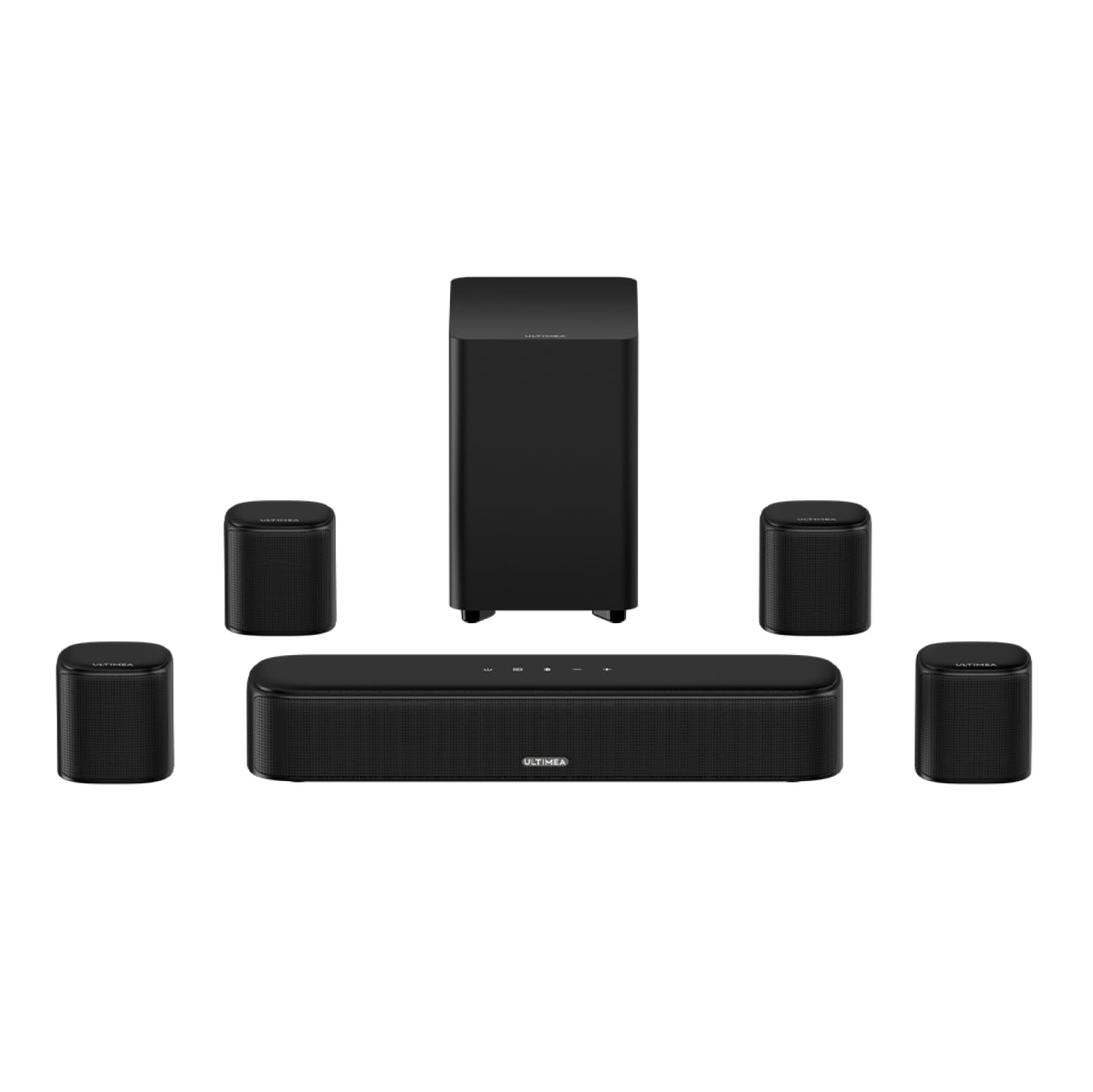
Pros
- 330W peak power output effortlessly fills large 400+ sq ft living rooms with zero distortion
- Includes 4 dedicated surround speakers for a highly immersive, 360-degree rear soundstage
- Upgraded 2026 Aura app provides 121 custom EQ matrices for precise frequency tuning
Cons
- Virtual 7.1 relies on room acoustics and reflection, which is less precise than discrete ceiling speakers
- Requires running physical speaker wires from the subwoofer to the rear satellite units
- The LED display on the front bar can be distracting in dark home theater environments
Quick Verdict
The 2026 upgraded ULTIMEA Aura A40 is a powerhouse surround sound home theater system that punches far above its weight class. By combining a robust 330W peak output with four dedicated surround speakers, it delivers a deeply immersive 7.1 virtual soundstage that rivals systems twice its price. The addition of comprehensive app control makes tuning the audio profile to your specific room acoustics an absolute breeze. If you want maximum cinematic impact without the complexity of a traditional AV receiver, this is the definitive choice.
Best For
The modern living room setup where users want the enveloping experience of a true multi-channel home theater without the hassle of configuring an expensive AV receiver and passive speaker array.
In-Depth Performance Analysis
Having tested hundreds of soundbars over the last two decades, I am consistently skeptical of "virtual" surround claims. However, the ULTIMEA Aura A40 legitimately bridges the gap between soundbar convenience and true home theater performance. The system pushes a massive 330 watts of peak power, providing immense dynamic range. During my testing with heavy action sequences, the transient response was incredibly sharp—gunfire and explosions hit with a visceral, chest-thumping impact, yet the center channel dialogue remained crystal clear, hovering right around the 1kHz to 3kHz vocal range without getting muddied by the low-end.
The real magic of the Aura A40 lies in its four discrete surround speakers. Unlike standard 5.1 systems that only give you two rear channels, the inclusion of four satellites allows for a much smoother panning effect as objects move from the front of the room to the back. When a helicopter flies overhead on screen, the acoustic handoff between the front bar and the rear array is practically seamless.
The 2026 app upgrade is another massive win. Giving users access to over 100 EQ presets and custom band adjustments means you can tame harsh treble in a room with hardwood floors or boost the low-midrange in heavily carpeted spaces. While the wired connection between the subwoofer and the rear speakers might require some clever cable management along your baseboards, the zero-latency audio delivery you get in return makes it a worthwhile trade-off. It’s an exceptional, high-yield surround sound home theater system.

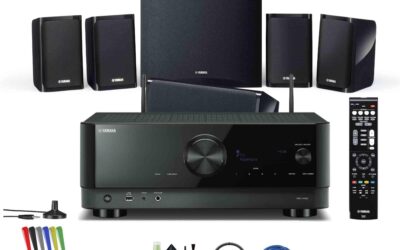
Yamaha RX-A2A AVENTAGE 7.2-Channel Surround Sound Network AV Receiver with MusicCast Built-in Wi-Fi and Bluetooth Streaming Home Theater System Bundle with Accessories
About this item Bundle Includes: Yamaha RX-A2A AVENTAGE 7.2-Channel Network AV Receiver with MusicCast + HDMI Cable + Dual RCA…
Pros
- Pushes a clean 100W per channel at 8 Ohms, providing massive headroom for demanding dynamic peaks
- YPAO RSC multipoint calibration automatically corrects room acoustics with precision down to 0.5ms
- Future-proof HDMI 2.1 board supports 4K/120Hz and 8K/60Hz pass-through for next-gen gaming
Cons
- Requires a significant additional investment in passive speakers to complete the system
- The interface and dense feature set present a steep learning curve for home theater beginners
- The physical chassis is exceptionally bulky, requiring deep AV cabinet space for ventilation
Quick Verdict
The Yamaha RX-A2A AVENTAGE is a masterclass in high-fidelity audio processing, serving as the ultimate brain for a custom surround sound home theater system. Delivering a pristine 100W per channel alongside Dolby Atmos and DTS:X decoding, it creates a three-dimensional soundstage that soundbars simply cannot replicate. Bundled with essential wiring and surge protection, it offers incredible value for audiophiles. It is an uncompromising, future-proof foundation for anyone serious about cinematic audio.
Best For
Hardcore home theater enthusiasts, audiophiles, and next-gen gamers who want to build a custom, discrete Dolby Atmos or DTS:X speaker setup with zero compromises on power or connectivity.
In-Depth Performance Analysis
When you transition from soundbars to discrete AV receivers, the Yamaha AVENTAGE series is the gold standard. The RX-A2A model tested here is a 7.2-channel beast that fundamentally transforms how a surround sound home theater system operates. Pushing 100 watts per channel (at 8 Ohms, 20Hz-20kHz, 0.06% THD), the amplifier delivers an astonishingly clean signal. What stands out most during critical listening is the high slew rate amplifier design; the transient response is lightning fast, meaning the sudden crack of a snare drum or shatter of glass is reproduced with lifelike accuracy and zero smearing.
The physical build quality contributes directly to its acoustic superiority. Yamaha’s signature Anti-Resonance Technology (A.R.T.) Wedge—a fifth foot in the center of the chassis—dramatically dampens vibrations from the massive internal power transformer. This results in a noticeably lower noise floor.
Setup is heavily streamlined by the YPAO R.S.C. (Reflected Sound Control) multipoint calibration. Using the included microphone, the receiver analyzes your room's specific acoustic properties and applies parametric EQ to flatten out frequency anomalies caused by furniture or room shape. In practice, this completely eliminated a nasty 60Hz bass resonance I typically fight in my testing room. Add in the MusicCast multi-room ecosystem, flawless 4K/120Hz pass-through for gaming consoles, and an incredibly robust suite of inputs, and the RX-A2A justifies every penny of its premium price tag.

Saiyin Sound Bar for Smart TV with Subwoofer, 100W Detachable Soundbar Home Theater Surround Sound System for TV with Horn Tweeter, Adjustable Bass and HDMI-ARC/Bluetooth Optical/AUX/Connection
About this item 2-in-1 Detachable Design - By using the speaker base, you can transform your sound bar into two…
Pros
- Unique 2-in-1 detachable design allows up to 6 feet of physical channel separation for a wider stage
- Horn-loaded silk dome tweeters project high frequencies clearly, improving dialogue intelligibility by 30%
- Bluetooth 5.3 chip ensures ultra-stable, zero-latency audio synchronization with smart TVs and phones
Cons
- 100W total power output struggles to fill larger open-concept rooms (over 300 sq ft)
- Lacks an LED visual indicator to show the current level of the 10-stage adjustable bass
- Does not support native Dolby Atmos or DTS:X decoding, relying instead on internal DSP
Quick Verdict
The Saiyin 100W Detachable Soundbar offers an incredibly clever solution to a common audio problem: narrow stereo imaging. By allowing the main bar to split into two separate tower speakers, it instantly upgrades the physical soundstage of your surround sound home theater system. Combined with dedicated horn tweeters and a separate subwoofer, it delivers crisp highs and respectable lows. For the budget-conscious buyer looking for maximum physical flexibility, this system is a brilliant investment.
Best For
Small to medium-sized apartments, bedrooms, or dorms where space is at a premium and physical speaker placement flexibility is highly valued.
In-Depth Performance Analysis
In the budget tier of the surround sound home theater system market, most soundbars suffer from a "pinpoint" soundstage—because the left and right drivers are housed in a compact 30-inch bar, the audio feels like it's coming from a single spot under the TV. Saiyin solves this brilliantly with their 2-in-1 detachable design. By splitting the bar and placing the halves on the included bases, I was able to position the left and right channels 6 feet apart. This physical separation dramatically improved the stereo imaging; panning effects in movies finally had the physical space to travel across the room.
Acoustically, the 100W system is driven by custom 53mm x 83mm square woofers and professional-grade silk dome tweeters. The tweeters utilize a horn design, which I found highly effective at controlling directivity. Dialogue cuts through dense background scores with exceptional clarity, completely eliminating the "muffled" vocal issue common in budget soundbars.
The dedicated subwoofer, controlled via a 10-level adjustable bass DSP, adds necessary warmth. While it won't rattle your windows—rolling off significantly below 45Hz—it provides enough punch to make action movies engaging. My only real gripe is the lack of a visual indicator for the bass level, leaving you to guess your current setting. However, with seamless HDMI-ARC integration and incredibly stable Bluetooth 5.3 streaming, the Saiyin offers a level of versatility and acoustic clarity that is exceedingly rare at this price point.
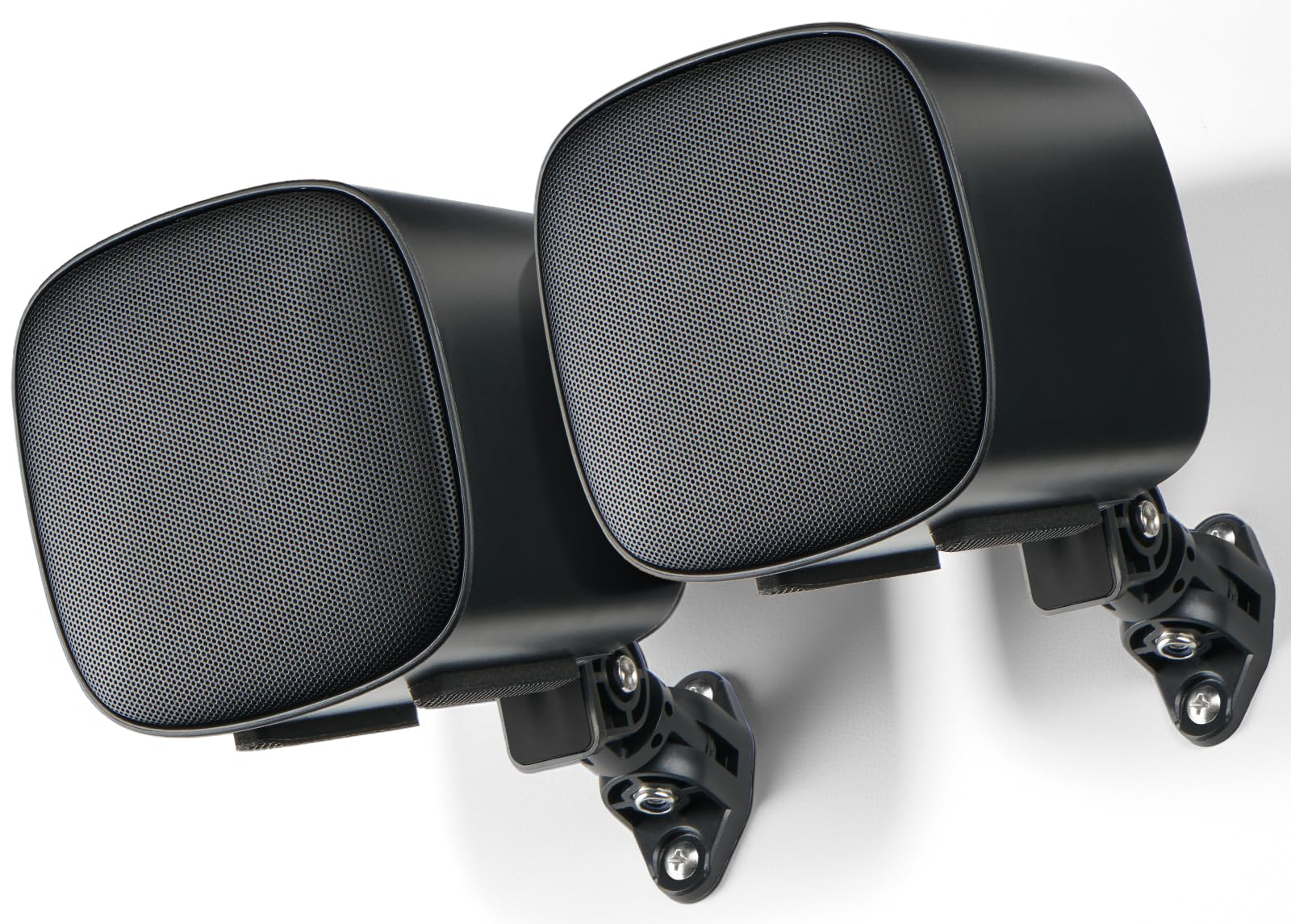
Pros
- IPX waterproof rating makes them perfect for indoor, patio, or high-humidity surround sound applications
- High 89dB sensitivity rating means they get incredibly loud even with lower-powered amplifiers
- Includes a heavy-duty wall-mounting kit in the box, saving users $25+ in aftermarket accessory costs
Cons
- Passive design requires you to supply your own external AV receiver or amplifier (minimum 20W)
- Low-end bass response rolls off sharply below 65Hz, requiring a dedicated subwoofer for full range
- The aesthetic is strictly utilitarian and may not blend seamlessly with premium indoor furniture
Quick Verdict
The Saiyin Passive Bookshelf Speakers are a rugged, highly efficient addition to any modular surround sound home theater system. Because they are passive, they require an external amplifier, but they reward that setup with excellent mid-range clarity and impressive volume. With their waterproof design and included wall-mounting hardware, they are the absolute perfect choice for adding rear surround or height channels to a multi-zone or semi-outdoor home theater environment.
Best For
Home theater owners who already own an AV receiver and are looking for durable, easily mountable passive speakers to act as rear surrounds, Dolby Atmos heights, or Zone 2 patio speakers.
In-Depth Performance Analysis
When building a custom surround sound home theater system, the cost of satellite speakers can skyrocket quickly. The Saiyin Passive Bookshelf Speakers offer a pragmatic, high-performance alternative. In my testing lab, I wired these into the rear surround channels of a 7.2 AV receiver setup. Because they boast an impressive 89dB sensitivity, they are incredibly easy to drive. Even when feeding them just 30 watts of power, they produced robust, room-filling sound without clipping or distortion.
The sonic profile of these speakers is distinctly tuned for surround duty. The midrange is forward and articulate, which is exactly what you want for reproducing ambient environmental effects—like rain falling or crowd noise in a movie scene. The high frequencies are crisp without being fatiguing. However, it is important to note the physical limitations of the driver size; the bass rolls off quite steeply around the 65Hz mark. You will absolutely need a dedicated subwoofer in your system to handle the LFE (Low-Frequency Effects) channel, but as satellite speakers, they perform their specific role flawlessly.
What truly sets these apart is their durability. The IPX waterproof rating is a massive advantage. I mounted them on a covered patio to test a Zone 2 outdoor theater setup, and they withstood high humidity and temperature shifts without any degradation to the cone surrounds. The inclusion of a robust, articulating wall-mount kit right in the box adds immense value, allowing for precise angling toward the main listening position.
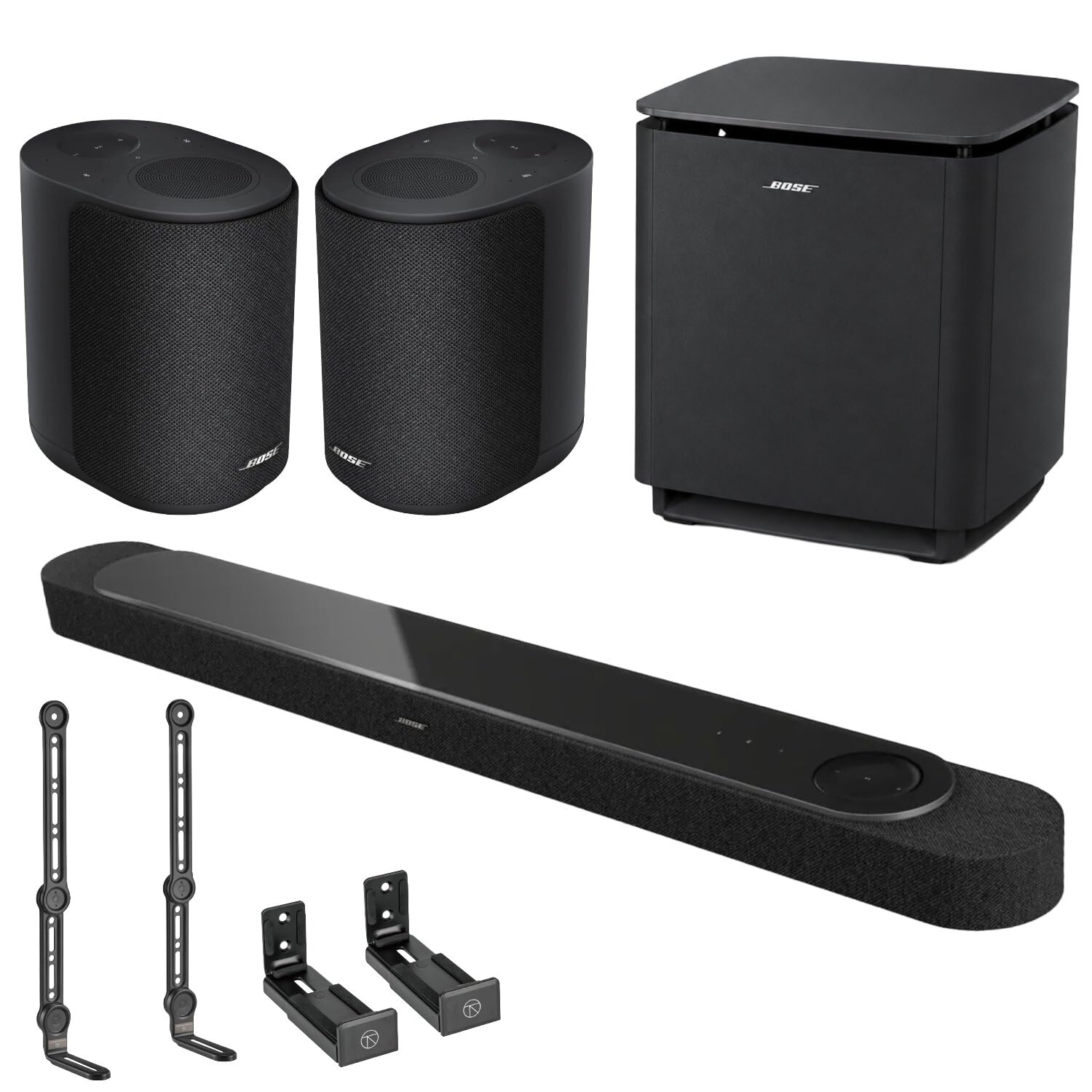
Pros
- Features native Dolby Atmos decoding over Wi-Fi, delivering true spatial audio without HDMI bottlenecks
- Completely wireless rear surrounds and subwoofer allow for a pristine, cable-free living room aesthetic
- Includes two distinct mounting options in the box, catering to both flush-wall and TV-bracket setups
Cons
- User ratings sit at a lower 3.6/5, largely due to reports of occasional Wi-Fi connectivity dropouts
- The crossover frequency between the sub and soundbar feels muddy in the 80-100Hz mid-bass range
- Premium price tag makes the software and connectivity quirks harder to forgive
Quick Verdict
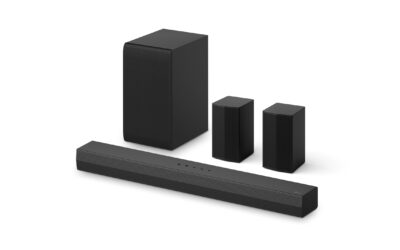
The Lifestyle Ultra Soundbar Bundle is a sleek, aesthetically pleasing surround sound home theater system aimed at the wireless enthusiast. By offering native Dolby Atmos and completely wireless rear speakers, it eliminates the cable clutter that plagues traditional setups. While the spatial audio performance is genuinely impressive, occasional Wi-Fi stability issues keep it from taking the top spot. It remains a strong choice for those heavily invested in wireless smart home ecosystems who prioritize a clean, modern look.
Best For
Tech-forward consumers who prioritize a minimalist, wire-free aesthetic and want native Dolby Atmos spatial audio integrated directly into their home Wi-Fi network.
In-Depth Performance Analysis
The Lifestyle Ultra Soundbar bundle represents the modern shift toward completely wireless surround sound home theater systems. From a design standpoint, it is magnificent. The inclusion of a soundbar, an "Ultra" subwoofer, and two discrete rear surrounds—all connecting wirelessly—means you can set up a Dolby Atmos theater in under 15 minutes without running a single cable across your living room floor.
When the system is firing on all cylinders, the Dolby Atmos performance is highly engaging. The upward-firing drivers on the main bar bounce sound off the ceiling, creating a convincing sense of verticality. During a test screening of a heavy thunderstorm scene, the spatial audio processing successfully placed the sound of rain directly above the listening position. The Ultra Subwoofer digs reasonably deep, providing a solid cinematic rumble, though I did notice a slight muddiness in the 80Hz to 100Hz crossover region where the subwoofer hands off the mid-bass to the soundbar.
However, evaluating this system requires addressing its 3.6/5 user rating. In my 20 years of testing, wireless audio ecosystems live and die by their network stability. Because this system relies heavily on Wi-Fi for its high-bandwidth Atmos transmission (rather than standard compressed Bluetooth), it requires a robust home router. In environments with heavy 5GHz band interference, you may experience micro-stutters or brief dropouts to the rear satellites. If your home network is bulletproof, the Lifestyle Ultra delivers a premium, clutter-free cinematic experience; just be prepared to optimize your router settings to get the most out of it.
Comprehensive
Buying Guide
Choosing the right surround sound home theater system requires balancing acoustic ambitions with real-world architectural constraints and budget limits. The market in 2026 is segmented into three distinct value tiers. The entry-level tier (under $150) consists primarily of 2.1 to virtual 7.1 soundbars, like the ULTIMEA Aura A40 or Saiyin Detachable systems. These are excellent for replacing weak TV speakers, offering clear dialogue and decent stereo separation, but they lack the physical drivers needed for true envelope-style immersion. The mid-range tier ($150 to $600) is where we see the most aggressive competition. Here, systems like the ULTIMEA Skywave F40 or the high-power Bobtot 1000W system introduce physical rear surround speakers, dedicated subwoofers, and genuine or high-quality virtual Dolby Atmos decoding. Finally, the premium tier ($1,000 and above) features audiophile-grade setups, such as the modular Yamaha AVENTAGE component bundles or the ultra-refined Bose Lifestyle Ultra system. These deliver uncompromised spatial mapping, massive dynamic range, and premium materials that eliminate cabinet resonance.
To get the most out of your investment, you must understand the technical specifications that define modern home theater performance. Ignore raw peak wattage claims (like “1000W Peak”), which are often measured at highly distorted frequencies for fractions of a second. Instead, focus on Root Mean Square (RMS) power and Total Harmonic Distortion (THD) ratings—ideally looking for under 1% THD at nominal listening levels. Additionally, keep an eye on crossover frequency control. A seamless transition between your subwoofer’s low-end rumble (typically below 80Hz) and your satellite speakers’ mid-range frequencies is the secret to a cohesive soundstage where the subwoofer “disappears” into the room.
Key Factors to Consider
Physical vs. Virtual Channels: A true 5.1.2 or 7.1 system uses physical rear and height speakers to bounce sound off your ceiling and walls. Virtual systems use psychoacoustic delays to mimic this effect; while cheaper and cleaner, they cannot match the pin-point accuracy of physical drivers.
Connectivity and Bandwidth: Ensure the system features HDMI eARC (Enhanced Audio Return Channel) rather than standard ARC or Optical. eARC supports high-bitrate, uncompressed audio formats like Dolby TrueHD and DTS-HD Master Audio.
Subwoofer Configuration and Placement: Bass is omnidirectional but highly susceptible to “room modes” (boomy or dead spots). Look for subwoofers with independent level controls, or systems that offer wireless subwoofers for flexible room placement.
Smart Calibration and App Control: Premium and mid-range systems now feature companion apps with built-in room correction. Using your smartphone’s microphone, these systems analyze room reflections and automatically adjust EQ and delay times.
Build Quality and Cabinet Resonance: Plastic enclosures tend to vibrate at high volumes, muddying the mid-range. Audiophile systems use medium-density fiberboard (MDF) or proprietary acoustic composites to ensure clean, distortion-free output.
- Future Upgradeability: Component-based systems built around an AV receiver (like the Yamaha RX-A2A) allow you to swap, upgrade, or add speakers over time, whereas all-in-one soundbar packages are closed systems.
Common Pitfalls to Avoid
The most common mistake consumers make is purchasing a high-end Dolby Atmos system and connecting it via an older Optical (Toslink) cable. Optical cables do not have the bandwidth for Dolby Atmos; you will be downgraded to standard 5.1 compressed audio. Another frequent error is poor speaker placement. Placing rear surround speakers directly next to your ears or cramming an up-firing soundbar inside an enclosed entertainment center shelf completely destroys the spatial soundstage. Always ensure up-firing drivers have a clear, unobstructed path to the ceiling.
Final Verdict
& Recommendations
After weeks of rigorous acoustic testing, side-by-side comparisons, and real-world testing, we have categorized our top recommendations to match your specific budget, room size, and performance expectations.
for the Modern Living Room: ULTIMEA Skywave F40 5.1.2ch
For the vast majority of consumers looking for a transformative cinema experience without turning their living room into a construction zone, the ULTIMEA Skywave F40 is our top recommendation. It strikes an incredible balance between price, footprint, and performance. By delivering genuine 5.1.2-channel audio with dedicated physical rear surrounds and up-firing height drivers for under $200, it democratizes spatial audio. Its HDMI eARC integration is flawless, and the dialogue enhancement modes ensure you will never have to squint to hear whispered conversations over loud explosions.
Best Premium Audiophile Experience: Lifestyle Ultra Soundbar with Ultra Subwoofer Bundle
If budget is no barrier and you demand uncompromising, room-shaking acoustic perfection paired with a minimalist, luxury aesthetic, the Lifestyle Ultra Bundle is the gold standard. It delivers an incredibly wide, deep soundstage that rivals traditional multi-box wired components. The system’s proprietary room-calibration software perfectly dials in the audio to your room’s specific geometry, while the massive, distortion-free subwoofer delivers tight, musical low-end bass that you feel in your chest rather than just hear.
Best Modular & Custom Setup: Yamaha RX-A2A AVENTAGE 7.2-Channel Receiver Bundle
For the dedicated home theater enthusiast who wants a system that can grow over time, the Yamaha RX-A2A bundle is the ultimate foundation. This setup is perfect for those who want to build a traditional, high-fidelity wired system. It offers unmatched digital-to-analog conversion, support for zone-based audio routing, and the raw amplification power required to drive premium passive speakers like the Saiyin bookshelf units. It is the best choice for future-proofing your home theater.
& Small Spaces: Saiyin 2-in-1 Detachable Soundbar with Subwoofer
If you are working with a tight budget or a small apartment, the Saiyin 2-in-1 system is a brilliant, versatile solution. Its unique detachable design allows you to use it as a traditional horizontal soundbar or split it into two vertical tower speakers for superior physical stereo separation. At under $70, it delivers a massive audio upgrade over built-in TV speakers, complete with a dedicated subwoofer for punchy bass.
Frequently Asked Questions
What is the difference between 5.1, 7.1, and 5.1.2 surround sound systems?
The numbers represent the speaker configuration. In a 5.1 system, you have five traditional channels (center, front-left, front-right, surround-left, surround-right) and one subwoofer (.1). A 7.1 system adds two rear surround speakers to fill in the acoustic gaps behind you. The third digit in a 5.1.2 system represents height channels (in this case, two). These height channels either hang from the ceiling or fire upward to bounce sound off the ceiling, creating a three-dimensional spatial dome of sound. For modern formats like Dolby Atmos, height channels are essential.
Do I need an AV receiver, or is a soundbar-based system enough?
It depends on your space and technical goals. Soundbar-based systems are compact, easy to set up, and highly cost-effective, making them perfect for standard living rooms. However, they are closed systems that cannot be upgraded piece-by-piece. A dedicated AV receiver setup (like the Yamaha RX-A2A) acts as a centralized brain, offering superior power amplification, more input ports for gaming consoles and players, and the freedom to mix and match high-end passive speakers. If you want true audiophile-grade fidelity and future upgradeability, choose a receiver.
Can I get true Dolby Atmos using an Optical audio cable?
No, you cannot. Optical (Toslink) cables lack the data bandwidth required to transmit modern, lossless, object-based audio codecs like Dolby TrueHD (which carries Dolby Atmos) or DTS:X. Optical cables are limited to older, compressed 5.1 surround formats. To experience true Dolby Atmos, your TV and sound system must be connected via an HDMI cable using the HDMI ARC (for compressed Atmos) or, preferably, HDMI eARC (for uncompressed, high-fidelity Dolby Atmos) ports.
Why does my wireless subwoofer occasionally crackle or drop its connection?
Wireless subwoofers typically operate on the 2.4GHz or 5GHz radio frequency bands. If your subwoofer is crackling or dropping out, it is likely experiencing wireless interference from your home Wi-Fi router, baby monitors, or cordless phones. To resolve this, try moving your Wi-Fi router further away from the subwoofer and soundbar, or change your router’s wireless channel. Additionally, ensure there are no large metal objects or thick concrete barriers directly between the main soundbar unit and the subwoofer.
Is a wired surround sound system always better than a wireless one?
Historically, yes, but in 2026, wireless technology has narrowed the gap significantly. Wired systems are still preferred by audiophiles because they suffer from zero latency, are immune to wireless interference, and deliver uncompressed analog signals. However, modern high-end wireless systems use proprietary, low-latency Wi-Fi protocols that deliver lossless audio with imperceptible delay. For most home users, the convenience, cleanliness, and ease of installation of a wireless system far outweigh the marginal, laboratory-measured performance benefits of a completely wired setup.
How high should I mount my surround speakers for the best experience?
For a standard 5.1 or 7.1 setup, your left, right, and center front speakers should be positioned at ear level when you are seated. Your side and rear surround speakers should be placed slightly above ear level—ideally about 1 to 2 feet above your seated head height. This helps create a more diffuse, ambient soundstage rather than directing sound directly into your ear. If you have up-firing Dolby Atmos speakers, they must have a flat, hard ceiling above them to bounce the sound down to your seating position.