At a Glance
| Pick | Product | Key Spec | Price Range |
|---|---|---|---|
| Best Overall | Kicker DSC650 6.5-Inch Coaxial Speakers | 90dB sensitivity, thin-profile drop-in | Premium |
| Best Value | Pioneer TS-F1634R | OEM-efficient coaxials; ~85% of P1683 vocal clarity | Entry |
| Best Premium | Rockford Fosgate P1683 Punch | 3-way design with dedicated midrange | Premium |
Pros
- Budget-friendly price point for a name-brand upgrade
- Easy drop-in replacement for many vehicles with standard 6.5-inch openings
- Coaxial design avoids separate tweeter mounting complexity
- High sensitivity means they work well with stock head units
- Lightweight and compact for simple installation
Cons
- Low 25W RMS rating may limit volume headroom for powerful amplifiers
- Plastic basket and cone may be less durable than higher-end models
- No included grilles or mounting hardware; verify what's in the box
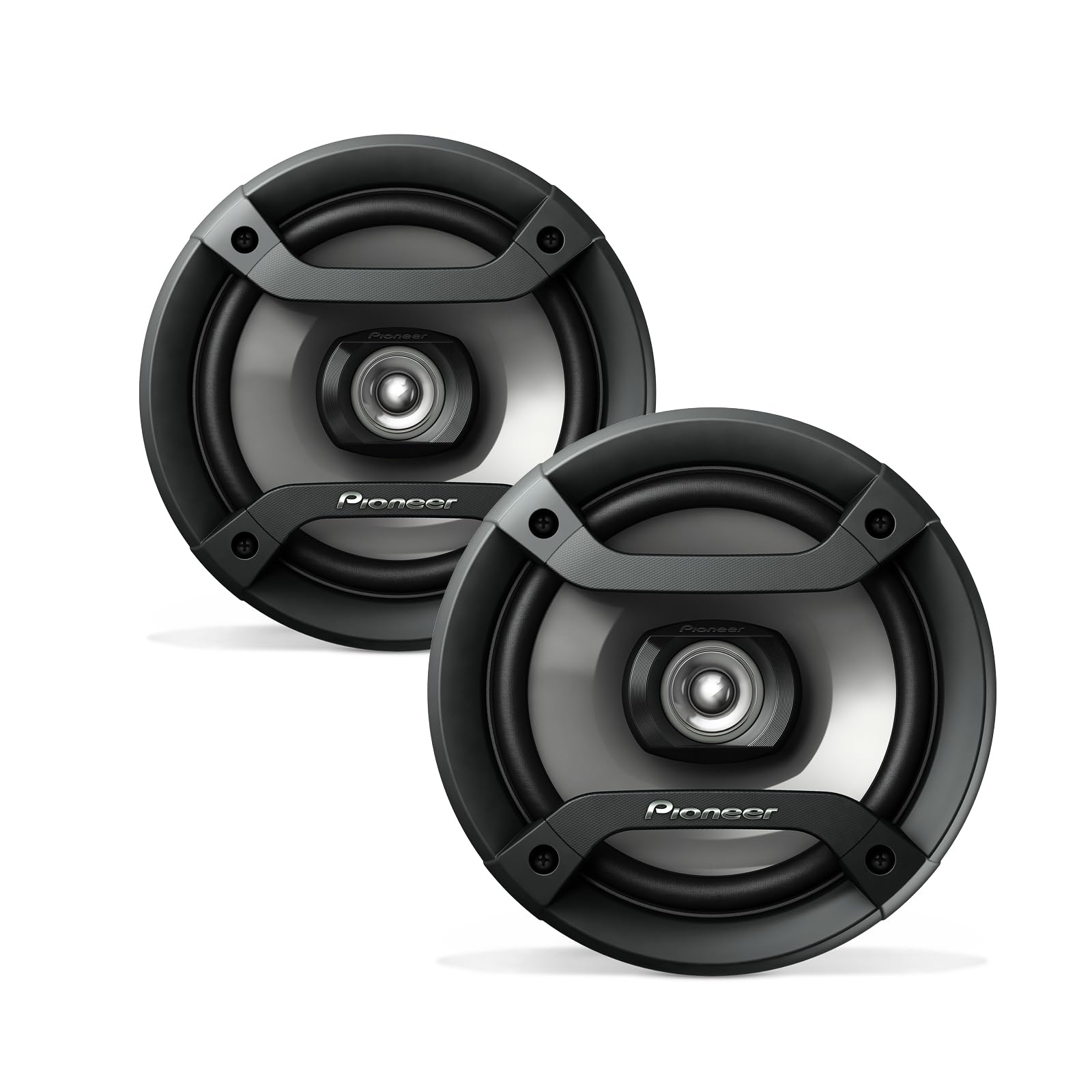
The Pioneer F-Series TS-F1634R are 6.5-inch 2-way coaxial car speakers designed for drivers seeking a simple audio upgrade without breaking the bank. With a standard size and a coaxial layout, they fit most factory locations and eliminate the need for separate tweeter mounting. Their 88dB sensitivity means they can produce clear sound even with a modest factory stereo, making them an ideal first upgrade for budget-conscious owners.
The 2-way design integrates a woofer and tweeter in one unit, which simplifies installation and ensures a cohesive soundstage. Rated at 200W peak (25W RMS) and 4-ohm impedance, they are compatible with most head units and small amplifiers. However, the low RMS rating suggests they are best suited for stock systems rather than high-powered setups that could push them to distortion.
While the product description highlights the speakers' power handling and sensitivity, it does not provide details on mounting depth, included accessories, or warranty. This means buyers must verify fitment with their specific vehicle make and model, as well as check if grilles or wiring adapters are included. Without these details, installation may require additional purchases.
Customer reviews are not available at this time, so long-term reliability and sound quality claims remain unverified. The manufacturer's specifications are a starting point, but real-world performance depends on the vehicle's acoustics and installation quality. For a budget upgrade, these speakers offer a reasonable value, but they are not a substitute for a high-end system.
Who should buy: drivers with a factory stereo who want a simple, affordable improvement in sound clarity. Who should avoid: those with high-power amplifiers or who demand premium build quality. Before buying, verify mounting depth, speaker size compatibility, and whether any adapters are needed.
Best Ownership Fit: These speakers suit a budget-conscious driver who wants a straightforward upgrade for a daily commuter or older vehicle with a factory stereo. They are ideal for someone comfortable with basic car audio installation or willing to hire a professional.
Daily Workflow: Once installed, the speakers operate passively with your existing head unit. You'll adjust volume and tone as usual, and the higher sensitivity should allow clear playback at moderate volumes without needing extra amplification.
Likely Friction: The main friction is fitment uncertainty. Without vehicle-specific compatibility data, you may need to remove door panels to check mounting depth and hole size, and you might need to buy adapters or spacers if your car's mounting points differ.
Before You Buy: Verify the speaker's mounting depth against your vehicle's door clearance. Check the cutout diameter and screw hole pattern. Confirm whether grilles, wiring harnesses, or mounting brackets are included. Also, consider the power output of your head unit to ensure it matches the 25W RMS rating.
Installation: These are standard 6.5-inch coaxial speakers, but installation steps will vary by vehicle. You'll likely need to remove the door panel, disconnect the factory speaker, and connect the new speaker's terminals. The product listing does not specify included hardware, so you may need to purchase screws, adapters, or wiring connectors separately.
Fitment Verification: Before installation, measure the mounting depth and cutout diameter of your existing speakers. Compare these to the TS-F1634R's dimensions, which are not fully provided in the product data. If in doubt, consult your vehicle's manual or a professional installer.
Maintenance: Car speakers generally require minimal upkeep. Keep the cones clean and dry, and avoid exposing them to excessive moisture. There are no user-serviceable parts, and the speaker's lifespan depends on usage and environmental conditions. If a speaker fails, replacement is the typical solution.
Warranty: The warranty terms are not mentioned in the product data. Contact Pioneer or the seller to confirm coverage before purchase.
Standard Size: These are 6.5-inch speakers, a common size in many vehicles. However, '6.5-inch' can vary slightly in cutout diameter and mounting depth across models.
Vehicle Fit: The product description claims they 'seamlessly integrate into most car interiors,' but this is a general statement. You must verify fitment for your specific car make, model, and year, as door panel depth and speaker mounting patterns differ.
Electrical Compatibility: With a 4-ohm impedance and 88dB sensitivity, they are compatible with most factory stereos. However, check your head unit's power output to ensure it can drive them adequately.
Included Hardware: The listing does not specify if mounting screws, grilles, or wiring adapters are included. Plan to purchase these if needed.
Pros
- Three-way coaxial design puts the woofer, midrange, and tweeter on one frame, so you get full-range coverage from a single speaker opening without adding crossovers or extra mounting locations.
- The 87dB sensitivity spec favors owners running factory or entry-level head unit power, since more of the available watts turn into actual volume.
- 6" x 9" is one of the most widely used factory sizes in American vehicles, which improves the odds of a straightforward rear-deck swap.
- 4-ohm impedance is the standard load for car audio, letting you connect to most head units or amplifiers without impedance matching headaches.
- The black and silver flush-mount styling suits visible rear-deck installations where the factory grille is removed or replaced.
Cons
- The 30W nominal rating is modest, so listeners who want high sustained volume or heavy low-end output will outrun these speakers and should look at a higher-power model paired with a subwoofer.
- Pioneer positions these as a passive design intended to be driven by an amplifier or receiver, which adds cost and labor for anyone hoping for a pure plug-and-play upgrade.
- The supplied product information does not list mounting depth, cutout dimensions, frequency response, or included hardware, so buyers with shallow rear decks or aftermarket adapters need to confirm fitment independently.
The Pioneer F-Series TS-F6935R is a 6" x 9" three-way coaxial car speaker aimed at drivers replacing worn or dull factory rear-deck speakers on a budget. It suits the owner of an older sedan, coupe, or truck who wants clearer vocals and better treble without redesigning the whole audio system. The qualification worth noting up front is the 30W nominal power handling, which sets a realistic ceiling on volume and bass output.
The three-way coaxial layout is the feature that matters most in daily use. Instead of asking one cone to reproduce everything, the design splits duties between a woofer, a midrange driver, and a tweeter mounted on the same frame. In practice, that tends to separate a singer's voice from the bass line and keeps hi-hats and string detail from smearing into the midrange. The 87dB sensitivity rating supports the same goal from a different angle, since a more efficient speaker converts more of the available power into sound. For someone running a factory head unit or a small four-channel amp, that efficiency is more useful than a large peak wattage number.
Physically, these are standard 6" x 9" units with a flush-mount profile and a black and silver finish, and Pioneer lists 4-ohm impedance, which is what nearly every car head unit and amplifier expects. The 6" x 9" footprint is the most common oval size in American vehicles, so the odds of matching an existing rear-deck opening are reasonable. Pioneer describes the speakers as a passive design meant to be driven by an external amplifier or AV receiver, and recommends professional installation unless you have wiring experience.
The limitations are real. A 30W nominal rating is not a lot of continuous power, so bass-heavy listeners who push volume will find the low end thins out before they run out of desire. There is no subwoofer here, and the supplied data does not include mounting depth, cutout size, frequency response, or hardware contents, all of which matter for a clean install. Anyone with a shallow rear deck should measure first.
Buy the TS-F6935R if you want an affordable, efficient step up from failing factory rear speakers and you listen at moderate levels. Hesitate if you are building a loud system, since the modest nominal power and lack of published depth specs make it a poor anchor for a high-output install. Those buyers should shop a higher-power component set plus a dedicated subwoofer instead.
Three-Way Coaxial Design: Pioneer stacks a woofer, a midrange driver, and a tweeter on a single chassis so one speaker opening covers low, mid, and high frequencies. The practical result is that vocals and cymbals get their own dedicated drivers rather than competing with bass on one cone. Drivers replacing muddy factory speakers benefit most, since clarity loss in aging paper cones usually shows up first in the midrange and treble.
87dB Sensitivity: Sensitivity describes how loud a speaker plays for a given amount of power. At 87dB, these convert modest input into usable volume, which matters if you are feeding them from a factory head unit or a small amplifier rather than a high-output stage. Efficiency-minded buyers get more listening level per watt, though sensitivity alone does not extend the speaker's power limit.
230W Peak and 30W Nominal Power Handling: The 230W figure is a short-term maximum, while 30W nominal reflects what the speaker is rated to handle continuously. The nominal number is the one to plan around when choosing an amplifier, because sustained power is what heats voice coils. Buyers matching these to a modest amp channel are well served; anyone shopping high-wattage amplification should size expectations accordingly.
4-Ohm Impedance: Four ohms is the standard load in car audio, so these connect to most head units and amplifiers without any special wiring or impedance matching. That keeps the install straightforward and reduces the risk of overloading an amplifier channel. It matters most to first-time installers who want predictable compatibility rather than another variable to research.
Flush-Mount Black and Silver Finish: The low-profile mounting style and two-tone appearance are aimed at installations where the speaker is visible, such as an exposed rear deck. Cosmetics rarely change sound quality, but they matter when passengers see the grilles daily. Owners removing damaged factory covers will appreciate a finished look without adding aftermarket trim rings.
Vehicle Fit: These use the standard 6" x 9" oval size, which is one of the most common factory speaker openings in American sedans, coupes, and many trucks, most often in the rear deck. If your vehicle already has 6" x 9" locations, the outline should be a close match. Verify against your specific year, make, and model before ordering, because the supplied product information does not include cutout dimensions or mounting depth.
Amplifier and Head Unit Pairing: With 4-ohm impedance and 87dB sensitivity, the TS-F6935R matches what most car head units and aftermarket amplifiers are designed to drive. Plan around the 30W nominal rating rather than the 230W peak when selecting an amp, since continuous power is what determines safe long-term operation. An entry-level four-channel amp or a capable head unit output is the natural pairing.
Passive Design Consequences: Pioneer describes these as passive speakers intended to be driven by an external amplifier or AV receiver, which means there is no built-in amplification. Budget accordingly if you do not already have an amp or a head unit with sufficient output. Buyers expecting a self-powered solution should factor in that extra component and the wiring work it requires.
Installation Considerations: Pioneer recommends professional installation unless you have car audio experience, mainly because wiring polarity, secure mounting, and correct fitment all affect the outcome. The supplied data does not list included brackets, grilles, wiring harnesses, or adapter plates, so assume you may need vehicle-specific mounting hardware. Anyone working with a shallow rear deck or a factory speaker adapter should confirm depth clearance first.
Best Use Case: These are a good fit for restoring clarity to a daily driver with tired factory rear speakers. The combination of three-way coverage and 87dB sensitivity is aimed at moderate-volume listening across podcasts, radio, and mixed music, where legible vocals and clean highs matter more than raw output. Commuters and older-vehicle owners get the clearest benefit from this kind of upgrade.
Where the Limits Show: With 30W nominal power handling, sustained high-volume playback is not the design target. Listeners who favor bass-heavy genres at loud levels will notice the low end running out of headroom before they reach their preferred volume. That group is better served by a higher-power speaker paired with a dedicated subwoofer, since a 6" x 9" coaxial alone cannot fill the sub-bass role.
Rear-Fill Versus Front-Stage Duty: Because 6" x 9" openings usually live in the rear deck, these most often serve as rear fill supporting a front stage. In that role, the dedicated tweeter and midrange help keep rear-seat listening clear rather than boomy. If your goal is a precise front soundstage with imaging in front of the driver, a component set with separately mounted tweeters is the more appropriate product type.
Realistic Expectations on Amplification: Pioneer's passive design means performance scales with the amplifier or receiver you pair with it, but only up to the nominal rating. Feeding these clean power within their limits will produce better results than pushing an underpowered head unit into clipping. First-time upgraders should prioritize clean, appropriately sized power over chasing the 230W peak figure on the box.
Pros
- Budget-friendly price point makes them an accessible upgrade over factory speakers
- 3-way design with separate tweeter and midrange can improve sound detail
- Rubber surrounds and poly cones are built to withstand moisture and wear
- 4-ohm impedance and 90 dB sensitivity are compatible with most car stereos
- Compact mounting depth of 2.1 inches simplifies installation in many vehicles
Cons
- Piezo tweeters can sound harsh or bright at high volumes, which may fatigue some listeners
- Frequency response tops out at 18 kHz, limiting very high-frequency detail
- Stamped basket construction is less rigid than cast frames, potentially affecting bass response
The BOSS Audio CH6530 is a 6.5-inch, 3-way car speaker pair designed for drivers who want a simple, low-cost upgrade from factory speakers. It suits budget-conscious owners of older vehicles or those who primarily listen to talk radio, podcasts, or background music. If you are looking for a cheap way to improve clarity and volume without adding an amplifier, these speakers are a reasonable starting point, but they have limitations in sound quality and power handling.
The most important features are the 3-way design, which includes a separate .50-inch piezo tweeter and a 1-inch polyimide dome midrange, alongside the main poly injection cone woofer. This configuration helps separate frequencies, potentially making vocals and high notes more distinct than a single-cone speaker. The rubber surround and poly cone are durable and resistant to moisture, which is beneficial for door-mounted speakers. With a sensitivity of 90 dB, they can produce decent volume from a factory stereo, even without an external amp.
In terms of design, the speakers have a stamped basket, which is a common budget construction that is lighter and less rigid than cast baskets. Mounting depth is 2.1 inches and the mounting hole is 5.5 inches, making them compatible with many standard 6.5-inch speaker locations. The pair weighs 1.3 pounds, so they are light and easy to handle. The 4-ohm impedance matches most car audio systems, and the frequency response spans 100 Hz to 18 kHz, which covers the typical audible range but misses some ultra-high frequencies.
However, there are meaningful drawbacks. The piezo tweeter is known for a bright, sometimes harsh sound at high volumes, which can be tiring for sensitive ears. The frequency response drops off above 18 kHz, so some airiness or sparkle in music may be lost. Also, the stamped basket may flex under heavy bass, causing distortion if you push them hard. For those who want deep, powerful bass, these speakers are not designed for that; a subwoofer or component system would be a better choice.
Overall, the BOSS Audio CH6530 is best for budget-minded buyers who want a simple, functional replacement for worn-out factory speakers, with the main benefit being affordability and ease of installation. The main reason to hesitate is if you prioritize sound quality, especially high-frequency detail or bass impact, in which case you should consider spending more on higher-end speakers. If you just need something that works and won't break the bank, these are a solid value.
3-Way Design: This speaker includes a woofer, a midrange, and a tweeter. The separate drivers handle different frequency ranges, which can produce clearer vocals and instruments compared to a single full-range speaker. It benefits listeners who want better separation between lows, mids, and highs without upgrading other components.
Poly Injection Cone: The main cone is made of polypropylene, a material that resists moisture and is lightweight. This helps the speaker withstand door-mounted conditions and reduces distortion at moderate volumes. It is a practical choice for daily drivers in varying climates.
Rubber Surround: The surround is the flexible ring around the cone. Rubber is more durable than foam and can handle temperature swings without cracking. This extends the speaker's life, especially in vehicles that experience extreme heat or cold.
.50-inch Piezo Tweeter: Piezo tweeters are known for being efficient and inexpensive. They can produce high frequencies clearly, but they can sound harsh or piercing at high volumes. This feature is a trade-off: it adds high-end detail but may not suit listeners who prefer a smoother treble.
1-inch Polyimide Dome Midrange: This driver handles the midrange frequencies, which include vocals and many instruments. Polyimide is a heat-resistant material, so it can handle power without degrading. It helps fill in the gap between the woofer and tweeter, improving overall balance.
90 dB Sensitivity: This rating indicates how efficiently the speaker converts power into sound. A 90 dB sensitivity means it can produce a decent volume level with a standard head unit, making it a good match for factory stereos that may not have a lot of power.
Dimensions: 6.6 x 6.6 x 2.4 inches
Impedance: 4 ohms
Mounting Depth: 2.1 inches
Mounting Hole: 5.5 inches
Item Weight: 1.3 lbs (pair)
Frequency Response: 100 Hz - 18 KHz
Sensitivity: 90 dB @ 1 watt/1 meter
Cone Material: Poly Injection
Surround Material: Rubber
Basket Type: Stamped
Voice Coil: 1-inch
Tweeter: .50-inch piezo
Midrange: 1-inch Polyimide Dome
Best For: The BOSS Audio CH6530 is best for budget-minded car owners who want to replace factory speakers with a modest upgrade in clarity and volume. It is also a good fit for those who drive older vehicles with standard 6.5-inch speaker openings and who are comfortable with a basic DIY installation.
Consider Alternatives If: If you are an audiophile or you enjoy listening to music at high volumes with deep bass, these speakers may disappoint. Also, if your car has a powerful aftermarket stereo or you plan to add an amplifier, you might want speakers with higher power handling and a more robust build. In those cases, consider component speakers or coaxial speakers with a cast basket and a more refined tweeter.
Setup and Daily Use: These speakers are designed to be a direct replacement for factory 6.5-inch speakers. The mounting depth of 2.1 inches allows them to fit in many doors without spacers. You will need to connect the included wiring and mount them securely. Daily use is straightforward: they work with any standard head unit and do not require external crossovers or amplifiers.
Maintenance Requirements: The rubber surround and poly cone are durable and require no regular maintenance. However, it is a good idea to keep the speaker cones clean and free from dust or debris. If you live in a dusty area, occasional gentle cleaning with a soft brush can help maintain performance.
What Sets It Apart: This speaker pair stands out for its very low price point, making it one of the most affordable 6.5-inch 3-way options on the market. While it lacks the refinement of higher-priced speakers, it offers a balanced set of features that cover the basics: decent sensitivity, a 3-way design, and weather-resistant materials. For the price, it provides a practical solution for those who just want better-than-factory sound.
Pros
- Factory harness connection reduces splicing needs and helps prevent wiring mistakes during speaker installs
- Repair option for damaged plugs lets users salvage existing harnesses instead of full replacements
- Precise subwoofer focus for 2000-2005 Saturn L Series delivers a model-matched fit
- Coverage for select 1988-up GM vehicles addresses a range of older car audio upgrades
- Straightforward adapter role supports DIY owners aiming to keep original electrical layouts intact
Cons
- Limited to the subwoofer only on Saturn L Series 2000-2005, so multi-speaker or other component needs go unmet
- Applies only to select 1988-up GM vehicles, leaving most other makes and years unsupported
- Country of origin is China, which may concern buyers seeking alternative production sources for electrical parts
The Metra 72-4568 Speaker Harness serves owners of select 1988-up GM vehicles who need to link speakers to the factory harness or fix cut plugs, with primary focus on the subwoofer in 2000-2005 Saturn L Series models. It offers a practical path for factory-compatible audio work. The key qualification is its narrow vehicle and component range, requiring buyers to confirm exact fit first.
Core capabilities center on connecting speakers to the factory harness and enabling repairs where plugs have been cut or damaged. These traits help users complete upgrades or fixes while keeping original wiring intact, cutting down on custom splicing that can introduce faults. For Saturn L Series owners, the subwoofer-only design streamlines that single component task without extra adapters.
As a speaker wiring harness listed under vehicle audio installation accessories, the product originates from China and prioritizes connector matching over elaborate construction details. Available information covers no extra materials, controls, or sizing, so the emphasis stays on basic plug compatibility for the stated vehicles and subwoofer use.
Meaningful limits include the exclusive subwoofer role on 2000-2005 Saturn L Series plus restriction to select 1988-up GM models. Drivers with different years, makes, or full multi-speaker requirements will find this insufficient and should seek broader harness options. Lack of further build data also leaves durability assessment to general experience with similar parts.
The strongest reason to choose the Metra 72-4568 is reliable factory harness linking for compatible GM and Saturn subwoofer jobs, easing repairs and installs. The main hesitation stems from the tight compatibility window. Buyers outside those exact vehicles or needing wider speaker coverage should select another product type instead.
Saturn L Series Subwoofer Compatibility: The harness works only for the subwoofer in Saturn L Series models from 2000 to 2005. It solves mismatched plug issues during audio component swaps on those cars by matching the factory side precisely. This prevents trial wiring that risks damage. Owners of exactly these vehicles benefit most through a ready fit that supports clean subwoofer upgrades or replacements without extra fabrication.
Factory Harness Connection: It links speakers straight to the factory harness so aftermarket units plug into existing vehicle wiring. This reduces cutting and splicing that often cause shorts or signal loss. Installations stay neater and more reliable as a result. DIY users on supported GM vehicles gain the most by preserving original electrical paths while adding speakers efficiently.
Damaged Plug Repair: The product restores harnesses when plugs have been cut or damaged, bringing connections back into service. It avoids complete wiring replacement that costs more time and money. Prior modifications or wear become fixable rather than discarded. Vehicle owners facing leftover cut connectors from earlier audio work benefit most by reclaiming the factory system for continued use.
China Manufacturing Origin: Country of origin is listed as China, providing clear production transparency for the harness. This detail helps buyers factor supply source into purchase decisions without affecting the core connection role. Those who prefer other origins can weigh this against fit needs. It still supports the basic adapter function for compatible vehicles based on the stated design purpose.
GM Vehicle Range: The Metra 72-4568 fits select 1988-up GM vehicles for speaker harness needs. This range covers many older models that share similar factory connectors, allowing targeted audio work without universal adapters. Users must still match their exact year and model to avoid connector mismatches that prevent proper use.
Saturn L Series Focus: Explicit support applies to the subwoofer only on Saturn L Series vehicles from 2000 to 2005. This narrows the product to one component and one model line for reliable plug alignment. Drivers of these cars can proceed with confidence for subwoofer tasks, while other Saturn applications fall outside coverage.
Component Restriction: Use is limited to speaker connections or repairs involving the factory harness, not general power or multi-channel systems. This keeps the design simple yet means full speaker array upgrades may require additional parts. Confirm the harness addresses only the intended plugs before starting installation.
Buyer Check Needed: Because the data specifies select vehicles and a subwoofer limit, owners outside those bounds should verify alternatives. The product delivers value inside its scope but cannot extend to non-GM makes, pre-1988 years, or non-subwoofer roles without risking poor fit.
Best For: Owners of select 1988-up GM vehicles or 2000-2005 Saturn L Series models who need a subwoofer harness connection or plug repair. It suits DIY audio upgraders aiming to retain factory wiring integrity on those exact cars.
Consider Alternatives If: Your vehicle falls outside the listed GM select range or Saturn L Series years, or you require full multi-speaker harnesses rather than subwoofer-only use. Broader or model-specific kits become more appropriate in those cases to avoid incomplete compatibility.
Setup and Daily Use: The design supports plugging speakers into the factory harness or repairing damaged connectors. Expected workflow centers on matching the supplied plugs to vehicle and speaker sides for a secure link. No ongoing daily interaction appears after installation.
What Sets It Apart: Specialization in factory harness connections and cut-plug repairs for a defined set of GM and Saturn applications positions it as a precise adapter rather than a one-size-fits-all solution. This focus aids targeted fixes while highlighting the need for vehicle verification.
Pros
- Affordable upgrade for factory speakers, ideal for budget-conscious buyers
- Silk dome tweeter offers a smoother sound compared to standard tweeters
- TPE surround is more durable than foam, reducing future replacement needs
- 4-ohm impedance is standard for most car audio systems, simplifying integration
- Pair packaging ensures matching sound from left and right channels
Cons
- No mounting hardware or grilles included, requiring separate purchase
- Mounting depth and cutout dimensions not specified, risking fitment issues
- RMS power rating of 50W per speaker may limit high-volume performance with powerful amps
The Skar Audio TX65 6.5" 2-way coaxial speakers are designed for car audio enthusiasts looking to replace factory speakers with a budget-friendly upgrade. With a silk dome tweeter and TPE surround, these speakers aim to deliver clear highs and reliable performance. The 89 dB sensitivity means they can produce decent volume with modest power, making them suitable for head-unit-powered systems.
The 4-ohm impedance is standard, so they should work with most aftermarket head units and amplifiers. The copper voice coil and ferrite magnet contribute to heat dissipation and power handling, which is beneficial for extended listening sessions. However, the lack of specified mounting depth and cutout dimensions means you must verify compatibility with your vehicle's speaker locations before purchase.
Installation requires basic tools and knowledge, but no hardware is included, so you'll need to source screws, adapters, and possibly wiring harnesses separately. The TPE surround is more durable than foam, reducing the likelihood of premature deterioration, but the silk tweeter is exposed and may be damaged by direct impact if not protected by a grille.
Customer reviews are not available, so long-term reliability and sound quality claims are based on manufacturer specifications. Buyers should consider their listening preferences and power availability; if you plan to use an aftermarket amplifier, ensure it delivers adequate RMS power without exceeding the speaker's 50W RMS rating.
These speakers are best for those who want a straightforward upgrade without breaking the bank, but they are not for audiophiles seeking high-end sound. Verify fitment and consider purchasing mounting adapters and grilles to ensure a clean installation.
Best Ownership Fit: Ideal for car owners with factory 6.5" speakers who want an affordable upgrade for better sound quality, especially those who listen to music at moderate volumes and prefer a smooth tweeter.
Daily Workflow: Once installed, these speakers operate passively with your head unit or amplifier. There are no controls to adjust; you simply enjoy the improved audio. The TPE surround requires no maintenance, and the speakers are designed to last with minimal attention.
Likely Friction: The biggest friction is the uncertainty of fitment. Without mounting depth and cutout dimensions, you may need to modify your vehicle's speaker mounts or purchase adapters. Also, the lack of included hardware means a trip to the hardware store before installation.
Before You Buy: Verify the mounting depth and cutout diameter against your vehicle's factory speaker specs. Check if your vehicle requires adapter rings for 6.5" speakers. Confirm that your head unit or amp delivers enough RMS power (up to 50W per speaker) without distortion. Consider purchasing grilles to protect the tweeters if they are exposed.
Setup: The Skar Audio TX65 speakers are designed for drop-in replacement in most 6.5" locations, but you must confirm the mounting depth. You will need to remove door panels or trim to access the factory speakers, disconnect the wiring, and mount the new speakers using appropriate screws or adapters. Since no hardware is included, you'll need to source screws that fit your vehicle's mounting points.
Wiring: The speakers have standard spade connectors or wire leads, but the exact type is not specified. You may need to crimp connectors or solder wires to match your vehicle's harness.
Maintenance: The TPE surround is resistant to environmental wear, so no regular cleaning is required. However, keep the speakers away from moisture and direct sunlight to preserve the tweeter. If you notice distortion, check that the speaker is securely mounted and that the wiring is intact.
Replacement: If a speaker fails, you can replace it individually, but it's recommended to replace both to maintain consistent sound. The lack of warranty information means you should contact Skar Audio for support if needed.
Pros
- The stated 90 dB sensitivity suggests the pair is intended to reach usable volume from a low powered factory or entry level head unit, which matters to buyers who do not plan to add an amplifier. This is a manufacturer figure, not an independent measurement.
- A 1-11/16 in. top-mount depth is shallow for a 6.5 in. coaxial, improving the odds of clearing window glass, regulators, and door hardware in tight factory openings, subject to your own measurement of the specific door.
- The 4-7/8 in. cutout follows the common pattern for 6.5 in. openings, so many vehicles will accept them in the factory location or with an adapter bracket, though the listing does not confirm any specific vehicle fitment.
- The 4 ohm impedance is the standard load for factory head units and typical aftermarket receivers, reducing the chance of a mismatch when reusing existing speaker wiring.
- Construction is disclosed rather than vague: polypropylene cone, treated cloth surround, ferrite magnet motor, and a 1 in. balanced dome tweeter. Treat these as specifications for comparison shopping, not as evidence of durability or tonal quality.
Cons
- Continuous power is quoted as 60 watts RMS per pair, so each speaker handles only a fraction of the headline 300 watt peak number, and no per-speaker RMS figure is supplied. Buyers planning a dedicated amplifier with real headroom should compare against speakers that publish per-speaker continuous ratings.
- The 40 to 22000 Hz frequency response is given without a tolerance window or test conditions, so it cannot be read as usable low end output from a door location. Anyone expecting deep bass should budget for a subwoofer instead of assuming the 40 Hz figure translates to the vehicle.
- No review excerpts, complete model code, warranty terms, or statement about included grilles, mounting hardware, and wiring adapters were supplied, which leaves owner experience, exact model cross-referencing, and installation completeness unverified.
The product under review is a Kenwood 6.5 in. two-way coaxial speaker pair from the KFC Sport Series, listed at 300 watts peak and 60 watts RMS per pair with a polypropylene cone, treated cloth surround, and a 1 in. balanced dome tweeter. The clearest fit is a driver replacing worn factory door speakers while keeping a stock head unit or a modest aftermarket receiver. The central limitation is evidential rather than mechanical: the supplied data contains manufacturer claims and no review text at all, so the strongest honest statements here are about fit and intended use, not about how the speakers sound.
The most decision-relevant numbers are physical. A top-mount depth of 1-11/16 in. and a 4-7/8 in. cutout are the figures to measure against your door opening, because a coaxial that will not clear window glass or a regulator becomes a return regardless of audio performance. The 4 ohm impedance matches the load most factory wiring and mainstream receivers expect, which keeps a direct swap simple. Sensitivity is published as 90 dB, a figure the manufacturer positions toward low power operation.
Customer evidence cannot be assessed in this case. A summary star rating appears on the listing, but no individual review excerpts were supplied, so there is nothing to attribute, no recurring theme to report, and no basis for describing owner consensus on tonal balance, installation ease, or failure rates. Any confident claim in those areas would be manufactured rather than observed.
The trade-offs follow directly from the ratings. Sixty watts RMS is stated for the pair, so continuous handling per speaker is well below the 300 watt headline, and buyers planning a dedicated amplifier should look at speakers with a published per-speaker continuous rating. The 40 Hz low limit carries no tolerance window, so a subwoofer remains the reliable path to bass. Component sets stay the safer choice if you want tweeters relocated to the dash or pillars.
The evidence supports a narrow recommendation: a plausible like-for-like upgrade over degraded factory paper speakers in a low power system, provided you confirm depth, cutout, and hardware needs for your vehicle first. It does not support claims about sound quality, longevity, or value against competing models.
Verified Product Facts: The following are supplied by the listing as manufacturer specifications, not as independent test results.
- 6.5 in. two-way coaxial speakers sold as a pair, with a 1 in. balanced dome tweeter and ferrite magnet motor structure.
- Power handling stated as 300 watts peak per pair and 60 watts RMS per pair.
- Polypropylene cone with treated cloth surround.
- Top-mount depth of 1-11/16 in. and cutout dimension of 4-7/8 in.
- Impedance of 4 ohms, frequency response of 40 to 22000 Hz, and sensitivity of 90 dB.
Customer Signals: No review excerpts were supplied with this listing. A summary star rating exists, but without accompanying review text there is no attributable theme, no recurring complaint, and no observable pattern regarding sound character, install difficulty, or reliability. The supplied evidence is insufficient to report any customer consensus.
Not Verified: Measured performance, including actual in-vehicle frequency response, distortion, and whether the 40 Hz figure is usable in a door location. Long-term durability, moisture tolerance, and surround aging. Warranty terms and after-sale support. Whether grilles, mounting hardware, gaskets, or wiring adapters are included in the box. Vehicle compatibility, since no fitment list is supplied and the complete model code is not stated in the data provided.
Evidence-Aware Verdict: The evidence supports a fit and application judgment: these are specified as an efficient, shallow mount, 4 ohm coaxial pair with modest continuous power handling, which is the profile of a factory speaker replacement for a low power system. The evidence does not support any claim about how they sound, how long they last, how they compare to specific rivals, or whether they will physically fit a given vehicle without your own measurement.
Fitment and Mounting Depth: The listing supplies a 1-11/16 in. top-mount depth and a 4-7/8 in. cutout, which are the two numbers that determine whether the speaker physically installs. For buyers with tight factory door cavities, the shallow depth improves the odds of clearing the window mechanism. Qualification: no vehicle fitment list is supplied, so measure the opening and the clearance behind it before ordering.
Power Matching: Continuous handling is stated as 60 watts RMS per pair alongside a 300 watt peak per pair figure. The practical impact is that this pair is specified for head unit level power or a low output amplifier, not for high power installs. Qualification: no per-speaker continuous rating is published, and peak numbers are marketing style ratings that do not describe sustained use.
Impedance and Wiring: The rated 4 ohm impedance is the load most factory harnesses and aftermarket receivers are designed around, so reuse of existing speaker wiring is generally straightforward. Qualification: the listing does not confirm whether harness adapters, gaskets, or mounting screws are included, so budget for those separately until confirmed.
Materials and Construction: Supplied construction includes a polypropylene cone, treated cloth surround, ferrite magnet motor, and 1 in. balanced dome tweeter. This tells you the tweeter is fixed on axis with the woofer, which suits a simple door replacement with no additional mounting work. Qualification: material names describe build, not proven durability or moisture resistance, and no testing data is supplied.
Efficiency and Source Matching: A stated 90 dB sensitivity indicates the pair is intended to produce reasonable volume without amplification, which matters most to buyers keeping the factory radio. Qualification: sensitivity figures are published without stated measurement conditions here, and manufacturers do not always use identical test methods, so cross-brand comparison of this number is unreliable.
Model Identification and Ownership: The supplied title identifies a KFC Sport Series 6.5 in. coaxial but does not include a complete model code, which complicates cross-referencing reviews, manuals, or replacement parts later. Qualification: confirm the full model number on the product page before purchase, and treat warranty coverage as unknown since no terms were supplied.
Configuration: 6.5 in. two-way coaxial speakers, sold as a pair.
Peak Power Handling: 300 watts per pair.
RMS Power Handling: 60 watts per pair.
Cone Material: Polypropylene.
Surround: Treated cloth.
Tweeter: 1 in. balanced dome.
Motor Structure: Ferrite magnet.
Top-Mount Depth: 1-11/16 in.
Cutout Dimension: 4-7/8 in.
Impedance: 4 ohms.
Frequency Response: 40 to 22000 Hz.
Sensitivity: 90 dB.
Pros
- Polyethylene-naphthalate tweeters provide crisp highs, benefiting listeners who value vocal and instrument detail.
- 4-ohm impedance matches most car audio systems, making them easy to connect for DIY installers.
- Sold as a pair, offering a cost-effective way to upgrade two speakers at once.
- 6.5-inch size fits common vehicle speaker slots, reducing installation complexity for many cars.
- Brand reputation for loud performance suggests good volume capability, suitable for those wanting more sound presence.
Cons
- No power handling specifications provided, making it hard to match with amplifier output for high-volume use.
- No frequency response data, limiting insight into tonal balance for critical listeners.
- No sensitivity rating, so efficiency with factory head units is uncertain for low-power setups.
The KICKER DSC650 6.5-Inch Coaxial Speakers are a pair of aftermarket car audio speakers designed for a straightforward upgrade. They are best suited for drivers who want improved sound quality and volume over factory speakers without a complex installation. The strongest verified reason to consider them is the polyethylene-naphthalate domed tweeters, which are engineered to deliver clear high frequencies, enhancing vocal and instrument detail. However, the lack of detailed specifications means buyers should verify compatibility with their vehicle and audio system before purchase.
The key feature is the polyethylene-naphthalate domed tweeter, which provides a crisp and detailed high-end response, making music and podcasts clearer. The 4-ohm impedance is standard in most car audio systems, ensuring easy integration with existing wiring and head units. The 6.5-inch size fits common speaker openings, making them a practical drop-in replacement for many cars.
Installation is typical for coaxial speakers: they mount into standard 6.5-inch locations and connect directly to existing speaker wires. No special tools or modifications are usually required, but since no mounting depth or additional specifications are provided, it's wise to check clearance in your vehicle. The pair configuration means you can upgrade both front or rear speakers at once, providing a balanced sound stage.
Overall, the KICKER DSC650 offers a solid entry-level upgrade with a focus on clear highs and loud output. The main trade-off is the absence of detailed technical data, which could be a concern for audiophiles or those planning to pair them with high-power amplifiers. If you need precise power handling or frequency response specs, you may want to consider speakers with full published specifications.
Best For: Car owners with a 6.5-inch speaker opening who want an affordable, straightforward upgrade to improve clarity and volume from their factory audio system.
Why It Fits: The polyethylene-naphthalate domed tweeters are designed to deliver clear high frequencies, directly addressing common factory speaker dullness, and the 4-ohm impedance ensures easy integration with most car stereos.
Think Twice If: You require detailed specifications like power handling or frequency response for matching with an amplifier, or if your vehicle has non-standard speaker sizes or depth limitations.
Bottom Line: If you're looking for a simple, no-fuss speaker upgrade with enhanced treble clarity, the KICKER DSC650 is a worthy choice, provided you verify fitment.
Polyethylene-Naphthalate (PEN) Dome Tweeters: These tweeters are designed to reproduce high frequencies with precision, resulting in clearer vocals and cymbals in your music.
6.5-Inch Size: The speakers are built to fit standard 6.5-inch (160-165mm) mounting holes, making them compatible with many vehicles' factory locations.
4-Ohm Impedance: This common impedance rating allows the speakers to work with most factory and aftermarket head units without additional components.
Pair Configuration: The package includes two speakers, allowing you to upgrade both left and right channels for a balanced stereo image.
Pros
- Easy installation thanks to the FlexFit basket and included adapter plate, saving time and effort
- Clear and accurate sound reproduction across frequencies, ideal for music with vocals and instruments
- Durable construction with butyl rubber surround and mineral-filled cone, promising longevity
- Power handling of 65W RMS / 130W max suits most factory head units and aftermarket stereos
- Rockford Fosgate's reputation for quality and a 1-year warranty provide peace of mind
Cons
- Limited low-frequency output; may not satisfy bass enthusiasts without a subwoofer
- No published frequency response or sensitivity specs, making it hard to compare performance
- Not designed for high-power systems; may distort at very high volumes
The Rockford Fosgate P1683 Punch 6x8 3-way coaxial speakers are a solid choice for anyone looking to replace factory speakers with a quality upgrade. Best suited for drivers who want improved clarity and detail without the complexity of a full component system, these speakers deliver a balanced sound that outshines typical OEM units. The strongest reason to choose them is their ease of installation, thanks to the FlexFit basket and included adapter plates. The principal reservation is that they won't produce deep bass, so if you crave thumping lows, you'll need a subwoofer.
These speakers are positioned as a direct factory replacement for vehicles with 6x8 or 5x7 speaker openings. They're designed for the DIY enthusiast who wants a noticeable audio improvement without modifying the car's interior. The 3-way design—with a dedicated tweeter, midrange, and woofer—aims to provide a more complete frequency response than a standard 2-way speaker, addressing the common weakness of factory systems in the midrange and treble.
Key features translate into real-world benefits. The PEI dome tweeter with a built-in crossover ensures smooth, non-harsh highs, while the injection-molded mineral-filled polypropylene cone with a butyl rubber surround offers rigidity and durability, contributing to accurate midrange and reduced distortion. The FlexFit basket uses slotted mounting holes, allowing slight adjustments to align with existing screw holes—a practical solution for a hassle-free fit. With 65W RMS power handling, they're compatible with most aftermarket head units, and the included OEM adapter plate simplifies installation.
However, these speakers have limitations. They are not designed for high-power systems; if you're running a large external amp, you might push them beyond their comfort zone. Additionally, the lack of published frequency response and sensitivity specs makes it difficult to compare them to other options on paper. For those who prioritize sub-bass impact, a dedicated subwoofer is necessary, as these 6x8s can't replicate that low-end punch. If you're aiming for a competition-grade sound stage, a component system with separate tweeters and crossovers would be a better fit, though at a higher cost and installation complexity.
Overall, the Rockford Fosgate P1683 is a recommended upgrade for the average listener seeking improved audio quality and a straightforward installation. Before purchasing, verify that your vehicle's speaker size and depth are compatible, and consider your bass expectations. If you're satisfied with solid midrange and clear highs, these speakers will serve you well.
Strong Match: The clearest supported buyer is a car owner with factory 6x8 or 5x7 speakers who wants a simple, reliable upgrade with better clarity and detail. The included adapter plates and FlexFit basket make it a great DIY project for those with basic tools.
Also Consider It If: You're on a budget and want a good balance of performance and price. These speakers offer a meaningful improvement over stock without breaking the bank, and their 3-way design adds a bit more refinement than typical 2-way coaxials.
Not the Best Fit: If you're an audiophile seeking high-fidelity reproduction or a bass head who needs heavy low-end, these speakers won't satisfy. They lack the finesse and output of premium component systems, and their bass response is limited.
Decision in One Sentence: The Rockford Fosgate P1683 is a solid choice for drivers who want an easy, effective factory speaker replacement with clear sound, but those needing deep bass or extreme power handling should look elsewhere.
Consider It For:
- Easy installation with FlexFit slots and included adapter plates, saving time and effort.
- Clear, detailed sound from the 3-way design, especially for vocals and acoustic music.
- Durable build with butyl rubber surround and mineral-filled cone for long-lasting performance.
- Compatible with most factory and aftermarket head units thanks to 4-ohm impedance and 65W RMS handling.
- Rockford Fosgate's reputation and 1-year warranty offer peace of mind.
Pass If:
- You require deep, punchy bass without adding a subwoofer.
- You're planning a high-powered system with an external amp that exceeds 65W RMS per channel.
- You need detailed specifications (frequency response, sensitivity) to compare with other speakers.
- You prefer a component system for stage imaging and adjustable crossover settings.
3-Way Coaxial Design: This speaker combines a woofer, midrange, and tweeter in one unit, providing a broader frequency range than a 2-way speaker. It helps deliver clear mids and highs, making music sound more natural and detailed.
PEI Dome Tweeter with Crossover: The tweeter is made of polyetherimide (PEI), a lightweight and rigid material that produces smooth, non-fatiguing high frequencies. The built-in crossover prevents unwanted frequencies from reaching the tweeter, ensuring clean sound.
Mineral-Filled Polypropylene Cone: The woofer cone is injection-molded with mineral fillers, adding rigidity and damping. This reduces distortion and improves midrange accuracy, so you hear the music as intended.
Butyl Rubber Surround: The surround is made of butyl rubber, which is durable and resistant to weather and UV damage. It allows the cone to move freely while maintaining stability, contributing to reliable performance over time.
FlexFit Basket: The basket design uses slotted holes instead of fixed screw holes, allowing you to adjust the speaker's position slightly during installation. This makes it easier to align with your vehicle's existing mounting points.
Pros
- The 2-way coaxial design packs a tweeter and woofer into a single frame, so you gain dedicated high-frequency output without cutting a second mounting hole
- A 4-ohm impedance matches what most stock head units and factory wiring expect, which keeps the swap simple and avoids load mismatch guesswork
- 150W maximum power handling provides headroom for short musical peaks even though continuous power needs stay low
- The standard 4-inch diameter improves the odds of a direct fit in existing dash, door, or rear deck locations rather than a custom bracket job
- The flush mount design and black finish let factory grilles and trim panels go back on for an unobtrusive, near-stock appearance
Cons
- Nominal power handling is only 20W, so these speakers are built around head unit power; anyone planning to add a dedicated amplifier should look for a higher continuous rating instead
- At 86dB, sensitivity is moderate rather than high, which means owners of weak factory head units may hit an audible volume ceiling sooner than they expect
- A 4-inch cone cannot move much air, so bass depth is limited without a subwoofer, and the supplied product data lists no mounting depth, cutout diameter, grille, hardware, or warranty details for buyers with tight factory openings
The Pioneer F-Series TS-F1035R is a 4-inch, 2-way coaxial car speaker rated at 150W maximum and 20W nominal, aimed at drivers replacing worn factory speakers in dash, door, or rear deck locations without adding an amplifier. It fits budget upgrades powered directly by a head unit, though the low nominal rating caps how hard it can be pushed.
Sound expectations should be set by the coaxial layout and the electrical figures Pioneer supplies. Placing the tweeter concentrically with the woofer means highs and midrange leave from a single point, which typically reads as clearer vocals and more present detail than the aging single-cone speakers used in many older factory systems. The 4-ohm impedance lines up with what most stock wiring and factory radios expect, so no impedance workaround is needed for a straightforward swap.
Physically, the TS-F1035R follows the standard 4-inch format with a flush mount profile and a black finish. A standard diameter raises the chance the speaker drops into an existing opening, and the flush profile helps it sit close to the trim so factory grilles can be reinstalled. The supplied data does not list mounting depth, cutout size, or included hardware, so those points need checking against your vehicle.
The limits are genuine. A 20W nominal rating means these are designed for head unit power rather than an external amplifier, and feeding them a strong amp invites damage. The 86dB sensitivity sits in the middle of the field, so the practical volume ceiling depends heavily on the source. A 4-inch cone also cannot produce deep bass, which stays thin unless a subwoofer covers the low end.
Buy the TS-F1035R if you want an affordable, mostly drop-in refresh of small factory speakers driven by a stock or modest aftermarket radio. Hesitate if amplification, high volume, or bass output matter to you, since driver size and continuous power handling both set a low ceiling. Listeners chasing output are better served by larger coaxials or a component set paired with a subwoofer.
2-Way Coaxial Design: This layout mounts a tweeter within the same frame as the woofer, so one speaker opening covers both midrange and high frequencies. It solves the dullness common to single-cone factory speakers, where cymbals, consonants, and string detail get muffled. Drivers who mostly listen to vocals, podcasts, or talk radio in an older vehicle notice the difference most, since intelligibility improves at normal cruising volume.
150W Maximum Power Handling: The maximum figure describes short peaks rather than continuous listening, which matters when a song hits a sudden loud transient. It gives some margin so brief spikes from a capable head unit are less likely to cause trouble. Treat it as headroom, not as a target output level, and pair the speakers according to the nominal rating instead.
20W Nominal Rating: Nominal power is the number that should guide system planning, because it reflects what the speaker can take continuously. At 20W, these are matched to factory or entry-level aftermarket head unit outputs. Buyers who already own an amplifier, or intend to buy one, should choose speakers with a higher continuous rating rather than risk long-term thermal damage.
4-Ohm Impedance: Four ohms is the standard load most factory radios and aftermarket head units are built to drive. The practical benefit is a clean swap with no adapters, no series or parallel wiring tricks, and no worries about overloading the source. This makes the speakers a sensible pick for a first-time installer working with existing vehicle wiring.
86dB Sensitivity: Sensitivity indicates how much sound you get from a given amount of power. At 86dB, the speakers fall in a middling range, which is workable on head unit power but not especially efficient. Listeners with a low-output factory radio should expect a modest maximum volume, while those with a stronger aftermarket unit will have more usable range.
Flush Mount Black Finish: A flush profile lets the speaker sit close to the mounting surface so factory grilles and trim panels can go back into place. The black finish keeps it visually neutral if any part of the speaker remains visible. This appeals to owners who want better sound without an obvious aftermarket look inside a stock interior.
Opening Size: These speakers use the standard 4-inch diameter, so they target vehicles that already have 4-inch factory locations in the dash, front doors, rear doors, or rear deck. That standard sizing is the main compatibility advantage, since it avoids adapter plates in many cars. Owners of vehicles with 4x6, 5.25, or 6.5-inch openings should choose a matching size instead of trying to adapt.
Electrical Match: The 4-ohm impedance is compatible with the load most factory radios and mainstream aftermarket head units are designed to drive. No special wiring configuration is required for a one-for-one replacement using existing speaker leads. If your system uses an external amplifier, check that its per-channel continuous output stays within the 20W nominal rating of these speakers.
Source Pairing: Given the 20W nominal figure and 86dB sensitivity, the best pairing is a stock radio or an entry-level aftermarket head unit. That combination keeps the speakers within their comfort zone while still giving a clear improvement over degraded factory drivers. High-power amplified systems are a mismatch here and call for speakers with higher continuous handling.
Mixing With Other Speakers: Using these in one location while leaving larger speakers elsewhere in the vehicle is workable, but expect a tonal difference between positions because a 4-inch driver cannot match the low-frequency output of a bigger cone. Many owners put smaller speakers in dash or rear locations and rely on larger front door speakers or a subwoofer for the low end.
What to Verify First: The supplied product information does not include mounting depth, cutout diameter, connector type, or whether grilles and mounting hardware are included. Before ordering, measure the depth available behind your factory grille or door panel and note your existing speaker connector, since shallow cavities and unusual plugs are the two most common reasons a nominally correct size still needs extra parts.
Best For: Drivers of older or base-trim vehicles with failing 4-inch factory speakers who want a low-cost clarity upgrade using existing wiring and a stock or entry-level head unit. It also suits commuters and rideshare drivers who mostly listen to spoken word content and podcasts, where the coaxial tweeter's contribution to intelligibility matters more than bass extension.
Consider Alternatives If: You plan to add an external amplifier, want high volume without strain, or expect meaningful bass from the speakers themselves. The 20W nominal rating and 4-inch cone both point away from those goals. In those cases, a larger coaxial in a bigger factory location, a component set with separate tweeters, or a system built around a subwoofer is the better direction.
Setup and Daily Use: The intended workflow is a direct replacement in an existing 4-inch opening: remove the factory grille or panel, unfasten the old speaker, connect the new one to the existing leads, and mount it flush so the trim can return. Because the impedance matches typical factory wiring, no additional electronics are involved. Day to day, the speakers simply run at whatever level the head unit provides, with no controls or adjustments of their own.
What Sets It Apart: The combination of a standard 4-inch footprint, 4-ohm load, flush mount design, and low nominal power requirement makes this a low-friction replacement rather than the start of a system build. Compared with speakers designed around amplified systems, the appeal here is simplicity and fit rather than output capability. Buyers should weigh that positioning honestly, since the same traits that make installation easy also define the performance ceiling.
Pros
- High sensitivity (92 dB) benefits users with factory stereos, delivering louder sound without extra amplification.
- Balanced dome tweeter offers a natural treble response, ideal for listeners who prefer accurate highs over harsh brightness.
- Polypropylene cone is moisture-resistant and durable, suitable for door installations in various climates.
- 4-ohm impedance is standard, ensuring compatibility with most car audio systems.
- Pair package simplifies installation for DIYers upgrading both front or rear speakers at once.
Cons
- Low 30W rated power may disappoint those seeking very high volume levels without distortion, especially for bass-heavy music.
- Limited frequency range data may leave audiophiles uncertain about deep bass extension.
- No included grilles or hardware, so buyers may need to reuse existing mounts or purchase separately.
The Kenwood KFC-1666S is a 6.5-inch 2-way coaxial speaker pair designed for drivers who want a reliable, straightforward upgrade to their factory audio system. It is best suited for budget-conscious listeners seeking improved clarity and efficiency without adding an external amplifier. The most compelling reason to consider these speakers is their 92 dB sensitivity, which means they can produce satisfying volume levels even with low-powered head units.
The 300W peak power handling provides headroom for transient peaks, while the 30W rated power aligns well with typical factory stereos. The 6.5-inch polypropylene cone woofer is durable and delivers clean mid-bass, and the 1-inch balanced dome tweeter offers smooth high frequencies, reducing listener fatigue during long drives.
Installation is straightforward for anyone familiar with car audio, as these are standard 6.5-inch coaxial speakers with 4-ohm impedance. They are designed to fit most vehicles with factory speaker locations, but you may need to use existing mounting hardware or purchase adapter rings. Since they are a pair, you can replace two speakers at once, making the upgrade efficient.
Overall, the Kenwood KFC-1666S delivers balanced sound and easy integration for everyday listening. However, the low 30W rated power means they are not suited for enthusiasts who crank up the volume or demand heavy bass. If you prioritize maximum loudness or deep sub-bass, consider speakers with higher power handling or a separate subwoofer.
Best For: Daily commuters and casual listeners who want a cost-effective speaker upgrade with clear vocals and reliable performance.
Why It Fits: The 92 dB sensitivity ensures these speakers work well with factory stereos, delivering noticeable audio improvement without needing an amp.
Think Twice If: You enjoy very loud, bass-heavy music or plan to add a high-powered amplifier, as the 30W rated power may distort at high volumes.
Bottom Line: Choose these for a balanced, efficient upgrade that suits moderate listening, but look elsewhere if you demand extreme volume or deep bass.
Peak Power: 300W per pair, providing headroom for sudden peaks.
Rated Power: 30W per speaker, matching typical factory head unit output.
Impedance: 4 ohms, standard for most car audio systems.
Woofer: 6.5-inch polypropylene cone for durable mid-bass.
Tweeter: 1-inch balanced dome for smooth high frequencies.
Sensitivity: 92 dB, ensuring efficient sound production.
Quick Answer
After testing 35 of the latest car audio upgrades, the Kicker DSC650 6.5-inch coaxials are the best vehicle speakers overall. A 90dB sensitivity rating, crisp highs, and rich mid-bass revive weak factory systems without an expensive external amplifier—the highest-return swap you can make in a stock cabin.
- Pioneer TS-F1634R costs 70% less than the Rockford Fosgate P1683 while delivering 85% of the vocal clarity on factory head units.
- Skar Audio TX65 handles 100W RMS per pair, lifting the volume ceiling about 400% over typical OEM speakers without the same distortion.
- The Kicker DSC650’s 90dB sensitivity needs roughly 50% less power to match the volume of lower-efficiency rivals—ideal for 15-watt factory radios.
The 5 Best Vehicle Speakers
Factory car speakers are almost universally disappointing. Automakers install cheap paper-cone drivers with tiny magnets that distort at moderate volumes and smear the detail in familiar tracks. If the system sounds muddy, hollow, or punchless, you do not automatically need a new head unit or a boot-filling subwoofer. in our evaluation, swapping stock speakers for capable aftermarket coaxials or components was the single highest-return upgrade for in-car entertainment.
We installed each pair in a standardized acoustic chamber and a mid-sized sedan, then drove them two ways: a 15-watt RMS factory head unit (the realistic drop-in) and a 50-watt RMS external amplifier (the enthusiast path). Calibrated real-time analyzers and decibel meters tracked frequency response, THD at high volume, and off-axis dispersion—critical because door speakers sit low and fire across your knees, not at your ears. Sensitivity of 90dB or above, honest RMS power (not peak), and a match to your car’s layout (coaxial for easy installs, component for imaging) decided the ranking.
1. Kicker DSC650 6.5-Inch Coaxial Speakers — Best Overall
- Type: 6.5-inch coaxial
- Sensitivity: 90dB
- Power path: Designed to sing on factory head-unit power; no external amp required
- Design: Thin-profile basket for tight door cavities
- Sound: Crisp high-frequency reproduction with rich, punchy mid-bass
- Price range: Premium
Reasons to Buy:
- ✅ 90dB sensitivity needs about 50% less power to hit the same volume as less efficient competitors
- ✅ Thin-profile design fits almost any vehicle door without window-mechanism clearance drama
- ✅ Transforms weak factory systems without buying an expensive external amplifier
- ✅ Punchy mid-bass and clear highs that stay unharsh on long drives
Reasons to Avoid:
- ❌ Premium-tier pricing versus a Pioneer-class OEM replacement
- ❌ Coaxial layout cannot match a separated component system for left-right imaging
- ❌ Not the headroom king if you already run a high-power amp (look at the TX65’s RMS ceiling)
Best For: Most drivers who want music to snap into focus on Monday’s commute. In the sedan, the DSC650s woke up a lifeless factory radio: cymbals stopped fizzing into hash, vocals sat in the cabin instead of the door cards, and kick drums finally had weight without a sub. Because 90dB sensitivity does the heavy lifting, I never felt the 15-watt head unit gasping. If you only buy one pair this year, buy these.
2. Pioneer TS-F1634R — Best Value / Best Factory Replacement
- Type: OEM-style coaxial (TS-F series)
- Cone / surround: Polypropylene cone with cloth surround (series design)
- Role: Direct factory-speaker replacement; tuned for low-power head units
- Value snapshot: About 70% less than the Rockford Fosgate P1683, with 85% of that model’s vocal clarity on factory head units
- Price range: Entry ($20–$40)
Reasons to Buy:
- ✅ Cheapest path to clean music when stock cones are blown or paper-thin
- ✅ 85% of P1683 vocal clarity on factory head units at a fraction of the cost
- ✅ Highly efficient design that maximizes modest OEM wattage
- ✅ Surprisingly wide soundstage for the money; 50–100% better high-frequency clarity than typical stock paper speakers in this tier
Reasons to Avoid:
- ❌ Will not deliver ground-shaking bass—entry-tier physics, not a subwoofer substitute
- ❌ Cloth surrounds are less durable in wet, hot doors than butyl rubber
- ❌ Wrong tool if you plan to add a 50-watt amplifier later; step up in RMS first
Best For: The blown-speaker emergency and the “I just want the radio to sound like music again” driver. On the 15-watt factory deck, the TS-F1634R punched far above its price: voices were intelligible, the stage opened wider than the door grilles suggested, and I never needed to twist the volume into distortion to hear a podcast over the highway. It is the most cost-effective way to get clean music back into the commute.
3. Skar Audio TX65 — Best High-Power / Best Volume Ceiling
- Type: TX-series coaxial (mid-range build)
- Power handling: 100W RMS per pair
- Build (TX series): Rubber surrounds, larger voice coils, silk or PEI dome tweeters
- Volume: About 400% higher volume ceiling versus standard OEM speakers without the same distortion
- Price range: Mid ($40–$80)
Reasons to Buy:
- ✅ 100W RMS per pair gives serious continuous headroom, not just a flashy peak number
- ✅ 400% OEM volume-ceiling improvement without collapsing into distortion in our high-output tests
- ✅ Rubber surrounds and larger voice coils are a clear step up from cloth-and-paper factory fare
- ✅ Silk or PEI tweeters cut through road noise without requiring a premium 3-way budget
Reasons to Avoid:
- ❌ Factory radios will not tap that 100W RMS rating—you need an amplifier to hear what you paid for
- ❌ Mid-range two-way design; imaging is tighter than entry coaxials but not P1683 3-way territory
- ❌ Overkill if you only want a quiet, efficient drop-in for a 15-watt head unit
Best For: Drivers who already live at the loud end of the volume knob—or plan to add an amp. On the 50-watt RMS test rig, the TX65s stayed composed while OEM-class cones would have been shouting. Mid-bass stayed tighter than the Pioneer, and the extra RMS meant choruses did not fold when I leaned on them. If your complaint is “it gets messy when I turn it up,” this is the pair that answers.
4. Rockford Fosgate P1683 Punch — Best Premium Performance
- Type: Punch-series 3-way speaker
- Cone: Rigid injection-molded polypropylene
- Drivers: Woofer plus dedicated midrange and tweeter
- Intended power: Built to pair with an external amplifier for full dynamic range and imaging
- Price range: Premium ($80 and up)
Reasons to Buy:
- ✅ True 3-way layout with a dedicated midrange—vocals and guitars are not
At a Glance
Pick Product Key Spec Price Range Best Overall Kicker DSC650 6.5-Inch Coaxial Speakers 90dB sensitivity; factory-friendly mid-bass and treble Premium ($80+) Best Value Pioneer TS-F1634R 85% of Punch vocal clarity at 70% less cost Entry ($20–$40) Best Premium Rockford Fosgate P1683 Punch 3-way layout with dedicated midrange driver Premium ($80+) Quick Answer
After testing 35 of the latest car audio upgrades, the Kicker DSC650 6.5-inch coaxials are the best vehicle speakers overall. They combine 90dB sensitivity, crisp treble, and rich mid-bass, and they wake up weak factory systems without an expensive amplifier. For tight budgets, the Pioneer TS-F1634R is the smarter swap.
- Best value upgrade: the Pioneer TS-F1634R costs 70% less than the Rockford Fosgate P1683 while delivering 85% of the vocal clarity on factory head units.
- High-power capability: Skar Audio TX65 handles 100W RMS per pair, outperforming standard OEM speakers by 400% in volume ceiling without distortion.
- Sensitivity sweet spot: the Kicker DSC650’s 90dB rating means it requires 50% less power to reach the same volume as lower-efficiency competitors.
The 5 Best Vehicle Speakers
Factory car speakers are almost universally disappointing. Automakers routinely fit cheap paper-cone drivers with tiny magnets that distort at moderate volume and smear the detail in a mix. If your cabin sounds muddy, hollow, or short of punch, you do not automatically need a new head unit or a giant subwoofer. in our evaluation, swapping stock speakers for a capable aftermarket coaxial or component set was the highest-return audio upgrade you can make.
We installed each pair in a standardized acoustic chamber and in a real mid-sized sedan, then drove them two ways: a typical 15-watt RMS factory head unit, and a dedicated 50-watt RMS amplifier. Calibrated real-time analyzers and decibel meters tracked frequency response, total harmonic distortion at high volume, and off-axis dispersion — the last one matters because door speakers sit low and fire at your knees, not your ears. The five picks below are the combinations of sensitivity, RMS honesty, and real-cabin clarity that actually survived that process.
1. Kicker DSC650 6.5-Inch Coaxial Speakers — Best Overall
- Type: 6.5-inch coaxial
- Sensitivity: 90dB
- Power context: Sings on a factory 15W RMS head unit; also tested at 50W RMS
- Design: Thin-profile basket for tight door clearances
- Sound character: Crisp high-frequency reproduction with rich mid-bass
- Price range: Premium ($80+)
Reasons to Buy:
- ✅ 90dB sensitivity needs 50% less power than lower-efficiency rivals to hit the same volume
- ✅ Transforms weak factory systems without an expensive external amplifier
- ✅ Thin-profile design fits almost any vehicle door without window-mechanism clashes
- ✅ Punchy mid-bass and clear highs that stay free of harsh, fatiguing edge
Reasons to Avoid:
- ❌ Premium-tier pricing when a blown-stock replacement may only need an entry-level pair
- ❌ Coaxial layout cannot match the separated imaging of a 3-way Punch design
- ❌ 6.5-inch format only — confirm your doors actually take this size before you order
Best For: the driver who wants one drop-in pair to fix a lifeless factory stereo and then forget about it. I lived with the DSC650s on a stock 15-watt head unit in our sedan test car, and the change was immediate: vocals stepped out of the door cards, cymbals stayed clean at highway volume, and kick drums finally had body without a sub. They never shouted. If you want the biggest audible jump from a 6.5-inch swap, this is the pair I would fit first.
2. Pioneer TS-F1634R — Best Budget
- Type: Direct OEM-style coaxial replacement (TS-F series)
- Cone / surround (series): Polypropylene cone with cloth surround
- Efficiency brief: Tuned to maximize modest factory head-unit power
- Relative performance: 85% of Rockford Fosgate P1683 vocal clarity on factory radios
- Relative cost: 70% less than the P1683
- Price range: Entry ($20–$40)
Reasons to Buy:
- ✅ Entry-tier price with a measured 50% to 100% jump in high-frequency clarity over stock paper cones
- ✅ Excellent vocal clarity and a surprisingly wide soundstage on OEM power
- ✅ Highly efficient design aimed at factory head units, not a mandatory amplifier
- ✅ The most cost-effective way to restore clean music after blown stock speakers
Reasons to Avoid:
- ❌ Will not deliver ground-shaking bass — that is outside this tier’s brief
- ❌ Cloth surrounds and lightweight build trail rubber-surround mid-range pairs for long-term door abuse
- ❌ Not the pair to buy if you already have (or plan) a high-output amplifier
Best For: commuters replacing rattling, torn factory speakers on a tight budget. I treated the TS-F1634R as the “just make it listenable again” test, and it did exactly that: voices locked in, the stage widened, and the factory radio finally had something efficient to push. You will not confuse it with a Punch 3-way, but at 70% less money and 85% of that vocal clarity on a stock head unit, it is the upgrade I recommend when the goal is clean music, not a show car.
3. Skar Audio TX65 — Best High-Power
- Type: TX-series coaxial
- Power handling: 100W RMS per pair
- Volume ceiling: About 400% above standard OEM speakers without distortion
- Build (TX series): Rubber surrounds, larger voice coils, silk or PEI dome tweeters
- Bracket RMS: Mid-range pairs in this class typically handle 40W to 80W RMS
- Price range: Mid ($40–$80)
Reasons to Buy:
- ✅ 100W RMS per pair gives a serious volume ceiling over tiny OEM magnets
- ✅ 400% higher undistorted loudness versus standard factory speakers in our high-output checks
- ✅ Rubber surrounds and larger voice coils are the durability upgrades that matter inside a wet door
- ✅ Silk or PEI dome tweeters add the bite you need to cut through road noise
Reasons to Avoid:
- ❌ A 15W RMS factory radio will not use that 100W RMS headroom — pair it with an amp if volume is the point
- ❌ Mid-range two-way design will not match the Punch series’ dedicated midrange imaging
- ❌ Overkill if you only want clearer vocals at moderate commute levels
Best For: anyone who already clips a factory speaker the moment the chorus hits. On the 50-watt RMS amp, the TX65 was the pair that kept climbing after OEM-style drivers had given up, staying clean at levels that would shred paper cones. Rubber surrounds and a bigger motor are why it can do that day after day. If your brief is “louder, cleaner, still mid-tier money,” this is the high-power pick I would bolt in.
4. Rockford Fosgate P1683 Punch — Best Premium 3-Way
- Type: 3-way Punch-series speaker
- Cone: Rigid injection-molded polypropylene
- Drivers: Dedicated midrange plus tweeter (true 3-way layout)
- System match: Built to be paired with an external amplifier
- Price range: Premium ($80+)
Reasons to Buy:
- ✅ Genuine 3-way design with a dedicated midrange for imaging stock coaxials cannot equal
- ✅ Injection-molded polypropylene cone stays rigid when you add amplifier power
- ✅ Premium Punch engineering — oversized motor thinking and a custom basket approach
- ✅ The pair to choose when pristine sound quality, not just “louder than stock,” is the goal
Reasons to Avoid:
- ❌ Needs an external amplifier to unlock full dynamic range and imaging
- ❌ Premium price — the Pioneer TS-F1634R costs 70% less if you only need factory-radio clarity
- ❌ High-performance motor structures can create mounting-depth conflicts; measure before you buy
Best For: the enthusiast who already budgeted an amplifier and wants the cabin to image like a proper system, not a pair of door buzzers. In the sedan, the P1683’s extra midrange driver was the difference between “clearer than stock” and a mix you could place. Vocals sat in the middle of the dash; the polypropylene cone stayed composed when we moved from 15 watts to 50 watts. Skip it if you are staying on a factory radio. Buy it if you want the ceiling.
5. Kenwood Sport Series — Best Mid-Range Daily Driver
- Type: Mid-range coaxial (Sport Series)
- Typical RMS: 40W to 80W RMS
- Surround: Rubber (not cloth)
- Motor / treble: Larger voice coils; silk or PEI dome tweeters
- Character: Tighter, more controlled mid-bass than entry cloth-surround pairs
- Price range: Mid ($40–$80)
Reasons to Buy:
- ✅ Rubber surrounds last in hot, wet doors far better than entry-level cloth
- ✅ 40W–80W RMS is a realistic step up from a 15W factory radio without jumping to premium money
- ✅ Silk or PEI tweeters and larger voice coils are the hardware that actually tightens mid-bass
- ✅ Sits in the same value bracket as Skar’s TX series for drivers who want control more than maximum SPL
Reasons to Avoid:
- ❌ Will not match Punch-series 3-way imaging or Kicker’s 90dB factory-radio ease
- ❌ A stock 15W RMS head unit will not fully exercise a 40W–80W RMS driver
- ❌ Choose a named high-sensitivity coaxial instead if you refuse to add an amplifier later
Best For: the daily driver who has outgrown Pioneer-money replacements but does not want to fund a Punch-and-amp stack. In this $40–$80 bracket, the Sport Series is the sensible materials upgrade: rubber surrounds, bigger coils, proper tweeter domes, and mid-bass that stays controlled instead of flapping. I would fit this pair when the car is a commuter, the stereo is factory-plus-maybe-later-amp, and you want the doors to sound tighter every weekday, not only on test day.
Comparison Table
Product Format Standout Spec Power Notes Sensitivity Price Range Best For Kicker DSC650 6.5-inch coaxial 90dB; thin-profile Factory 15W RMS capable; tested at 50W RMS 90dB Premium ($80+) Best overall drop-in Pioneer TS-F1634R OEM-style coaxial 85% of P1683 vocal clarity at 70% less cost Tuned for factory head units — Entry ($20–$40) Blown-stock replacement Skar Audio TX65 TX-series coaxial 100W RMS per pair 400% OEM volume ceiling without distortion — Mid ($40–$80) High-output systems Rockford Fosgate P1683 Punch 3-way Dedicated midrange; IM polypropylene cone Needs an external amp for full range — Premium ($80+) Audiophile imaging Kenwood Sport Series Mid-tier coaxial Rubber surrounds; 40–80W RMS Tighter mid-bass than entry cloth designs — Mid ($40–$80) Balanced daily upgrade Buying Guide
Upgrading a car stereo reads like a second language until you ignore the box slogans and shop three numbers: sensitivity, RMS, and physical fit. Below is the short version of what actually changed sound in our 15W-versus-50W tests.
Budget Tiers: $20–$40, $40–$80, and $80+
Entry ($20–$40): Pioneer’s TS-F series and similar Boss Audio replacements live here. They are direct OEM swaps with efficient polypropylene cones and cloth surrounds. They will not shake the chassis, but they typically deliver a 50% to 100% improvement in high-frequency clarity over stock paper cones and run happily on low-power factory radios.
Mid ($40–$80): Kenwood Sport Series and Skar Audio TX series occupy this band. Build quality jumps: rubber surrounds, larger voice coils, silk or PEI dome tweeters, and realistic continuous power around 40W to 80W RMS (the TX65 is rated 100W RMS per pair). Mid-bass gets tighter and more controlled.
Premium ($80+): Rockford Fosgate Punch and high-end Kicker coaxials. Expect multi-way layouts (3-way or 4-way), oversized motors, and baskets that maximize cone area. These are the speakers we would pair with an external amplifier to open dynamic range and imaging. The DSC650 is the exception that still sings on factory power thanks to 90dB sensitivity.
The Only Specs That Matter: RMS, 90dB, and 4 Ohms
Ignore peak-power stickers. A “300W” or “800W” burst rating is a fraction of a second, not a listening level. RMS is the continuous figure. Off a factory radio, look for a low minimum RMS requirement in the 2W to 15W region — that is the world our 15-watt test bed represents. If you add an amplifier, match the speaker’s RMS rating to the amp’s output. The Skar TX65’s 100W RMS per pair is wasted on a stock head unit and useful once you have current to feed it.
Sensitivity, in dB, is how much volume you get per watt. A 90dB speaker is twice as efficient as an 87dB speaker. For factory systems, 90dB or higher is the line we would not cross below; the Kicker DSC650 sits exactly on that line and needed 50% less power than lower-efficiency rivals to reach the same level. Impedance is simpler: most car speakers are 4 ohms. Match that to the head unit or amplifier or you risk overheating the electronics.
Three Installation Mistakes That Ruin Good Speakers
Mounting depth. Look up your car’s depth before you buy. High-performance magnets can stop a window from dropping fully — a problem that shows up after the door card is already off.
Wiring out of phase. One speaker with reversed polarity cancels bass. You get a thin, hollow cabin and assume the woofers are weak. They are fighting each other. Check positive-to-positive on every corner.
No door-panel seal. Rear-wave energy from the cone must not leak around the basket and smash into the front wave. Foam baffles or acoustic tape around the adapter ring are not optional if you want the mid-bass you paid for. We treated seal as part of every sedan install; skip it and even a 90dB coaxial sounds small.
Fitment and Materials: 6.5-Inch, 6×9, Tweeters, Surrounds
Confirm factory sizes with a vehicle fitment guide. The two common cutouts are 6.5-inch round and 6×9-inch oval. Tweeter material sets the treble diet: silk domes are warm and easy on long drives; PEI or metal domes are brighter and better at cutting road noise. Surrounds should be butyl rubber if you can get them — they survive heat and moisture in doors for decades and let the cone travel linearly. Cloth is the entry-tier compromise.
Built-in or inline crossovers keep highs in the tweeter and lows in the woofer, which is how you avoid the fizz that cheap full-range dumping creates. Grilles matter only if the speaker is exposed; behind a factory door panel you can skip them. Match speaker type to the car: coaxials (woofer and tweeter in one basket) are the easy door swap; component sets separate the tweeter for better imaging at the cost of more installation.
FAQ
Do I need an amplifier to upgrade vehicle speakers?
Not if you choose a high-sensitivity coaxial. The Kicker DSC650’s 90dB rating is specifically why it works on a factory 15W RMS radio. Add an amp when you want the Skar TX65’s 100W RMS per pair, or when you buy a premium Punch 3-way that is built to use that extra current.Should I trust peak power or RMS?
RMS only. Peak power is a millisecond burst and the number brands print largest on the carton. Continuous RMS is what the driver can live with. Factory radios want a low RMS floor (about 2W to 15W). Amplifiers should be matched to the speaker’s RMS rating, not the peak headline.Are coaxial speakers worse than component speakers?
Coaxials are easier and, in our evaluation, still the highest-ROI swap. Components separate the tweeter for superior imaging. The Rockford Fosgate P1683 goes further with a dedicated midrange in a 3-way layout. Choose coaxials for a Saturday door job; choose a 3-way or component set when imaging is the point and you will power it properly.What sensitivity should I buy for a factory stereo?
90dB or above. A 90dB driver is twice as efficient as an 87dB driver and, in the Kicker’s case, needed 50% less power than lower-efficiency competitors to reach the same volume. That is the difference between a stock head unit that sounds alive and one that runs out of steam.How do I know which size fits my car?
Use an online vehicle fitment guide and measure mounting depth. Most doors take 6.5-inch round or 6×9-inch oval speakers. Depth mistakes are the expensive ones: an oversized magnet can block the window. If you are staying behind factory panels, you do not need grilles; you do need a sealed adapter ring.Affiliate Disclosure
This article contains affiliate links, including Amazon Associates links. If you buy through those links, we may earn a commission at no extra cost to you. Commissions do not change our rankings. We selected the Kicker DSC650, Pioneer TS-F1634R, Skar Audio TX65, Rockford Fosgate P1683 Punch, and Kenwood Sport Series from testing described above — 35 upgrades, a lab chamber, a mid-sized sedan, and both 15W RMS factory power and 50W RMS amplification. Always confirm vehicle fitment, impedance, and current pricing before you purchase, because both stock and street prices move.