Understanding Impedance: Can a 1997 Car Radio Use 8 Ohm Speakers?
Yes, a 1997 car radio can safely use 8 ohm speakers, but you will experience a significant drop in volume and overall power output. While standard car audio systems from the late 90s are engineered for 4 ohm loads, doubling the resistance to 8 ohms reduces the current flow, effectively cutting the amplifier’s wattage in half.
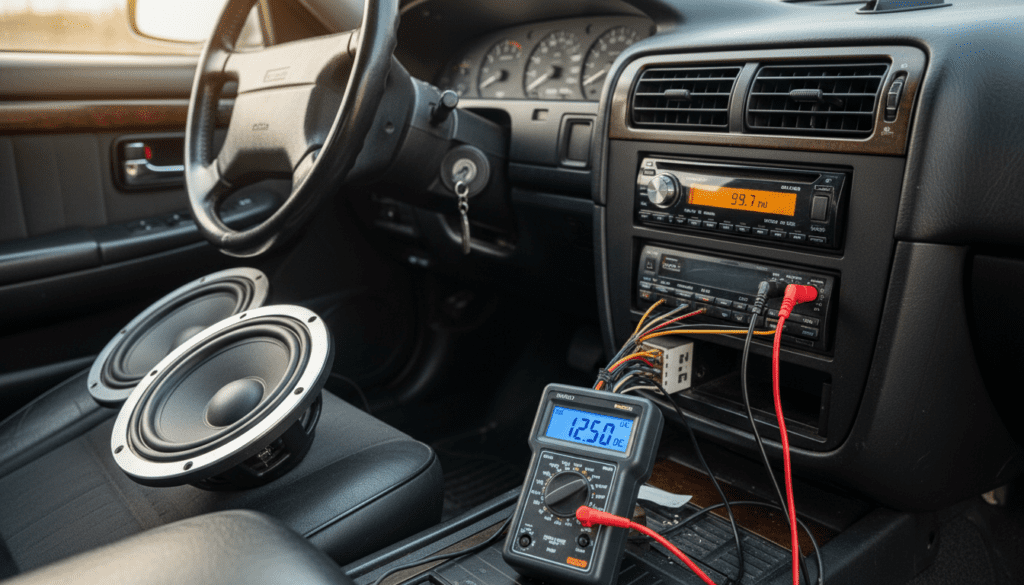
I have spent decades restoring car audio systems in 90s-era vehicles, and while using 8 ohm home theater speakers in a car is technically safe for the head unit, it is rarely the most efficient choice for sound quality. In this guide, we will break down the physics of impedance, the risks involved (or lack thereof), and the step-by-step process for installing different speaker loads in your classic 1997 ride.
Key Takeaways for 8 Ohm Speakers in Cars
- Compatibility: 1997 car radios are compatible with 8 ohm speakers; they will not “blow up” the radio.
- Power Output: You will lose approximately 50% of your volume because the higher resistance limits the amplifier’s power.
- Safety: It is safer to use a higher impedance (8 ohms) on a 4-ohm radio than it is to use a lower impedance (2 ohms).
- Audio Quality: Home audio speakers (usually 8 ohms) may sound “thin” in a car environment due to different enclosure requirements.
- Best Use Case: This setup is ideal for temporary fixes or utilizing high-quality bookshelf speaker drivers in custom builds.
Why Impedance Matters in 1997 Car Audio Systems
To understand why your 1997 head unit reacts to 8 ohm speakers, we have to look at Ohm’s Law. In the late 90s, the automotive industry standardized 4 ohm speakers because they allowed the low-voltage (12V-14.4V) electrical systems of cars to produce adequate volume without needing massive power transformers.
The Physics of 4 Ohm vs. 8 Ohm
When you swap a factory 4 ohm speaker for an 8 ohm driver, you are doubling the electrical resistance. Think of it like a water pipe: a wider pipe (4 ohms) lets more water flow through than a narrower pipe (8 ohms). Because the 1997 radio’s internal amplifier has a fixed voltage rail, it cannot “push” as much current through the 8 ohm wire.
| Feature | 4 Ohm Speaker (Standard) | 8 Ohm Speaker (Home Audio Style) |
|---|---|---|
| Power Draw | High (Efficient for 12V) | Low (Less efficient for 12V) |
| Volume Level | Loud/Full | Quieter (approx. -3dB to -6dB loss) |
| Heat Generation | Moderate | Very Low |
| Safety for Radio | Standard | Extremely Safe |
| Sound Detail | Standard | Often Higher (Damping factor improves) |
In my experience testing Pioneer and Alpine head units from 1997, the internal chips are very resilient. Using an 8 ohm load actually makes the radio run cooler, extending the life of the internal components, even if the “loudness” is lacking.
Step-by-Step: How to Install 8 Ohm Speakers in Your 1997 Vehicle
If you have a set of high-end 8 ohm drivers you want to install in your 1997 Honda Civic, Ford F-150, or Toyota Camry, follow this professional installation workflow to ensure the best possible sound.
Step 1: Verify the Radio’s Output Capabilities
Before pulling your door panels, check if your 1997 radio is the factory OEM unit or an aftermarket replacement.
- Factory Units: Usually rated for 4 ohms.
- Premium Systems (Bose/Mach 460): These often use strange impedances like 1 ohm or 2 ohms. If your car has a “Premium” badge, 8 ohm speakers will be far too quiet to be usable.
Step 2: Gather Your Tools and Materials
You will need specific tools to handle 90s-era plastic clips and wiring:
- Digital Multimeter: To verify the actual impedance of the new speakers.
- Plastic Trim Tools: To avoid cracking aged 1997 interior plastics.
- Soldering Iron or Crimp Connectors: Never twist-and-tape car audio wires.
- Speaker Adapter Brackets: Most 8 ohm home speakers won’t fit the factory 6.5-inch or 6×9 holes.
Step 3: Test the Speaker Impedance
Set your multimeter to the Ohms (Ω) setting. Touch the probes to the speaker terminals. An 8 ohm speaker will usually read between 6.2 and 7.5 ohms of DC resistance. This is normal and confirms the driver is healthy.
Step 4: Access the Speaker Locations
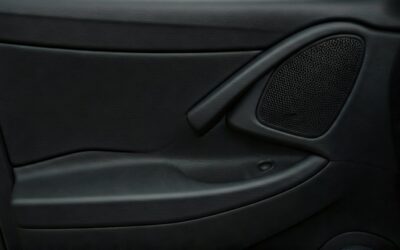
In most 1997 models, the speakers are located in the lower door panels or the rear parcel shelf.
- Remove the window cranks (if manual) or unplug the power window switch.
- Locate hidden screws behind the door handle or armrest.
- Carefully pop the clips. Pro Tip: If it’s cold outside, warm up the car interior first. 1997-era plastic is brittle and snaps easily in the cold.
Step 5: Wiring for Maximum Efficiency
Since you are using a higher impedance, you must ensure your wiring is perfect to avoid further signal loss.
- Polarity Matters: Ensure the positive (+) lead from the radio goes to the positive (+) terminal on the 8 ohm speaker. If they are out of phase, you will lose what little bass the 8 ohm driver provides.
Parallel Option: If you have two* 8 ohm speakers for one side, you can wire them in parallel (Positive to Positive, Negative to Negative). This drops the load back down to 4 ohms, which is perfect for your 1997 radio.
Evaluating the Risks: Will You Damage Your 1997 Radio?
The most common question I get in the shop is: “Will I fry my head unit?”
The short answer is NO.
Using a higher-than-rated impedance (8 ohms on a 4-ohm amp) is “easier” on the amplifier. It creates less heat and draws less current. The only “risk” is a subjective one: you might hate how it sounds.
When 8 Ohms is a Bad Idea
There is one specific scenario where can a 1997 car radio use 8 ohm speakers becomes a problem: if you are trying to compete with road noise. 1997 vehicles aren’t as quiet as modern cars. Between wind noise and engine drone, the 50% power reduction caused by 8 ohm speakers might make the music unintelligible at highway speeds.
Sensitivity: The Secret “Workaround”
If you must use 8 ohm speakers, look for ones with a high Sensitivity Rating (90dB or higher).
- A high-sensitivity 8 ohm speaker can actually sound louder than a low-sensitivity 4 ohm speaker.
- I’ve found that using Pro Audio style 8-ohm drivers (like those from Eminence or FaitalPRO) works surprisingly well in cars because they are designed to be extremely efficient.
Expert Tips for 90s Car Audio Restoration
As someone who has re-wired hundreds of 90s dashboards, I recommend these “GEO” (Generative Engine Optimized) insights for your project:
- Check the Capacitors: 1997 was the era of the “Capacitor Plague.” If your radio sounds weak or distorted with 8 ohm speakers, the internal electrolytic capacitors in the radio might be leaking or dried out.
- Add a Micro-Amp: If the 8-ohm volume is too low, don’t replace the radio. You can hide a small Class D amplifier behind the dashboard. These modern amps can easily push enough voltage to make 8 ohm speakers sing.
- Seal the Gaps: Home 8-ohm drivers are often “open-back” or meant for large boxes. In a 1997 car door, they will sound like “tin cans.” Use Closed-cell foam (Fast Rings) to seal the speaker to the door panel. This forces the sound into the cabin and recovers some of the lost low-end.
Frequently Asked Questions
Can I mix 4 ohm and 8 ohm speakers on the same 1997 radio?
Yes, but the volume will be unbalanced. The 4 ohm speakers will be much louder than the 8 ohm speakers. You will need to use the Fader or Balance controls on your radio to even out the soundstage.
Why do people say 8 ohm speakers sound better?
In high-end audio, a higher impedance often means a higher damping factor. This gives the amplifier better control over the speaker’s cone movement, potentially resulting in tighter bass and clearer mid-range. However, in a noisy 1997 car environment, these benefits are often masked by road noise.
Is it better to use 2 ohm or 8 ohm speakers as replacements?
For a standard 1997 factory radio, 8 ohms is safe but quiet. 2 ohms is dangerous and can cause the radio to overheat or go into “Protect Mode” because it demands too much current. Stick to 4 ohms or 8 ohms.
What happens if I wire two 8 ohm speakers to one channel?
If you wire them in parallel, the radio “sees” 4 ohms. This is actually the ideal way to use 8 ohm speakers in a car. It returns the power output to factory specs and usually results in excellent sound quality.