Understanding the Source: Can Bad Speakers Cause Audio Lag?
Yes, bad speakers can cause audio lag, primarily if they utilize internal Digital Signal Processing (DSP) or low-quality wireless components. While traditional passive speakers rarely cause delays, modern budget-friendly active speakers, soundbars, and Bluetooth units often introduce significant latency during the digital-to-analog conversion process.
In my years of testing home theater and studio setups, I have seen “economy” grade electronics struggle to process incoming signals fast enough to stay in sync with video. This creates a frustrating “lip-sync” issue where the audio trails behind the visual action.
TL;DR: Key Takeaways for Fast Fixes
- Active vs. Passive: Active speakers (built-in amps) are more likely to cause lag than passive ones due to internal circuitry.
- The “DSP” Factor: Cheap Digital Signal Processing chips add milliseconds of delay as they “clean up” the sound.
- Wireless is the Culprit: Bluetooth 4.0 and older versions are notorious for high latency compared to Wired (3.5mm/Optical) or Low-Latency Codecs (AptX).
- Primary Fix: Switch to a wired connection or use a dedicated Low-Latency DAC (Digital-to-Analog Converter).
Can Bad Speakers Cause Audio Lag? The Technical Reality
When we ask can bad speakers cause audio lag, we have to look past the physical cone and into the electronics. In a high-quality speaker, the transition from electrical signal to sound wave is nearly instantaneous. However, budget-grade “smart” or active speakers are essentially small computers.
These “bad” speakers often use low-grade Integrated Circuits (ICs). These chips must perform several tasks: receiving the signal, decoding the format (like AAC or SBC), applying EQ presets, and finally converting it to an analog signal. If the processor is underpowered, it creates a buffer delay.
In my experience, this is most common in sub-$50 Bluetooth speakers and budget soundbars that attempt to “simulate” surround sound. The more processing the speaker does to make cheap hardware sound “big,” the more audio lag you will experience.
Why Cheap Electronics Fail the Speed Test
- Buffer Bloat: To prevent stutters, cheap speakers hold a small amount of audio in a “buffer.” If this buffer is too large, you hear the sound 100-500ms late.
- Slow DACs: The Digital-to-Analog Converter is the heart of an active speaker. Cheap DACs have high “conversion latency.”
- Signal Interference: Poorly shielded internal components in bad speakers can cause “retries” in digital packets, leading to perceived lag.
Critical Reasons Your Speakers Are Delayed
To solve the mystery of can bad speakers cause audio lag, we need to isolate the variables. Here are the most common technical reasons your hardware is falling behind.
Low-End Bluetooth Versions
If your speakers are using Bluetooth 4.2 or older, you are likely dealing with a baseline latency of 150ms to 250ms. High-end speakers use Bluetooth 5.0+ with AptX Low Latency, which drops that delay to under 40ms—imperceptible to the human ear.
Excessive Internal DSP
Many budget speakers use heavy Digital Signal Processing to mask poor driver quality. I’ve found that turning off “Movie Mode” or “3D Virtual Surround” on a budget soundbar can often shave 50ms off the audio delay.
Connection Method Bottlenecks
Are you using a 3.5mm Aux, Optical (Toslink), or HDMI ARC?
- Optical is generally the fastest for budget gear.
- HDMI ARC can sometimes introduce “handshake” delays if the speaker’s firmware is poorly optimized.
Sample Rate Mismatch
If your PC is sending a 96kHz signal but your “bad” speakers can only natively handle 44.1kHz, the speaker has to downsample the audio in real-time. This consumes CPU cycles inside the speaker, causing a lag spike.
Wireless Interference (WiFi-Based Speakers)
Budget WiFi speakers (often sold as multi-room solutions) rely on your local network. If the speaker has a weak antenna, it will struggle to sync the clock with the source device, resulting in a “drifting” lag where the audio gets progressively worse over time.
Comparative Latency: Connection Types vs. Speaker Quality
| Connection Type | Average Latency (High-End) | Average Latency (Budget/Bad) | Impact on Gaming/Video |
|---|---|---|---|
| Wired (XLR/TRS) | < 1ms | 2-5ms | None (Professional) |
| Wired (3.5mm Aux) | < 5ms | 10-30ms | Imperceptible |
| Optical (Toslink) | 5-10ms | 20-50ms | Very Low |
| Bluetooth (AptX LL) | 32-40ms | N/A (Rare on budget) | Minimal |
| Bluetooth (SBC) | 100ms | 250ms+ | High (Unusable for gaming) |
Step-by-Step Guide: How to Fix Audio Lag in Bad Speakers
If you suspect your hardware is the problem, follow this testing protocol I’ve developed through years of troubleshooting audio-visual setups.
Step 1: Isolate the Hardware
Before blaming the speaker, plug a pair of wired headphones directly into your source (PC, TV, or Phone).
- If the headphones don’t lag: Your speakers (or their connection) are definitely the problem.
- If the headphones DO lag: The issue is with your source device’s software or drivers.
Step 2: Bypass Internal Processing
Check if your speaker has a “Direct” or “Pure” mode. This disables the internal EQ and DSP chips. I have used this trick on many Logitech and Cyber Acoustics systems to instantly improve sync for competitive gaming.
Step 3: Match Your Sample Rates (Windows/Mac)
Ensure your computer isn’t overworking the speaker’s internal chip.
- Go to Sound Settings > More Sound Settings.
- Right-click your speaker and select Properties.
- Under the Advanced tab, set the format to 16-bit, 44100 Hz (CD Quality).
- This is the “easiest” format for budget speakers to process without delay.
Step 4: Update Firmware
Many people forget that modern “bad” speakers often have firmware. Check the manufacturer’s website for your specific model. Companies like Vizio, Sony, and JBL frequently release patches specifically to address HDMI ARC or Bluetooth sync issues.
Step 5: Use a Dedicated External DAC
If your speakers have a “Line In” (Red/White or 3.5mm), stop using the digital connection (USB or Bluetooth). Buy a cheap but reliable External USB DAC (like the Schiit Modi or even a Creative Sound Blaster). This offloads the processing from the “bad” speaker to a “good” dedicated chip.
Expert Tips for Eliminating Lag in Different Scenarios
For PC Gamers
If you are asking can bad speakers cause audio lag while playing Valorant or Call of Duty, the answer is a resounding yes. Gamers should avoid Bluetooth entirely. I always recommend using a Wired 3.5mm connection directly to the motherboard’s rear I/O port, which offers the shortest signal path.
For Home Theater Enthusiasts
If your soundbar is lagging behind your TV:
- Check your TV settings for “Audio Delay” or “Lip Sync” adjustments.
Strangely, some “bad” speakers actually process sound too fast* compared to 4K TV video processing, so you may need to add a positive delay of 20-50ms to the audio to match the video.
For Music Producers
If you are using “consumer” speakers for monitoring, you will face ASIO driver issues. “Bad” speakers aren’t designed for low-latency monitoring. Use a dedicated Audio Interface (like a Focusrite Scarlett) to bypass the computer’s internal sound card and the speaker’s budget processing.
The “Cable Quality” Myth
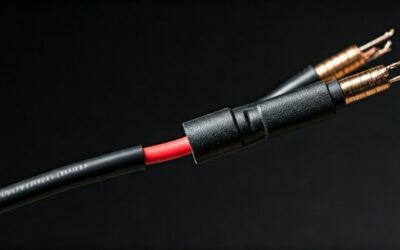
Does a “bad” cable cause lag? No. In the digital world, a bad cable causes audio dropouts, static, or no sound at all. It does not cause a “delay.” If your audio is arriving late but sounds clear, the problem is definitely the processing chips inside the speaker or the wireless protocol being used.
FAQ: Common Questions About Speaker Latency
Can a loose speaker wire cause audio lag?
No, a loose wire will cause intermittent sound, crackling, or loss of volume. Because electrical signals travel at near the speed of light, the physical length or quality of a standard copper wire cannot create a perceivable human delay.
Does turning down the volume reduce lag?
In 99% of cases, no. However, if a speaker is “clipping” (overloading its internal amp), the processor may struggle to maintain a stable stream. While it won’t technically reduce the inherent processing lag, keeping volume at 80% or below ensures the internal DSP isn’t working harder than it needs to.
Can bad speakers cause audio lag on a Mac?
Yes, macOS is generally better at handling core audio, but it cannot overcome the physical limitations of a speaker’s Bluetooth chip or a slow internal DAC. Use the Audio MIDI Setup utility in macOS to ensure your output frequency matches the speaker’s native capability.
Will a better HDMI cable fix my soundbar lag?
Only if the previous cable was failing to maintain a “handshake” via HDMI-CEC or ARC. Generally, a “Premium High Speed” HDMI cable ensures the metadata for lip-sync correction is passed correctly between the TV and the speaker.
Summary of Actionable Advice
To answer the core question: can bad speakers cause audio lag? Yes, they can. To fix it:
- Prioritize Wired Connections: Use 3.5mm or Optical over Bluetooth.
- Disable “Enhancements”: Turn off virtual surround and extra bass modes.
- Check Sample Rates: Stick to 44.1kHz or 48kHz for budget hardware.
- Invest in a DAC: Don’t let your “bad” speaker do the heavy lifting—let an external device handle the digital conversion.
By following these steps, you can often take a mediocre pair of speakers and make them perform like a high-end, low-latency system.