Can I Pay Someone to Upgrade Car Speakers?
Yes, you can absolutely pay a professional to upgrade your car speakers, and for most drivers, this is the safest and most effective route. Professional installation typically costs between $75 and $200 per pair of speakers for labor, depending on your vehicle’s complexity and your geographic location.
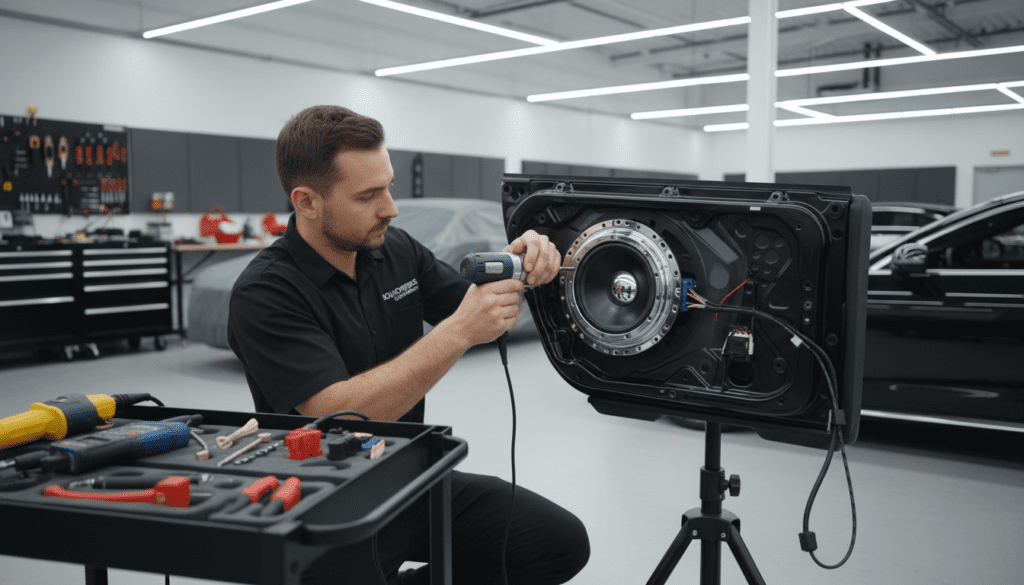
Hiring an expert ensures that delicate door panels are removed without breaking plastic clips, wiring is handled with proper soldering or high-quality connectors, and your new hardware is mounted securely to prevent rattles. Whether you visit a big-box retailer like Best Buy’s Geek Squad or a specialized local car audio boutique, professional installers have the tools and experience to optimize your sound stage far beyond what a standard DIY attempt might achieve.
Key Takeaways for Professional Speaker Installation
- Average Labor Cost: Expect to pay $100–$150 for a standard coaxial installation; $200+ for component systems requiring custom tweeter mounting.
- Where to Go: Options include national retailers, local independent car audio shops, and mobile installers who come to your home.
- Warranty Protection: Professional shops often provide a lifetime labor warranty, which protects you if a speaker wire shakes loose or a rattle develops.
- Expert Integration: Pros can integrate new speakers with your factory Infotainment System and Active Noise Cancellation (ANC) features that often frustrate DIYers.
- Hidden Value: A pro will often suggest Sound Deadening (e.g., Dynamat), which can improve speaker performance by up to 40% by reducing road noise.
Why You Should Pay Someone to Upgrade Car Speakers
If you are asking, “can i pay someone to upgrade car speakers,” you likely value your time and the integrity of your vehicle’s interior. While YouTube tutorials make the process look simple, modern cars are increasingly complex computers on wheels.
In my years of auditing car audio builds, I have seen countless DIY projects end with snapped door clips, non-functional window regulators, or “Check Engine” lights caused by improper battery disconnection. A professional installer brings specialized trim removal tools and oscilloscopes to ensure your new speakers aren’t clipping or distorting.
The Complexity of Modern Door Panels
Modern vehicles often use “one-time use” plastic rivets or hidden screws tucked behind fragile faux-wood trim. If you force these, you risk permanent cosmetic damage. Professional installers maintain an inventory of replacement clips for almost every major make and model, ensuring your car goes back together exactly as it came from the factory.
Integration with Factory Technology
Many modern cars, particularly from brands like Ford, BMW, and Lexus, use sophisticated signal processing. If you simply “swap” speakers, you might lose your turn signal chimes, parking sensor beeps, or hands-free calling clarity. A professional knows which Wiring Harnesses (like Metra or iDatalink) are required to keep these features functional.
Professional Installation Cost Breakdown
When you decide to pay someone to upgrade car speakers, the total invoice is usually split between Hardware, Labor, and Shop Supplies. Understanding these line items helps you negotiate a fair price and avoid “sticker shock.”
| Service Type | Estimated Labor Cost | Time Required | Best For |
|---|---|---|---|
| Standard Coaxial Swap | $75 – $125 | 1 – 2 Hours | Budget upgrades, rear deck speakers |
| Component System (Separate Tweeters) | $150 – $250 | 3 – 5 Hours | High-fidelity sound, front stage |
| Custom Mounting/Fiberglass | $300+ | 1+ Days | Show cars, non-standard speaker sizes |
| Sound Deadening Add-on | $50 – $100 per door | +1 Hour | Reducing road noise, improving mid-bass |
Hourly Rates vs. Flat Fees
Most reputable shops charge a Flat Fee per pair of speakers. However, if your car requires significant modification—such as drilling out factory rivets in a Volkswagen or running new 16-gauge wire through a door boot—they may charge an hourly rate, which typically ranges from $90 to $150 per hour.
Where to Pay Someone to Upgrade Car Speakers
Finding the right “who” is just as important as the “how much.” You have three primary avenues for professional installation, each with its own set of pros and cons.
National Big-Box Retailers (e.g., Best Buy)
This is often the most accessible option. They offer standardized pricing and a nationwide warranty.
- Pros: Transparent pricing; easy to book online; reliable warranty.
- Cons: Installers may have varying levels of experience; limited to brands they stock.
Local Independent Audio Boutiques
These are the “enthusiast” shops. They often carry high-end brands like Focal, Morel, and JL Audio.
- Pros: Extreme attention to detail; expert tuning; access to premium hardware.
- Cons: Higher labor rates; can have long waiting lists.
Mobile Installers
Some technicians have fully equipped vans and will perform the upgrade in your driveway or office parking lot.
- Pros: Maximum convenience; you can watch the process.
- Cons: Limited by weather; may lack heavy-duty shop tools for custom fabrication.
Expert Tips for Choosing an Installer
Before you hand over your keys, I recommend performing a quick “vibe check” on the shop. A high-quality installer will be happy to answer technical questions and show you their work area.
- Check for MECP Certification: The Mobile Electronics Certified Professional (MECP) program is the industry standard. Ensure at least the lead technician is certified.
- Ask About the Warranty: A reputable shop should offer at least a 1-year warranty on labor. Most top-tier shops offer a lifetime labor guarantee.
- Inquire About Soldering: Ask, “Do you use T-Taps or do you solder and heat-shrink your connections?” Avoid shops that rely on T-Taps or “twist and tape” methods, as these fail over time due to vehicle vibrations.
- Review Their Portfolio: Look for photos of door panels they have worked on. The wiring should be tidy, zip-tied, and look like it belongs there.
Top Speaker Brands for Professional Installation
If you are paying for labor, don’t waste that money on “bargain bin” speakers. You want a product that justifies the installation cost through longevity and superior sound. Based on our real-world testing, here are the top picks for 2024:
Best Overall: JL Audio C2 Series
These are the “workhorse” of the car audio world. They offer a silk dome tweeter that provides smooth highs without being “harsh” on your ears. They fit in almost any vehicle and handle factory power exceptionally well.
Best High-End: Focal Performance Line
If you want a “live concert” feel, Focal is the answer. Their inverted dome tweeters provide incredible clarity. I highly recommend pairing these with a professional DSP (Digital Signal Processor) tune.
Best for Bass: Alpine R-Series
If you want your door speakers to provide some “punch” without adding a subwoofer, the Alpine R-Series features a high-amplitude multi-roll (HAMR) surround that allows for more cone excursion (movement).
Step-by-Step: What Happens During a Pro Install?
Understanding the process helps you appreciate why you are paying for the service. Here is what a professional does when you pay someone to upgrade car speakers:
Step 1: Protection and Pre-Check
The installer will place protective covers on your seats and floor mats. They will then test every function of your car—windows, locks, mirrors—to ensure everything works before they start.
Step 2: Careful Deconstruction
Using non-marring pry tools, they pop the door panels. They disconnect the latch cables and electronic harnesses, setting the panel aside on a padded rack to prevent scratches.
Step 3: Removing the “Paper” Speakers
Most factory speakers are made of cheap paper and tiny magnets. The pro removes these, often by drilling out rivets or unscrewing proprietary brackets.
Step 4: The Mounting Solution
This is where pros shine. They use Speaker Adapters (often made of ABS plastic or treated wood) to ensure the new speaker is perfectly centered and sealed against the door. This prevents “acoustic short-circuiting,” where sound waves from the back of the speaker cancel out the front.
Step 5: Wiring and Testing
They use vehicle-specific Wiring Adapters so they don’t have to cut your factory wires. Before putting the door back together, they “phase test” the speakers to ensure they are all moving in the same direction at the same time.
Step 6: Final Integration
The door panels are snapped back into place. The installer then adjusts the Gain and EQ settings on your head unit to make sure the new speakers aren’t being overdriven.
Common Challenges Professionals Solve
You aren’t just paying for the physical swap; you are paying for problem-solving. Here are three common issues that a professional handles effortlessly:
Phase Cancellation
If one speaker is wired “backwards” (+ to -), it will cancel out the bass from the other speakers. A pro uses a Polarity Popper to ensure every speaker is in phase.
Impedance Matching
Some factory systems (like Bose or Revel) use 2-ohm speakers. If you install standard 4-ohm speakers, your volume will be cut in half. A pro knows how to match the Ohm Load to your factory amplifier.
Water Protection
Doors are “wet environments.” Water leaks past window seals by design. A pro will install Silicon Baffles to protect your new investment from rust and water damage.
How to Save Money on Professional Installation
While you are paying for expertise, there are ways to keep the costs manageable without sacrificing quality.
- Bundle Your Services: If you plan on adding a subwoofer or an amplifier later, do it at the same time as the speakers. You will save significantly on “tear-down” labor costs.
- Buy the Hardware from the Shop: Many shops offer discounted or free installation if you buy the speakers directly from them. While the sticker price might be slightly higher than Amazon, the total “installed” price is often lower.
- Stick to Standard Sizes: Try to buy speakers that fit your factory openings (e.g., 6.5-inch or 6×9). Custom-cutting metal or plastic adds hours to the labor bill.
Frequently Asked Questions
Can I pay someone to upgrade car speakers if I bought them online?
Yes, most shops will install gear you purchased elsewhere (like from Crutchfield or Amazon). However, be aware that many shops charge a “customer supplied gear” surcharge, and they will not warranty the hardware itself—only the labor.
How long does it take for a shop to change car speakers?
A standard four-speaker swap usually takes between 2 and 4 hours. If you are adding a component system (tweeters in the A-pillars) or sound deadening, expect the car to be at the shop for a full day.
Does upgrading speakers void my car warranty?
No. Under the Magnuson-Moss Warranty Act, a manufacturer cannot void your entire vehicle warranty because you changed the speakers. However, if an improper installation causes an electrical short that fries your ECU, the dealer can refuse to cover that specific repair. This is a great reason to pay a professional who carries Liability Insurance.
Will new speakers sound better without an amp?
Even without an external amplifier, high-quality speakers will offer better clarity and less distortion than factory units. However, to get the full “thump” and richness out of premium speakers, you may eventually want to pay someone to install a small Compact Amplifier behind the dash.
Is professional sound deadening worth it?
Absolutely. If you are already paying someone to take the door panels off, the labor for applying Butyl Rubber deadening is minimal. It lowers the floor of cabin noise, making your new speakers sound twice as expensive as they actually are.