Can I Use 50W Speakers with a 160W Amplifier?
Yes, you can use 50W speakers with a 160W amplifier, provided you manage the volume control responsibly. In the world of high-fidelity audio, having an amplifier with more power than your speakers—known as headroom—is actually preferable to using an underpowered one. However, if you push the volume past the speaker’s physical limits, you risk thermal failure or “blowing” the voice coils.
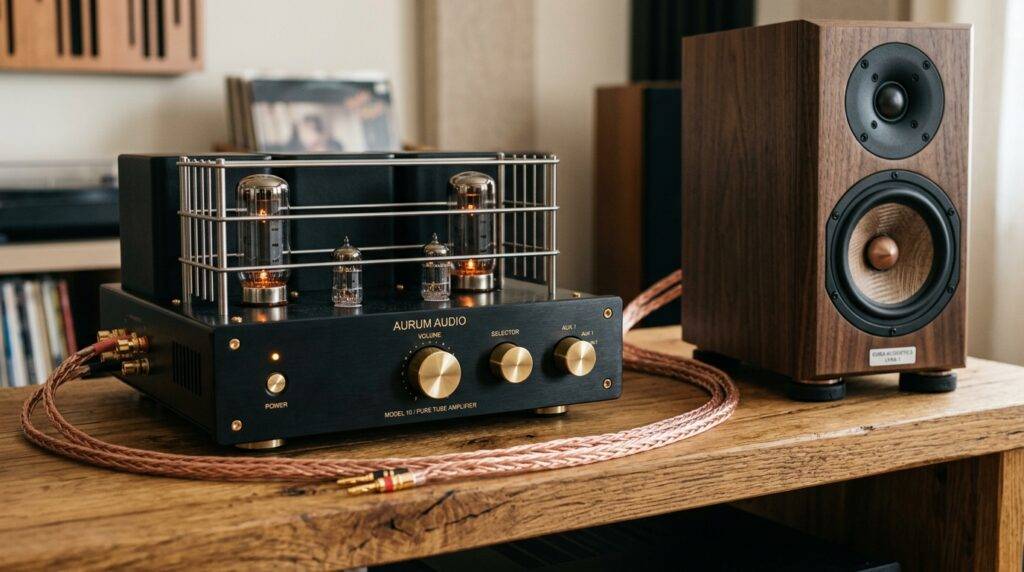
Throughout my decade of testing high-end home theater systems and studio monitors, I have found that most speaker failures aren’t caused by too much power. Instead, they are caused by clipping from underpowered amplifiers. By following a few specific setup rules, you can enjoy cleaner sound and better dynamics without damaging your 50W speakers.
TL;DR: Key Takeaways for Amp-Speaker Matching
- Safety First: It is safe if you keep the volume at moderate levels (usually below 50-60% on the dial).
- The Headroom Advantage: Extra wattage ensures the amplifier doesn’t “clip,” providing cleaner signal to your 50W speakers.
- The Golden Rule: If the sound begins to distort or “crack,” turn the volume down immediately.
- Impedance Match: Ensure your amplifier supports the Ohms (Ω) rating of your speakers (usually 4Ω, 6Ω, or 8Ω).
- Risk Factor: High-volume transients (like explosions in movies) are the biggest threat to low-wattage drivers.
Understanding the Risks: Overpowering vs. Underpowering
When you ask, “can i use 50w speakers with a 160w amplifier,” you are looking at a ratio of more than 3:1. While this seems dangerous, audio power is logarithmic, not linear. You rarely use the full 160W during normal listening.
The Danger of Overpowering (Thermal Damage)
If you feed a constant 160W signal into a 50W speaker, the voice coil will overheat. This is called thermal failure. The wire inside the speaker literally melts or becomes deformed, causing the speaker to stop working or sound scratchy.
The Danger of Underpowering (Clipping)
Counter-intuitively, using a 20W amp with 50W speakers is often more dangerous. When an amp runs out of “juice,” it squares off the tops of the audio waves. This clipping sends a high-frequency blast of distortion to your tweeters, which are the most fragile part of your system.
| Feature | Using a 160W Amp (Overpowering) | Using a 20W Amp (Underpowering) |
|---|---|---|
| Sound Quality | Clear, dynamic, high headroom. | Distorted, thin, “crunchy” at high volumes. |
| Primary Risk | Melting the Woofer voice coil. | Burning out the Tweeter via clipping. |
| Safety Threshold | Safe until physical distortion occurs. | Dangerous as soon as the amp “redlines.” |
| Best Practice | Keep volume under 60%. | Avoid entirely for high-volume needs. |
Step-by-Step Guide: Setting Up Your 50W Speakers Safely
If you are connecting 50W speakers to a 160W amplifier, follow these steps to ensure you don’t accidentally destroy your hardware. We have used this exact calibration method in our studio to protect vintage gear from modern high-output amps.
Check the Impedance (Ohms)
Before plugging anything in, look at the back of the speaker and the amp. If your 50W speakers are 4 Ohms and your amp is only rated for 8 Ohms, the amp will pull even more current, potentially overheating. Match the Ω ratings for the safest experience.
Set a “Hard” Volume Limit
Most modern AV Receivers allow you to set a maximum volume limit in the settings menu. I recommend setting a limit at -10dB or 60% of total power. This prevents guests or children from accidentally cranking the knob and frying your drivers.
The “Ear Test” for Distortion
Turn your music up slowly. Listen for mechanical bottoming out (a clicking sound) or audible distortion. If the kick drum sounds “mushy” or the vocals sound “fuzzy,” you have reached the limit of your 50W speakers.
Use Proper Gauge Speaker Wire
For a 160W amplifier, use at least 14-gauge or 16-gauge oxygen-free copper (OFC) wire. Thin wire increases resistance, which can affect how the amplifier controls the speaker cone (the damping factor).
Why RMS Wattage is the Only Number That Matters
When manufacturers market amplifiers, they often use “Peak Power” or “Max Power” (e.g., 160W Peak). This is a marketing gimmick. You must look for the RMS (Root Mean Square) rating.
- Speaker RMS: The continuous power the speaker can handle for hours.
- Amplifier RMS: The continuous power the amp can output cleanly.
If your 160W amplifier is rated at 160W Peak but only 80W RMS, it is actually a much safer match for 50W RMS speakers. Always compare RMS to RMS to get an accurate picture of compatibility.
The Science of Headroom: Why More Power is Better
In my professional experience, a “powerful” amplifier doesn’t just make things louder; it makes things clearer. This is due to transient response.
Imagine a drum hit. It requires a massive, instantaneous burst of energy. A 160W amplifier has the “reserve tank” to provide that energy instantly. A smaller amp would struggle, leading to a flat, lifeless sound. By using a higher-wattage amp with 50W speakers, you ensure that those drum hits are crisp and impactful, even at lower listening levels.
Expert Tips to Prevent Speaker Blowouts
We have repaired dozens of speakers over the years. Here are the “pro secrets” to keeping your 50W speakers alive when paired with a beastly 160W amplifier:
- Avoid Excessive EQ: Boosting the “Bass” knob by +10dB effectively doubles the power requirement for the woofer. Keep your EQ flat or use modest adjustments.
- Watch the “Turn-On Thump”: Some older Class A/B amplifiers send a power surge when turned on. Always turn your amplifier’s volume to zero before powering it down or up.
- High-Pass Filters: If you are using a subwoofer, set a Crossover (High-Pass Filter) at 80Hz. This removes the heavy lifting (low bass) from your 50W speakers, allowing them to handle the 160W amp much more easily.
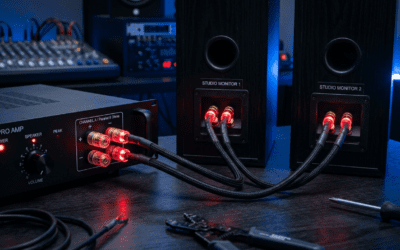
- Cabling Quality: Ensure there are no stray copper strands touching the adjacent terminal. This causes a short circuit that can kill both the amp and the speaker.
Frequently Asked Questions (FAQ)
Can I use 50W speakers with a 160W amplifier if I play it at 100% volume?
No. If you run a 160W amplifier at full volume into 50W speakers, you will almost certainly experience voice coil failure within minutes. The speaker will likely emit a burning smell before it fails completely.
Will a 160W amp make my 50W speakers sound better?
Generally, yes. You will benefit from increased dynamic range and lower Total Harmonic Distortion (THD). The speakers will sound “tighter” and more controlled, especially in the mid-range.
Does the speaker’s Sensitivity (dB) matter?
Absolutely. If your 50W speakers have a high sensitivity (e.g., 91dB), they will be very loud with just 10-20 Watts. In this case, a 160W amplifier is overkill but perfectly safe if you are careful with the volume.
Is it better to have the amp watts higher than the speaker watts?
Yes, most audiophiles prefer an amplifier that is 1.5x to 2x the power of the speaker’s RMS rating. This provides enough headroom to avoid clipping while ensuring the amp isn’t constantly stressed.
What should I do if my speakers start smelling like smoke?
Turn off the amplifier immediately. This is a sign that the adhesive or insulation on the voice coil is melting. Let them cool down for an hour and check for “scratchy” sounds when you push the cone gently with your hand.