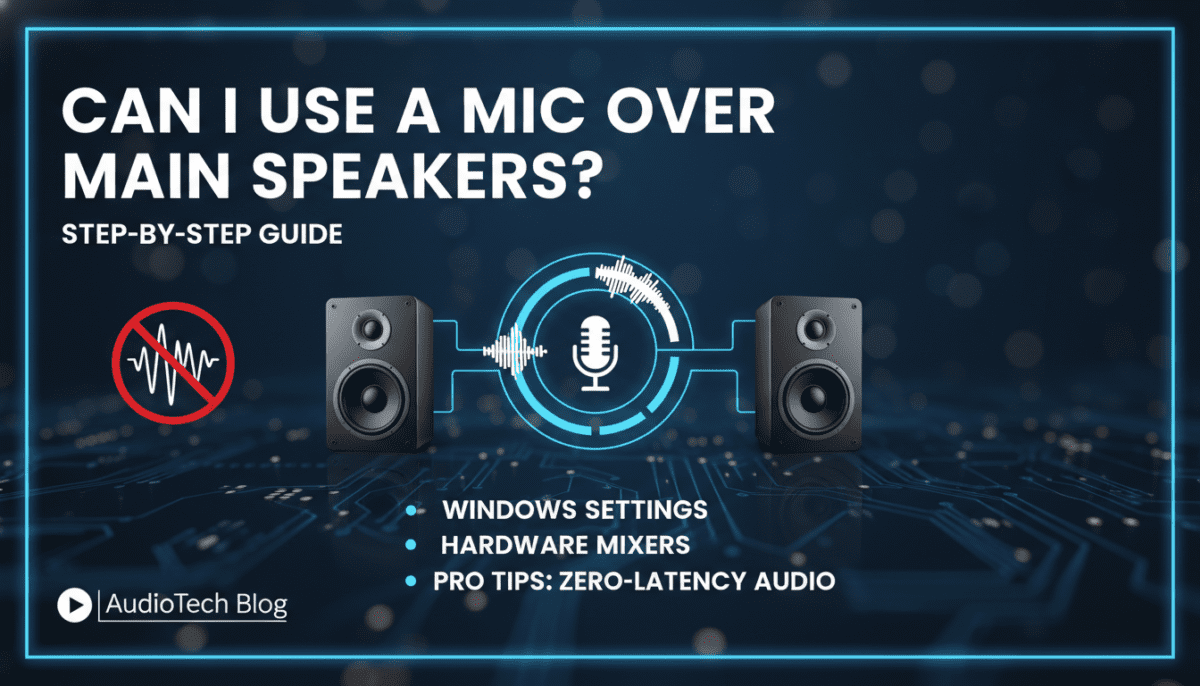
Yes, you can use a mic over main speakers by routing the audio signal through a computer, a hardware mixer, or an audio interface. To achieve this without a “howling” feedback loop, you must manage the physical distance between the mic and speakers and use software or hardware settings to monitor the input in real-time.
Can I Use a Mic Over Main Speakers? The Definitive Setup Guide
Whether you are hosting a karaoke night, giving a corporate presentation, or setting up a live stream with a “room feel,” the question of can i use a mic over main speakers is one of the most common hurdles in home audio. In my years of setting up live sound for small venues, I’ve found that while the connection is simple, the optimization is what prevents equipment damage.
If you plug a microphone directly into a computer, it typically won’t play through the speakers automatically to prevent accidental feedback. You must intentionally “route” that signal. This guide will walk you through every hardware and software method to get your voice booming through your main monitors with zero lag.
TL;DR: Key Takeaways for Quick Setup
- Software Method: On Windows, go to Sound Settings > Recording > Properties > Listen > Check “Listen to this device.”
- Hardware Method: Use an Audio Interface or Mixer for the lowest latency (lag) and best sound quality.
- Feedback Prevention: Always keep the microphone behind the speakers and never point the mic head toward the drivers.
- Latency Issues: Standard Windows drivers have lag; use ASIO drivers or hardware “Direct Monitoring” for real-time speech.
- Best Gear: A Dynamic Microphone (like the Shure SM58) is better for speakers than a Condenser Microphone because it picks up less background noise.
Understanding the Signal Chain: From Mic to Speaker
To successfully answer “can i use a mic over main speakers,” you have to understand how the sound travels. Unlike a guitar amp, which is an all-in-one unit, a vocal setup usually requires three distinct stages:
- Input (The Microphone): Converts sound waves into an electrical signal.
- Processing (The Mixer or PC): Boosts the weak mic signal (Preamp) and routes it to an output.
- Output (The Speakers): Converts the electrical signal back into sound waves.
| Component | Purpose | Best For |
|---|---|---|
| XLR Cable | Balanced audio connection | Reducing hum and interference |
| Audio Interface | Converts Analog to Digital | Home recording and high-quality PC output |
| Analog Mixer | Physical knobs for volume | Live events and karaoke |
| PA Speaker | High-output amplification | Large rooms and loud crowds |
| Studio Monitors | Flat, accurate sound | Small rooms and podcasting |
Method 1: Using Windows Sound Settings (The Budget Way)
If you don’t want to buy extra gear, you can use your computer’s built-in routing. This is the most common way people try to use a mic over main speakers, but it comes with a “latency” warning—there might be a slight delay between your speech and the sound coming out.
Step-by-Step Windows Configuration:
- Plug your microphone into the 3.5mm jack or USB port.
- Right-click the Speaker Icon in your taskbar and select “Sound Settings.”
- Scroll down to “More sound settings” (on Windows 11) or “Sound Control Panel.”
- Click the “Recording” tab.
- Right-click your active microphone and select “Properties.”
- Navigate to the “Listen” tab.
- Check the box that says “Listen to this device.”
- Under “Playback through this device,” select your Main Speakers.
- Click “Apply.”
Expert Tip: If you notice a distracting delay (latency), this method is using the standard MME or DirectSound drivers, which are slow. For professional use, you will need the hardware methods listed below.
Method 2: Using an Audio Interface for Zero Latency
When I’m setting up a professional stream or a local PA system, I never rely on Windows’ “Listen” feature. Instead, I use an Audio Interface like the Focusrite Scarlett or PreSonus AudioBox.
These devices feature a button or knob labeled “Direct Monitor.” When you engage this, the interface sends the microphone signal directly to the speaker outputs before it even reaches your computer. This results in zero latency.
Why an Interface is Better:
- Preamps: It provides “Clean Gain,” meaning your voice won’t have that “hissing” sound common with cheap PC inputs.
- Phantom Power: If you are using a Condenser Mic, the interface provides the 48V power needed to make it work.
- Physical Volume Knobs: You can quickly turn down the speakers if feedback starts, which is much faster than using a mouse.
Method 3: The Analog Mixer Setup (Best for Karaoke & Live Events)
If your goal is to use a mic over main speakers for a party or a public speaking engagement, an analog mixer is the gold standard.
- Connect your microphone to Channel 1 via an XLR cable.
- Connect the Main Out of the mixer to your Powered Speakers.
- Turn the “Gain” up until the signal lights are green.
- Slowly raise the “Fader” or “Level” knob until you hear yourself.
Why this works: An analog mixer doesn’t have a CPU. There is no digital processing, meaning there is absolutely no delay. It is the most reliable way to ensure your voice and the music stay perfectly in sync.
The Biggest Challenge: How to Prevent Feedback
The moment you use a mic over main speakers, you face the “Feedback Loop.” This happens when the speakers play the sound from the mic, the mic picks up that sound again, amplifies it, and creates a high-pitched squeal.
Pro-Tips to Kill Feedback:
- Placement is Key: Always place your speakers ahead of the microphone. The “dead zone” of most microphones is at the back.
- Use a Dynamic Mic: Microphones like the Shure SM58 or Sennheiser e835 are designed to ignore off-axis sound. Avoid using sensitive studio condensers in a room with loud speakers.
- The “Ring Out” Method: I always slowly turn up the volume until I hear a slight “ring,” then back it off by 3-5 decibels. This gives you a “safety buffer.”
- EQ Cutting: If you have an equalizer, “cut” (lower) the high frequencies (above 5kHz) where most squealing happens.
- Room Treatment: Hard walls reflect sound back into the mic. Adding rugs or curtains can significantly reduce the risk of feedback.
Choosing the Right Hardware for Your Speaker Setup
Not all speakers are created equal. If you are trying to use a mic over main speakers, the type of speaker you have determines your connection cable.
Active vs. Passive Speakers
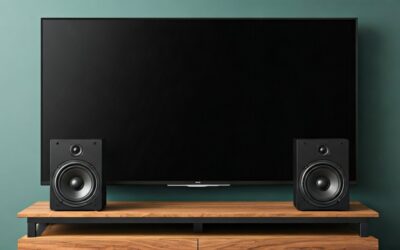
- Active (Powered) Speakers: These have built-in amplifiers. You can plug a mixer or interface directly into them. Most Studio Monitors (like KRK Rokits or Yamaha HS5) are active.
- Passive Speakers: These require an external power amplifier. You must go: Mic -> Mixer -> Amplifier -> Passive Speakers.
Recommended Microphones for Speaker Playback
- For Singing: Shure SM58. It is virtually indestructible and handles feedback better than any mic in history.
- For Speech/Podcasting: Shure SM7B. It requires a lot of gain (use a Cloudlifter), but its rejection of room noise is elite.
- Budget Choice: Samson Q2U. It has both USB (for PC) and XLR (for mixers) outputs, making it incredibly versatile.
Advanced Routing: Using OBS for Live Stream Playback
If you are a streamer and want to use a mic over main speakers so you can hear yourself while you broadcast, you can use OBS Studio.
- Open OBS Studio.
- Go to Settings > Audio.
- Ensure your microphone is selected as Mic/Auxiliary Audio.
- Go to the Audio Mixer dock in the main window.
- Click the Three Dots (Settings) next to your Mic and select Advanced Audio Properties.
- Find your Mic and change “Monitor Off” to “Monitor and Output.”
- In the main OBS Settings, under Audio, set your Monitoring Device to your main speakers.
Warning: Using OBS for monitoring will introduce about 50-100ms of lag unless you are using ASIO drivers.
Frequently Asked Questions
Why is there a delay when I use my mic over speakers?
This is called Latency. It happens because your computer needs time to process the analog sound into digital data and back again. To fix this, use an Audio Interface with a Direct Monitor feature or install ASIO4ALL drivers on your PC.
Can I plug a mic directly into my computer speakers?
Generally, no. Most computer speakers expect a “Line Level” signal, while microphones put out a much weaker “Mic Level” signal. You will usually get very quiet, distorted sound unless you use a Preamp or a Mixer.
Will using a mic over my speakers damage them?
It can. If you experience a loud, sustained feedback squeal, the high frequencies can overheat the tweeters in your speakers. Always start with your volume at zero and increase it slowly.
What is the best way to use a mic for karaoke over my home theater?
The best way is to buy a small Karaoke Mixer that sits between your source (TV/Laptop) and your Soundbar or Receiver. This allows you to mix the vocal and music signals before they reach the speakers.
Do I need a special cable to use a mic over main speakers?
Yes, you should ideally use a Balanced XLR cable. This prevents the cable from acting like an antenna and picking up radio interference or hum, which is common when boosting mic signals for loud speakers.