Understanding the Risk: Can Speakers Damage Pickups?
The short answer is yes, speakers can damage pickups, but it rarely happens instantly. Powerful speaker magnets generate a significant magnetic field that can interact with the permanent magnets inside your guitar pickups, potentially leading to demagnetization or “degaussing” over time.
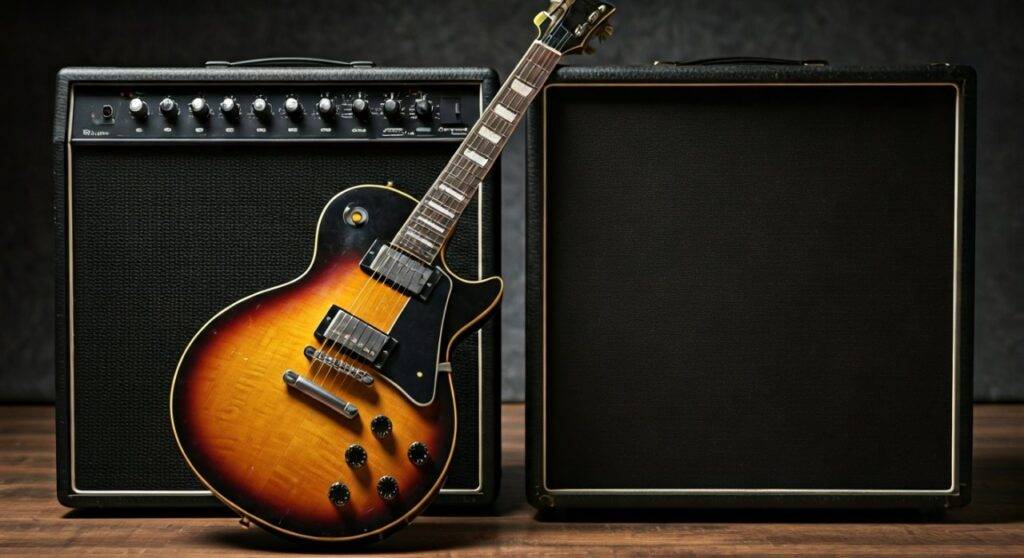
In my fifteen years of working as a guitar technician and studio engineer, I have seen numerous vintage instruments lose their “top-end clarity” simply because they were leaned against high-powered subwoofers or stage monitors for weeks. While modern Ceramic pickups are quite resilient, vintage-style Alnico magnets are much more susceptible to these external magnetic forces. To keep your tone intact, you must understand the invisible dance between your speakers and your electronics.
TL;DR: Key Takeaways for Gear Protection
- Proximity is the enemy: Never lean your guitar directly against a speaker cabinet for long periods.
- Magnet Types Matter: Alnico II and V magnets are more vulnerable to damage than Ceramic or Neodymium magnets.
- The “Dead Tone” Symptom: If your pickups sound muddy, weak, or have lost their output, they may have been partially demagnetized.
- Safe Distance: Maintain at least 12 to 24 inches between your guitar and large speaker magnets during storage.
- Permanent vs. Temporary: Magnetic interference (hum) is temporary; demagnetization (loss of Gauss) is permanent without professional re-charging.
The Science of Magnetic Interference
To understand how speakers can damage pickups, we have to look at Magnetic Flux. Both guitar pickups and speakers rely on magnets to function, but they use them in opposite ways.
A speaker uses a massive permanent magnet (often Ferrite or Neodymium) to move a voice coil and create sound. A guitar pickup uses smaller magnets to create a steady field that “senses” string vibration. When these two fields overlap, the stronger field (the speaker) can physically “push” the magnetic alignment of the weaker field (the pickup).
Why Alnico Pickups Are at Risk
Most classic guitars use Alnico (Aluminum, Nickel, Cobalt) magnets. While Alnico provides a warm, musical tone, it has a lower Coercivity compared to modern materials. This means it is relatively easy for an external magnetic force to “scramble” the magnetic domains inside the Alnico slugs, leading to a weaker signal.
The Role of Speaker Size and Power
The larger the speaker, the larger the magnet. A small 8-inch practice amp is unlikely to do much damage. However, a 15-inch bass cabinet or a high-wattage PA subwoofer creates a massive magnetic “bubble” that can easily reach out and affect your single-coil pickups.
How to Prevent Speaker Damage to Your Pickups (Step-by-Step)
If you want to ensure your guitar’s output remains hot and clear, follow this protocol for gear management on stage and in the studio.
Step 1: Establish a “Safe Zone” for Storage
Never use your amplifier cabinet as a guitar stand. Even if the amp is turned off, the permanent magnet inside the speaker is always “on” and radiating a field.
- Place your guitar stand at least two feet away from your amp.
- If you are in a small studio, ensure your guitar wall hangers are not directly behind your studio monitors.
- In transit, avoid placing your guitar case directly on top of a subwoofer in a van or truck.
Step 2: Identify High-Risk Environments
Not all speakers are created equal. You need to be particularly careful around specific types of equipment that utilize oversized magnets.
- Bass Cabinets: These often house massive Ferrite magnets to handle high power.
- Vintage Cabinets: Older speakers may not have the magnetic shielding found in modern consumer electronics.
- Large PA Systems: The magnets in “Front of House” speakers are powerful enough to affect gear from several feet away.
Step 3: Use Protective Shielding
If you must work in close proximity to large speakers, consider the state of your guitar’s internal shielding.
- Apply Copper Foil Tape to the pickup cavities.
- Ensure your pickguard has a grounded aluminum or copper backing.
- While shielding primarily blocks Electro-Magnetic Interference (EMI), it can slightly dampen the effects of external magnetic flux.
Comparing Magnet Vulnerability
Not all pickups react the same way to speaker proximity. Use this table to determine the risk level for your specific gear.
| Pickup/Magnet Type | Vulnerability Level | Effect of Speaker Proximity |
|---|---|---|
| Alnico II | High | Significant loss of output and “sweetness.” |
| Alnico V | Medium | Gradual loss of “snap” and treble response. |
| Ceramic (Ferrite) | Low | Very resistant to demagnetization. |
| Active Pickups | Very Low | Internal pre-amps and shielded housings provide protection. |
| Neodymium | Low | High coercivity makes them very stable. |
Identifying the Signs of Magnet Damage
How do you know if speakers have already damaged your pickups? In my experience, the change is often subtle and happens over months of poor storage. Look for these specific “symptoms”:
Significant Drop in Output
If you find yourself having to turn your amp’s gain or volume up higher than usual to achieve the same sound, your pickup magnets may have weakened. We measure this in Gauss. A healthy Alnico V magnet should read between 600 and 1200 Gauss at the pole piece.
Loss of High-Frequency Clarity
Weak magnets result in a “dark” or “muddy” tone. The “chime” associated with Fender Stratocaster or Telecaster pickups is the first thing to go when the magnetic field is compromised.
Increased Noise Floor
When the magnetic field of a pickup weakens, the signal-to-noise ratio decreases. You might notice more 60-cycle hum because the pickup is struggling to capture the string’s vibration while still picking up environmental interference.
Can You Fix Demagnetized Pickups?
The good news is that magnetic damage is usually reversible. Unlike a blown speaker or a fried transformer, a “dead” magnet can be re-charged.
- Professional Re-Gaussing: A luthier can use powerful Neodymium magnets or an Industrial Magnetizer to reset the poles of your pickups to their original strength.
- DIY Re-Charging: You can pass a strong Neodymium magnet over the poles of your pickup to restore its strength. Warning: This is risky. If you do it incorrectly, you can reverse the polarity of your pickups, leading to “out-of-phase” issues when using multiple pickups together.
- Replacement: If the pickup is an inexpensive stock model, it is often more cost-effective to upgrade to a higher-quality set from brands like Seymour Duncan or DiMarzio.
Expert Tips for Studio and Stage Layouts
To keep your gear safe, I recommend adopting these “best practices” that we use in professional recording environments:
- The “Face-to-Face” Rule: Never point the front of your guitar directly at a speaker at close range. This causes feedback, but the intense vibration and magnetic interaction are also hardest on the pickups in this position.
- Storage Orientation: When storing guitars in a rack, keep the “face” of the guitar (the side with the pickups) pointing away from any known magnetic sources.
- Check Your “Case Candy”: Be careful with magnetic guitar stands or cases that use powerful magnets for latches. I’ve seen these latches sit right against a humbucker and cause localized “dead spots.”
Frequently Asked Questions
Can an amp’s transformer damage my pickups?
While transformers create an electromagnetic field, they are usually shielded within the amp’s metal chassis. The risk is much lower than the “open” magnetic field of a speaker, but I still recommend keeping your guitar at least 12 inches away from the rear of an amplifier.
Do active pickups (like EMG) get damaged by speakers?
Active pickups are much more resistant to damage. They use smaller magnets and rely on an internal battery-powered pre-amp for output. The electronic shielding required for active circuitry provides an extra layer of protection against external magnetic forces.
Will keeping my guitar in a gig bag near speakers protect it?
No. Magnetic fields pass through fabric, gig bags, and even hardshell wood cases with ease. Only thick Mu-metal or heavy steel can effectively block a magnetic field. Physical distance is your only practical defense.
Can a smartphone magnet damage my guitar pickups?
Modern smartphones contain small Neodymium magnets (especially for MagSafe charging). While these are strong for their size, they are generally too small to cause permanent damage unless you rub the phone directly against the pickup for an extended period. However, they will cause significant EMI noise if held near the guitar.