Can Speakers From One Car Go to Another? The Expert Answer
Yes, can speakers from one car go to another? The short answer is yes, but compatibility depends entirely on three factors: physical dimensions, mounting depth, and electrical impedance. While most standard aftermarket speakers (like 6.5-inch or 6×9-inch models) are interchangeable across various makes and models, factory-installed OEM speakers often use proprietary brackets and wiring harnesses that require modification to fit a different vehicle.
In my decade of experience as a car audio technician, I have successfully swapped hundreds of systems. However, I have also seen many DIYers damage their door panels or blow their factory amplifiers by ignoring Ohm ratings or forcing a speaker into a space that was too shallow. To ensure a successful transfer, you must verify that the “donor” speakers match the “receiver” vehicle’s mounting footprint and power requirements.
TL;DR: Quick Checklist for Speaker Swapping
- Size Match: Ensure the diameter (e.g., 6.5″, 5.25″, 6×9″) matches the new car’s factory cutouts.
- Mounting Depth: Verify the speaker magnet won’t hit the window glass when it’s rolled down.
- Impedance (Ohms): Most car stereos use 4-ohm speakers; premium systems (Bose/JBL) may use 2-ohm, which can’t always be swapped safely.
- Wiring: You will likely need vehicle-specific wiring harness adapters or must be prepared to crimp/solder new connections.
- Tools Needed: Plastic pry tools, a screwdriver set, a socket wrench, and possibly a drill for new mounting holes.
Understanding Compatibility: Can Your Speakers Physically Fit?
When asking can speakers from one car go to another, the first hurdle is physical size. Car manufacturers design door panels around specific speaker shapes. If you are moving speakers from a 2015 Toyota Camry to a 2020 Ford F-150, the sizes might differ significantly.
Common Speaker Sizes and Interchangeability
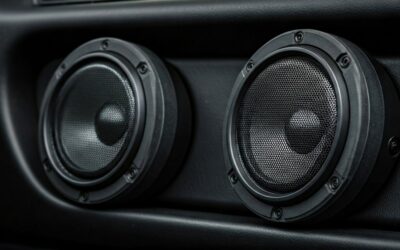
Most modern vehicles use standardized sizes. If your donor car has 6.5-inch round speakers, they are the most “universal” and can often fit into larger openings (like a 6×9 spot) using an adapter bracket. However, fitting a larger speaker into a smaller hole is much more difficult and usually requires cutting metal or plastic.
The Critical Role of Mounting Depth
This is the “silent killer” of speaker swaps. Even if the diameter matches, the mounting depth (how deep the magnet sits inside the door) is vital. I’ve seen many enthusiasts install a high-end Focal or JL Audio speaker only to realize they can’t roll their windows down because the magnet is blocking the window track. Always measure the distance between the mounting surface and the window glass before finalizing the transfer.
| Speaker Type | Common Diameter | Typical Use Case | Transfer Ease |
|---|---|---|---|
| Coaxial | 6.5″, 5.25″, 6×9″ | Standard door/rear deck | High |
| Component | 6.5″ + Tweeter | Front doors / Dash | Moderate (needs crossover) |
| Tweeter | 1″ – 2″ | Dash or A-pillars | Low (often proprietary) |
| Subwoofer | 8″, 10″, 12″ | Trunk or under-seat | High (requires enclosure) |
Electrical Requirements: Matching Impedance and Power
Beyond the physical fit, the electrical “handshake” between your car’s head unit (radio) and the speakers must be correct. If you ignore this, you risk overheating your car’s internal amplifier.
The Importance of Impedance (Ohms)
Most aftermarket speakers are rated at 4 Ohms. However, many factory “Premium” systems (like Harman Kardon, Bose, or Bang & Olufsen) operate at 2 Ohms.
If you take a 2-ohm speaker from a premium system and put it into a standard car designed for 4 ohms, the radio will try to push too much power, potentially causing it to clip or fail. Conversely, putting a 4-ohm speaker into a 2-ohm system will result in very low volume output. We always recommend using a Multimeter to test the terminals of the donor speaker before installation.
Power Handling (RMS vs. Peak)
Make sure your new car’s head unit can actually drive the speakers you are moving. High-end speakers often require more “juice” than a basic factory radio can provide. If you move high-performance Alpine Type-R speakers into a budget compact car, they might sound “thin” or “weak” without an external amplifier.
Step-by-Step Guide: How to Transfer Car Speakers
If you’ve confirmed that the speakers are a match, follow this professional workflow to ensure a clean installation without rattles or electrical shorts.
Step 1: Removing the Donor Speakers
- Disconnect the Battery: Safety first. Disconnect the negative terminal to prevent short circuits.
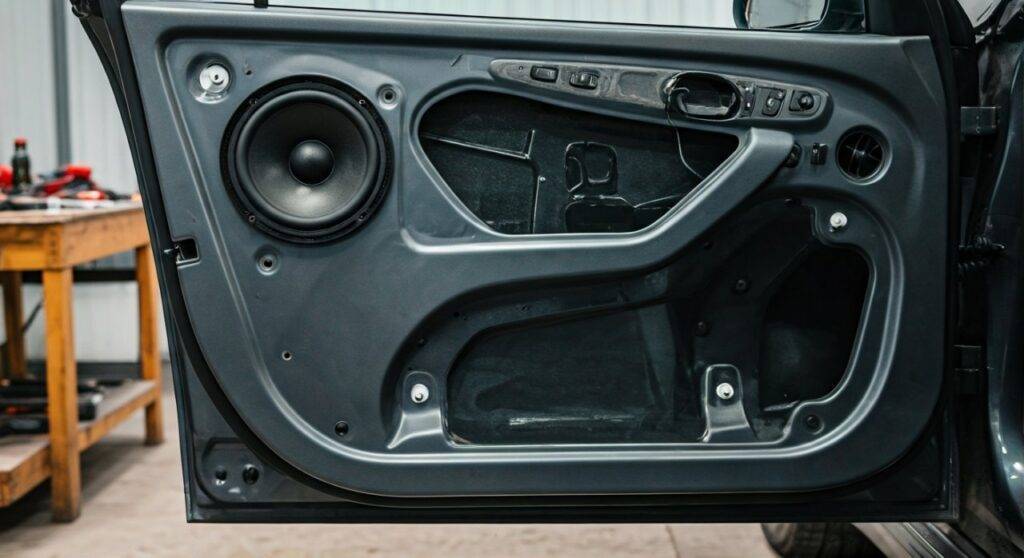
- Remove Door Panels: Use plastic trim removal tools to pop the clips. Avoid metal screwdrivers, as they will scratch the plastic.
- Unbolt the Speaker: Most are held by 3 or 4 Phillips screws or 10mm bolts.
- Disconnect the Harness: Unplug the factory clip. Pro Tip: If you plan to sell the donor car, keep the factory speakers to reinstall them later.
Step 2: Preparing the Receiver Vehicle
- Access the Speaker Pod: Repeat the panel removal process on the new car.
- Compare Mounting Patterns: Hold the donor speaker up to the hole. If the screw holes don’t line up, you will need a universal adapter bracket (usually made by Metra or Scosche).
- Check for Obstructions: Ensure the wires won’t get pinched and the magnet has clearance.
Step 3: Wiring the Connection
Don’t just cut and twist wires. For a professional result:
- Use Wiring Adapters: Buy a vehicle-specific harness that plugs into the car’s factory clip and provides spade connectors for the speaker. This avoids cutting the factory wires.
- Observe Polarity: Ensure the Positive (+) and Negative (-) wires are correct. If you swap them, the speakers will be “out of phase,” resulting in a total loss of bass response.
Step 4: Testing and Sealing
Before putting the door panel back on:
- Sound Test: Reconnect the battery and turn on the radio. Listen for clarity and check that all drivers (woofers and tweeters) are working.
- Apply Foam Gaskets: Use closed-cell foam rings (Fast Rings) around the speaker. This seals the speaker against the door panel, directing all the sound into the cabin rather than letting it “leak” inside the door cavity.
The Hidden Challenges of Component vs. Coaxial Swaps
A common question is: Can speakers from one car go to another if one system uses separate tweeters?
Moving Coaxial Speakers
Coaxial speakers have the tweeter mounted in the center of the woofer. These are the easiest to transfer because they are “all-in-one.” If your new car has separate factory tweeters in the dash, you can simply leave the old tweeters disconnected and use the coaxials in the doors.
Moving Component Systems
Component systems use a separate woofer, tweeter, and a crossover box. Transferring these is significantly more complex. You must find a place to mount the crossover box inside the door and potentially fish new wires through the door “boot” (the rubber tube connecting the door to the car body). In my experience, this is where most DIYers get frustrated and should consider professional help.
Expert Tips for Maximizing Sound Quality After a Transfer
Simply moving speakers isn’t enough to get the best sound. To truly upgrade the audio in the “receiver” car, consider these professional enhancements:
- Sound Deadening: While the door panels are off, apply butyl-based sound deadening sheets (like Dynamat or Hushmat) to the inner metal skin of the door. This reduces road noise and stops the metal from vibrating, which drastically improves bass “punch.”
- Speaker Baffles: If you live in a rainy climate, install silicone speaker baffles. These protect the back of your transferred speakers from water dripping down inside the door, extending their lifespan.
- Correct Level Settings: If the new car has a different interior volume, you will need to re-adjust the EQ settings (Bass, Mid, Treble) on the head unit to compensate for the different acoustics.
When Should You NOT Transfer Speakers?
Sometimes, it’s better to leave the speakers where they are. Avoid transferring if:
- The Donor Speakers are “Dry Rotted”: If the foam surround on the edge of the speaker is crumbling, it will fail shortly after the move.
- Proprietary Shapes: Some cars (like BMW or Tesla) use highly specialized triangular or ultra-slim speakers that simply won’t fit a standard circular or oval opening without heavy fabrication.
- Integrated Amps: Some high-end factory speakers have the amplifier bolted directly to the speaker basket. Moving these requires extensive rewiring.
FAQ: Frequently Asked Questions
Can I put 6.5-inch speakers in a car that has 6×9-inch factory speakers?
Yes. You can use 6×9 to 6.5-inch adapter brackets. This is a very common upgrade because many high-end audiophile speakers only come in 6.5-inch round formats, which often provide better mid-bass clarity than oval speakers.
Will swapping speakers void my car warranty?
Generally, no. Under the Magnuson-Moss Warranty Act, a manufacturer cannot void your entire vehicle warranty just because you changed the speakers. However, if your wiring job causes an electrical fire or shorts out the factory radio, the repair for that specific damage will not be covered.
Do I need to buy new wires to move my speakers?
Usually, you do not need to run “new” wires from the radio to the doors. You can use the existing factory wiring. However, I highly recommend buying plug-and-play wiring adapters for the new car so you don’t have to cut the factory plugs.
Can I use home theater speakers in my car?
No. Home speakers are typically rated at 8 Ohms, while car stereos are designed for 4 Ohms. Using home speakers will result in very low volume and poor sound quality. Additionally, home speakers are not built to withstand the extreme heat, cold, and moisture levels found inside a car door.