Can Speakers of Moroccan Arabic Understand Standard Arabic? The Reality of Communication
Yes, the vast majority of Moroccan Arabic (Darija) speakers can understand Modern Standard Arabic (MSA), primarily due to formal education, religious practices, and media consumption. While Darija is the language of the street and home, Standard Arabic (known as Fusha) is the language of the classroom, the mosque, and the news, making the relationship between the two a functional form of diglossia.
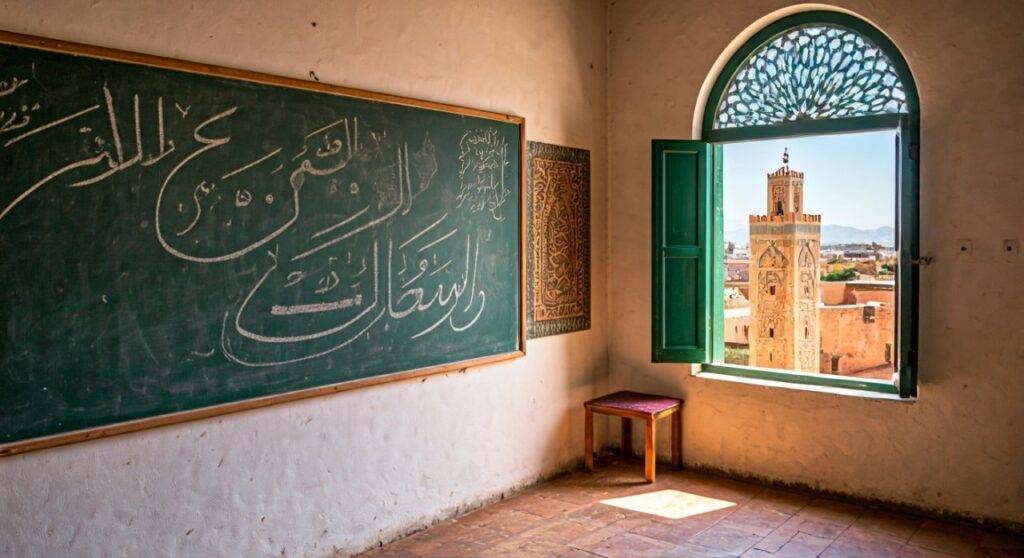
During my years living and working across North Africa, I’ve observed a fascinating linguistic phenomenon: a Moroccan shopkeeper might watch a news broadcast in Standard Arabic with perfect comprehension, but he will respond to his customers in a dialect that a speaker from the Middle East might find nearly unrecognizable. This “one-way” intelligibility is a cornerstone of the Maghrebi linguistic experience.
TL;DR: Key Takeaways
- High Comprehension: Most Moroccans understand Standard Arabic because it is the medium of instruction in schools.
- Media & Religion: Daily exposure to the Quran and Pan-Arab news (like Al Jazeera) reinforces MSA skills.
- The “Gap”: While they understand it, many Moroccans find it “stiff” or difficult to speak fluently in casual settings.
- Vocabulary Differences: Moroccan Arabic integrates significant Amazigh (Berber), French, and Spanish loanwords.
- Asymmetric Intelligibility: It is much easier for a Moroccan to understand a Syrian or Egyptian than vice-versa.
Understanding the Linguistic Bridge: MSA vs. Darija
To answer the question of whether speakers of Moroccan Arabic can understand Standard Arabic, we must first define the two “versions” of Arabic at play. Modern Standard Arabic (MSA) is the standardized, literary version of Arabic used across the Arab world for formal purposes. Moroccan Arabic, or Darija, is a vernacular dialect that has evolved over centuries.
The Role of Formal Education
In Morocco, the educational system is the primary driver of Standard Arabic literacy. From a young age, children are taught to read and write in Fusha. Consequently, the level of understanding is directly correlated with a person’s level of schooling.
- Literate Adults: Generally have high to near-perfect comprehension of MSA.
- Younger Generations: Often have high comprehension but may prefer using French or English in professional digital spaces.
- Rural/Uneducated Populations: May struggle with complex literary MSA but usually understand basic “White Arabic” (a simplified version used in media).
The “Passive” Understanding Advantage
I have found that most Moroccans possess a high “passive” vocabulary in Standard Arabic. They can listen to a political speech or read a newspaper without issue. However, “active” production—speaking it fluently without mixing in Darija—is a skill that requires more effort and is often reserved for formal debates or academic settings.
Why Moroccan Arabic Is So Unique
The reason people ask if speakers of Moroccan Arabic can understand Standard Arabic is that Darija sounds drastically different from the dialects spoken in the Levant or the Gulf. Darija is a linguistic “melting pot.”
Key Linguistic Influences
- Amazigh (Berber): The indigenous languages of North Africa have heavily influenced the syntax and phonology of Darija.
- French: Due to the colonial era, French words are deeply embedded in daily speech (e.g., tomobile for car, marche for walk).
- Spanish: Particularly in the north of Morocco, Spanish influences are prevalent (e.g., kuzina for kitchen).
| Feature | Modern Standard Arabic (MSA) | Moroccan Arabic (Darija) |
|---|---|---|
| Vowels | Clear, long vowels (a, i, u) | Frequent vowel shortening/dropping (schwa) |
| Verb Negation | Uses “La” or “Ma” before verb | Uses “Ma…sh” (e.g., Ma fhamtch) |
| Loanwords | Primarily Classical Arabic roots | High mix of French, Spanish, Amazigh |
| Usage | News, Books, Law, Religion | Daily life, Music, Street talk |
| Difficulty | High (complex grammar) | Medium (simplified grammar, hard phonology) |
Can Standard Arabic Speakers Understand Moroccans?
This is where the confusion often lies. While the answer to “can speakers of Moroccan Arabic understand Standard Arabic?” is a resounding Yes, the reverse is often No.
Middle Easterners (from Saudi Arabia, Jordan, or Lebanon) frequently complain that Moroccan Arabic is the most difficult dialect to understand. When I traveled from Cairo to Casablanca, the shift was jarring. Moroccans speak much faster, and they “swallow” vowels in a way that makes words like mektoub (written) sound like mktb.
The “White Arabic” Solution
When a Moroccan speaks with a non-Maghrebi Arab, they often employ “Ammiya al-Bayda” (White Arabic). This is a neutralized version of their speech where they:
- Remove specific Darija slang.
- Slow down their speech.
- Use more Standard Arabic vocabulary.
- Adopt certain Egyptian or Levantine loanwords made famous by TV shows.
Factors That Help Moroccans Understand Standard Arabic
If you are wondering how the bridge is maintained despite the heavy influence of other languages, look at these three pillars of Moroccan society.
Religious Practice
The Quran is written in Classical Arabic, which is the precursor to MSA. Since Morocco is an Islamic country, the sounds and vocabulary of Standard Arabic are heard daily during the call to prayer (Adhan) and in weekly sermons (Khutbah). This creates a baseline of linguistic familiarity even for those with limited formal schooling.
Pan-Arab Media Consumption
Satellite TV revolutionized Arabic understanding. Channels like Al Jazeera, MBC, and Al Arabiya broadcast almost exclusively in Standard Arabic. Furthermore, children’s cartoons (like the famous Spacetoon channel) are dubbed into MSA. This means Moroccan children are often “immersed” in Standard Arabic before they even start primary school.
Government and Law
All official government documents, street signs, and legal proceedings in Morocco are conducted in Standard Arabic (and often French). To navigate the bureaucracy of the state, one must have at least a functional understanding of MSA.
Common Misconceptions About Moroccan Arabic
“It’s not real Arabic”
This is a myth. While Darija has many loanwords, its core structure and the majority of its “base” verbs are derived directly from Arabic. The grammar is simply more streamlined. When a Moroccan speaker hears a Standard Arabic word, they can usually recognize the “root” (the three-letter system) even if the pronunciation has shifted.
“They prefer French”
While the elite and business classes in cities like Casablanca or Rabat use French extensively, Standard Arabic remains the symbol of national identity and religious heritage. Most Moroccans take pride in their ability to understand the language of the Quran.
Practical Tips for Language Learners
If you are learning Arabic and plan to visit Morocco, here is my expert advice based on years of trial and error:
- Start with MSA: If your goal is to be understood by educated people and to read signs/menus, Modern Standard Arabic is a great foundation.
- Learn Darija Greetings: Even if you speak MSA, use Darija for greetings. Instead of “Kaifa halak?”, use “Labas?”. It builds immediate rapport.
- Expect the “Switch”: Don’t be offended if you speak Standard Arabic to a Moroccan and they reply in French or English. They might assume you are a tourist who doesn’t understand the local dialect.
- Listen for the “Sh”: In Darija, negation ends with a “sh” sound. If you hear Ma-XXXX-sh, they are saying “Not.”
The Expert Perspective: Is the Gap Widening?
In my view, the gap between Moroccan Arabic and Standard Arabic is actually narrowing in terms of comprehension. Thanks to the internet and social media, Moroccans are more connected to the broader Arab world than ever before.
However, Darija is also becoming more “standardized” in its own right through texting and social media apps. We are seeing a rise in “Digitized Darija” where Latin letters and numbers (like 3, 7, 9) are used to represent Arabic sounds. Despite this, the prestige of Standard Arabic ensures it remains a vital part of the Moroccan linguistic identity.
Frequently Asked Questions (FAQ)
Is Moroccan Arabic a separate language?
Linguistically, it is considered a dialect of Arabic, though it is so distinct that some linguists argue it could be classified as a separate language within the Arabic family. However, culturally and politically, it is viewed as a version of Arabic.
Can a Moroccan understand a Saudi Arabian?
Yes, usually. The Moroccan will likely understand the Saudi speaker (especially if the Saudi uses a more standardized dialect), but the Saudi speaker will likely struggle to understand the Moroccan if they speak pure Darija.
Do Moroccans speak Standard Arabic in daily life?
No. Standard Arabic is almost never used for casual conversation, shopping, or speaking with family. It is strictly reserved for “high” or formal functions. Using MSA in a coffee shop would be seen as very strange or overly formal, similar to someone speaking Shakespearean English in a modern Starbucks.
Why does Moroccan Arabic have French words?
Morocco was a French protectorate from 1912 to 1956. During this time, French became the language of administration, technology, and medicine. Those terms stayed in the local dialect even after independence.
**
**
**
**