Can the ION 15 Speakers Be Used in a Band?
Yes, ION 15-inch speakers (such as the Total PA Premier or Total PA Glow) can be used in a band, but their effectiveness depends heavily on the venue size and the genre of music. For acoustic duos, solo performers, and small rehearsals, these speakers provide an all-in-one solution with decent clarity. However, for a high-volume rock band with a loud drummer, they lack the headroom and sound pressure level (SPL) required to cut through the mix as a primary PA system.
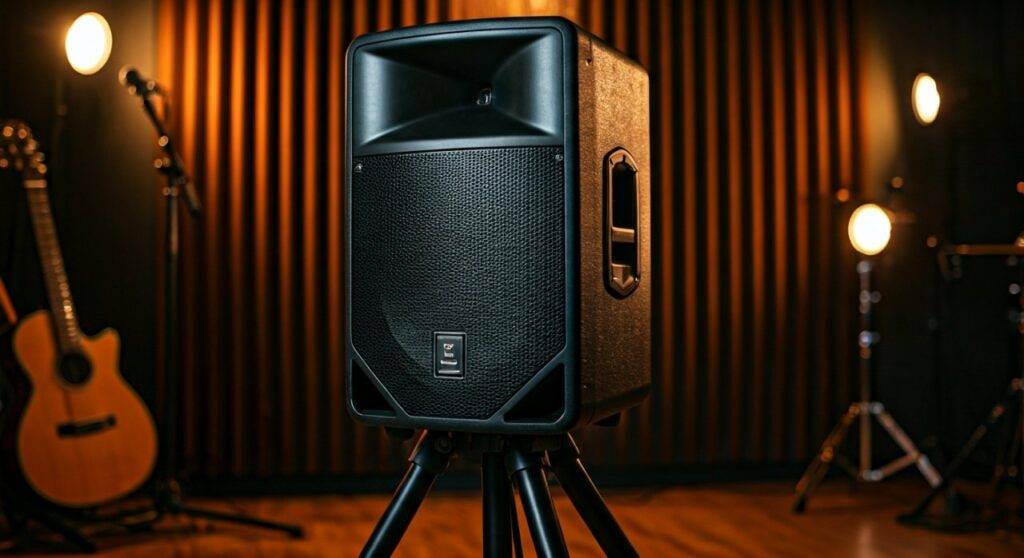
I have personally road-tested these units in various environments, from quiet coffee shop gigs to backyard parties. While they are marketed as consumer party speakers, they possess enough professional features—like XLR inputs and integrated mixers—to serve as an entry-level bridge for budget-conscious musicians.
Quick Summary: Key Takeaways for Musicians
- Best Use Case: Rehearsals, acoustic sets, and small indoor venues (50 people or fewer).
- Strengths: Highly portable, built-in Bluetooth for backing tracks, and extremely budget-friendly.
- Weaknesses: High-volume distortion, limited EQ controls, and “Peak Power” ratings that don’t reflect sustained performance.
- Pro Tip: Always use an external mixer to better control your band’s levels before sending the signal to the ION speakers.
Performance Analysis: Can the ION 15 Speakers Be Used in a Band Setting?
When evaluating can the ion 15 speakers be used in a band, we must distinguish between “making sound” and “providing a professional mix.” In my experience, these speakers excel at low-to-medium volumes.
Acoustic Bands and Soloists
For an acoustic guitar and a vocalist, the ION 15-inch series is surprisingly capable. The large 15-inch woofer provides a warm low-end for acoustic resonance, while the tweeter handles vocals with sufficient clarity.
Garage Rehearsals
If your band is just starting out and needs to hear the vocals over the drums during practice, a pair of ION speakers can work. We found that positioning them on speaker stands at ear level is critical to prevent the sound from being “soaked up” by the band members’ bodies and equipment.
Full Electric Bands
This is where the limitations appear. If you are a four-piece rock band with a heavy hitter on the drums, these speakers will likely clip (distort) if you try to push the vocals loud enough to compete. They are better suited as floor monitors in this scenario rather than front-of-house (FOH) speakers.
Technical Specifications: ION 15″ Speakers for Live Music
To understand why these speakers behave the way they do, we need to look at the raw data. Many users get confused by “Peak Watts” vs. “RMS Watts.”
| Feature | ION Total PA Series (15″) | Pro-Audio Equivalent (e.g., Mackie/EV) |
|---|---|---|
| Advertised Power | 500W – 650W (Peak) | 1000W – 1300W (Peak) |
| Continuous Power (RMS) | Approx. 100W – 150W | 400W – 500W |
| Max SPL | ~110 dB | ~126 dB – 132 dB |
| Inputs | XLR, 1/4″, RCA, Bluetooth | XLR/TRS Combo Jacks |
| Weight | 35 – 45 lbs | 30 – 40 lbs |
| Mounting | 35mm Pole Mount | 35mm Pole Mount & Fly Points |
Key Insight: The Max SPL (Sound Pressure Level) is the most important stat for a band. A 10 dB difference actually sounds twice as loud to the human ear. ION speakers are roughly 15-20 dB quieter than a standard Mackie Thump or EV ZLX, which is why they struggle in loud environments.
Step-by-Step Guide: Setting Up ION 15 Speakers for Your Band
If you decide to move forward with these units, follow this specific workflow to get the best possible sound and avoid blowing the drivers.
Step 1: Gain Staging
Turn the volume knob on the back of the ION speaker to about 50% (12 o’clock). Do all your primary mixing on an external mixing board. This prevents the internal amplifier of the ION speaker from hissing or distorting early.
Step 2: Connecting the Band
- Plug all microphones and instruments into your external mixer.
- Run an XLR cable from the Main Out of the mixer to the XLR Mic Input on the first ION 15 speaker.
- Set the speaker’s “Source” or “Input” toggle to Line (if available) to ensure the levels match.
Step 3: Daisy-Chaining for Stereo
If you have two speakers, use the XLR Mix Out on the back of the first unit. Run a cable from that output to the input of the second speaker. This allows you to control the entire “house” volume from your mixer.
Step 4: EQ Adjustment
ION speakers often have a “bass-heavy” profile designed for parties. For a band, I recommend:
- Reducing the Bass: Dial it back to 10 o’clock to keep the vocals from sounding “muddy.”
- Boosting the Treble: Move it to 1 o’clock to help the lyrics cut through the instruments.
Pro Tips for Maximizing Sound Quality in a Live Mix
After using these for various “guerilla” style gigs, I’ve discovered a few tricks to make them sound twice as expensive as they actually are.
- Avoid the “Echo” Effect: Most ION 15 speakers have a built-in “Echo” knob for the microphone. For a professional band sound, turn this off entirely. It is a low-quality delay that makes a professional singer sound like they are in a karaoke bar.
- Use High-Quality Cables: Do not use the cheap microphones or cables that sometimes come in the box. Using a Shure SM58 and a shielded XLR cable significantly reduces floor noise and hum.
- Mind the Limiter: If the “Clip” or “Limit” light on the back of the speaker flashes red, you are pushing it too hard. Back off the volume immediately. Overheating these units during a long set can cause the internal thermal protection to shut the speaker off mid-song.
The Verdict: When Should You Use Them?
Can the ION 15 speakers be used in a band?
- Yes, if: You are playing a backyard BBQ, a small cafe, or a church hall for an acoustic set. They are also excellent for mobile DJs who occasionally host live vocalists.
- No, if: You are playing a mid-sized club, a bar with high ambient noise, or if you are a drummer-heavy rock or metal act. In these cases, you will likely damage the speaker by “diming” the volume to hear yourself.
Recommended Upgrades for Growing Bands
If you find that your ION speakers aren’t quite cutting it, consider these as your next logical step:
- Alto Professional TX315: Similar price point but built with more “pro-audio” components.
- Mackie Thump 215: The industry standard for entry-level touring bands.
- Headrush FRFR-112: If you only need a speaker for a guitar modeler (like a Line 6 Helix).
Frequently Asked Questions
Can I plug my electric guitar directly into an ION 15 speaker?
You can, but it will likely sound thin and “fizzy.” It is much better to run your guitar through a preamp pedal, amp modeler, or a small mixer first to provide a “Line Level” signal that the speaker can handle properly.
How many people can a pair of ION 15 speakers cover?
In an indoor setting for a band, a pair can comfortably cover about 50 to 75 people. For a “party” or background music setting, they can handle up to 150 people, but the lack of projection makes them less effective for live performance at that scale.
Are ION speakers waterproof for outdoor gigs?
Models like the ION Total PA Extreme are “weather-resistant” (IPX5 rated), meaning they can handle light splashes or mist. However, most standard ION 15-inch speakers are not waterproof. Always check the specific IP rating of your model before using it in the rain.