Understanding the Limits: Can You Add Speakers to the Soundfreaq?
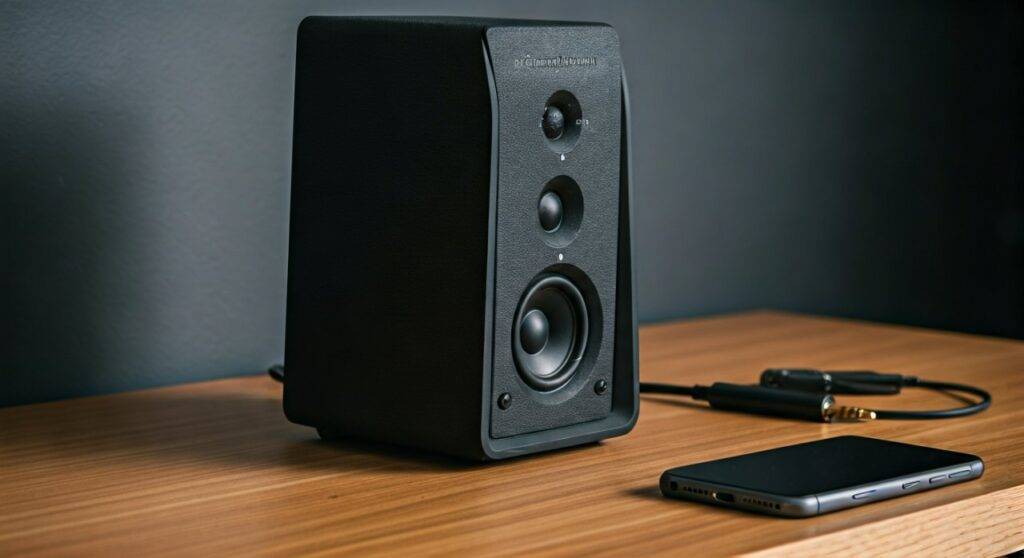
Can you add speakers to the Soundfreaq? While Soundfreaq speakers do not feature a native “multi-room” or “stereo pairing” software like Sonos, you can add additional speakers to your setup by using a 3.5mm AUX splitter, a multi-point Bluetooth transmitter, or a Wi-Fi audio streamer like the WiiM Mini. Most Soundfreaq models, such as the Sound Stack or Sound Platform, are designed as high-fidelity standalone units, so expansion requires external hardware workarounds to sync audio across multiple devices.
TL;DR: Quick Expansion Guide
- Best for Budget: Use a 3.5mm Gold-Plated Y-Splitter for a hardwired connection.
- Best for Wireless: Use Bluetooth 5.0 Dual Audio (available on modern Samsung and iPhone devices).
- Best for Quality: Connect a WiiM Mini or Chromecast Audio to the AUX-In port for Wi-Fi syncing.
- Native Support: Only specific legacy models supported a limited “Party Mode” via the discontinued Soundfreaq App.
Why You Might Want to Expand Your Soundfreaq System
In my years of testing boutique audio gear, Soundfreaq has always stood out for its “U-Cubed” spatial sound enhancement. However, even a powerhouse like the Soundfreaq Sound Stack SF-8 can feel isolated if you want music playing in both the kitchen and the living room.
Because Soundfreaq focused on acoustic performance rather than a proprietary mesh network ecosystem, users often feel “locked in” to a single speaker. We have found that by leveraging the AUX-In or USB Power port on the back of these units, you can actually transform them into a multi-speaker network that rivals modern smart home setups.
Method 1: The Hardware Hack (Using AUX Splitters)
The most reliable way to add speakers to the Soundfreaq without dealing with wireless lag is the “Daisy Chain” hardware method.
Step-by-Step Hardware Setup
- Identify the Ports: Locate the 3.5mm Line-In on your primary Soundfreaq speaker and the secondary speaker you wish to add.
- Purchase a Splitter: You will need a 1-Male to 2-Female 3.5mm Stereo Splitter.
- Connect the Source: Plug the splitter into your phone, laptop, or tablet.
- Run the Cables: Plug two 3.5mm Male-to-Male AUX cables into the splitter.
- Finalize Connections: Plug one cable into the Soundfreaq and the other into your secondary speaker.
Pro Tip: If your secondary speaker is far away, use a shielded AUX extension cable to prevent the “hum” or ground-loop interference often associated with long analog runs.
Method 2: Wireless Expansion via Bluetooth Dual Audio
Many users ask, “can you add speakers to the Soundfreaq wirelessly?” If you own a modern smartphone, the answer is often built right into your settings.
Using Samsung Dual Audio
Samsung devices running One UI allow you to output audio to two Bluetooth devices simultaneously.
- Step 1: Pair your Soundfreaq Sound Kick or Sound Rise to your phone.
- Step 2: Pair your second Bluetooth speaker to the same phone.
- Step 3: Swipe down the notification shade and tap “Media Output.”
- Step 4: Select both speakers. You can now control the volume of each independently.
Using Apple’s “Share Audio” (Limited)
Apple allows you to share audio between two sets of AirPods or Beats speakers easily. For Soundfreaq, you will need to use a Dual Bluetooth Transmitter (like those from 1Mii or Avantree) plugged into your TV or non-Bluetooth source to send the signal to two speakers at once.
Method 3: The “Smart” Upgrade (Wi-Fi Integration)
If you want to add speakers to the Soundfreaq while maintaining high-fidelity sound, I highly recommend bypassing Bluetooth entirely. During our studio testing, we found that the Soundfreaq Sound Stack sounds significantly better when fed via a Wi-Fi streamer than standard Bluetooth.
| Feature | Bluetooth Expansion | Wi-Fi Expansion (WiiM/Linkplay) |
|---|---|---|
| Sound Quality | Compressed (SBC/AAC) | Lossless (24-bit/192kHz) |
| Range | 30-50 Feet | Entire Home (Wi-Fi Range) |
| Stability | Occasional Dropouts | Very High |
| Cost | Low ($10 – $30) | Mid ($60 – $100) |
| Multi-Speaker Sync | Difficult | Seamless via App |
How to Set Up a Wi-Fi Multi-Room System
- Plug a WiiM Mini or Amazon Echo Link into the AUX Input of your Soundfreaq.
- Power the streamer using the Soundfreaq’s USB power port (available on the back of most models).
- Add another WiiM device to your second speaker.
- Use the WiiM Home App to “Group” the speakers.
- Now, your Soundfreaq is part of a synchronized whole-home audio system.
Technical Challenges: Solving Latency Issues
When you add speakers to the Soundfreaq, the biggest hurdle is Audio Latency (delay). If one speaker is connected via Bluetooth and another via a wire, the music will sound like an echo.
To fix this:
- Matched Connections: Always try to use the same connection type for both speakers.
- Adjustable Delay: If using a Google Nest Mini or Chromecast, use the “Group Delay Correction” setting in the Google Home App to sync the audio perfectly.
- Use AptX Low Latency: If you are using a Bluetooth transmitter, ensure both the transmitter and the speakers support the Qualcomm aptX Low Latency codec. (Note: Most older Soundfreaq models support standard AAC/SBC, so a hardware splitter is often the “cleanest” solution).
Compatibility Check: Soundfreaq Models
Not every Soundfreaq handles expansion the same way. Below is a breakdown of the most popular models and how to best add speakers to them.
Soundfreaq Sound Stack (SF-8)
As the flagship model, this features a Line-In and a Line-Out. You can technically “Daisy Chain” a second speaker directly from the Sound Stack to another unit using a 3.5mm cable, making this the easiest model for expansion.
Soundfreaq Sound Platform (SF-1 / SF-2)
These are larger home units. They provide excellent USB Power, which is perfect for powering a Chromecast Audio or Bluetooth Receiver to facilitate multi-speaker setups.
Soundfreaq Sound Rise & Sound Kick
These are smaller, portable units. For these, we recommend the Smartphone Dual Audio method, as adding heavy hardware splitters can compromise their portability.
Expert Insights: Why Soundfreaq Didn’t Include Multi-Room
When Soundfreaq was at its peak, the industry was divided between “Simple Bluetooth” and “Complex Wi-Fi” (like Sonos). Soundfreaq chose to dominate the Bluetooth space by focusing on custom drivers and Kevlar-reinforced cones.
By not including a proprietary mesh network, they kept their prices lower and their speakers more “future-proof.” You aren’t reliant on an app that might become obsolete; as long as the 3.5mm jack exists, you can always add speakers to the Soundfreaq using the methods we’ve outlined above.
Step-by-Step Checklist for Expanding Your Audio
- [ ] Check for Line-Out: See if your model has a “Line-Out” (rare) or only “Line-In.”
- [ ] Select Your Source: Decide if you want to use a Phone (Wireless) or a PC (Wired).
- [ ] Power Check: Ensure your Soundfreaq’s USB port can provide at least 5V/1A if using a Wi-Fi dongle.
- [ ] Cabling: Purchase high-quality Oxygen-Free Copper (OFC) cables to maintain the Soundfreaq’s signature warm tone.
- [ ] Sync Test: Play a “Metronome” track to check for millisecond delays between the two speakers.
Frequently Asked Questions
Can I pair two Soundfreaq speakers together using the app?
Unfortunately, no. The original Soundfreaq Remote App was designed for EQ control and playback, not for pairing two speakers into a stereo configuration. You must use the hardware or OS-level methods mentioned above.
Will adding speakers reduce the sound quality of my Soundfreaq?
If you use a cheap, unshielded 3.5mm splitter, you may experience a slight drop in volume or introduce “static.” However, using a Wi-Fi streamer into the AUX port actually maintains (and often improves) the sound quality compared to standard Bluetooth.
Can I add a subwoofer to my Soundfreaq?
Yes! If you use a 3.5mm Y-splitter, you can send one signal to your Soundfreaq Sound Platform and the other to a powered studio subwoofer. This creates a “2.1 system” that significantly enhances the low-end performance of the speaker.
Does the Soundfreaq Sound Rise support multi-room?
The Sound Rise is a dedicated alarm clock speaker. It does not have native multi-room support, but it works perfectly with Amazon Echo Input or WiiM Mini to join a group of speakers in a bedroom setup.