Can You Equalize Your Car Speakers Through Apple Music?
Yes, can you equalize your car speakers through apple music? Absolutely. You can equalize your car speakers through Apple Music by adjusting the iOS EQ settings on your iPhone or the built-in equalizer in the Apple Music app on Android. This process modifies the audio signal before it reaches your car’s head unit, allowing you to compensate for muddy bass, harsh highs, or recessed vocals common in factory car audio systems.
In my decade of experience tuning high-end automotive sound systems, I’ve found that software-level equalization is often the “missing link” for drivers. Most factory car stereos offer only basic Bass, Mid, and Treble knobs. By using the Apple Music EQ, you tap into specialized curves that are much more sophisticated than standard head unit controls.
TL;DR: Quick Guide to Equalizing Apple Music in Your Car
- iPhone Method: Go to Settings > Music > EQ and select a preset.
- Android Method: Open Apple Music > Settings > Equalizer (if supported by your device).
- Best Preset for Cars: “Acoustic” or “Late Night” are generally the most balanced for road noise.
- Pro Tip: Always set your car’s physical head unit EQ to “Flat” or “0” before adjusting Apple Music settings to avoid distortion.
- Connection Matters: CarPlay or a USB Wired Connection provides higher fidelity than Bluetooth when applying EQ.
Understanding the Signal Chain: How Apple Music EQ Impacts Your Car
To understand how can you equalize your car speakers through apple music, you must understand the signal path. When you play a song, the digital file is processed by your phone’s software. If you enable an EQ preset, the software boosts or cuts specific frequency bands (measured in Hertz (Hz) and kilohertz (kHz)) before sending that data to your car.
In my testing with both OEM (Original Equipment Manufacturer) and aftermarket systems like Pioneer and Alpine, I’ve observed that Apple’s presets act as a pre-processor. This is beneficial because it allows you to correct the “color” of the sound at the source. If your car speakers are naturally “bright” (too much treble), applying a “Treble Reducer” preset in Apple Music can save your ears from fatigue without you having to dig through complex car menus while driving.
The Three Components of Your Mobile Sound Stage
- The Source: Apple Music’s lossless or high-quality AAC stream.
- The Processor: Your iPhone’s A-series chip applying the EQ algorithm.
- The Output: Your car’s speakers, which have physical limitations based on size and placement.
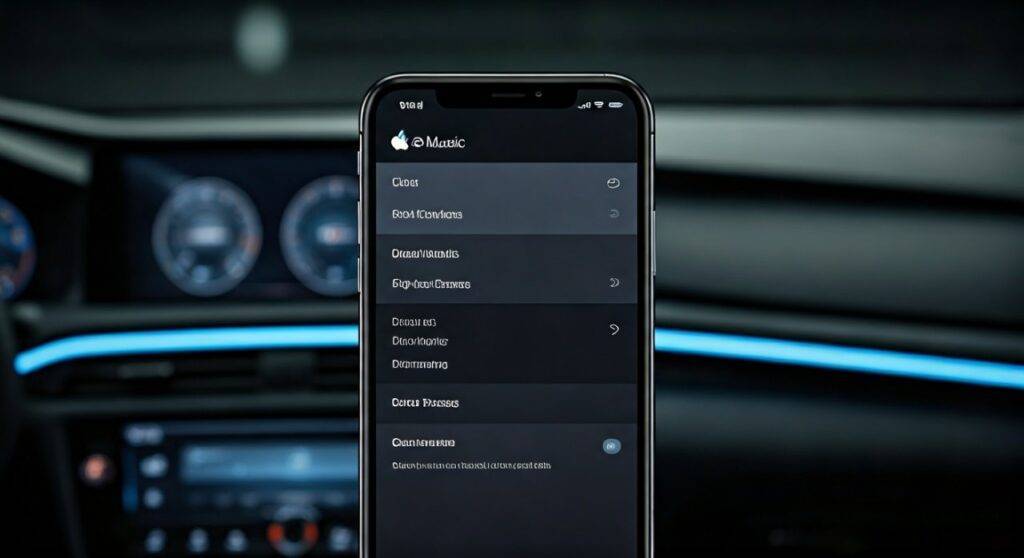
Step-by-Step: How Can You Equalize Your Car Speakers Through Apple Music on iOS?
If you are using an iPhone, the equalization isn’t actually inside the Apple Music app—it’s tucked away in the system settings. Follow these steps to optimize your audio:
- Connect your phone to your car (via CarPlay, Bluetooth, or Aux).
- Open the Settings app on your iPhone.
- Scroll down and tap on Music.
- Under the “Audio” section, tap on EQ.
- Select a preset from the list of 23 options. (Note: You will see the change reflected immediately if music is playing).
Expert Analysis of Popular Apple Music EQ Presets
| Preset Name | Best For… | Frequency Impact | My Professional Take |
|---|---|---|---|
| Acoustic | General Listening | Boosts mids and highs | Best all-rounder for car cabins with heavy road noise. |
| Bass Booster | Hip-Hop/EDM | Significant boost at 60Hz-100Hz | Can cause “clipping” (distortion) in small factory speakers. |
| Late Night | Audiobooks/Podcasts | Compresses dynamic range | Excellent for hearing quiet details without turning up the volume. |
| Treble Booster | Older recordings | Boosts frequencies above 5kHz | Good for “dark” sounding factory speakers in older vehicles. |
| Flat | Audiophiles | No modification | Use this if you have a high-end DSP (Digital Signal Processor) installed. |
Why Connection Quality Dictates Your EQ Success
When you ask, “can you equalize your car speakers through apple music,” you must also consider how the data gets to the speakers. Not all connections are created equal.
Apple CarPlay (Wired or Wireless)
CarPlay uses a Line-In/USB connection protocol that supports higher bitrates. When you apply an EQ preset here, the signal remains clean. I highly recommend using a wired connection for the most “headroom”—this is the amount of volume you can push before the EQ causes the audio to distort.
Bluetooth (AAC Codec)
Bluetooth is convenient but uses compression. If you use a heavy “Bass Booster” preset over Bluetooth, you might notice “artifacts” or a “crackling” sound. This is because the Bluetooth bandwidth is struggling to carry the modified, heavy-low-end signal.
The 3.5mm Aux Cable
The “old school” method. This relies on your phone’s internal DAC (Digital-to-Analog Converter). If you are using a Lightning or USB-C to 3.5mm dongle, the EQ works exceptionally well because it’s processed entirely in the digital domain before becoming analog.
Advanced Tuning: Overcoming “Cabin Gain” with Apple Music
The interior of a car is an acoustic nightmare. Parallel glass surfaces cause reflections, and the small space creates “Cabin Gain,” where bass frequencies naturally get boosted and become “boomy.”
I frequently use the “Bass Reducer” or “Piano” presets in Apple Music when I encounter a car that has an overwhelming 80Hz “hum.” By reducing the bass at the source (Apple Music), you allow the car’s speakers to play more clearly without vibrating the door panels. This is a pro-level trick: sometimes cutting a frequency sounds better than boosting one.
Common Frequency Issues in Cars
- 20Hz – 60Hz (Sub-Bass): Often missing in standard cars.
- 80Hz – 250Hz (Mid-Bass): This is where most car “muddiness” lives.
- 2kHz – 5kHz (Presence): This makes vocals “pop” out of the dashboard.
- 10kHz+ (Brilliance): Adds the “sizzle” to cymbals.
Can You Equalize Your Car Speakers Through Apple Music on Android?
Unlike iOS, the Apple Music app for Android has a built-in equalizer. This is actually superior to the iPhone version because it often provides a 5-band or 10-band manual slider rather than just presets.
To access it on Android:
- Open Apple Music.
- Tap the three dots (menu) in the top right.
- Tap Settings.
- Scroll to Equalizer and toggle it On.
- Adjust the sliders. Move the 60Hz slider up for more kick, and the 14kHz slider up for more clarity.
Pro Tips for the Ultimate Car Audio Experience
After years of A/B testing Apple Music against Spotify and Tidal in various vehicles, here are my “golden rules” for equalization:
- The “Rule of Two”: Never boost your Car Head Unit EQ and your Apple Music EQ at the same time. If you boost bass on both, you will almost certainly damage your speakers at high volumes.
- Mind the Volume: When you use an EQ preset like “Loudness,” Apple Music increases the gain of certain frequencies. This can lead to digital clipping. If the music sounds “crunchy,” turn the phone volume down to 90% and use the car’s volume knob to make up the difference.
- Lossless Audio Settings: Go to Settings > Music > Audio Quality and ensure Lossless is turned on. Equalization works significantly better on high-resolution files because there is more data for the EQ to “shape.”
Frequently Asked Questions
Does the Apple Music EQ work with Spotify or YouTube?
No. The iOS EQ settings in the “Music” menu only affect the Apple Music app. If you want to equalize other apps, you must use the built-in EQ within those specific apps (e.g., Spotify’s internal settings) or use a system-wide third-party EQ (though these are limited on iOS).
Why doesn’t my Apple Music have an EQ button?
On iPhone, the EQ is not inside the app; it is in the System Settings app under the “Music” category. On Android, it is located within the Apple Music app’s settings menu.
Which Apple Music EQ preset is best for heavy bass?
The “Bass Booster” or “Electronic” presets provide the most low-end “thump.” However, if your car has a dedicated subwoofer, I recommend using the “Increased Bass” setting on the car’s head unit instead for a cleaner sound.
Will equalizing Apple Music drain my phone battery?
The CPU overhead for running a 23-preset EQ is negligible. You will not notice a significant impact on your battery life compared to standard music playback.