The Aesthetic Conflict: Can You Hang Picture Near In Wall Speakers?
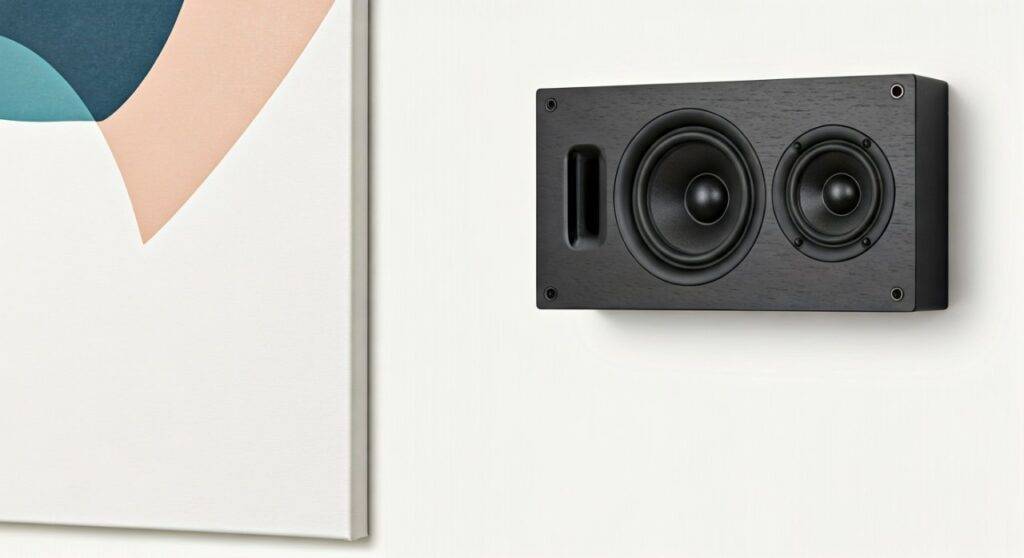
Yes, you can hang a picture near in-wall speakers as long as you maintain a clearance of at least 2 to 4 inches from the edge of the speaker grille. This prevents the frame from vibrating against the wall and ensures the sound waves can disperse properly without being muffled or distorted.
In my fifteen years of home theater installation, I have seen countless homeowners struggle to balance interior design with high-end audio performance. Hanging art too close to an in-wall speaker is one of the most common mistakes, often leading to annoying “rattling” sounds during bass-heavy movie scenes. This guide will walk you through the technical safety requirements, acoustic considerations, and the exact steps to secure your decor without ruining your surround sound experience.
🚀 Key Takeaways: Quick Summary for Homeowners
- Safe Distance: Keep frames 2-4 inches away to avoid acoustic diffraction.
- Vibration Control: Use adhesive rubber bumpers on the back of frames to stop rattling.
- Wire Safety: Always use a stud finder with AC wire detection to avoid hitting speaker cables.
- Material Choice: Lightweight, canvas-wrapped art is safer than heavy, glass-fronted frames near high-output speakers.
- The Golden Rule: Never cover the speaker grille unless you are using specialized acoustically transparent fabric.
Understanding the Risks of Hanging Pictures Near Speakers
Before you drive a nail into the wall, you need to understand what is happening behind the drywall. Unlike standard walls, the area around an in-wall speaker is a “live” zone subject to mechanical energy.
Mechanical Vibrations and Rattling
In-wall speakers transfer energy directly into the drywall studs. When you hang a traditional picture frame nearby, the low-frequency vibrations (bass) can cause the frame to dance against the wall. I have personally diagnosed “blown speakers” that turned out to be nothing more than a loose picture wire vibrating against a nail.
Acoustic Diffraction
Sound waves need room to “breathe” as they exit the speaker. If you place a thick, heavy frame right next to the tweeter, the sound waves hit the edge of the frame and bounce back. This is called diffraction, and it creates “muddy” audio where the high frequencies lose their clarity.
Electrical Interference and Damage
Most in-wall speakers have wires running vertically or horizontally through the wall cavity. If you aren’t careful, you might drive a screw directly into a 14-gauge speaker wire, causing a short circuit that could fry your AV receiver.
Essential Tools for Safe Installation
To do this right, you need more than just a hammer. Based on my professional toolkit, these are the non-negotiables:
| Tool | Purpose | Why It’s Critical |
|---|---|---|
| Electronic Stud Finder | Locates studs and wires. | Prevents drilling into speaker cables. |
| Rubber Bumpers | Small adhesive pads. | Dampens vibrations between the frame and wall. |
| Command Strips | Adhesive hanging. | Best for lightweight art to avoid wall penetrations. |
| Laser Level | Ensures perfect alignment. | Helps keep symmetry with the speaker grilles. |
| Wall Anchors | Secure fastening. | Prevents the “vibration-walk” of heavy frames. |
Step-by-Step Guide: How to Hang Pictures Near In-Wall Speakers
Following this process ensures that your home theater looks like a gallery while sounding like a cinema.
Step 1: Map the “Dead Zone”
First, identify exactly where your speaker wires are running. Use a stud finder with a voltage sensor. Usually, wires run vertically from the speaker down to the floor or up to the ceiling. Mark a 6-inch “No-Fly Zone” around the speaker where you will avoid using deep nails or screws.
Step 2: Test for Vibration
Before permanently mounting, hold the picture in the desired spot and play a bass-heavy track or an action movie scene. If you feel the frame vibrating in your hands, move it an inch further away or plan to use dampening materials.
Step 3: Apply Anti-Vibration Pads
I recommend placing silicone rubber bumpers on all four corners of the back of the picture frame. This creates a tiny air gap (approx. 1/8th of an inch) between the frame and the wall. This gap is the “secret sauce” that prevents the frame from buzzing against the drywall.
Step 4: Choose the Right Hardware
If you are hanging a heavy frame, do not rely on a single nail. Use toggle bolts or zinc self-drilling anchors. These provide a tighter grip that won’t loosen over time due to the constant micro-vibrations from the subwoofer or woofers.
Step 5: Final Alignment
Ensure the frame is at least 3 inches away from the edge of the speaker grille. This maintains the aesthetic balance and prevents the frame from becoming an accidental acoustic baffle.
Can You Hang Picture Near Speakers? Material Comparisons
The type of art you choose significantly impacts how much it will interfere with your in-wall speakers.
Canvas Wraps vs. Glass Frames
Canvas wraps are the gold standard for home theaters. They are lightweight and have a soft surface that actually helps absorb stray sound reflections. In contrast, glass-fronted frames are highly reflective. If you place a large glass frame directly opposite or next to a speaker, you may experience “bright” or “harsh” sound.
Metal Prints
Be cautious with metal prints. Metal is highly resonant. If you must use them, ensure they are mounted with heavy-duty adhesive strips across the entire back surface to kill any “ringing” tendencies.
Expert Pro-Tip: The “Acoustic Art” Alternative
If you absolutely must cover or be extremely close to a speaker, consider Acoustic Art Panels. These are specialized panels made from high-density fiberglass or rockwool, wrapped in acoustically transparent fabric printed with your choice of art.
We often use these in professional studio designs because they serve two purposes:
- They hide the speaker or the wall space beautifully.
- They improve the room’s sound by reducing standing waves and echoes.
Advanced Troubleshooting: Why is my Picture Rattling?
If you’ve followed the steps and still hear a “buzz” when the volume goes up, check these three common culprits:
- The Wire Hanger: Standard picture wire is notorious for vibrating against the back of the frame. Use D-rings mounted directly to the wall instead.
- Loose Glass: If the glass is loose inside the frame, use a tiny bead of clear silicone caulk to secure it to the frame’s lip.
- Internal Wall Resonance: Sometimes the in-wall speaker’s back-box isn’t insulated. Adding poly-fill insulation inside the wall cavity (if accessible) can reduce the energy transferred to the surrounding art.
FAQ: Hanging Decor Near Audio Equipment
Can I hang a picture directly over an in-wall speaker?
No, you should never cover a speaker with a standard picture. It will muffle the high frequencies and could cause the speaker to overheat. The only exception is using acoustically transparent art, which is designed specifically for this purpose.
Will the magnets in the speaker ruin my digital art frame?
Modern in-wall speakers are usually shielded, and digital frames (like The Frame TV or Samsung Canvas) are not easily affected by the small magnetic fields of speakers. However, keeping a 4-inch distance is still a good practice to avoid any potential electro-magnetic interference (EMI).
How do I find speaker wires behind the wall?
Use an advanced wall scanner like the Walabot DIY or a high-end Zircon stud finder. These tools can “see” through the drywall to identify the plastic casing of the speaker wires. If you are unsure, look for the direction the wire enters the speaker terminal and assume it runs straight to the floor or ceiling.
Does the frame thickness matter?
Yes. A very deep “shadow box” frame will cause more sound diffraction than a thin, flat frame. If you are using a thick frame, increase the distance from the speaker to at least 5 or 6 inches to allow the sound waves to wrap around the frame properly.