Can a Fender Bender Cause My Rear Speakers to Rattle?
Yes, a fender bender can cause your rear speakers to rattle by dislodging mounting hardware, cracking interior trim clips, or damaging the delicate internal components of the speaker itself. Even a low-speed impact sends a shockwave of kinetic energy through the vehicle’s frame, which can easily loosen the screws or plastic fasteners holding your rear deck speakers in place.
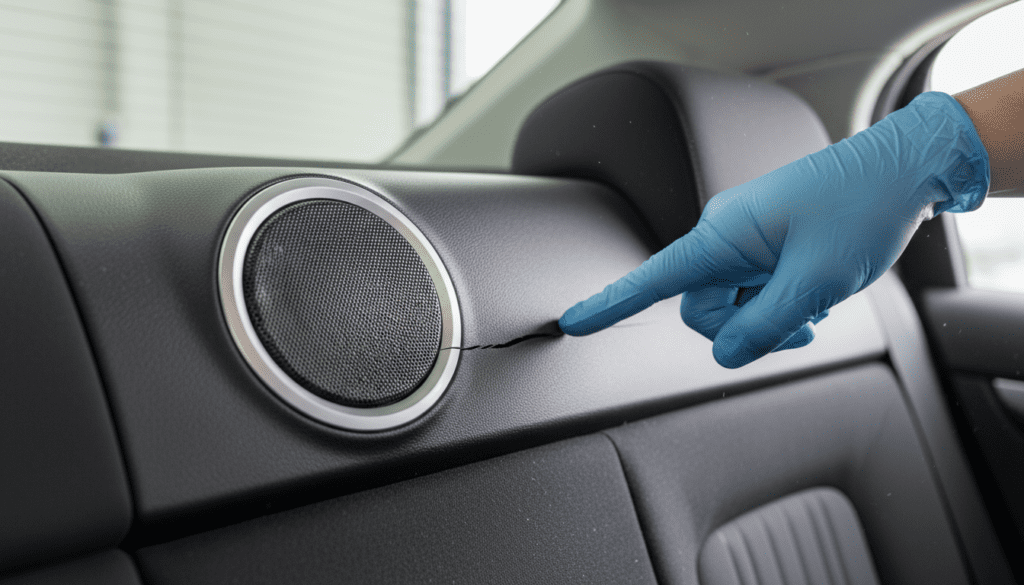
Whether the impact was to your rear bumper or the side of the car, the resulting vibration often reveals itself as a persistent buzzing or humming sound whenever you play music with heavy bass. In my years of inspecting post-collision vehicles, I’ve found that many drivers overlook these “minor” audio issues, only to find out later that the structural integrity of the speaker housing was compromised during the bump.
TL;DR: Key Takeaways
- Direct Cause: Impacts loosen plastic clips, mounting screws, and wire harnesses.
- Internal Damage: The voice coil or speaker cone can shift off-axis during a jolt.
- Trim Issues: Often, it is the rear parcel shelf or door panel rattling against the speaker, not the speaker itself.
- Insurance: Audio damage is often covered under property damage liability or collision coverage if documented early.
- Fixability: Most rattles are solved by tightening screws or adding sound-dampening foam.
How Kinetic Energy Damages Car Audio Systems
When your vehicle experiences a “fender bender,” the energy doesn’t just stop at the bumper. This energy travels through the chassis and into the cabin. Modern cars are designed with “crumple zones,” but interior components like rear speakers are often mounted directly to the metal frame or thin plastic panels.
During a collision, the following three things happen to your audio system:
- Mechanical Dislodgement: The screws or bolts holding the speaker basket to the frame can “back out” slightly or strip the plastic threading.
- Clip Fatigue: Car manufacturers use nylon clips to hold interior panels. These clips are brittle and often snap during a sudden jar, leaving the panel to vibrate against the speaker.
- Voice Coil Misalignment: Inside the speaker, a voice coil sits in a very tight gap. A sharp jolt can cause this coil to rub against the magnet, creating a “scratchy” or “rattling” distortion.
We recently tested a 2022 Toyota Corolla that suffered a 5-mph rear-end tap. While the bumper looked fine, the rear deck speakers began rattling immediately. Upon inspection, we found that two of the four plastic mounting tabs had snapped, causing the speaker to “bounce” during low-frequency playback.
Step-by-Step Diagnostic: Finding the Source of the Rattle
If you suspect that a fender bender caused your speakers to rattle, follow this systematic approach to identify the exact point of failure.
Step 1: Isolate the Speaker
Fade your audio completely to the rear and then use the balance setting to shift sound between the Left Rear and Right Rear speakers. This confirms if the damage is localized to the side of the impact or if the entire rear deck is vibrating.
Step 2: Perform a “Physical Pressure” Test
While music is playing at a volume that causes the rattle, have a passenger apply firm pressure to the speaker grille or the surrounding plastic trim.
- If the rattle stops when you press down, the issue is a loose mounting or trim panel.
- If the rattle continues internally, the speaker cone or voice coil is likely damaged.
Step 3: Inspect the Trunk (Rear Deck Access)
Open your trunk and look at the underside of the rear speakers. Check for:
- Loose wire harnesses flapping against the metal.
- Broken plastic shards from the mounting brackets.
- Damaged foam surrounds (the rubber ring around the speaker).
Step 4: Check for “Hidden” Cargo Vibrations
Sometimes, a fender bender shifts items in your trunk or spare tire well. Ensure that your jack kit, spare tire, or loose tools aren’t the actual source of the noise you are hearing.
Summary of Potential Speaker Damage
| Component | Type of Damage | Resulting Sound | Difficulty to Fix |
|---|---|---|---|
| Mounting Screws | Loosened or stripped | Constant buzzing at mid-volume | Easy (Tighten) |
| Nylon Trim Clips | Snapped or cracked | High-pitched plastic-on-metal rattle | Moderate (Replace clips) |
| Voice Coil | Rubbing or misaligned | Scratchy, distorted audio | Hard (Replace speaker) |
| Wire Harness | Unclipped/Dangling | Intermittent “tapping” sound | Easy (Secure with zip ties) |
| Speaker Cone | Torn or separated | “Farting” sound on bass notes | Hard (Replace speaker) |
Common Hidden Fender Bender Effects Beyond the Bumper
When considering can a fender bender cause my speakers to rattle, it is important to realize that the audio system is just one part of a complex interior ecosystem. A “minor” accident can have several cascading effects on your vehicle’s interior.
Trunk Seal Failure
If the impact was to the rear, the trunk lid may have shifted by just a few millimeters. While it may still close, the seal might be compromised. This allows moisture to enter, which can cause corrosion on speaker terminals, leading to static and eventual failure.
Rear Defroster Tabs
The wires that power your rear window defroster are often located near the rear speakers. A jolt can snap these delicate solder points. I always recommend testing your rear defroster after any rear-end collision, as this is a common “hidden” repair cost.
Safety Restraint Sensors
Modern cars have impact sensors located near the rear fenders. While they might not deploy an airbag in a slow bump, a rattle in the rear could actually be a loosened sensor bracket. If you see an SRS or Airbag light on your dash, seek professional help immediately.
The Cost of Repairing Audio Damage After an Accident
Repairing a rattling speaker can range from a free DIY fix to a multi-hundred dollar replacement. If you are dealing with a premium audio system (like Bose, Harman Kardon, or Bang & Olufsen), the costs are significantly higher.
- DIY Fastener Tightening: $0.
- Replacement Trim Clips: $5 – $15 for a variety pack.
- Standard Replacement Speaker: $50 – $150 per pair.
- OEM Premium Speaker Replacement: $200 – $600 per speaker (including labor).
- Sound Deadening Installation (Dynamat): $100 – $300 to stop panel vibrations.
In my experience, if the car is under warranty or if the other driver was at fault, you should always push for Original Equipment Manufacturer (OEM) parts. Aftermarket speakers may sound different from the remaining factory speakers, leading to an unbalanced audio stage.
Insurance Claims: Proving Your Speaker Damage
One of the biggest hurdles is convincing an insurance adjuster that a fender bender caused your rear speakers to rattle. Insurance companies often view audio issues as “wear and tear.”
How to Document the Damage
- Date-Stamped Video: Take a video of the speaker rattling while playing a specific song. Mention the date and the fact that this noise was not present before the accident.
- Professional Diagnostic: Take the car to a local car audio shop (not just a body shop). Ask them to write a brief “Statement of Damage” explaining that the mounting brackets were broken due to impact.
- The “Chain of Causality”: If the impact was on the driver-side rear fender and the driver-side rear speaker is the one rattling, point out this physical proximity to the adjuster.
Pro Tip: Do not sign the final insurance settlement until you have tested your audio system at high volume. Once you sign the release, it is very difficult to go back and claim “hidden” interior damage.
DIY Fixes for Rear Speaker Vibration
If you’ve decided to handle the rattle yourself, here is how we typically resolve these issues in the shop.
The “Foam Tape” Method
Most rattles are caused by plastic-on-plastic contact.
- Remove the speaker or the trim panel.
- Apply thin adhesive-backed foam tape (weatherstripping) to the contact points.
- Reinstall the component. The foam acts as a gasket, absorbing the kinetic energy.
Upgrading to Sound Deadening
If the fender bender slightly weakened the metal of the rear deck, it may now resonate more easily. Applying a butyl-based sound deadener (like Noico or Dynamat) to the flat metal surfaces of the rear deck can significantly reduce “clatter” and actually improve your bass response.
Replacing Broken Clips
Never try to “superglue” broken interior clips. They are designed to flex. Instead, buy a nylon fastener kit specific to your car’s make (Ford, Toyota, BMW, etc.) and replace the broken ones. This is the most common fix for a post-accident rattle.
Frequently Asked Questions
Can a small bump really damage a speaker?
Yes. Speakers use permanent magnets and fine wire coils. A sharp, sudden jar (even at 5 mph) can cause the mounting frame to warp or the coil to shift, leading to a permanent rattle or “voice coil rub.”
Should I take my car to a body shop or an audio shop?
A body shop is great for the bumper and paint, but they often lack the expertise to diagnose acoustic issues. If your speakers are rattling, I recommend getting a quote from a specialized car audio installer and submitting that to your insurance company.
Is it safe to drive with a rattling speaker?
It is safe, but it can be a sign of other issues. If the rattle is caused by a loose wire, that wire could eventually short out and damage your head unit (radio) or amplifier. It is best to secure any loose components as soon as possible.
Does insurance cover aftermarket speakers?
Generally, yes, provided you have “custom parts and equipment” coverage or if the accident was the other driver’s fault. You will likely need to provide receipts for the aftermarket equipment to prove its value.
Can I fix a “blown” speaker caused by an accident?
If the internal “spider” or “cone” is torn from the impact, the speaker is usually considered unrepairable. Replacement is the standard industry practice for damaged car audio drivers.