

Is Someone Listening? Your Step-by-Step Guide on How to Find Hidden Speakers in a Home
That unsettling feeling that you’re not alone, even in your own home, is a serious concern. Whether you’ve moved into a new place with an unknown smart home setup or you suspect something more sinister, finding hidden audio devices is crucial for your peace of mind. This guide provides a comprehensive, step-by-step process to uncover everything from forgotten in-ceiling speakers to covert listening bugs. We’ll move from simple physical searches to using advanced technology, giving you the confidence to secure your private space.
Key Takeaways: Finding Hidden Speakers Fast
- Start with a Physical Search: The first and most effective step is a slow, methodical visual inspection. Look for tiny holes, unusual wires, or objects that seem out of place.
- Check Common Hiding Spots: Focus on areas like smoke detectors, power outlets, light fixtures, clocks, and everyday decor items.
- Use Your Smartphone: Your phone is a powerful tool. Use its flashlight to spot camera lenses and network scanning apps like Fing to identify suspicious devices on your Wi-Fi.
- Listen for Clues: In a completely silent room, listen for faint electronic buzzing or humming. You can also use a phone call to create interference, which can reveal a nearby bug.
- Invest in an RF Detector: For the highest level of certainty, a dedicated RF (Radio Frequency) detector is the best tool for finding devices that are actively transmitting signals.
- Know When to Call a Pro: If you find a suspected malicious device or are in a high-stakes situation, contact a professional TSCM (Technical Surveillance Counter-Measures) service immediately.
Why Would Speakers Be Hidden in Your Home?
Before you begin your search, it’s helpful to understand the two main reasons you might find hidden speakers. The intent behind them ranges from completely harmless to deeply concerning.
Benign Reason: Integrated Home Audio Systems
In my experience renovating and inspecting homes, I frequently come across high-end, integrated audio systems. The previous owner may have been an audiophile or simply loved the clean look of a “wire-free” setup.
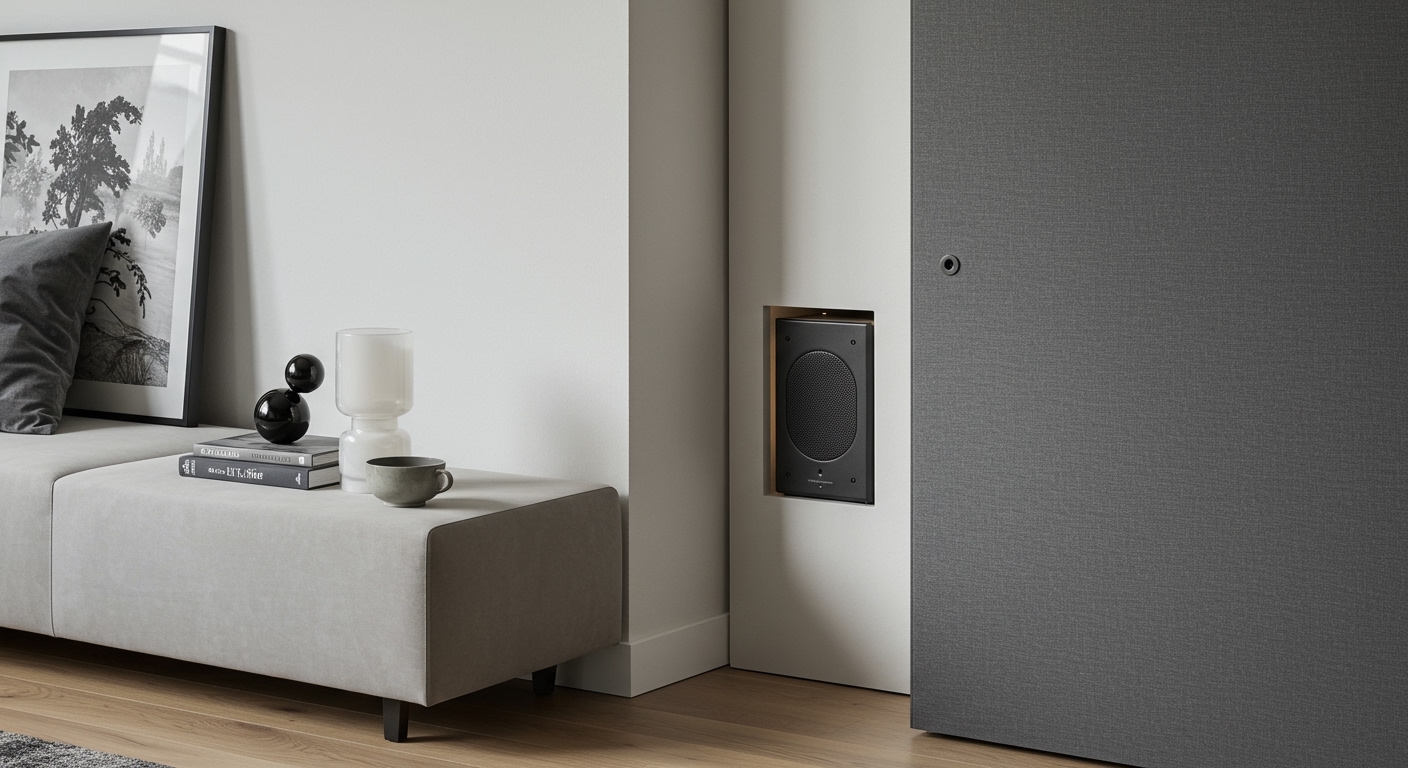
- In-Wall & In-Ceiling Speakers: These are designed to be discreet. They sit flush with the drywall and often have paintable grilles to blend in perfectly. Brands like Sonos, Bose, and Klipsch are common.
- Minimalist Design: The goal is to have music in every room without the clutter of traditional bookshelf or floor-standing speakers.
- Forgotten Technology: Sometimes, these systems are old and disconnected. A previous owner might have removed the central amplifier, leaving the speakers orphaned in the walls.
Malicious Reason: Covert Surveillance
This is the more alarming possibility. Hidden microphones or speakers with listening capabilities can be planted for various illegal and unethical reasons.
- Untrustworthy Individuals: This could include a suspicious landlord, a former partner, or even a corporate rival if you work from home.
- Compromised Smart Devices: Many smart home devices, from security cameras to smart speakers, have microphones. If their security is compromised, they can be used for eavesdropping.
- Spy Gadgets: The market for tiny, disguised listening devices is huge. They can be hidden in everyday objects like USB chargers, smoke detectors, or even pens.
The Complete Guide on How to Find Hidden Speakers in Your Home
We’ll approach this methodically, starting with the simplest techniques that require no special equipment and progressing to more advanced, tech-based methods.
Step 1: The Low-Tech Physical Inspection (Your First Line of Defense)
Never underestimate the power of your own eyes and intuition. Most poorly hidden devices can be found this way.
- Prepare the Room: Turn off all lights except for a bright flashlight (your phone’s works well). This creates shadows and helps you spot things that are out of place. Unplug any unnecessary electronics to reduce confusion.
- Conduct a Systematic Visual Sweep: Don’t just glance around. Start in one corner of the room and scan the walls from top to bottom, moving methodically. Pay extremely close attention to details.
- Check Common Hiding Spots:
- Look for Telltale Signs:
I once helped a friend inspect a new apartment and we found an old, disconnected intercom speaker hidden behind a large, heavy bookshelf. The previous tenants had simply covered it up, but it was a good reminder to check everywhere.
Step 2: Using Your Ears – The Auditory Search
Some active electronic devices emit a faint sound that you can only hear in complete silence.
- Create Total Silence: Wait for a quiet time of day. Turn off the HVAC system, unplug the refrigerator, and shut down any computers or fans. Silence is key.
- Listen Carefully: Walk slowly around the room. Get close to walls, outlets, and furniture. Listen for any faint buzzing, clicking, or humming sounds.
- Perform a Phone Call Feedback Test: This trick works well for detecting active transmitting devices.
Leveraging Technology to Find Hidden Audio Devices
If the physical and auditory searches come up empty, it’s time to use technology. These methods can find devices that are well-hidden or don’t make any noise.
Method 1: Using Your Smartphone as a Detection Tool
Your smartphone is more powerful than you think. With the right techniques and apps, it can be an effective bug-sweeping device.
- The Flashlight & Camera Trick: Many covert cameras (which often include microphones) use a tiny lens. These lenses will reflect light.
- Network Scanning Apps: Most hidden smart speakers or cameras need a Wi-Fi connection to function. A network scanner can reveal every device connected to your router.
- Bluetooth Scanners: Some devices use Bluetooth instead of Wi-Fi.









