Introduction
The digital music revolution forever changed the way we consume audio. In the early days of digital music, convenience almost always came at the cost of sound quality. Compressed MP3 files played through cheap computer speakers became the standard, leaving audiophiles stranded in a sea of low-fidelity convenience. Fortunately, a few pioneering companies recognized that convenience and pristine audio did not have to be mutually exclusive. Slim Devices, a company that was later acquired by Logitech, set out to bridge the gap between high-end home audio and local digital networks.
The culmination of this vision was the Logitech Transporter Network Music Player (Silver). Originally introduced with a premium retail price of $1,699, the Transporter was never designed to be a casual consumer accessory. Instead, it was built from the ground up as a “no-compromise” piece of high-fidelity gear for serious music lovers. While the Logitech brand is more commonly associated with computer mice, keyboards, and webcams, the Transporter stands as a magnificent testament to what happens when digital engineers are given a blank check to design an absolute masterpiece for the audiophile community.
In this comprehensive, deep-dive review, we will explore the engineering marvel that is the Logitech Transporter. We will analyze its technical specifications, evaluate its unique design features, look at both its strengths and weaknesses, and discover how this classic silver component continues to hold a legendary status among high-end audio enthusiasts.
Product Overview
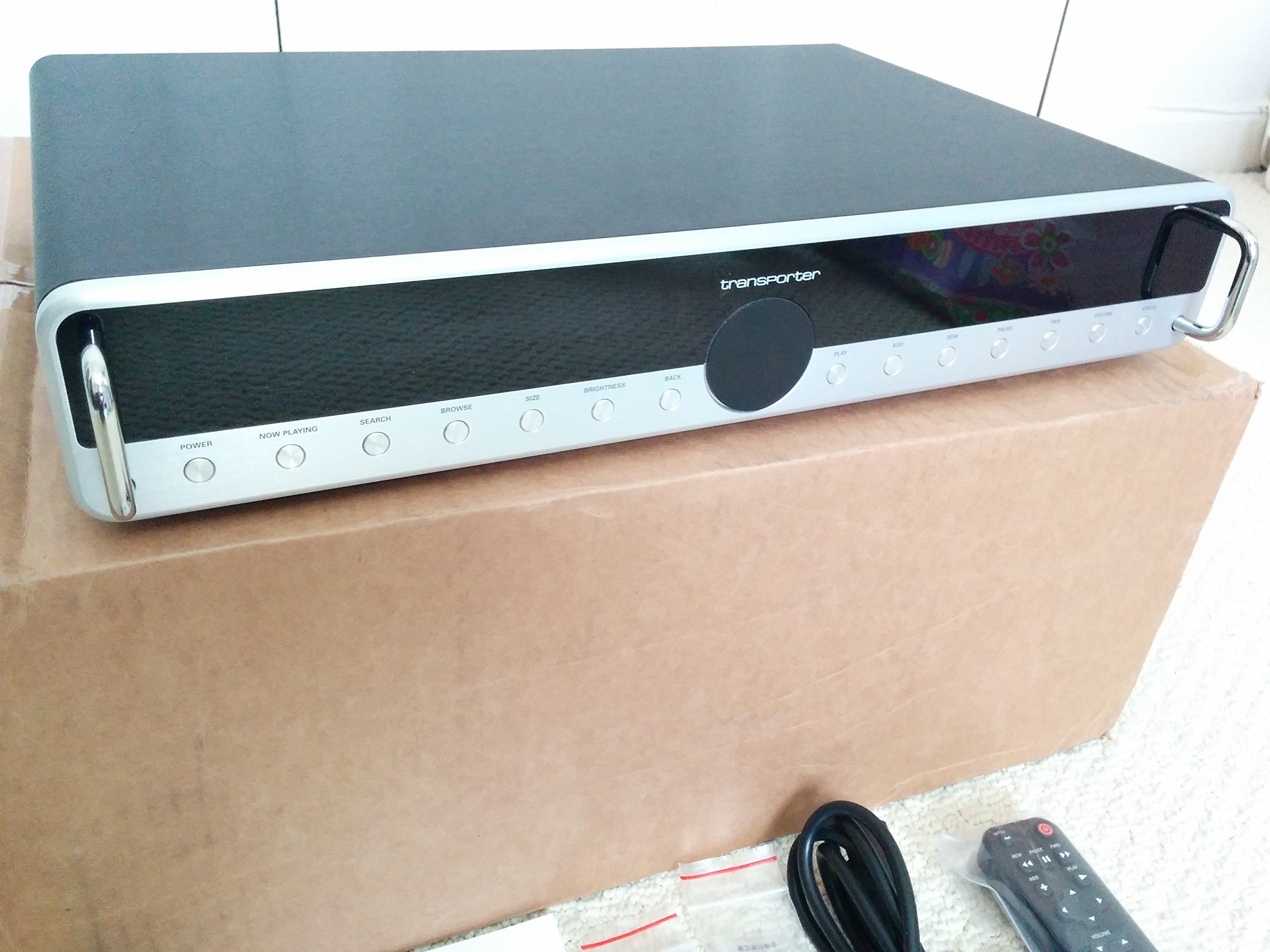
The Logitech Transporter is a dedicated, rack-width network music player designed to sit proudly in a high-end two-channel stereo setup. Measuring 17 inches wide, it has the exact physical presence, weight, and premium feel of a top-tier CD transport or preamplifier. The silver brushed-aluminum front panel exudes luxury, giving the device an immediately recognizable retro-professional aesthetic.
The most striking visual features of the front panel are the dual vacuum fluorescent displays (VFDs). These highly customizable screens can display song titles, artist names, and bitrates on one side, while the other displays real-time, beautifully animated analog-style VU meters. Situated between these two gorgeous displays is the TransNav controller—a heavy, motorized navigation dial that features dynamic force-feedback. As you scroll through your music library, the dial actively resists your touch or “clicks” when you reach the end of a menu list, providing a physical, tactile connection to your digital media.
Under the hood, the Logitech Transporter is packed with ultra-high-grade components. At its heart is the highly acclaimed AKM AK4396 multi-bit delta-sigma digital-to-analog converter (DAC). Known in audiophile circles as the “Miracle DAC”, this chip is celebrated for its natural, lifelike, and organic sound signature. It boasts an impressive 120dB dynamic range and an incredibly low total harmonic distortion plus noise (THD+N) figure of -106dB. This pristine digital-to-analog stage ensures that high-resolution audio files are decoded with absolute precision and no digital coloration.
What truly separates the Transporter from ordinary digital audio players, however, is its uncompromising clocking system. Timing errors, also known as digital jitter, can introduce harshness and distortion into high-frequency playback, muddying the soundstage. Logitech’s engineers treated digital clock signals as precision analog signals. The Transporter relies on dedicated, high-precision crystal oscillators for standard sample rates (such as 44.1kHz, 48kHz, and 96kHz), entirely bypassing the need for digital resampling or Phase-Locked Loop (PLL) circuits. Furthermore, for true purists, the rear panel includes a dedicated BNC word clock input. This allows the unit to synchronize with an external laboratory-grade master clock source, a feature normally reserved for professional recording studios.
The rear panel of the Transporter is a dream come true for custom installers and audiophiles alike. It offers professional-grade connections, including balanced XLR analog outputs and unbalanced gold-plated RCA outputs. In addition to analog outputs, the Transporter serves as a highly capable digital hub. It provides digital inputs and outputs for optical TOSLINK, coaxial S/PDIF, BNC, and balanced AES/EBU. This means you can use the Transporter as a standalone high-end DAC to upgrade the sound of legacy devices like CD players or game consoles.
To access your digital library, the Transporter functions as a network client. It connects to your home network via a wired 10/100 Ethernet port or wirelessly via built-in 802.11g Wi-Fi with dual external antennas. Music streaming is handled through server software installed on your local computer or Network Attached Storage (NAS) drive. Originally called SlimServer, this software is now known as Logitech Media Server (LMS), and it has been embraced by an active, passionate open-source developer community. While the physical product specifies legacy compatibility with Windows 2000, Windows XP, and Windows Vista, community-developed versions of the server software ensure seamless operation on modern Windows, macOS, and Linux operating systems.
Pros
- Pristine, Audiophile-Grade Sound: The AKM AK4396 “Miracle” DAC delivers a remarkably clean, natural, and warm sound. It completely avoids the harsh, sterile “digital glare” found in many budget streamers, offering deep instrument separation, a black background, and a expansive soundstage.
- Studio-Grade Clocking and Jitter Prevention: By bypassing resampling and utilizing specialized, high-precision crystal oscillators, the Transporter achieves incredibly low jitter. The dedicated BNC word clock input allows synchronization with external master clocks for the ultimate in timing accuracy.
- Unrivaled Physical Connectivity: The back panel is populated with professional, high-end connectors. From balanced XLR and AES/EBU to optical, coaxial, and BNC inputs and outputs, the Transporter can effortlessly integrate into the most complex and expensive audio systems.
- Stunning Retro Dual Displays: The twin vacuum fluorescent displays (VFDs) are both beautiful and practical. The ability to display real-time, glowing digital-analog VU meters brings a gorgeous, nostalgic visual element to your audio rack.
- Innovative Motorized TransNav Dial: The motorized, force-feedback navigation knob on the front panel provides a tactile interaction that is unmatched. It acts as a physical scroll wheel that dynamically adjusts its resistance based on the size of your lists.
- Active Open-Source Ecosystem: Thanks to the enduring legacy of the Squeezebox ecosystem, the underlying software (Logitech Media Server, now Lyrion Music Server) is actively maintained by an open-source community. This means the Transporter can still stream from modern platforms like Spotify, Tidal, Qobuz, and local FLAC libraries.
- Superb Build Quality: Hand-assembled with a thick, brushed silver aluminum front plate, a rigid steel chassis, and premium internal components, the Transporter is built to last. It has the physical density and luxurious finish expected of high-end hifi gear.
Cons
- High Cost and Limited Availability: With an original price of $1,699, the Transporter has always been a significant financial investment. Since it has been discontinued, used units still command a premium on the resale market due to their legendary status among collectors.
- Technical and Complex Setup: Unlike modern, plug-and-play smart speakers (such as Sonos), the Transporter requires a dedicated server (Logitech Media Server) to be installed on a local computer or NAS drive. This requires some network configurations, which can be challenging for non-technical users.
- No Native USB Port for Direct Media: The player lacks a USB Type-A port for connecting a flash drive or external hard drive directly, and it does not have a USB Type-B port for use as a direct computer USB DAC. All local music must be streamed over the network.
- Legacy Wireless Hardware: The built-in Wi-Fi is based on the older 802.11g standard. While this provides more than enough bandwidth to stream high-resolution 24-bit/96kHz lossless audio files, it may require extra patience and configuration on modern, high-speed dual-band home networks. Hardwiring via the Ethernet port is highly recommended.
Customer Reviews Analysis
The feedback surrounding the Logitech Transporter Network Music Player is highly enthusiastic, representing a very dedicated group of audiophiles and digital music collectors. Though it has a small pool of official retail reviews due to its high-end niche market, the broader customer sentiment found across hifi forums and audio publications paints a consistent picture.
Sonic Performance and Audio Clarity: Owners of the Transporter universally praise its incredible sonic presentation. Many reviewers express amazement at how the device transforms their digital music library, breathing new life into local FLAC and lossless files. They describe the audio output as incredibly smooth, natural, and rich in detail, with a wide, holographic soundstage. Users often compare its internal DAC to standalone converters costing three to four times as much, noting that the Transporter holds its own against even the most exotic digital players.
Aesthetic Appeal and the VU Meters: The dual displays and the simulated VU meters are an absolute favorite among owners. Customers love the visual presence the device brings to their audio racks. Several reviews point out that being able to read track titles from across a large living room, while watching the glowing VU meters dance to the music, creates a wonderfully engaging listening experience.
User Experience and Setup Hurdles: On the critical side, the primary complaint centers around the initial installation process. Non-technical buyers frequently note that configuring the local server software (Logitech Media Server) and establishing the initial network connection can be complex and frustrating. Users have pointed out that without a direct local hard drive, the system relies entirely on your computer or NAS remaining powered on to play music. Additionally, while some enjoy the lightweight, backlit remote control, a few reviewers felt that a premium device at this price point deserved a heavier, silver-brushed metal remote that matched the solid feel of the main chassis.
Despite these minor setup complaints, customer consensus is clear: once the network configuration is complete, the Logitech Transporter is extremely reliable, rock-solid, and delivers a level of acoustic purity that is deeply satisfying.
Who Should Buy This Product
The Logitech Transporter Network Music Player (Silver) is a highly specialized, reference-grade piece of equipment. It is not meant for the average consumer looking for a quick and simple way to play background music. Instead, it is aimed directly at dedicated music enthusiasts.
You should consider purchasing the Logitech Transporter if:
- You are an Audiophile with a High-End System: If you own premium amplification, high-quality loudspeakers, or a balanced system with XLR preamps, the Transporter is designed to integrate seamlessly. Its ultra-low noise floor and reference DAC will allow your high-end gear to shine.
- You Have a Large Local Library of Lossless Music: If you have spent years building a massive collection of FLAC, WAV, or Apple Lossless (ALAC) files, the Transporter is the ultimate bridge to stream those files from your computer or NAS straight to your main listening room.
- You Love Classic Hifi Aesthetics and Tactile Control: The brushed silver faceplate, the motorized TransNav control dial, and the beautiful VFD displays with simulated VU meters are a dream come true for anyone who values tactile, premium design over sterile touchscreens.
- You Own or Plan to Use an External Master Clock: For true purists who employ high-precision external word clock generators in their digital chains, the Transporter’s dedicated BNC word clock input makes it one of the very few network players capable of true external synchronization.
- You Enjoy Open-Source Software and Customization: If you like having total control over your media server, experimenting with custom community plugins, and being part of a highly active global community of developers, the Logitech Media Server ecosystem is incredibly rewarding.
Final Verdict
In the fast-moving world of digital audio and home network streaming, consumer electronic products usually have a shelf life of just a few years before they become obsolete. However, the Logitech Transporter Network Music Player (Silver) is a rare exception. By focusing on uncompromising hardware design, precision engineering, and a robust open-source software foundation, Logitech and Slim Devices created a product that has transcended the typical product lifecycle to become an absolute classic.
Its acoustic performance remains stellar. The combination of the AKM AK4396 “Miracle” DAC, the ultra-clean super-regulated power supplies, and the meticulous clock management results in an audio experience that stands shoulder-to-shoulder with modern high-end streamers costing twice as much. While the setup requires some patience and a bit of technical know-how, the reward is a rock-solid, jitter-free connection to your entire digital music collection.
The physical unit itself is a work of art. The brushed silver aluminum faceplate, the highly tactile TransNav control knob, and those hypnotic, digital-analog VU meters bring a sense of ceremony and beauty back to digital music playback. It is a stunning visual centerpiece that commands respect in any high-fidelity stereo rack.
If you are looking for a simple, plug-and-play Bluetooth speaker, the Transporter is definitely not for you. But if you are a passionate music lover who demands pristine sound quality, extensive digital and analog connectivity, and the timeless appeal of high-end hi-fi design, the Logitech Transporter in Silver is a magnificent investment. It remains a legendary achievement in network audio—a true masterclass in digital engineering that continues to deliver pure, unadulterated audiophile bliss.